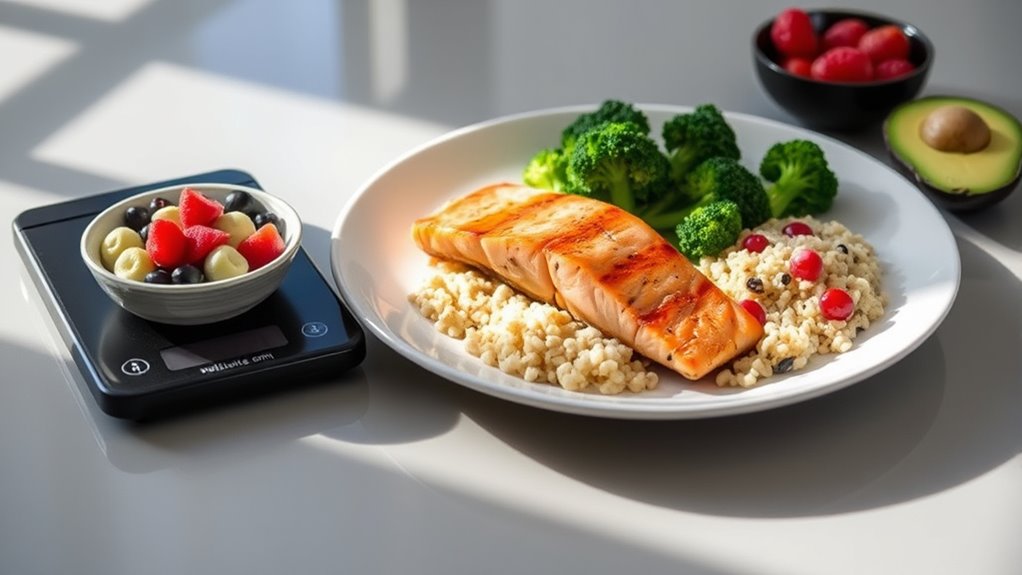

To balance macros for weight management, plan your meals ahead of time with a focus on proper portion sizes and nutrient distribution. Use tools like food scales or measuring cups to guarantee accuracy and include a variety of protein, healthy carbs, and fats. Prepping meals helps you stay on track and avoid overeating. If you want to learn how to optimize your macro ratios and keep your plan sustainable, keep exploring proven strategies inside.

Get kitchen gear delivered free with Prime
- Fast, free delivery on millions of items
- Prime Video, Amazon Music and more included
- Member-only deals all year
Key Takeaways
- Prioritize balanced macro ratios tailored to individual weight goals and activity levels.
- Use meal prepping to control portion sizes and ensure consistent macro distribution across meals.
- Incorporate a variety of nutrient-dense foods to maintain macro balance and prevent nutritional deficiencies.
- Track macro intake using apps or food scales to stay aligned with personalized targets.
- Adjust macro ratios over time based on progress, preferences, and changing dietary needs.

Effective meal planning is essential for managing your weight because it helps you make healthier choices and avoid impulsive eating. When you plan your meals ahead of time, you have better control over portion sizes, which is crucial for maintaining or losing weight. Portion control ensures you’re consuming appropriate amounts without overeating, and it’s easier to stick to your goals when you know exactly how much food to serve yourself. One effective way to achieve this is through meal prepping. By preparing your meals in advance, you can portion out servings accurately, reducing temptation to indulge in oversized portions or unhealthy snacks. Meal prepping also saves time during busy weekdays, so you’re less likely to grab fast food or processed snacks that derail your weight management efforts.
Incorporating portion control into your daily routine doesn’t mean you have to eat tiny amounts or feel deprived. Instead, it’s about understanding the right serving sizes for different food groups and using tools like measuring cups or a food scale to be precise. When you prepare your meals ahead of time, you can divide dishes into appropriate portions, making it easier to stick to your macro goals. For example, if you’re aiming to balance your macros—carbohydrates, proteins, and fats—meal prepping helps you distribute these nutrients evenly across your meals. You can prepare protein-rich dishes, healthy carbs, and fats in controlled quantities, ensuring your intake aligns with your dietary targets. This way, you’re not only controlling the amount you eat but also the quality and macro balance of your diet, which is vital for sustainable weight management.
Meal prepping also allows you to experiment with different macro ratios and find what works best for your body. By consistently preparing meals, you develop a better understanding of portion sizes and nutrient content, making it easier to fine-tune your intake over time. Additionally, understanding personalized nutrition plans can help tailor your meal prep to meet your specific weight management goals. Plus, it reduces the likelihood of making impulsive decisions based on hunger or cravings, since you already have nutritious, pre-portioned meals ready to go. This discipline helps you stay on track with your weight goals without feeling deprived or overwhelmed. Ultimately, combining portion control with strategic meal prepping empowers you to make smarter, more controlled eating choices, supporting your journey toward a healthier weight and improved overall well-being.
Frequently Asked Questions
How Do I Adjust Macros for Different Activity Levels?
To adjust macros for different activity levels, you should modify your intake based on exercise adjustments. Increase carbs and protein on more active days to fuel recovery and performance, then scale back on rest days. Use macro tracking tools to monitor these changes easily. This way, you stay aligned with your activity, ensuring proper energy and nutrient balance while supporting your weight management goals.
Can Meal Timing Affect Weight Loss?
Your meal timing can dramatically impact weight loss—like flipping a switch! Intermittent fasting and adjusting meal frequency influence how your body burns calories and stores fat. Eating at strategic times helps regulate insulin and boost metabolism, making weight loss more efficient. So, yes, when you eat matters; it can accelerate your progress or stall it. Prioritize your meal timing to release your full weight management potential.
What Are Quick Macro-Friendly Snack Ideas?
You can enjoy quick macro-friendly snacks by choosing healthy snack swaps like Greek yogurt with berries or a handful of nuts. Portable snack ideas include protein bars, string cheese, or sliced veggies with hummus. These options help you balance carbs, protein, and fats while satisfying hunger. Keep these snacks handy to stay on track with your macros, ensuring you maintain energy levels and support your weight management goals throughout the day.
How Do I Handle Dining Out While Macro Counting?
Ever find yourself at a restaurant just as you’re counting macros? It’s common, but don’t worry. Use restaurant tips like asking for grilled options, swapping sides, or customizing dishes. When menu navigation, look for protein-packed choices and balance carbs and fats. Stay mindful of portion sizes, and don’t hesitate to request adjustments. This way, you stay on track without sacrificing the dining experience.
Are There Macro Guidelines for Vegetarians or Vegans?
Yes, there are vegan macros guidelines to help you stay on track. Focus on plant-based proteins like beans, lentils, tofu, and tempeh to meet protein needs. Balance your intake of carbs from whole grains, fruits, and veggies, and include healthy fats from nuts, seeds, and avocados. Tracking vegan macros guarantees you’re getting enough nutrients while maintaining your weight goals. Adjust portions to suit your daily macro targets.
Conclusion
By thoughtfully balancing your macros, you gently guide your body toward healthier habits without feeling deprived. Remember, it’s all about harmony and mindful choices, not perfection. With a little planning and patience, you’ll find a rhythm that feels right for you. Embrace the journey as a gentle dance toward well-being, and trust that each small step brings you closer to your goals. Your balanced approach will help you flourish quietly and confidently.
Fall Picks
fall essentials
As an affiliate, we earn on qualifying purchases.