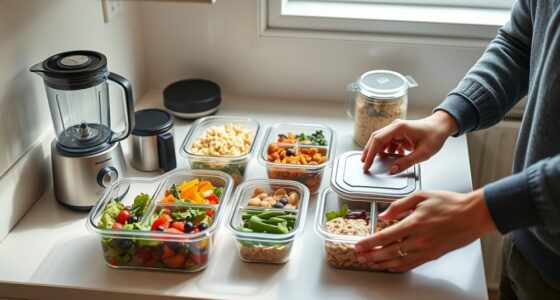
Adopting plant-based meal prep can boost your performance, support recovery, and keep your diet nutrient-dense. Focus on incorporating diverse protein sources like beans, tofu, lentils, and grains to meet your athletic needs. Planning your meals ahead reduces impulsive choices and helps balance carbs, fats, and protein around your workouts. By using smart strategies like batch cooking and meal variation, you’ll stay motivated and energized—continue to explore how to optimize your plant-based nutrition for peak results.

Get kitchen gear delivered free with Prime
- Fast, free delivery on millions of items
- Prime Video, Amazon Music and more included
- Member-only deals all year
Key Takeaways
- Incorporate diverse plant-based proteins like beans, tofu, and quinoa to meet daily amino acid needs.
- Batch cook nutrient-dense meals such as lentil stews and grain bowls for quick, energizing prep.
- Schedule meal timing around workouts to optimize muscle recovery and glycogen replenishment.
- Plan weekly menus to ensure balanced intake of carbs, protein, and healthy fats for sustained energy.
- Use visual meal plans and ingredient prep to stay motivated and maintain consistent, healthy eating habits.

Switching to plant-based meal prep is a great way to boost your health, save time, and reduce your environmental footprint. As an athlete, you know that proper nutrition is essential for peak performance, and choosing the right protein sources plays a vital role. When you plan your meals around plant-based options, you can guarantee you’re fueling your body with the nutrients it needs while also supporting your sustainability goals. Incorporating diverse protein sources like beans, lentils, tofu, tempeh, nuts, and seeds into your meal planning helps you meet your daily protein requirements without relying on animal products. These foods are not only rich in protein but also packed with fiber, vitamins, and minerals that promote recovery and stamina.
Effective meal planning becomes your best tool when shifting to a plant-based diet. Start by mapping out your weekly meals, making sure each includes a variety of protein sources to keep your diet balanced and interesting. Think beyond just beans and lentils—experiment with quinoa, edamame, chickpeas, and whole grains, which all contribute to your daily protein intake. Preparing these ingredients in advance allows you to assemble meals quickly, saving you time during busy training days. Batch cooking large portions of hearty stews, grain bowls, or veggie-packed stir-fries ensures you always have nutritious options ready to go, reducing the temptation to reach for less healthy convenience foods. Additionally, visualizing your meal plan can help you stay motivated and on track with your nutrition goals.
Meal planning also involves paying attention to nutrient timing. As an athlete, you need to optimize your intake of carbs, protein, and fats around your workouts. Incorporate plant-based protein sources into pre- and post-training meals to support muscle repair and replenish glycogen stores. For example, a chickpea salad or tofu scramble can serve as excellent pre-workout options, while a lentil soup or quinoa bowl can help with recovery afterward. Remember, variety is key, so rotate your protein sources to cover all essential amino acids and prevent dietary boredom.
In addition to boosting your performance, plant-based meal prep makes it easier to stick to your dietary goals. When you plan ahead, you avoid impulsive choices that may derail your progress. With a well-thought-out meal plan, you can track your intake to guarantee you’re meeting your energy and protein needs, all while enjoying delicious, nutrient-dense foods. As you incorporate more plant-based options into your training regimen, you’ll notice improved digestion, sustained energy levels, and a lighter footprint on the planet—all of which support your journey as an athlete committed to health and sustainability.
Frequently Asked Questions
How Do Plant-Based Meals Support Athletic Recovery?
Plant-based meals support your athletic recovery by providing antioxidants that combat oxidative stress and recovery-enhancing nutrients like vitamins and minerals. These foods help reduce inflammation, repair muscle tissue, and replenish glycogen stores faster. By fueling your body with plant-based antioxidants, you optimize your recovery process, allowing you to train harder and more consistently. Incorporate a variety of fruits, vegetables, and whole grains to maximize these benefits.
What Are the Best Protein Sources for Plant-Based Athletes?
You might think finding good plant protein sources is tough, but it’s actually a breeze. Legume options like lentils, chickpeas, and black beans top the list, providing ample protein for your needs. Don’t forget about soy-based foods like tofu and tempeh, which pack a punch. These options not only support your athletic goals but also keep your meals exciting and varied. So, embrace these plant protein powerhouses and fuel your workouts!
How Can I Ensure Adequate Iron Intake on a Plant-Based Diet?
To guarantee adequate iron intake on a plant-based diet, you should include iron-rich foods like lentils, spinach, tofu, and fortified cereals in your meals. Pair these with vitamin C-rich foods such as citrus or peppers to boost absorption. If needed, consider supplement options like iron tablets, but consult a healthcare professional first. Staying consistent with these habits helps you meet your iron needs effectively.
Are Plant-Based Meals Suitable for High-Endurance Athletes?
Absolutely, plant-based meals are powerful enough to fuel high-endurance athletes! With an abundance of plant-based antioxidants, you can boost recovery and stamina like never before. Just pay attention to vegan meal timing—spacing out nutrient-rich foods guarantees sustained energy. You won’t miss out on performance; instead, you’ll open new levels of endurance fueled by vibrant vegetables, grains, and legumes. Your body thrives on this plant-powered performance!
What Are Quick Plant-Based Meal Prep Ideas for Busy Athletes?
You can whip up quick plant-based meal prep ideas by packing snack options like trail mix, energy balls, or fruit with nuts. Prepare hearty salads or grain bowls in advance and store them in airtight containers for easy grab-and-go meals. Use meal storage tips like dividing portions and labeling containers to stay organized. These strategies save time, keep you fueled, and guarantee you always have nutritious, plant-based options ready.
Conclusion
Switching to plant-based meal prep can boost your energy and recovery as an athlete. Did you know that plant-based athletes often experience a 25% faster muscle recovery time? Imagine fueling your body with colorful, nutrient-packed meals that keep you energized through every workout. By choosing plant-based options, you’re not only supporting your performance but also caring for the planet. So, give it a try—your body and the environment will thank you.
Fall Picks
fall essentials
As an affiliate, we earn on qualifying purchases.