
TL;DR
Air fryers for small kitchens can cook quick portions and reheat crisp foods without heating a full-size oven, but they still need room for safe ventilation and storage. Measure the appliance’s footprint, opening clearance, and usable cooking area, then match its format to the meals you actually make. For one or two people, a compact basket model may be handy; larger oven-style and dual-basket models offer more options but take up more space.
The counter in a small kitchen can feel like a game of Tetris: move the kettle, and the cutting board loses its spot. An air fryer may cook a quick dinner without warming a full-size oven, but its footprint, open basket, and hot exhaust need room too.

Get kitchen gear delivered free with Prime
- Fast, free delivery on millions of items
- Prime Video, Amazon Music and more included
- Member-only deals all year
This guide helps you decide whether an air fryer deserves that space. You’ll learn how the different formats compare, what to measure before you buy, and where their crisp results shine. A few practical checks can help you pick a machine that fits your meals and your kitchen, instead of turning into one more appliance to store.
Measure the appliance’s footprint, height, basket opening, and required operating clearance before buying.
Compare usable single-layer cooking area as well as advertised quarts or liters.
Choose a basket, oven-style, or dual-basket format based on the meals you actually cook and the counter space you have.
Leave room for airflow and follow the manufacturer’s placement and cleaning instructions.
Expect the best results from crisp small batches; a crowded basket can cook unevenly.
Why an air fryer can earn a spot in a small kitchen
Air fryers for small kitchens can make quick portions of crisp food without heating a full-size oven, which suits everyday meals for one or two people. They cook by circulating hot air around food, often with a small amount of oil. Think of the cooking chamber as a compact wind tunnel: hot air moves around the food, while the basket keeps everything close to the heat.
That setup can be convenient for frozen snacks, roasted vegetables, and reheating foods that taste better crisp than limp. For instance, if you come home with one serving of leftover fries, reheating them in a small basket may be easier than heating an oven and waiting for a large tray. Your results still depend on the food, quantity, and appliance.
The tradeoff is physical space. The unit needs a stable place to sit while it runs, and you’ll need somewhere to put it when you’re done if it can’t stay on the counter. A small household that cooks quick lunches often may use one regularly; someone who mostly makes large, slow-cooked meals may find it gathering dust in a cupboard.
Air fryers can use less added oil than some deep-frying methods, but that doesn’t make every air-fried dish healthy by default. Ingredients and portions still count. Treat the appliance as another cooking tool, with a particular knack for crisp small batches, rather than a magic route to better food.
Products Worth Considering

Ninja Foodi Smart Dual Heat Air Fry Oven, 13-in-1, Silver, SP351

Cuisinart PerfecTemp 14-Cup Programmable Coffee Maker with Glass Carafe, Black and Stainless Steel

Traeger Pro 22 Wood Pellet Grill & Smoker
As an affiliate, we earn on qualifying purchases.
Measure these four things before you bring one home
To choose an air fryer that fits a tight kitchen, measure its footprint, height, opening space, and storage route before you shop. The number on the capacity label won’t tell you whether the appliance fits beneath a shelf or whether you can pull out its basket without hitting a wall. Measure the actual spot, then compare it with the manufacturer’s dimensions and operating instructions.
- Check the counter footprint. Measure width and depth where the unit would sit, and leave the ventilation clearance the manufacturer specifies.
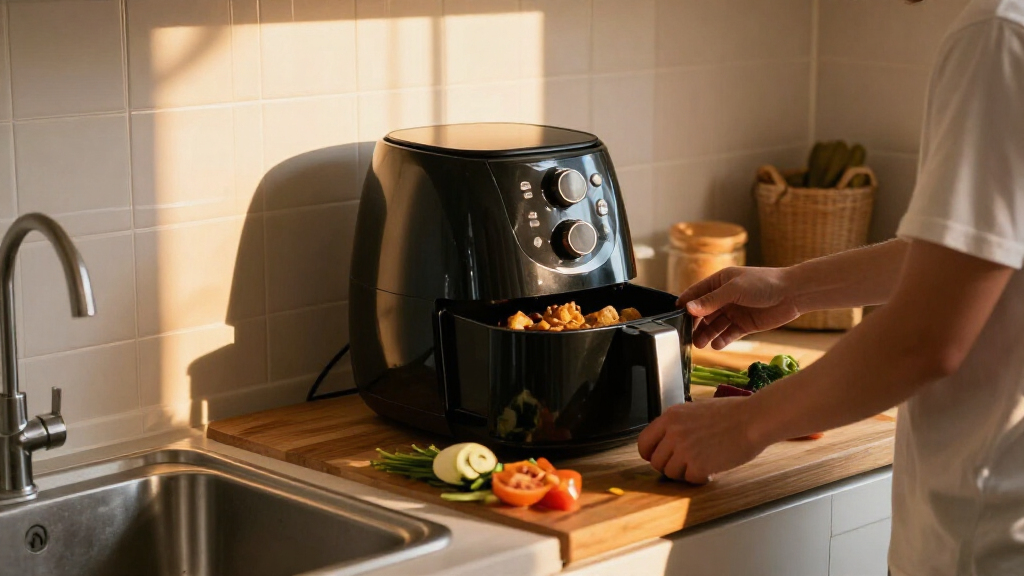
- Check the opening path. Pull out a drawer or open a door in your planned location. In a narrow galley kitchen, a basket that swings into a busy walkway can quickly become annoying.
- Check height and heat clearance. Confirm the space above the appliance meets the manual’s directions. A cabinet that looks high enough can still sit in the path of hot exhaust.
- Check where it will live afterward. Measure your cupboard opening, sink, and shelf. A bulky model may fit the counter but be awkward to wash or put away.
These measurements work together. A model can fit within the counter’s width and depth yet still be impractical if its basket needs room to slide out, its exhaust blows toward a cabinet, or its weight makes storage inconvenient. That matters because a machine that is cumbersome to set up or clean is less likely to earn regular use.
For example, imagine a renter with a narrow counter and a low cupboard. A model can look compact in a product photo yet fail the real test when its basket handle needs clearance or its exhaust warms the cabinet above. Tape a rectangle on your counter to mark the base, then check the space the basket needs while you use it.
Set the appliance on a stable, heat-resistant surface and follow the maker’s ventilation and placement instructions. Don’t run it inside a tight cubby just to reclaim counter space; hot air needs somewhere to go, and nearby items and surfaces need protection from heat and steam. If safe placement leaves no workable spot, a smaller footprint alone will not solve the fit problem.
Pick a format that matches the meals you actually cook
Basket air fryers tend to suit compact kitchens and simple small batches, while oven-style models and dual-basket units offer different cooking options at the cost of more room. The format shapes how an appliance fits your routine: it’s a little like choosing between a small saucepan and a broad roasting pan. Neither is automatically better; each makes certain jobs easier.
| Format | What it does well | Space tradeoff |
|---|---|---|
| Basket model | Fries, vegetables, snacks, and reheating | Often compact, but a crowded basket can cook unevenly |
| Oven-style model | Racks and multiple cooking functions | Usually takes more counter or cupboard room |
| Dual-basket model | Two foods can cook separately | Extra width can be a problem on a narrow counter |
A person who reheats a slice of pizza or roasts a handful of broccoli may get more use from a straightforward basket than from a cabinet-sized appliance with several racks. A couple who often wants vegetables and potatoes ready together might value separate baskets, provided the extra width fits. Oven-style models may offer settings such as bake, roast, or dehydrate, but those functions earn their keep only if you use them.
Think through the compromises in terms of your usual meal. A basket model keeps the footprint simple, but its single cooking space may mean cooking components in sequence. A dual-basket model can cook two foods separately, though you pay for that flexibility with width and more parts to clean. Oven-style racks can spread food over a broader area and offer extra modes, but the larger shell can occupy the very counter space that made a compact cooker appealing. The better fit is the format whose most frequent advantage offsets its everyday space and cleanup cost.
Capacity figures in quarts or liters can be hard to compare. A deep, narrow basket and a wide, shallow basket may hold similar volumes but offer different usable cooking areas. Since food usually cooks better with airflow around it, consider how much fits in a single layer, not just the advertised volume. If your common portion only fits when piled up, the nominal capacity may overstate how useful the appliance will be for that meal.
Choose features that save time instead of adding clutter
In a small kitchen, the most useful air fryer features are the ones you will use often and can clean easily. A readable timer and temperature control may serve you better than a long list of presets you never touch. Start with the basics: the right temperature range for your recipes, a timer you can read at a glance, and removable parts that suit your washing routine.
Convenience features can make a real difference. Dishwasher-safe parts, a clear viewing window, and a reliable pause or shake reminder can make dinner feel less fiddly. But feature claims vary by model, so check the manual before assuming a basket is dishwasher-safe. Hand-washing may help protect some coatings over time.
Newer models may add digital controls, roast or bake settings, dual zones, or app-connected controls. These options can be useful if they solve a specific problem. For instance, a viewing window might help when you’re checking vegetables without opening the basket repeatedly; an app connection adds little if you prefer to set a timer and walk away.
Don’t forget the everyday nuisances. The fan makes sound, and the appliance releases hot air. If your kitchen table sits a few feet away, reviews may help you gauge noise, while the manual tells you how much clearance the unit needs. Before buying a new model, check its current dimensions, price, features, and any official recall notices; product availability and claims change over time.
Get crisp results without cooking in frustrating batches
Air fryers crisp many foods best when hot air can move around them, so a single layer often beats filling the basket to the rim. Overcrowding is a common reason food turns soggy or cooks unevenly: pieces block the airflow, and the hot breeze can’t reach every surface. Cooking a second batch may take longer, but it can give you a more even result.
Imagine filling a small basket with a mountain of frozen fries after a long day. The fries at the bottom may soften while pieces at the top brown too quickly. Spread them into a looser layer, shake or turn them if the recipe calls for it, and give oddly large pieces a little more space.
For fresh vegetables, cut pieces to similar sizes so they cook at roughly the same rate. Some ingredients may brown more easily with a light coating of oil, while foods that already contain fat may need little or none. Follow the recipe and the appliance guidance; avoid aerosol cooking sprays if the manufacturer warns against them.
Quick fix for soggy food: Leave space around the pieces, cook in batches, and shake or turn them when the recipe recommends it.
An air fryer won’t duplicate every result from deep-frying, and it may not replace an oven for a large tray or a full meal. If you regularly cook several dishes at once, your full-size oven may still make more sense. For a single crispy side or a small leftover, the compact chamber can be a handy shortcut.
Decide if the counter space is worth the convenience
An air fryer is worth its space when you use it often for meals your oven handles less conveniently. Think about what you cook in a normal week: a quick snack after work, a single portion of roasted vegetables, or leftovers that taste better with a crisp edge. If those jobs come up repeatedly, easy access may matter more than keeping the counter perfectly clear.
Picture a student in a permitted dorm kitchen who often cooks frozen snacks and reheats leftovers. A compact basket model could suit those portions, as long as the residence allows the appliance and the student can store it safely. A home cook who makes full trays of food may see less benefit from the same machine and might prefer an oven or toaster oven they already own.
Energy use depends on the appliance, cooking time, portion, and the oven you compare it with. A smaller chamber and shorter cook can use less energy for a small portion, but you can’t promise a fixed saving without measured evidence. If energy is your main reason for buying, compare real usage information rather than relying on a broad claim.
Before you commit, ask three plain questions: How often will I use it? Where will it sit while running? Where will I store and wash its parts? If you have clear answers, compare models by external dimensions, usable basket area, cleaning, and price. That small checklist is more useful than chasing the biggest capacity or the most buttons.
Frequently Asked Questions
Are air fryers worth it for one person?
They can be useful if you often cook quick portions or reheat foods that benefit from a crisp finish. Before buying, check that you have convenient counter or cupboard space and expect to use it regularly.
What size air fryer fits a small kitchen?
There is no single size that suits every small kitchen. Compare external dimensions and basket opening space with your available counter, then check the usable area for the portions you cook.
Can an air fryer replace an oven or toaster oven?
An air fryer can handle some small-batch cooking and reheating, but it may not fit large trays or several dishes at once. If you often cook full meals for a group, keep your oven’s capacity in the comparison.
Where should I put an air fryer, and can it sit under a cabinet?
Use a stable, heat-resistant surface and follow the manufacturer’s clearance and ventilation instructions. Place it under a cabinet only if the manual allows the available space; hot exhaust can affect nearby surfaces or objects.
Why does food turn soggy or cook unevenly?
Overcrowding can block hot air from reaching food evenly. Try a single layer, more consistent piece sizes, and shaking or turning the basket when the recipe recommends it.
Are air fryer baskets dishwasher-safe?
Some models have dishwasher-safe parts and others do not. Check the manual for your appliance; hand-washing may help preserve some basket coatings.
Conclusion
Choose an air fryer by starting with your kitchen, not the product’s preset count. Measure where it will run and where it will live, then match the usable basket area to the portions you usually cook. A compact appliance that fits comfortably and gets used each week beats a larger one that blocks the counter.
When the dinner rush comes, a well-placed air fryer should feel like a small patch of open counter working in your favor: hot air humming, vegetables browning, and no giant oven to warm for one plate.