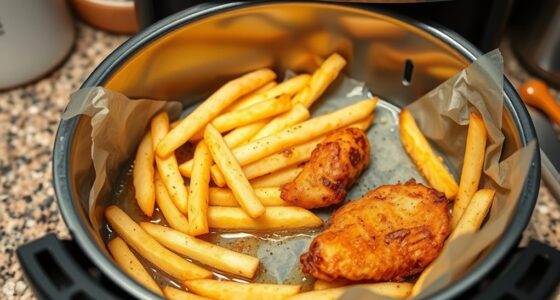

When cooking in the air fryer, frozen foods usually need longer cook times and benefit from seasoning after cooking or during halfway through for better flavor. Fresh ingredients cook faster, often at higher temperatures, resulting in crispier exteriors. To get the best results, preheat the air fryer and shake or turn foods midway. Continue exploring ways to perfect your air-fryer skills, and you’ll master crispy, flavorful meals every time.
Key Takeaways
- Frozen foods require longer cooking times and often benefit from seasoning after initial cooking for better flavor.
- Fresh ingredients cook faster and can be seasoned beforehand, resulting in a crisper exterior.
- Preheating the air fryer improves even cooking for both frozen and fresh items.
- Shaking or turning foods midway promotes uniform browning and texture.
- Using a light oil spray enhances browning and helps seasonings adhere better for both types.
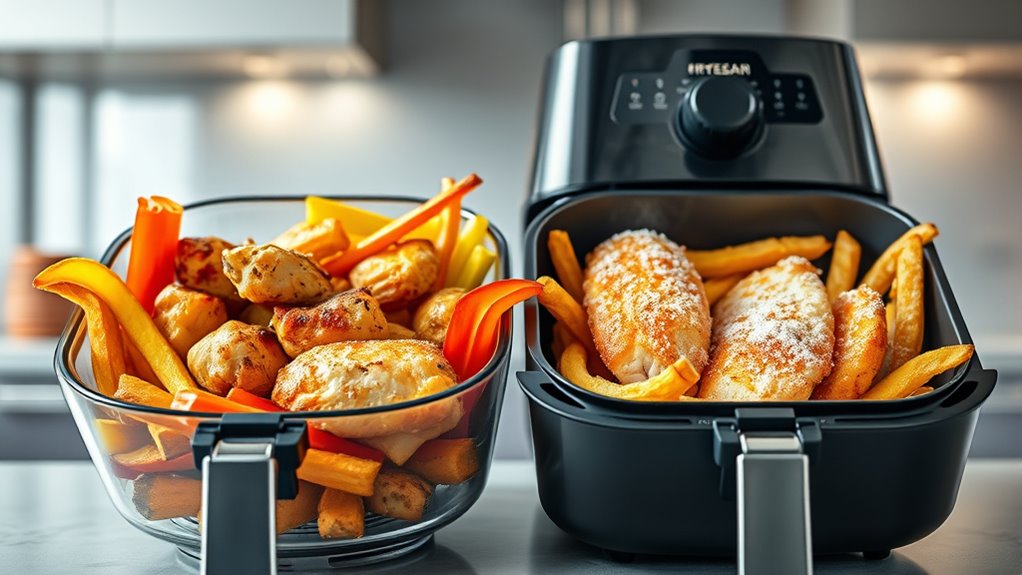
Cooking frozen and fresh foods in an air fryer can yield different results, so understanding the best approach for each is essential. When you’re preparing either, your goal should be to maximize flavor and texture, which starts with how you season your food and how long you cook it. Seasoning techniques play a crucial role in bringing out the best in both frozen and fresh items. For fresh foods, you have the luxury of applying seasonings before cooking, allowing flavors to meld and penetrate the ingredients. Use herbs, spices, and marinades to enhance taste, and don’t be afraid to experiment with bold flavors. With frozen foods, seasoning techniques often involve adding or adjusting flavors after a brief initial cooking, since the freezing process can dull some of the natural flavors. You can sprinkle seasonings right onto frozen items before cooking or toss them with a little oil and spices midway through the process to boost flavor.
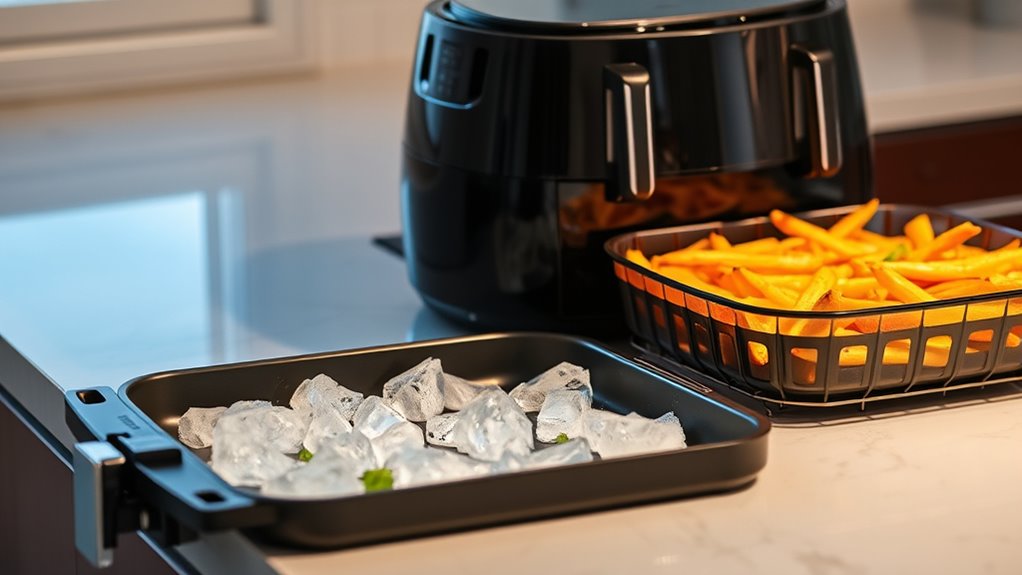
Cooking times are another vital consideration. Frozen foods typically require a slightly longer cook time than fresh because they start at a lower temperature and contain ice that needs to melt and evaporate. You should check the recommended cooking times on packaging but be prepared to add a few extra minutes. Remember, overcooking can lead to dryness or a tough texture, so keep an eye on your food and adjust accordingly. For fresh ingredients, cooking times are usually shorter, as they don’t have ice or moisture barriers. This means you can often cook them at higher temperatures for a crisper exterior or faster results. Always preheat your air fryer to ensure even cooking, especially with fresh foods, so they develop that desirable crispy exterior without overcooking the inside.
Another tip for both frozen and fresh foods is to shake or turn them halfway through cooking. This promotes even exposure to the hot air and helps achieve a uniform texture. When it comes to seasoning techniques, consider adding a light spray of oil before cooking to help seasonings stick and improve browning. For frozen items, you might want to season more heavily after the initial cooking stage, since the freezing process can diminish some flavors. Additionally, understanding how projector bulb maintenance and proper care can extend the lifespan of your appliances ensures consistent performance and better results in your cooking setup. Overall, understanding the nuances of seasoning techniques and adjusting cooking times accordingly allows you to get the most out of your air fryer, whether you’re working with frozen or fresh foods. With a little practice and attention to detail, you’ll consistently achieve delicious, perfectly cooked meals every time.

McCormick Air Fryer Garlic Parmesan Seasoning Mix, 1.25 oz (Pack of 12)
McCormick Air Fryer Seasoning Mixes are developed especially for the air fryer
As an affiliate, we earn on qualifying purchases.
As an affiliate, we earn on qualifying purchases.
Frequently Asked Questions
Does Cooking Frozen Foods in the Air Fryer Affect Appliance Longevity?
Cooking frozen foods in your air fryer doesn’t harm the appliance or diminish its longevity if you maintain it properly. Regular appliance maintenance, like cleaning the basket and avoiding overloading, guarantees it runs efficiently. Using frozen foods can actually boost energy efficiency because it often requires less preheating and shorter cooking times. Just follow manufacturer guidelines, and your air fryer will stay in good shape, cooking both frozen and fresh foods effectively.
Are There Specific Frozen Foods That Don’T Work Well in the Air Fryer?
You’ll find that frozen breaded items, like chicken nuggets or mozzarella sticks, cook well in your air fryer, but delicate frozen vegetables may turn soggy or unevenly cooked. Avoid placing overly watery or fragile foods directly into the basket without proper preparation. To get the best results, shake or flip items halfway through, and consider pre-treating delicate vegetables with a light coating or shorter cook time for ideal texture.
How Does the Texture of Frozen Foods Compare to Fresh After Air Frying?
When you air fry frozen foods, they often end up crispier on the outside but may retain more moisture inside compared to fresh. Fresh items typically develop a more uniform, tender texture with a higher crispiness level because they start with ideal moisture content. Frozen foods can sometimes be a bit soggy or uneven in texture, but adjusting cooking time and temperature helps you achieve a satisfying balance of crispiness and moisture retention.
Can I Cook Multiple Frozen Items Simultaneously in the Air Fryer?
Yes, you can cook multiple frozen items simultaneously in your air fryer. Just make sure to arrange them in a single layer for even cooking. For batch cooking, avoid overcrowding to maintain proper air circulation and flavor retention. You might need to add a few extra minutes to the cooking time, but this method saves time and lets you prepare a variety of frozen foods efficiently without sacrificing texture or taste.
Is There a Difference in Cooking Time for Frozen Versus Fresh Foods in the Air Fryer?
Yes, there’s a difference in cooking time between frozen and fresh foods in the air fryer. You should make cooking time adjustments based on food size variance and whether the food is frozen or fresh. Frozen items usually need a few extra minutes to cook through completely, while fresh foods typically cook faster. Keep an eye on your food and check for doneness to avoid under or overcooking.

Boribim 2 PCS Square Silicone Air Fryer Liners – 8 Inch Reusable Air Fryer Pot – Air Fryer Accessories – Air Fryer Inserts for 4 to 7 QT Oven Microwave Accessories (Red + Blue)
[2-PCS Air Fryer Silicone Liners] Our square silicone air fryer liners is thicker, It's about 67mil thick, it's…
As an affiliate, we earn on qualifying purchases.
As an affiliate, we earn on qualifying purchases.
Conclusion
When it comes to cooking frozen versus fresh foods in your air fryer, both options work well—just adjust your cooking time accordingly. Did you know that frozen foods can sometimes cook 20% faster due to their pre-cooked state? So, whether you choose frozen or fresh, your air fryer makes mealtime quick and easy. Experiment with both to discover your perfect crunch, and enjoy delicious, hassle-free meals every time!

Mantova Air Fryer Spray 450F Smoke Point – All-Natural High-Heat Cooking Oil – Perfect for Air Fryers, Roasting, Grilling, Baking, and Sautéing-High Smoke Point, Non-Aerosol Spray, Easy to Use and Mess-Free – Made in Italy – (Pack of 1)
All-Natural Ingredients: Made with pure oil, free of additives and artificial flavors.
As an affiliate, we earn on qualifying purchases.
As an affiliate, we earn on qualifying purchases.

Air Fryer Cheat Sheet Magnets Cooking Guide Booklet – Air Fryer Cookbooks – Air Fryer Liners – Air Fryers Kitchen Gifts Gadgets 2026 – Air Fryer Accessories – Air Fryer Cooking Guide
Master Air Frying with All-in-One Air Fryer Cookbook Guide. Featuring 120+ foods across 5 helpful categories, this air…
As an affiliate, we earn on qualifying purchases.
As an affiliate, we earn on qualifying purchases.