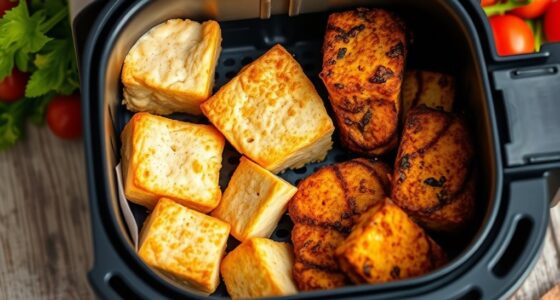
Air fryers are more energy-efficient than traditional ovens because they heat up quickly and cook food faster, reducing overall electricity use. Their targeted heat transfer means less heat loss and shorter cooking times, which lowers your energy bills over time. They’re especially effective for small meals and quick snacks, making them a smart choice for saving energy and reducing environmental impact. If you want to understand how these benefits work in detail, keep exploring the facts.
Key Takeaways
- Air fryers heat quickly and cook faster than traditional ovens, reducing overall energy consumption.
- They are more energy-efficient for small meals due to shorter cooking times and targeted heating.
- Lower preheating requirements and rapid heat transfer minimize energy waste.
- Using an air fryer for quick snacks and reheating can significantly lower electricity bills.
- Over time, energy savings from air fryers can offset their higher initial cost, making them environmentally and economically efficient.
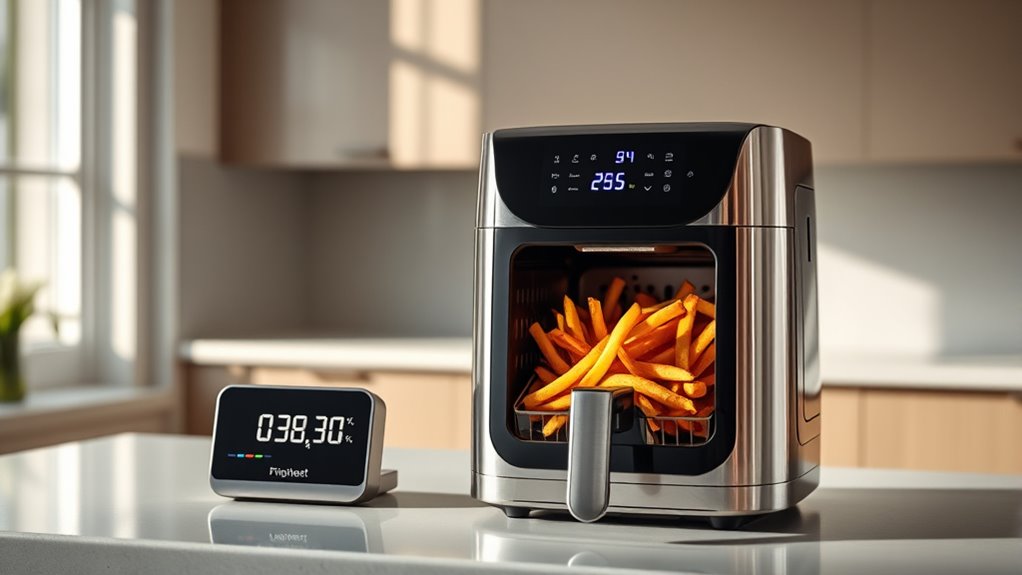
Are air fryers truly more energy-efficient than traditional ovens? That’s a question many people ask when trying to cut down on energy costs or reduce their environmental footprint. The answer largely depends on how you use each appliance and what you’re cooking. When you compare the cost, air fryers often seem to come out ahead, especially for small meals. They heat up faster and cook more quickly, which means they draw power for less time. This shorter cooking duration can translate into lower electricity bills over time. In contrast, traditional ovens, especially large ones, tend to consume more energy because they take longer to preheat and maintain higher temperatures for extended periods.
From an environmental impact standpoint, air fryers are generally better suited for smaller, quick-cooking tasks. Their rapid heating and efficient heat transfer mean they use less energy overall, reducing your carbon footprint. Conventional ovens, especially older models, tend to be less efficient because of heat loss and longer cooking times. Additionally, because air fryers generate less heat and are more targeted in their cooking process, they emit fewer greenhouse gases associated with electricity consumption. If you’re aiming to lessen your environmental impact, opting for an appliance that uses less energy makes a noticeable difference. Plus, the smaller size of air fryers means they require less energy to operate compared to full-sized ovens, making them a smarter choice for everyday use.
Furthermore, understanding the pool terminology and how appliances operate can help you make more energy-conscious decisions for your home. However, it’s important to take into account the type of cooking you do most often. If you tend to prepare large batches or roast multiple dishes, a traditional oven might still be more practical despite its higher energy consumption. For quick snacks, reheating, or small meals, an air fryer’s efficiency shines. The cost comparison shows that although air fryers might have a higher upfront price, their energy savings can offset that initial investment over time. Also, because they heat up faster, you save energy not just on cooking but also on preheating time.
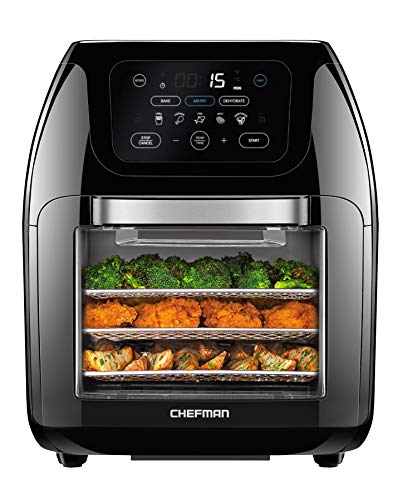
CHEFMAN Multifunctional Digital Air Fryer+ Rotisserie, Dehydrator, Convection Oven, 17 Touch Screen Presets Fry, Roast, Dehydrate, Bake, XL 10L Family Size, Auto Shutoff, Large Easy-View Window, Black
Versatile countertop cooking: Air fry, bake, dehydrate, rotisserie, or roast to crispy perfection in one convenient appliance
As an affiliate, we earn on qualifying purchases.
Frequently Asked Questions
Do Air Fryers Consume More Energy Than Traditional Ovens?
No, air fryers usually don’t consume more energy than traditional ovens. Their wattage, typically around 1,200 to 1,500 watts, is lower than most ovens, which can go up to 3,000 watts. This means that during use, an air fryer has less energy consumption compared to a traditional oven. So, if you’re looking for energy efficiency, an air fryer is a smart choice for quick, less power-intensive cooking.
How Does Food Quantity Affect an Air Fryer’s Energy Use?
When you cook larger portions in your air fryer, it typically increases energy use because the appliance needs more time and heat. Studies show that doubling the portion size can raise cooking duration by about 50%, which impacts energy consumption. Keep in mind that ideal portion size helps maintain efficiency, so adjusting your cooking time accordingly ensures you save energy while preparing meals efficiently.
Are Newer Air Fryer Models More Energy-Efficient?
Yes, newer air fryer models are generally more energy-efficient because they include advanced energy saving features and benefit from the latest technological advancements. These improvements help reduce power consumption while maintaining cooking performance. When you choose a modern air fryer, you’ll likely notice faster cooking times and lower energy bills, making it a smarter choice for your home. Keep an eye out for models with eco-friendly features to maximize savings.
Can Air Fryers Save Energy Compared to Deep Frying?
Using an air fryer is like switching from a gas-guzzling SUV to an electric bike—you’ll save energy and reduce your environmental impact. Air fryers use hot air circulation, which cooks food faster and with less energy than deep frying. By choosing an air fryer, you cut down on energy consumption, leading to greater energy savings and a smaller carbon footprint, making it a smarter, eco-friendlier kitchen choice.
What Maintenance Practices Improve an Air Fryer’s Energy Efficiency?
To improve your air fryer’s energy efficiency, stick to regular cleaning routines by removing grease and food debris, which guarantees ideal heating. Also, practice proper storage by keeping it in a cool, dry place, avoiding overcrowding, and covering it when not in use. These habits help maintain the appliance’s performance, reduce energy consumption, and extend its lifespan, making your cooking more efficient and cost-effective.

Emeril Lagasse Extra Large French Door Air Fryer Toaster Oven Combo, 24 Cooking Functions and Digital Controls, 7 Accessories Included, Stainless Steel Finish, 26QT Capacity
A VERSATILE AIR FRYER AND MULTI-COOKER COMBO: Elevates practically any meal, from air frying quick after-school snacks to...
As an affiliate, we earn on qualifying purchases.
Conclusion
Think of your air fryer as a wise little squirrel preparing for winter. It gathers just enough energy to do its job efficiently, conserving resources like a pro. When you use it wisely, you’re helping it store that energy for when you really need it. So, by choosing an air fryer and using it smartly, you’re like that squirrel—making sure every bit of effort counts. Together, you’re both working smarter, not harder, for a cozy, efficient winter.

bella 4Qt Slim Air Fryer, Fits-anywhere™ Kitchenware, EverGood™ Ceramic Nonstick Coating, Adjustable Temperature, 6 Preset Cooking Options, 60 Min Auto Shutoff w Audible Tone, 3.3lb Capacity, Oatmilk
Slim Design for Any Space: The bella 4qt Air Fryer features a sleek, space-saving design, perfect for fitting...
As an affiliate, we earn on qualifying purchases.

Cosori 9-in-1 TurboBlaze Air Fryer 6 Qt, Premium Ceramic Coating, 90°–450°F, Precise Heating for Even Results, Air Fry, Roast, Bake, Broil, Dry, Frozen, Proof, Reheat, Keep Warm, 120V, Dark Gray
𝘼𝙞𝙧 𝙁𝙧𝙮𝙚𝙧 𝙐𝙥𝙜𝙧𝙖𝙙𝙚: Innovative TurboBlaze Technology delivers a powerful 3600 rpm fan speed and temperatures up to 450℉,...
As an affiliate, we earn on qualifying purchases.