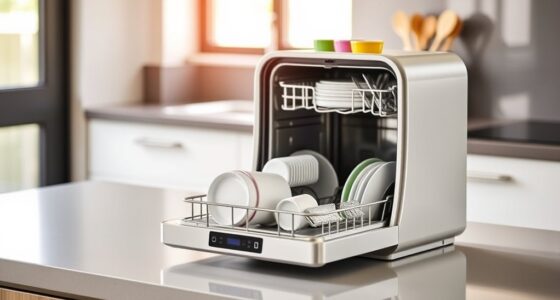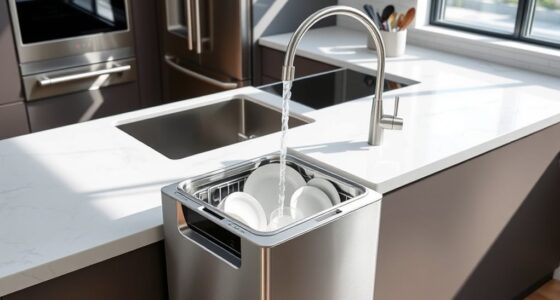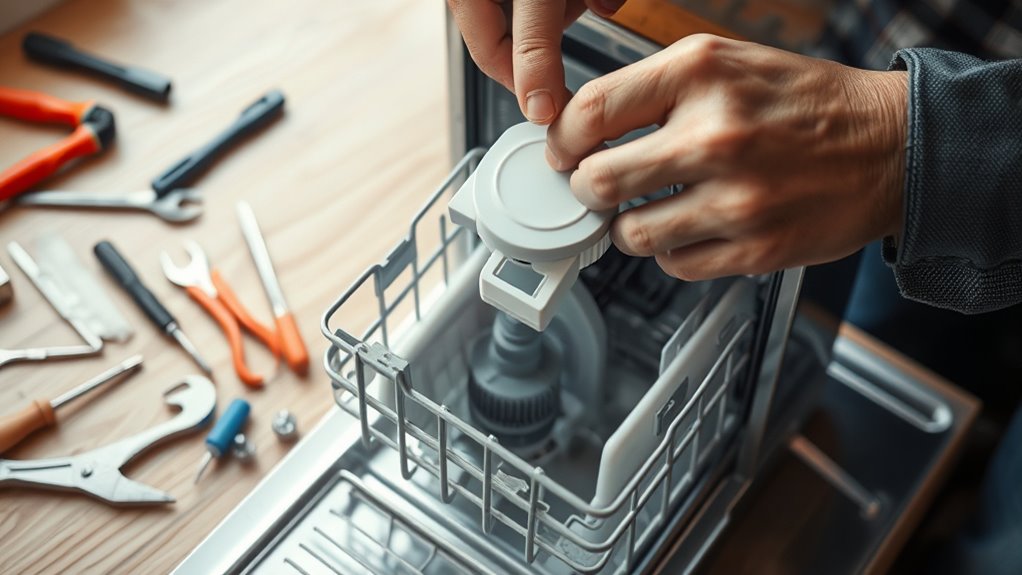

To maintain and repair your small dishwasher yourself, start by regularly cleaning the filter and checking the drain hose for kinks or blockages. Inspect electrical components like the drain pump and door latch with a multimeter, and replace any faulty parts. Keep the control panel clean and ensure the door latches properly. Following these tips can prevent common problems; if you’d like to learn more about troubleshooting and fixing these issues, keep exploring further.

Get kitchen gear delivered free — and shop member deals
- Fast, free delivery on millions of items
- Access to Prime Big Deal Days deals on October 6–7
- Prime Video, Amazon Music and more included
Key Takeaways
- Regularly clean filters and drain hoses to prevent clogs and ensure proper water drainage.
- Unplug the dishwasher before inspecting or replacing electrical components, and use a multimeter for testing.
- Check and secure door latches and switches, replacing faulty parts to resolve startup and operational issues.
- Perform periodic cleaning cycles with vinegar or dishwasher cleaner to remove grease and mineral buildup.
- Inspect wiring and electrical connections for damage or corrosion, and replace damaged parts to maintain safe operation.

Small dishwashers are convenient appliances that can save you time and effort, but they require regular maintenance to keep them running smoothly. One common issue you might face is water drainage problems. If your dishwasher isn’t draining properly, it could be due to a clogged filter, a kinked or blocked drain hose, or a faulty drain pump. Start by inspecting the filter, usually located at the bottom of the dishwasher. Remove any debris or food particles that might be obstructing water flow. Next, check the drain hose for kinks or blockages; straighten out any bends and clear out any debris you find. If these steps don’t resolve the issue, test the drain pump for electrical faults. You can do this by unplugging the dishwasher and using a multimeter to check for continuity. If the pump isn’t functioning electrically, it may need to be replaced. Electrical troubleshooting is an essential skill for maintaining your unit; guarantee you disconnect power before working on any electrical components. Sometimes, a blown fuse or tripped circuit breaker can cause the dishwasher to stop functioning, so verify that your household’s electrical circuit is active. If you notice the dishwasher doesn’t turn on at all, check the power supply first, then look inside for any signs of damaged wires or burnt components. Replacing faulty switches or wiring might be necessary if you find damage.
Another common electrical troubleshooting step involves inspecting the door latch. If the latch isn’t engaging properly, the dishwasher may not start. Clean the latch and test it with a multimeter to ensure it’s working correctly. If the latch or switch is defective, replacing it can solve startup issues. Also, examine the control panel for signs of damage or corrosion. Sometimes, resetting the dishwasher by unplugging it for a few minutes can clear electronic glitches.
Regular maintenance also includes running a cleaning cycle with vinegar or a dishwasher cleaner to prevent buildup of grease and mineral deposits. Ensuring proper water drainage and electrical functionality helps extend your dishwasher’s lifespan and prevents costly repairs. Keep an eye on these areas, and don’t hesitate to troubleshoot electrical issues carefully—your safety is paramount. With a little effort, you can keep your small dishwasher operating efficiently, saving you time and money over its lifespan.
small dishwasher filter cleaning kit
As an affiliate, we earn on qualifying purchases.
As an affiliate, we earn on qualifying purchases.
Frequently Asked Questions
Can I Replace a Dishwasher Motor Myself?
Yes, you can replace a dishwasher motor yourself if you’re comfortable with DIY repair. Start by unplugging the dishwasher and removing the panels to access the motor. Carefully disconnect the wiring and mounting hardware, then install the new motor in reverse order. Follow the manufacturer’s instructions closely, and if you’re unsure, consider consulting a repair manual or professional. With patience and proper tools, replacing the dishwasher motor is achievable for a handy DIYer.
What Tools Are Needed for Dishwasher Pump Repairs?
You’ll need basic tools like screwdrivers, pliers, and a socket set for dishwasher pump repairs. Common repair kits often include replacement impellers, seals, and gaskets, so having those on hand helps. Make sure to gather a multimeter to check electrical connections. These tools will help you access, diagnose, and replace the pump components efficiently. Always disconnect the power before starting any repairs to stay safe.
How Do I Reset a Small Dishwasher’s Circuit Breaker?
To reset a small dishwasher’s circuit breaker, first locate your home’s electrical panel. For circuit breaker troubleshooting, identify the breaker labeled for your dishwasher. If it’s in the “off” position or feels loose, flip it fully to the “off” position, then back to “on.” This action resets the breaker. Always unplug the dishwasher before resetting, and if it trips again, consider consulting a professional for further troubleshooting.
Are There Specific Safety Precautions for Electrical Repairs?
When doing electrical repairs, you should always prioritize electrical safety and follow repair precautions. Turn off the power at the circuit breaker before starting, and use insulated tools to prevent shocks. Wear rubber gloves and safety goggles for added protection. Double-check that power is off using a tester, and work in a dry area. These steps help you avoid accidents and guarantee a safe repair process.
How Can I Identify if My Dishwasher’s Control Board Is Faulty?
Imagine your dishwasher as a busy city, with the control board as its command center. To identify a faulty circuit, perform control board diagnostics by checking for error codes or unresponsive cycles. If your dishwasher won’t start, stops mid-cycle, or exhibits erratic behavior, it signals potential issues with the control board. Carefully inspect for burnt components or damaged wiring, which are clear signs of a faulty circuit needing repair or replacement.
dishwasher drain hose replacement
As an affiliate, we earn on qualifying purchases.
As an affiliate, we earn on qualifying purchases.
Conclusion
Taking care of your small dishwasher yourself isn’t just budget-friendly—it’s surprisingly straightforward. With a few simple checks and fixes, you can keep it running smoothly and extend its lifespan. Some folks believe that regular maintenance isn’t worth the effort, but history shows that a little upkeep can prevent costly repairs down the road. So, roll up your sleeves, trust your instincts, and enjoy the satisfaction of fixing your dishwasher on your own.
As an affiliate, we earn on qualifying purchases.
multimeter for electrical testing
As an affiliate, we earn on qualifying purchases.
As an affiliate, we earn on qualifying purchases.
Evergreen bestsellers Picks
bestsellers
As an affiliate, we earn on qualifying purchases.