
To keep mini appliances safe in small spaces, organize and secure cords away from walkways to prevent tripping. Place devices on stable surfaces, avoiding water sources and flammable materials, while ensuring good ventilation. Unplug appliances when not in use and inspect cords regularly for damage. Keep switches accessible and avoid overloading outlets with surge protectors. If you want to learn how to keep your small space safe and efficient, keep exploring these helpful tips.
Key Takeaways
- Organize and secure cords with clips or sleeves to prevent tripping hazards in small spaces.
- Place mini appliances on stable surfaces with adequate ventilation and away from water or flammable materials.
- Unplug appliances when not in use and regularly inspect cords for damage or wear.
- Avoid overloading outlets; use surge protectors to reduce electrical fire risks.
- Keep switches and plugs easily accessible for quick operation and emergency shutoff.

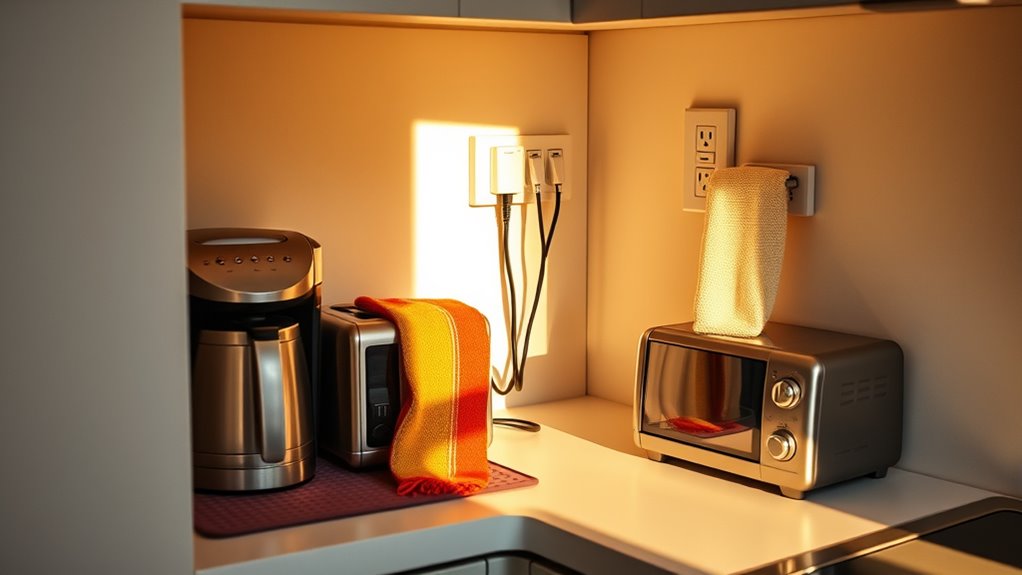
Living in a small space often means making the most of every inch, but it also requires extra caution when using mini appliances. These compact devices are convenient, but they can pose safety risks if not used properly. One of the most important aspects to focus on is cord safety. Since space is limited, cords tend to be crowded and can easily become tripping hazards or cause accidental unplugging. Always ensure cords are neatly organized and secured away from walkways. Avoid running cords across high-traffic areas or under rugs, as these can lead to trips or damage to the cord insulation. Use cord clips or sleeves to keep cords tidy and prevent them from tangling. Never overload an outlet, and consider using a power strip with a built-in surge protector to reduce the risk of electrical fires.
Keep cords organized and away from walkways to prevent tripping hazards in small spaces.
Appliance placement is equally critical in small spaces. You need to be strategic about where you put your mini appliances to maximize safety and efficiency. Place appliances on stable, flat surfaces that can support their weight and prevent tipping. Keep appliances away from water sources, such as sinks or humid areas, to avoid electrical hazards. When setting up, make sure there’s enough clearance around each appliance for ventilation; overheating can occur if devices are crammed together. Avoid placing mini appliances near curtains, paper, or other flammable materials, especially if they generate heat or produce sparks. Also, consider the accessibility of switches and plugs. You want to make sure you can easily turn devices off in case of emergency without having to move furniture or reach behind appliances.
In addition to placement and cord safety, remember to unplug appliances when not in use, especially if you’re leaving the space or going on vacation. This reduces the risk of electrical fires caused by faulty cords or internal malfunctions. Keep an eye on cords and plugs regularly for signs of wear or damage, and replace any frayed or cracked cords immediately. When using appliances like mini rice cookers, toasters, or coffee makers, always follow the manufacturer’s instructions for proper operation. Don’t attempt to modify or adapt appliances to fit awkward spaces, as this can compromise safety features. Regularly inspecting and maintaining your appliances can also help prevent malfunctions or hazards related to performance tuning.
Living in a small space demands attention to safety details, especially when it comes to mini appliances. Staying mindful of cord safety and appliance placement helps prevent accidents and keeps your environment secure. With a little planning and regular maintenance, you can enjoy the convenience of your mini appliances without risking safety.

Lancord Cord Organizer for Appliances, 8 Pack Upgraded Kitchen Appliance Cord Organizer Stick On Appliance Wire Organizer Wire Wrapper for Kitchen Appliances Mixers, Coffee Maker, Pressure Cooker
Upgraded Cord Organizer: This is an upgraded cable organizer with increased space to organize thicker & longer cords….
As an affiliate, we earn on qualifying purchases.
As an affiliate, we earn on qualifying purchases.
Frequently Asked Questions
Can Mini Appliances Be Safely Used Outdoors?
Yes, you can safely use mini appliances outdoors if you have the right setup. Make sure to connect them to outdoor power sources that are properly grounded and rated for outdoor use. Weatherproofing appliances is essential; use weatherproof extension cords and keep the appliances covered when not in use. Always check the manufacturer’s instructions to verify outdoor compatibility, and avoid using mini appliances in rain or wet conditions for safety.
Are There Specific Power Requirements for Mini Appliances?
You need to check the voltage compatibility of your mini appliance to guarantee it matches your power outlet, preventing damage or hazards. Additionally, consider the power cord length; a longer cord offers more flexibility in small spaces, making it easier to position your appliance safely. Always follow the manufacturer’s instructions regarding power requirements to avoid electrical issues and ensure safe, efficient use of your mini appliances.
How Often Should I Inspect Mini Appliance Cords for Damage?
Think of your mini appliance cords as the lifelines of your small space. You should inspect cords for damage weekly, like checking the roots of a thriving plant. Regular cord inspection helps prevent damage and keeps your appliances safe to use. Look for frays, cracks, or exposed wires, and replace damaged cords immediately. This routine guarantees ongoing damage prevention, keeping both your appliances and your space secure and functional.
Can Multiple Mini Appliances Be Plugged Into One Outlet Safely?
You can plug multiple mini appliances into one outlet safely if you use a high-quality power strip with built-in safety features. However, avoid overloading the outlet, as this can cause overheating and fire hazards. Always check the power strip’s maximum load capacity, and don’t exceed it. Regularly inspect cords for damage, and never force too many devices into one outlet. Prioritize safety to prevent accidents.
What Should I Do if a Mini Appliance Overheats?
Think of it like a vintage radio; if your mini appliance overheats, unplug it immediately. To prevent future overheating, make certain proper appliance cooling and avoid overloading outlets. Check for signs like unusual smells or excessive heat. Let the appliance cool down in a well-ventilated area before using it again. Prioritize overheating prevention to keep your small space safe and your appliances working smoothly.

6 Ft Extension Cord Power Strip, Teiobar Surge Protector with 12 AC Outlets and 4 USB Ports for Home, Office, Dorm Essentials, 1875W/15A, 2700 Joules, ETL Listed, Black
【Multi Function Power Strip】:Surge Protector Power Strip with 12AC outlets & 4 USB charging ports (5V/3.4A,17W), 6-foot Heavy…
As an affiliate, we earn on qualifying purchases.
As an affiliate, we earn on qualifying purchases.
Conclusion
Remember, keeping safety in mind while using mini appliances in small spaces isn’t just about avoiding accidents—it’s about creating a comfortable environment where everything works smoothly. Sometimes, a simple tip or two can prevent unexpected issues, like finding yourself in a pinch just when you least expect it. By staying vigilant and cautious, you might be surprised how effortlessly your space becomes safer and more efficient, making safety habits second nature without even realizing it.

ToLanbbt Mini Fridge Stand Adjustable Height 8.3"-9.3" Washer and Dryer Stand Base with 4 Strong Feet Washing Machine Universal Stand Pedestal for 16"-24" Furniture Portable Appliance Black
【Upgrade Stabilizer Feet】4 feet are made of stainless steel and rubber suction cups. Stainless steel gives stand a…
As an affiliate, we earn on qualifying purchases.
As an affiliate, we earn on qualifying purchases.

VELCRO Brand Mountable Cable Sleeve | Cord Management Mounts on Walls, Desk or Entertainment Center | Removable Adhesive is Damage Free | 8in Black, 2pk, 8in – 2Pk
MOUNTABLE CABLE SLEEVE FOR WALLS OR DESK: Versatile cable management system, VELCRO Brand wire organizer sleeves mount seamlessly…
As an affiliate, we earn on qualifying purchases.
As an affiliate, we earn on qualifying purchases.