TL;DR

Get kitchen gear delivered free with Prime
- Fast, free delivery on millions of items
- Prime Video, Amazon Music and more included
- Member-only deals all year
Electric kettles with temperature control heat water to a selected target, which can make tea and coffee routines easier to repeat. Compare the temperature range, keep-warm behavior, capacity, cleaning access, and safety features, and remember that a display does not guarantee the water is exactly that temperature everywhere in the kettle.
Water can turn a gentle cup of green tea harsh, or leave a pour-over coffee tasting flat, if it is much hotter or cooler than your recipe expects. Electric kettles with temperature control let you choose a target instead of boiling every batch and guessing when it has cooled enough.
That control can make a morning routine more repeatable, especially if you brew the same tea or coffee most days. It can also be useful for instant foods and other drinks that call for hot water below a full boil. The trick is choosing a kettle whose settings and everyday details fit your kitchen.
Here, you’ll learn what the controls do, how to use them without treating the display as a precision lab instrument, and which features deserve your attention before you buy. You’ll also see where a kettle’s temperature setting has limits, including when preparing baby formula.
Use recipe guidance as a starting point, then adjust tea or coffee temperature to taste.
Check a kettle’s temperature range, adjustment steps, and keep-warm behavior before buying.
A display reports a sensor reading that may not represent the temperature throughout the water.
Heat only the amount you need, stay above the minimum fill line, and follow the manual’s descaling instructions.
For baby formula, follow the preparation guidance from the maker and relevant health authority rather than relying on a kettle setting.
Choose a target temperature without guessing after the boil
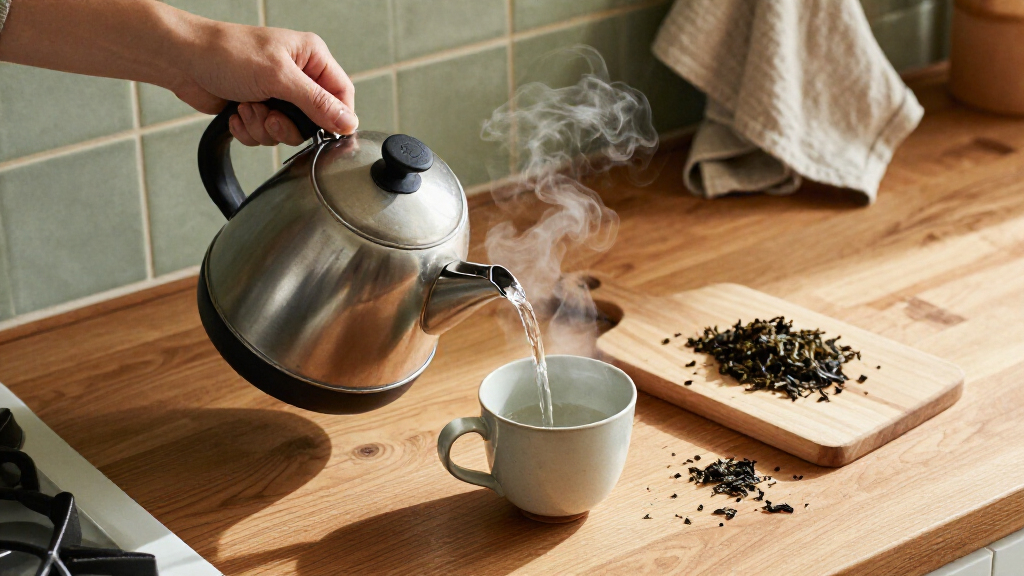
Electric kettles with temperature control heat water to a selected target, using a sensor, heating element, and electronic controls. Most offer preset buttons or adjustable settings, and some add a display, an audible alert, or a keep-warm mode. That gives you a repeatable starting point for a drink, rather than a full boil followed by a cooling-time guess.
Think of the kettle as a kitchen thermostat: you set a destination, and the appliance works toward it. A digital display helps, but it usually reflects a sensor in or near the base. The number may not match the temperature at every point in the water, and accuracy varies from model to model.
For example, if your green tea recipe calls for water below boiling, choosing a lower setting saves you from standing by the mug while boiling water cools. You can start there, taste the tea, and adjust the next cup. Tea type and personal preference still matter; one temperature won’t suit every leaf.
A displayed temperature is a useful setting, not a guarantee that the whole kettle holds water at precisely that temperature.
Temperature control mainly buys convenience and repeatability. It doesn’t automatically make the kettle faster, more accurate, or more energy efficient. If you brew a range of drinks, it may prove useful every day. If you mainly want boiling water for pasta or black tea, a simpler kettle may do the job.
Products Worth Considering

Cuisinart Chef's Classic 17-Piece Stainless Steel Cookware Set

Cuisinart MultiClad Pro 12-Piece Stainless Steel Cookware Set

Philips 2200 Series Fully Automatic Espresso Machine with Classic Milk Frother, 2 Coffee Varieties, Intuitive Touch Display, Ceramic Grinder
As an affiliate, we earn on qualifying purchases.
Match the setting to the drink, then adjust by taste
Electric kettles with temperature control can help you repeat a brewing routine, but the right setting depends on the drink and recipe. Green and white teas are often brewed below boiling, while oolong and black teas generally call for hotter water. Coffee recipes also vary: many pour-over methods use hot water below a rolling boil, but grind, roast, and brewing method change the result.
Use the recipe as a starting point, then pay attention to what’s in the cup. If a green tea tastes bitter, try a lower setting or a shorter steep next time. If a pour-over tastes thin, the cause could be the grind or pouring technique as well as the water temperature. The kettle can help you repeat a change, but it can’t tell you which variable needs adjusting.
Imagine making the same coffee every Saturday. You select your usual target, use the same amount of water and coffee, and pour at a steady pace. After a few attempts, the routine feels less like guesswork and more like a recipe you can trust.
- Tea: Start with guidance for the specific tea; leaf type and steeping time both affect flavor.
- Pour-over coffee: Follow the recipe’s water guidance, then adjust to taste.
- Instant drinks and foods: A lower target may suit the directions, but check the package.
For baby formula, follow the formula maker’s and relevant health authority’s preparation instructions exactly. A kettle setting alone does not establish food safety, because safe preparation depends on the full method, not just the temperature shown on the appliance.
Compare the features you’ll notice after the first week
The most useful kettle features are the ones that match your daily routine: workable settings, a suitable capacity, easy cleaning, and comfortable, safe handling. More presets may look impressive, but a clear display and a dependable control scheme matter more if you only make two kinds of drink.
Before buying, check how fine the temperature adjustments are, whether the units match your preference, and what the keep-warm mode actually does. Some models hold the selected temperature for a limited time; others cycle the heater or require you to switch the function on. The manual can answer questions a product photo can’t.
| Feature | What to check | Why it matters |
|---|---|---|
| Temperature settings | Range, presets, and adjustment increments | They should match your recipes and preferred units. |
| Keep-warm mode | Duration and whether heating restarts automatically | Useful if you make a second cup later. |
| Capacity | Typical batch size and minimum fill | A large jug can be wasteful for one mug; too little water can violate the fill line. |
| Materials | Which surfaces touch the water | Glass shows deposits, while stainless steel can hide them. |
| Controls and alerts | Readable display, beeps, and alert options | Simple controls make a sleepy morning easier. |
For instance, a household that makes several cups in a row may value a keep-warm mode more than a single-cup drinker does. App control may appeal to some buyers, but it adds little if you’re happy to tap a button on the counter. Check warranty terms and cleaning access too; both affect whether a feature-rich kettle stays pleasant to use.
Use the kettle efficiently and keep it ready for tomorrow
Heating only the water you need is the clearest everyday way to avoid unnecessary heating. A temperature setting can also prevent you from heating water beyond your target, but the energy used depends on the amount of water, its starting temperature, the selected target, and the kettle itself. No single preset guarantees lower energy use.
If you want two mugs of tea, fill the kettle for those mugs rather than filling it to the top out of habit. Follow the minimum-fill mark so the heating element stays covered as the manufacturer specifies. That small routine can trim waiting time as well as avoid heating a larger batch than you’ll use.
Cleaning matters because mineral deposits can build up on the base or walls, especially with hard water. A wide opening and an accessible filter make it easier to see and clean limescale. Use the descaling method in the manual; the right interval depends on your water and how often you use the kettle.
- Fill for the batch you plan to make, while staying above the minimum line.
- Select the recipe’s target or a suitable preset.
- Use keep-warm only if you need it, and check how long the feature runs.
- Empty and refill as needed; follow the maker’s guidance on leaving water in the jug.
- Descale as recommended when deposits appear or performance changes.
For example, if a kettle that once heated quickly starts leaving a chalky ring and taking longer, limescale may be part of the problem. A clean kettle is easier to maintain and gives you a clearer view of what’s happening inside.
Handle hot water safely, even when the cycle ends
A temperature-control kettle remains a burn hazard while it heats and after the cycle ends. Automatic shutoff and boil-dry protection are useful features, but they don’t make hot water harmless. Choose a stable base, a comfortable handle, and a lid that opens safely, then keep the jug away from the edge of the counter.
Check that the cord and base suit your kitchen layout. A cordless jug on a powered base is common; a rotating base can make it easier to return the kettle from different angles. If you have children nearby, place the kettle and its cord where a curious hand can’t pull hot water down.
Material alone doesn’t settle whether a kettle is safe or well made. Look at which parts contact the water, follow the cleaning and care instructions, and check for applicable safety certifications. Glass can show limescale quickly, while stainless steel may conceal it; either still needs regular cleaning.
Picture a busy breakfast counter with toast popping and someone reaching for a mug. A clear alert and stable handle can help, but a hot jug still needs a deliberate grip and a safe landing spot. Give steam room to escape when opening the lid, and don’t fill above the marked maximum.
If you are comparing newer designs, look at adjustable digital controls, compact sizes, repair options, and warranty terms. Connected features may be convenient, but they aren’t a substitute for a readable display, safe handling, or easy maintenance. Choose the details that will matter on an ordinary Tuesday morning.
Frequently Asked Questions
What temperature should I use for tea or coffee?
There is no single temperature for every tea or coffee. Start with guidance for the tea type or brewing recipe, then adjust based on taste; leaves, roast, grind, and steeping method all affect the cup.
Is a temperature-control kettle more accurate than a thermometer?
A kettle makes it convenient to select a target, but accuracy varies by model and its display may reflect a sensor near the base. If a precise reading matters for your use, check the kettle with a separate thermometer.
Will the kettle keep water at the selected temperature?
Only if the model has a keep-warm function. Its duration and heating behavior vary, so check the manual to see whether it holds the target, cycles the heater, or requires you to turn the feature on.
Does a temperature-control kettle save energy?
It can avoid heating water beyond your selected target, but actual energy use depends on the water amount, starting temperature, target, and kettle efficiency. Heating only the amount you need also helps avoid wasted heating.
Is it safe to use a kettle setting for baby formula?
Follow the formula manufacturer’s and relevant health authority’s preparation instructions. A kettle’s displayed setting alone does not establish that water or prepared formula is safe.
How often should I descale my kettle?
It depends on your water hardness and how often you use the kettle. Follow the manufacturer’s descaling method, and clean it when deposits appear or performance changes.
Conclusion
Choose a temperature-control kettle if you regularly make drinks or recipes that benefit from repeatable heating. Match its settings, capacity, cleaning access, and safety features to the way you actually use your kitchen, then let taste guide small adjustments.
When tomorrow’s first cup is brewing, you’ll have a familiar setting ready and one less guess to make before the day begins.