🔍 Read the full analysis: The Parmesan Grater Test: Tools That Respect The King Of Cheeses on Mad Tasting

Get kitchen gear delivered free with Prime
- Fast, free delivery on millions of items
- Prime Video, Amazon Music and more included
- Member-only deals all year
TL;DR
A rasp grater suits fine finishing, while a rotary grater can make larger batches easier to handle. Choose based on portion size, grip, stability and cleanup, and use gentle strokes to keep hard cheese from clogging the teeth.
Mad Tasting has published a guide to choosing a grater for Parmesan, recommending rasp-style tools for fine finishing and rotary graters for larger batches. The advice focuses on texture, comfort, stability and safe handling when working with hard, aged cheese.
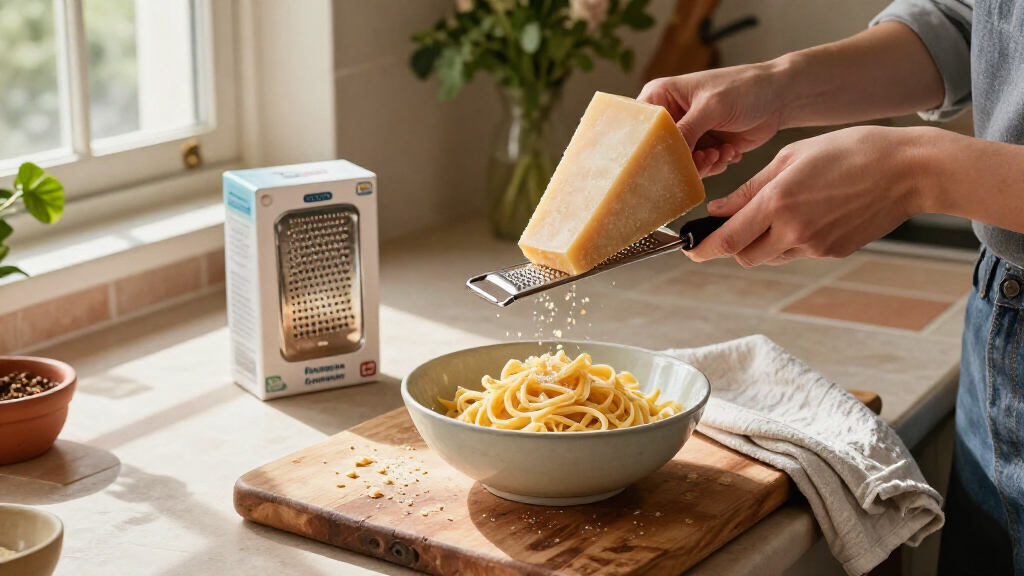
The Mad Tasting guide says a grater should cut cheese cleanly without requiring excessive pressure, slipping during use or trapping shreds in hard-to-reach places. It describes a rasp as producing fine, airy strands for pasta, soup or roasted vegetables. A rotary model holds the cheese in a drum and may suit cooks preparing a larger mound for risotto, minestrone or baked pasta.
According to the guide, a box grater offers several surfaces in one tool. Its fine side can grate Parmesan, while its other faces can be used for different ingredients. The guide cautions that hard cheese can take more wrist effort on a box grater and may lodge in its corners. For any style, it recommends checking for sharp stainless steel teeth, a comfortable grip and a stable working position.
The guide advises using light strokes rather than pressing hard, which can compact cheese against the teeth and clog them. If the wedge is very cold, it suggests letting it sit briefly to make grating easier, while cautioning against leaving it at room temperature for an extended period. It also advises stopping before fingers reach the blade, cleaning the tool soon after use and following its maker’s care instructions.
The Parmesan Grater Test Choose the right tool
Mad Tasting’s guide compares grater styles by texture, comfort, stability and cleanup. Match the tool to your usual portions and dishes.
Three designs, different jobs
The guide describes common uses, not a ranking of tested products.
Rasp grater
Makes fine, airy strands for pasta, soup or roasted vegetables. Its compact size suits finishing a serving.
Rotary grater
A drum holds the cheese and can make a larger mound easier to prepare. Moving parts may take longer to clean.
Box grater
Its fine face grates Parmesan and other sides handle different ingredients. Hard cheese may take more wrist effort and lodge in corners.
Choose for your routine
Consider whether you grate a little for finishing or more for a full recipe.
- Choose a rasp for delicate strands.
- Useful for pasta, soup or vegetables.
- Consider a rotary drum for a bigger mound.
- Check that its parts suit your cleanup routine.
Check comfort and control
Aged Parmesan is firm, so a grater should work without excessive pressure.
Look for a comfortable handle and sharp stainless steel teeth.
Choose a stable working position over a bowl or board.
Check that teeth, corners or drum can be cleaned as the maker instructs.
Grate and store with care
Gentle handling helps keep cheese moving through the teeth and fingers clear of the cutting surface.
- Use light strokes; pressing hard can compact cheese and clog the teeth.
- If the wedge is very cold, let it sit briefly; do not leave it at room temperature for an extended period.
- Stop before your fingertips reach the blade, then clean the tool soon after use.
- Save the rind for beans or tomato sauce, and remove it before serving.
Choosing a Grater for Your Meals
The Mad Tasting guide says the choice affects more than the shape of the shreds. A fine rasp topping softens quickly on hot food, while a rotary grater can make preparing a larger quantity less demanding. Matching the tool to the usual portion may also make it easier to store and use regularly.
Comfort and control matter because aged Parmesan is firm, the guide notes. If a grater feels awkward or requires heavy pressure, the task can become tiring and less controlled. A steady base, suitable handle and accessible cleaning surfaces help make routine use more manageable.
The guide says freshly grated Parmigiano Reggiano DOP can bring aroma and texture to a dish. It describes the designation as identifying cheese made under specific production rules in Emilia-Romagna. Its practical point is that the cheese and the grater both shape the result: the tool should suit the dish, and the wedge should be handled with care.
Products Worth Considering

Breville Bambino Espresso Machine, Brushed Stainless Steel

Cuisinart CPG-256 8-in-1 Portable Wood Pellet Grill and Smoker

Le Creuset Signature Deep Round Enameled Cast Iron Dutch Oven, 6.5 qt, Oyster
As an affiliate, we earn on qualifying purchases.
Rasp, Rotary and Box Designs
The Mad Tasting guide frames its comparison around common kitchen tasks rather than a single best tool. It describes a rasp as compact and convenient for finishing one serving at the table. A rotary design can help when grating more cheese, with a drum that keeps the hand farther from the cutting surface. The guide notes that its moving parts may take longer to clean.
The guide describes a box grater as combining multiple cutting surfaces and handling other kitchen jobs, though its corners may need brushing to clear trapped cheese. It provides no specific product test results, brand rankings, prices or measured performance comparisons; its recommendations are based on the described uses and features of each design.
The cheese itself is part of the setting. The guide notes that Parmigiano Reggiano is produced in Emilia-Romagna under protected designation rules. It recommends grating a wedge fresh to preserve its aroma and texture, and says a leftover rind can be simmered in beans or tomato sauce and removed before serving.
No Brand Test Results Provided
The Mad Tasting source is a buying guide, not a report of a controlled product test. It does not identify models that were tested, explain a scoring method or provide measured comparisons of speed, force, durability or cleaning time. Readers therefore cannot use it to rank particular products or confirm that one design performs better across all kitchens.
The right choice also depends on individual cooking habits, hand comfort and the amount of cheese needed. The guide offers general criteria, but it does not give medical or product-safety testing evidence about particular handles, guards or blades.
Match the Tool to Your Routine
Before buying, consider how much cheese you usually grate and whether it is mostly for a finishing touch or a full recipe. The Mad Tasting guide advises checking that the handle feels secure, the tool stays steady on a bowl or board, and the teeth or drum can be cleaned according to the manufacturer’s instructions.
During use, keep fingertips clear, stop before reaching the rind and clean the grater promptly so cheese does not dry in the teeth. The source gives no follow-up testing or product announcements; its next step for readers is to compare these features against their own kitchen routine.
Key Questions
Which grater is best for Parmesan?
The Mad Tasting guide recommends a rasp for fine finishing and a rotary grater for larger amounts. The best fit depends on portion size, grip and cleanup preferences.
Is a box grater suitable for hard aged cheese?
Yes. The Mad Tasting guide says its fine face can grate Parmesan, but hard cheese may require more wrist effort and can collect in the corners.
How can I keep Parmesan from clogging a grater?
The guide recommends gentle strokes instead of pressing hard, which can compact cheese against the teeth. Clean the tool soon after use, before residue dries.
When should I stop grating a wedge?
The guide advises stopping before your fingertips reach the cutting surface. It suggests saving the remaining rind for a simmering pot of beans or tomato sauce, then removing it before serving.
Source: Mad Tasting