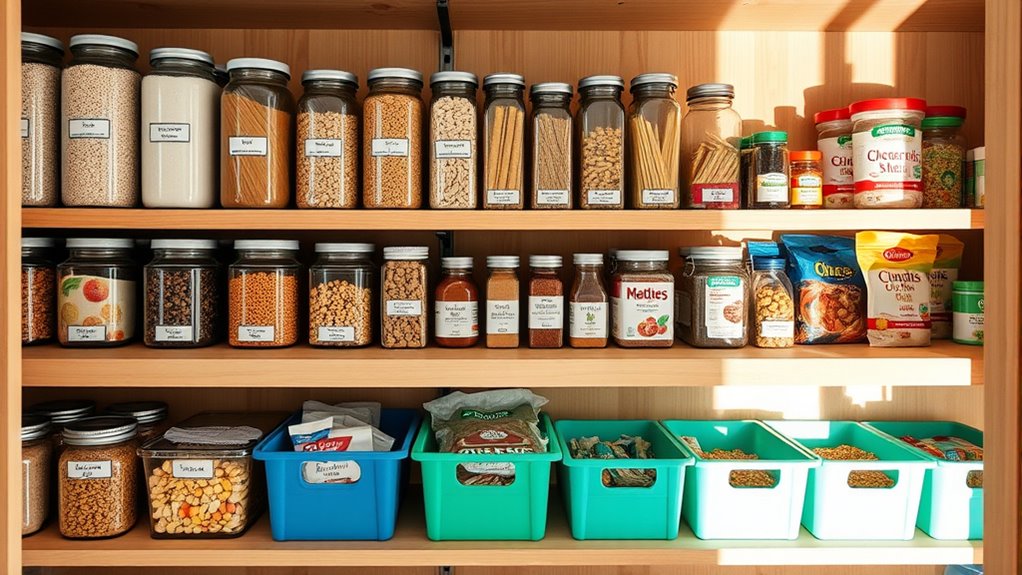

To make your pantry easily accessible, start by sorting similar items together, like snacks, grains, and canned goods. Use clear, uniform containers with lids for visibility and stackability, and assign color codes to different categories for quick identification. Label each container with bold, easy-to-read labels that include expiration dates. Keep frequently used items at eye level and less-used items higher or lower. Keep your system consistent; you’ll discover simple tips that can transform your space as you explore further.
Key Takeaways
- Use clear, front-facing labels with bold text to identify container contents and expiration dates easily.
- Implement a color coding system to categorize items like grains, snacks, and canned goods for quick visual identification.
- Group similar items together on adjustable shelves or baskets to streamline access and maintain organization.
- Store frequently used items at eye level and less-used items on higher or lower shelves for convenience.
- Regularly review, relabel, and reorganize your pantry to keep it tidy, prevent waste, and ensure easy access.

Organizing your pantry can make meal prep quicker and reduce waste, but it all starts with proper labeling and sorting. When you set out to streamline your space, the right storage containers are essential. Choose clear containers that allow you to see what’s inside at a glance, saving you time and preventing unnecessary rummaging. Investing in uniform storage containers also creates a tidy, cohesive look, making it easier to maintain the organization over time.
Color coding your storage containers can further enhance your system. Assign different colors to categories such as grains, snacks, baking supplies, and canned goods. For example, use blue for grains, red for snacks, green for baking ingredients, and yellow for canned items. This visual cue helps you quickly identify where everything belongs, especially when you’re in a hurry or multitasking. It reduces the chances of misplacing items or forgetting what’s inside containers, which can lead to food waste and frustration.
Labeling is equally important. Even if your containers are transparent, labels ensure everyone in your household knows exactly where things are stored. Use a label maker or printable labels with clear, bold text. Place labels on the front of each container, and if possible, include expiration dates for perishables or items that tend to get lost. This way, you can easily check what’s running low or nearing its expiry date, helping you plan meals more efficiently and avoid throwing out spoiled food.
Sorting your pantry items by category is the next step. Group similar items together—baking supplies in one section, snacks in another, and canned goods in their own designated area. Use adjustable shelves or baskets within your storage containers to keep things separated and accessible. As you organize, consider the frequency of use; place everyday essentials at eye level for quick access, while less frequently used items can go on higher or lower shelves. Incorporating sound design principles such as clarity and organization can help you create a more efficient and user-friendly system.
Maintaining your system is key. Regularly check labels and containers for expired or unused items, and re-label or re-organize as needed. Keep a running list of supplies to replenish, preventing overstocking or shortages. By combining proper storage containers with thoughtful color coding and diligent labeling, you create a streamlined pantry that makes meal prep faster, keeps your food fresh longer, and minimizes waste. This proactive approach transforms your pantry into an efficient space that serves your needs and simplifies daily routines.
Frequently Asked Questions
What Are the Best Materials for Pantry Labels?
The best materials for pantry labels are waterproof vinyl or laminated paper, as they guarantee label durability and resist moisture. Using labeling techniques like clear, bold fonts and consistent sizing helps keep your labels easy to read. You should also consider adhesive labels or chalkboard labels with seals, which stay firmly in place and withstand humidity. These materials and techniques make your pantry organized and labels last longer, even in humid conditions.
How Often Should I Update My Pantry Labels?
You should update your pantry labels whenever you notice they’re fading, peeling, or no longer guarantee clear label visibility. Typically, this means checking every few months, especially if you stock up on new items or change brands. Regular updates ensure your labels maintain a good label lifespan and remain easy to read. Keeping your labels fresh helps you find what you need quickly and keeps your pantry organized and functional.
How Do I Organize Non-Food Items in My Pantry?
Did you know that 60% of people find organization boosts productivity? To organize non-food items, focus on your pantry shelf arrangement by grouping similar items together. Use container stacking techniques to maximize space, stacking items like cleaning supplies and kitchen gadgets neatly. Make certain frequently used items are at eye level for quick access, and use clear containers with labels for easy identification. This keeps your pantry tidy and functional.
What Are Storage Tips for Pantry Fragile Items?
To safeguard fragile items in your pantry, use shelf padding techniques like foam liners or felt pads to cushion them from bumps. Place fragile items on sturdy, lower shelves to minimize falls, and consider using bins or baskets to keep them secure. Always handle with care and avoid overcrowding. These tips guarantee fragile item protection and keep your pantry organized and safe for delicate items.
How Can I Prevent Pests in My Organized Pantry?
To prevent pests in your organized pantry, prioritize pest prevention by sealing all food containers tightly. Maintain pantry cleanliness by regularly sweeping and wiping shelves to remove crumbs and spills that attract pests. Store food in airtight containers and avoid leaving open packages. Inspect items frequently for signs of pests, and clear out any contaminated products. Implementing these habits keeps pests at bay and keeps your pantry fresh and safe.
Conclusion
By labeling and sorting your pantry, you’ll transform chaos into a well-oiled kitchen masterpiece. No more digging through endless cans or hunting for that elusive spice—you’ll save time and sanity. With everything perfectly organized, you might even feel like a culinary wizard every time you cook. So go ahead, take charge of your pantry today, and turn it into the most organized space in your home. Trust me, your future self will thank you endlessly!