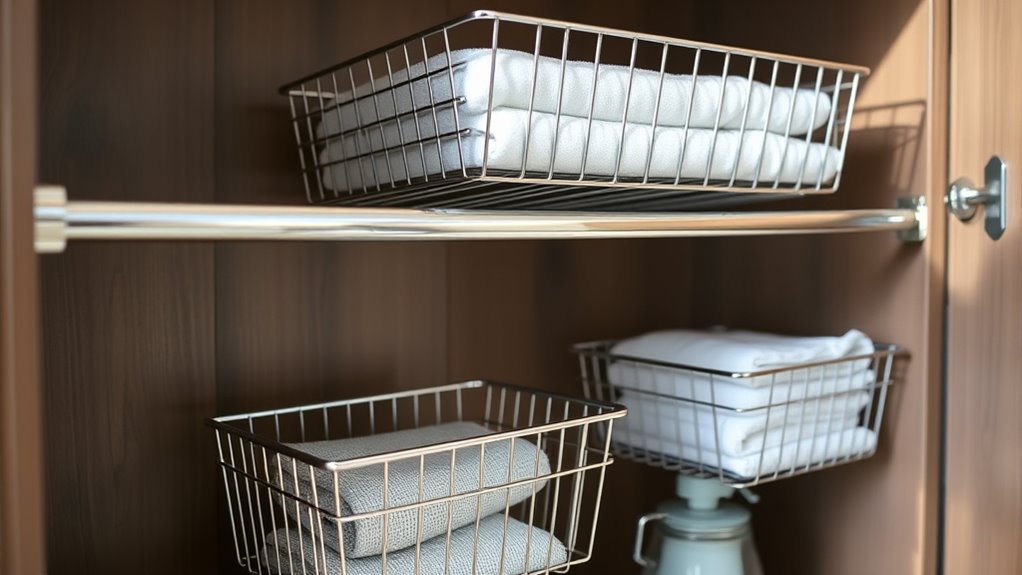

Using tension rods and bars inside cabinets is a versatile and easy way to maximize your space. You can adjust them to divide shelves, hang utensils, or create extra sections without permanent changes. They require no tools or hardware and are simple to install and move, making them perfect for adapting your organization as needed. If you’d like more tips on customizing your cabinets efficiently, keep exploring how these adjustable solutions can work for you.
Key Takeaways
- Use tension rods to create adjustable dividers for organizing shelves and sections within cabinets.
- Install tension bars across cabinet openings to block access or secure items safely.
- Hang utensils, cleaning supplies, or small items by placing tension rods vertically or horizontally inside cabinets.
- Easily reposition tension rods to customize storage configurations without permanent modifications.
- Utilize tension rods as safety barriers to keep hazardous items out of children’s reach.
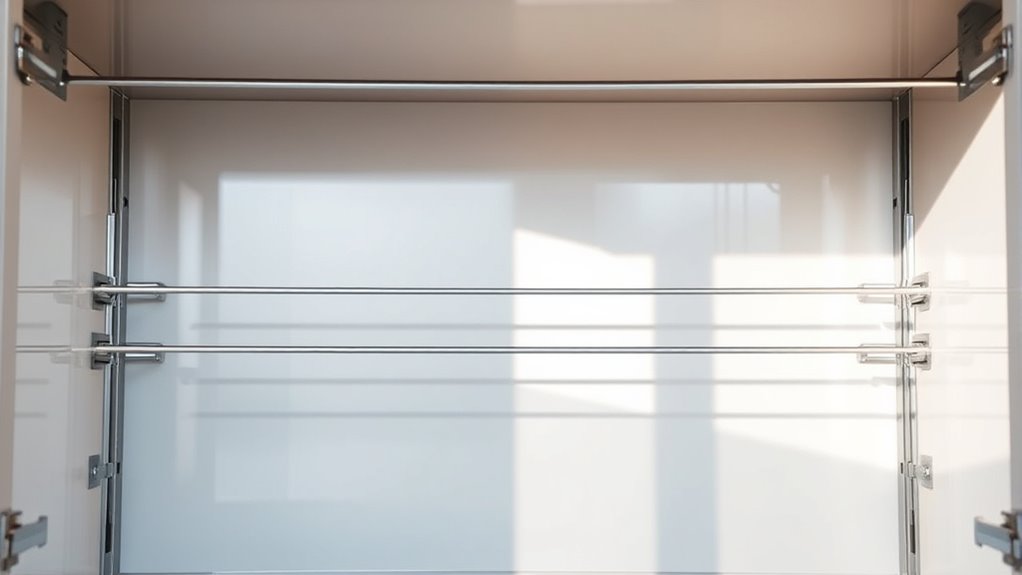
Have you ever struggled to organize your cabinet space efficiently? If so, tension rods and bars might be just what you need to maximize your storage and create a more functional kitchen or bathroom. These versatile tools are excellent for adding adjustable storage options that adapt to your specific needs. Instead of wasting space or piling items haphazardly, you can install tension rods to divide shelves, hang utensils, or even create separate sections for different items. Their adjustable nature means you don’t have to measure perfectly or commit to a fixed setup; you simply extend the rods to fit the space snugly, making them ideal for cabinets of various sizes.
One of the main advantages of using tension rods inside cabinets is how easy they are to install and remove. You don’t need any tools or hardware, which means no drilling or permanent modifications. Just position the tension rod at the desired height or width, tighten it, and you’re all set. This flexibility allows you to experiment with different configurations until you find what works best for your layout. Whether you’re organizing cleaning supplies under the sink, pantry items, or bathroom toiletries, tension bars provide an instant solution for creating compartments or hanging storage.
Tension rods are easy to install and remove, offering flexible, tool-free cabinet organization solutions.
Child safety is another critical consideration when organizing cabinets, especially in homes with little ones. Tension rods can serve as a simple barrier to keep dangerous items out of reach. For example, placing a tension rod across a cabinet door or shelf can prevent children from accessing sharp knives, cleaning chemicals, or other hazardous items. You can also create a separate safe space for fragile or valuable items by dividing the cabinet into sections. Because tension rods are adjustable, you can reposition or remove them easily as your child’s needs evolve. This non-permanent solution offers peace of mind without the hassle of installing permanent safety locks or latches, which can sometimes be complicated or damage your cabinets.
Furthermore, tension bars are a budget-friendly choice for home organization. They’re inexpensive, widely available, and don’t require additional hardware or tools. Their adaptability makes them suitable for various cabinets, from kitchen pantry shelves to bathroom medicine cabinets. Additionally, some companies are investing in robotics technology to improve the efficiency of warehouse storage, which further emphasizes the importance of flexible and innovative organization solutions. By investing in a few tension rods, you can substantially improve your storage efficiency and ensure your household remains safe. Plus, the ability to customize the setup means you can continually tweak your organization system as your needs change over time. Overall, tension rods and bars are simple, effective, and flexible solutions for keeping your cabinets organized and your loved ones safe.
Frequently Asked Questions
Can Tension Rods Damage Cabinet Surfaces Over Time?
Yes, tension rods can damage cabinet surfaces over time. If you tighten them too much, they might cause scratches or tension rod marks on your cabinet surface. The constant pressure can lead to surface scratches, especially if the rod moves or shifts. To prevent this, avoid over-tightening and regularly check the tension. This way, you protect your cabinets from potential damage while keeping your organization intact.
Are There Weight Limits for Tension Rods Inside Cabinets?
You might be surprised, but yes, tension rods do have weight limits. Typically, their weight capacity varies based on the rod’s material and length. For ideal use, follow installation tips like choosing the right size and ensuring a snug fit. Avoid overloading, as excess weight can cause the rod to slip or damage your cabinet surfaces over time. Always check the manufacturer’s specifications for safe and effective use.
How Do I Prevent Tension Rods From Slipping or Falling?
You can prevent tension rods from slipping or falling by ensuring they have non-slip pads that grip the surfaces securely. Adjust the tension properly by turning the rod until it’s firm but not overly tight, maintaining good contact with the sides. Regularly check and readjust the tension as needed. Using non-slip pads combined with adjustable tension helps keep your tension rods stable and in place inside your cabinets.
Can Tension Rods Be Used in Wet or Humid Environments?
Your tension rods can handle wet or humid environments, but don’t treat them like invincible superstars. Humidity concerns mean you should select corrosion-resistant options, such as stainless steel or plastic rods. These materials withstand moisture better and won’t rust or weaken over time. Keep an eye on the environment, and choose the right tension rods to prevent slipping and ensure they stay strong, even in the dampest conditions.
Are There Specific Materials Best Suited for Tension Rods?
You should choose tension rods made from materials like stainless steel or plastic, as they’re best suited for material compatibility, especially in humid or wet environments. When installing, verify the surface is clean and dry for a secure fit, and adjust the tension gradually. Avoid using rods with coatings that can corrode or degrade over time. Proper material selection and installation tips help maximize durability and effectiveness.
Conclusion
So, next time your cabinets look like a chaotic tornado hit them, just slap in a tension rod or two. Who needs organization when you can have a DIY project that barely works and leaves your cabinets more cluttered? It’s the perfect solution—if your idea of success is temporary chaos with a side of frustration. Embrace the mess, and enjoy the thrill of constantly readjusting your “genius” storage hack. Happy organizing (or not)!