If your De’Longhi espresso machine is leaking water unexpectedly, it can disrupt your daily coffee routine and may indicate an underlying problem. Understanding the common causes and knowing how to troubleshoot safely can save you time and money. This guide provides practical, step-by-step instructions to help you identify the cause of leaks and fix them efficiently.

Get kitchen gear delivered free with Prime
- Fast, free delivery on millions of items
- Prime Video, Amazon Music and more included
- Member-only deals all year
Whether your machine is leaking during operation or after use, we’ll cover the most frequent issues, including water reservoir problems, internal blockages, and faulty seals. Always remember, safety first—unplug your machine before performing any maintenance or repairs.
Key Takeaways
| Identify common leak sources | Water reservoir, seals, and internal components are typical leak points. |
| Check water reservoir & connections | Ensure the reservoir is properly seated and not cracked. |
| Inspect seals & gaskets | Worn or damaged seals can cause leaks; replacing them often resolves the issue. |
| Clean internal components | Descale and clean to prevent mineral buildup that causes blockages and leaks. |
| Perform safe troubleshooting | Always unplug the machine before inspection or repairs to avoid electric shock. |
Step 1: Turn Off and Unplug Your Machine
Before inspecting your De’Longhi espresso machine, ensure it is turned off and unplugged from the power source. This prevents electrical hazards and allows safe handling of internal components. Wait a few minutes for the machine to cool down if it was recently used.
Step 2: Inspect the Water Reservoir and Connections
- Remove the water reservoir carefully and check for any cracks or damage. If you notice a crack, replacing the reservoir is necessary.
- Ensure the reservoir is properly seated back into the machine. Misalignment can cause leaks during operation.
- Check the water inlet and outlet connections for any loose or clogged parts. Tighten or clean as needed.
Step 3: Check the Seals and Gaskets
Worn or damaged seals and gaskets are common culprits for water leaks. Locate the seals around the brew group, water inlet, and other internal parts. If any seal appears cracked, hardened, or deformed, replace it with a new one designed for your model.
Proper sealing ensures no water escapes during operation, maintaining both safety and performance.
Step 4: Clean and Descale Your Machine
Mineral buildup can block internal pathways, causing water to leak or spill. Use a descaling solution like the De’Longhi EcoDecalk Descaler, following the manufacturer’s instructions. Regular descaling (about every 2-3 months depending on usage) helps prevent leaks caused by limescale buildup.
Remove and clean removable parts, including the drip tray and brew unit, to ensure smooth operation.
Step 5: Test the Machine After Repairs
Once you’ve performed the above steps, reassemble your machine, ensuring all parts are correctly installed. Plug it back in and run a short brewing cycle without coffee to observe if the leak persists. Watch for water seeping from any repaired or inspected parts.
If the leak continues, further inspection or professional repair may be necessary.
The Products in This Guide
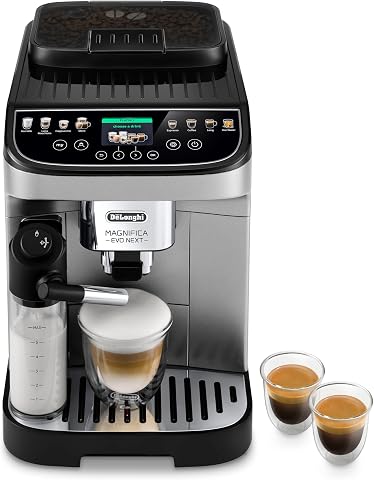
De’Longhi Magnifica Evo Next Fully Automatic Espresso Ma
- ✔ Weight: 22 lbs
- ✔ Water Capacity: 1.8L
- ✔ Voltage: 120V

De’Longhi Replacement Water Filter
- ✔ Weight: 8 oz
- ✔ Filter Type: Replaceable cartridge
- ✔ Replacement Interval: Every 2 months
De’Longhi Magnifica Evo Next Fully Automatic Espresso Ma
The De’Longhi Magnifica Evo Next Fully Automatic Espresso Machine offers a comprehensive brewing experience with a built-in grinder and Milk Frother. Its design emphasizes ease of use and versatility, making it a popular choice among coffee enthusiasts. Proper maintenance, including addressing leaks early, ensures longevity and optimal performance.
Pros:
- Programmable with 13 recipes
- Built-in conical burr grinder
- Automatic milk frother for lattes and cappuccinos
- User-friendly touch controls
Cons:
- Requires regular descaling
- Potential for internal leaks if not maintained
- Complex repairs may need professional assistance
Best for: Home baristas seeking a versatile, all-in-one espresso machine
Not ideal for: Users looking for a simple, manual espresso maker
Bottom line: Regular maintenance and timely repairs keep your De’Longhi working leak-free and brewing perfect coffee.
De’Longhi Replacement Water Filter
Using a water filter like the De’Longhi Replacement Water Filter can significantly improve water quality, reduce mineral buildup, and prevent leaks caused by scale. It’s easy to install and works seamlessly with compatible models.
Pros:
- Optimizes water quality
- Prevents lime scale buildup
- Easy to install and replace
- Enhances coffee flavor
Cons:
- Requires periodic replacement
- Additional cost over time
- Only compatible with select models
Best for: Maintaining machine performance and water purity
Not ideal for: If your machine is heavily scaled or damaged, replacement parts or descaling may be necessary.
Bottom line: Use a water filter regularly to extend your espresso machine’s lifespan and improve coffee taste.
Frequently Asked Questions
Why is my De’Longhi espresso machine leaking water?
Leaking can be caused by a cracked water reservoir, worn gaskets, mineral buildup inside the machine, or loose connections. Regular maintenance can prevent most issues.
How do I know if the water reservoir is the source of the leak?
Check if the reservoir is properly seated and inspect for cracks or damage. Also, see if water drips from the reservoir area when the machine is running.
Can mineral buildup cause leaks?
Yes, mineral deposits from hard water can clog internal passages, leading to leaks or spills. Descaling the machine regularly helps prevent this.
How often should I descale my De’Longhi espresso machine?
Descaling is recommended every 2-3 months, or more frequently if you notice slower brewing or water leaks. Use a suitable descaler like De’Longhi EcoDecalk.
Is it safe to repair internal seals myself?
If you are comfortable with small appliance repairs, replacing seals can be safe. Otherwise, consult a professional technician to avoid damaging your machine or voiding the warranty.
Keep Your Espresso Machine Leak-Free and Brewing Perfectly
Regular maintenance and prompt troubleshooting are key to preventing water leaks in your De’Longhi espresso machine. By inspecting the water reservoir, replacing worn seals, and descaling periodically, you can extend your machine’s lifespan and enjoy consistently great coffee. When in doubt, professional repair services can help ensure your machine remains in top condition.
Affiliate disclosure: As an Amazon Associate we earn from qualifying purchases. Prices and availability are accurate as of the time of publishing.
Halloween Picks
halloween
As an affiliate, we earn on qualifying purchases.