
TL;DR

Get kitchen gear delivered free with Prime
- Fast, free delivery on millions of items
- Prime Video, Amazon Music and more included
- Member-only deals all year
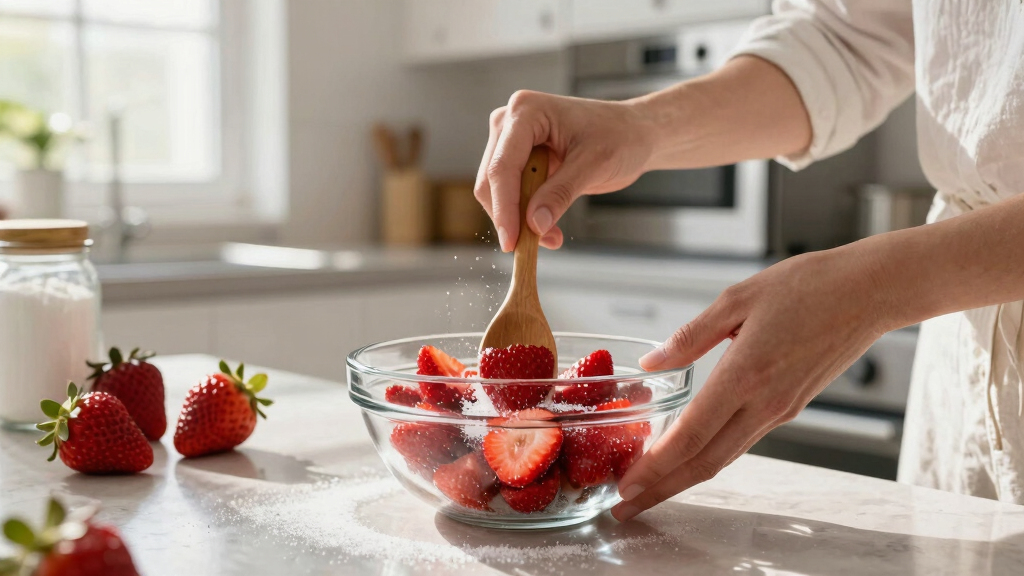
Macerating strawberries with sugar is a straightforward technique that enhances their sweetness and softens their texture without cooking. It involves mixing berries with sugar and letting them sit to release juices, creating a flavorful syrup.
Bon Appétit has published a detailed guide on how to macerate strawberries with sugar, emphasizing its ease and ability to elevate the fruit’s natural flavor, making it a popular technique for summer desserts.
The process involves washing and preparing strawberries, then tossing them with sugar and refrigerating for at least 30 minutes. During this time, the berries release their juices, forming a sweet syrup and softening slightly. The method requires no heat and can be customized with additional ingredients like citrus zest, vanilla, or spices.
According to the guide, the duration of maceration influences the texture: 30 minutes yields lightly softened berries, 1–2 hours results in juicier, more concentrated flavor, and overnight allows for very soft, jam-like berries. Frozen strawberries can also be macerated, though they tend to release more liquid due to cell wall breakdown, making them ideal for toppings or smoothies.
Why It Matters
This technique is significant because it offers a simple, no-cook way to enhance fresh strawberries, making them more versatile for desserts like shortcakes, ice cream toppings, and yogurt. It also allows home cooks to maximize peak-season produce with minimal effort, adding depth and sweetness without extra cooking or complex ingredients.
Products Worth Considering

Cuisinart Stand Mixer, 12 Speed, 5.5 Quart Stainless Steel Bowl, Chef’s Whisk, Mixing Paddle, Dough Hook, Splash Guard w/ Pour Spout, Ruby R

Ninja Luxe Café Premier 3-in-1 Espresso Machine, Stainless Steel, ES601

Breville Smart Grinder Pro Conical Burr Coffee Grinder, Brushed Stainless Steel
As an affiliate, we earn on qualifying purchases.
Background
Maceration is a traditional culinary method used to tenderize and flavor fruits by soaking them in sugar or other liquids. This practice has gained popularity in recent years as a quick way to improve fresh fruit dishes, especially during peak strawberry season when ripe berries are abundant. The recent publication from Bon Appétit provides updated, practical tips tailored for home cooks.
“Maceration is a process in which produce, usually fruit, sits in a flavorful substance such as sugar, which tenderizes the ingredient and intensifies its natural flavor.”
— an anonymous researcher from Bon Appétit
What Remains Unclear
It is not yet clear how long the flavor enhancement lasts beyond three days or how variations in sugar types impact the final taste and texture. Further testing may be needed for precise timing recommendations for different fruits or added ingredients.
What’s Next
Next steps include experimenting with different flavor additions, such as citrus zest or spices, and incorporating macerated strawberries into a variety of recipes. Additional guidance on storage and shelf life may also be provided as more home cooks adopt the technique.
Key Questions
Can I use other sweeteners besides sugar?
Yes, honey, maple syrup, brown sugar, and other sweeteners can be used, each adding its own flavor profile to the macerated strawberries.
How long should I leave strawberries to macerate for best results?
For lightly softened berries, 30 minutes is sufficient. For juicier, more concentrated flavor, 1–2 hours is recommended. For a jam-like consistency, overnight is ideal.
Can I macerate frozen strawberries?
Yes, frozen strawberries can be macerated. Toss them with sugar and let them thaw in the refrigerator, which results in a softer, syrupier mixture suitable for toppings or smoothies.
Source: Bon Appétit