Many people mistakenly believe leftovers are safe forever if kept in the fridge, but that’s not true. You should consume leftovers within 3-4 days and store them in airtight containers at or below 40°F. Reheat leftovers thoroughly to avoid bacteria growth, and watch out for signs of spoilage like sour smells or slime. Proper organization and temperature control are key to keeping food fresh longer. Stick around to learn how to protect your health through smarter fridge habits.

Get kitchen gear delivered free with Prime
- Fast, free delivery on millions of items
- Prime Video, Amazon Music and more included
- Member-only deals all year
Key Takeaways
- Many people forget to check and maintain the fridge temperature at 40°F, risking bacterial growth on leftovers.
- Storing leftovers in non-airtight containers accelerates spoilage and cross-contamination risks.
- Reheating leftovers improperly or for too short a time can leave bacteria alive, causing foodborne illness.
- Failing to label and rotate leftovers leads to waste and consuming spoiled food unknowingly.
- Leaving leftovers in the danger zone (40°F-140°F) for too long promotes bacteria growth and spoilage.
airtight food storage containers
As an affiliate, we earn on qualifying purchases.
As an affiliate, we earn on qualifying purchases.
How Long Are Leftovers Safe to Keep in the Fridge?
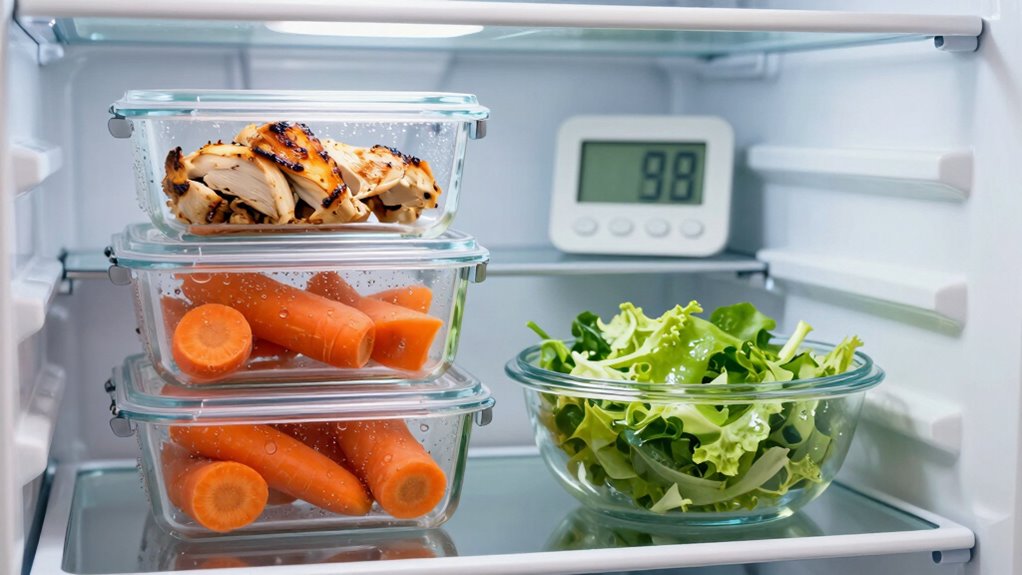
Ever wonder how long leftovers stay safe in your fridge? The key is understanding that bacteria can grow quickly if food isn’t stored properly, increasing the risk of food poisoning. Generally, leftovers should be eaten within three to four days. After this period, bacterial growth can accelerate, making the food unsafe to consume. Even if leftovers look and smell fine, bacteria like Salmonella or Listeria can still be present. Proper refrigeration slows bacterial growth but doesn’t stop it entirely. To reduce the risk of food poisoning, always label leftovers with the date you stored them. Additionally, maintaining an optimal temperature range in your fridge can significantly extend the safety of your leftovers. If you’re unsure whether leftovers are still safe, it’s better to discard them. Eating spoiled food can lead to illness, so keep track of storage times diligently. Understanding color accuracy can also help in assessing whether your food looks fresh and appealing before consumption.
digital refrigerator thermometer
As an affiliate, we earn on qualifying purchases.
As an affiliate, we earn on qualifying purchases.
What’s the Best Way to Store Leftovers to Keep Them Fresh?
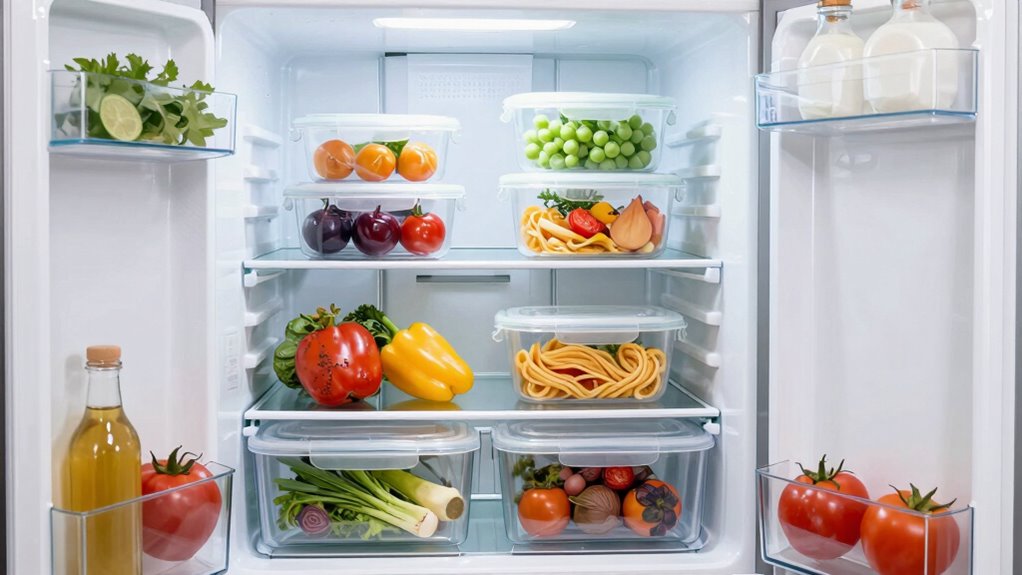
To keep your leftovers fresh, choose containers that seal tightly to prevent air exposure. Store your food at the right temperature, ideally below 40°F, to slow bacteria growth. Proper containers and temperature control are key to extending freshness and ensuring safety.
Proper Container Selection
Choosing the right containers is essential to keeping leftovers fresh and safe to eat. Opt for airtight containers to prevent moisture loss and keep bacteria out. These containers help maintain the right humidity, extending the shelf life of your food. Clear containers are ideal because they allow you to see what’s inside without opening them, reducing unnecessary exposure. Incorporating digital concepts into your food storage strategy can enhance your understanding of food safety and preservation techniques. Be sure to use containers that fit your leftovers without overcrowding, which helps prevent crushing or spoilage. Always label your containers with clear labeling, including the date, so you know exactly when to consume or discard the leftovers. Proper container selection minimizes air exposure and keeps food fresh longer, reducing waste and ensuring your leftovers stay safe to eat. Consider using non-toxic cleaning solutions to sanitize your containers before storing food, ensuring they are free from contaminants.
Optimal Storage Temperature
Sure! Here’s your revised article subheading content with the requested modifications:
—
Proper container selection helps keep leftovers fresh, but maintaining the right storage temperature is equally important. You should set your fridge to around 40°F (4°C) to slow bacterial growth and keep food safe. Avoid temperature fluctuations by not leaving the door open too long, as this can cause inconsistent temperatures. Fluctuations can lead to frost formation, which impairs the fridge’s efficiency and may cause uneven cooling. Keeping your fridge organized can also aid in maintaining optimal campsite selection temperatures for your food. Studies suggest that astrological signs can influence self-image, which may affect how we perceive the freshness of our leftovers. To ensure food safety, consider the benefits of a raw food diet for pets as it emphasizes fresh and unprocessed ingredients. Regularly incorporating portable power solutions can help you maintain proper refrigeration in off-grid situations. Keep leftovers in airtight containers to prevent moisture loss and odor transfer. Regularly check your fridge’s temperature with a thermometer, especially after power outages or frequent opening. Storing leftovers at the suitable temperature reduces spoilage risk, preserves quality, and ensures leftovers stay safe to eat longer. Incorporating traditional techniques can enhance the longevity and safety of your food storage practices.
—
Let me know if you need any further changes!
leftover food containers with labels
As an affiliate, we earn on qualifying purchases.
As an affiliate, we earn on qualifying purchases.
How Can You Reheat Leftovers Safely Without Losing Flavor?
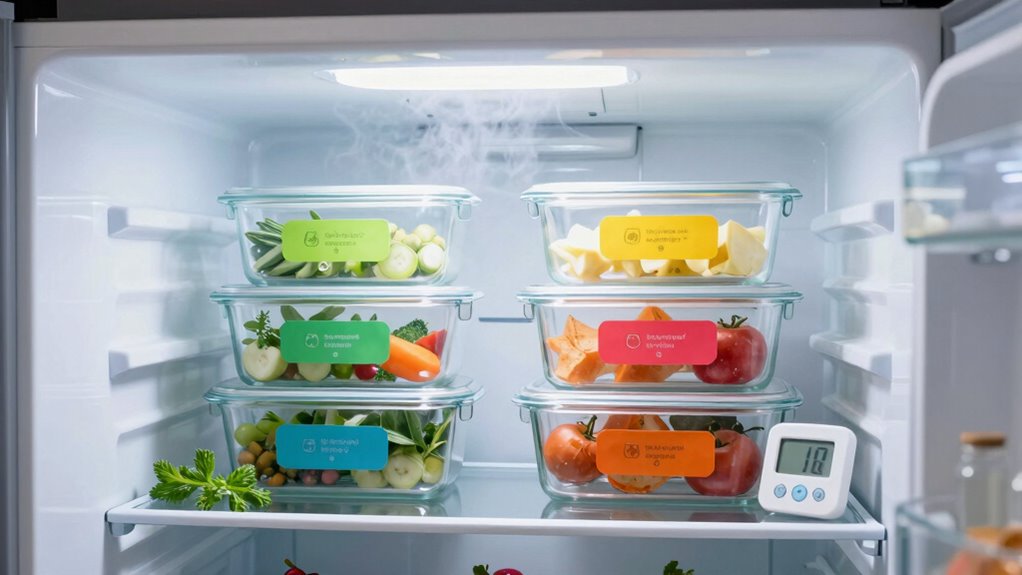
Reheating leftovers safely while preserving their flavor requires a careful approach. To prevent flavor loss, use gentle reheating techniques like stovetop or microwave on low power. Stir frequently to distribute heat evenly, avoiding hot spots that can dry out food. Cover dishes to lock in moisture, maintaining juiciness and aroma.
| Reheating Method | Best Practice |
|---|---|
| Microwave | Use medium power, stir often, cover with vented lid |
| Stovetop | Reheat over low heat, stirring regularly |
| Oven | Reheat at 325°F, covered with foil |
| Slow Cooker | Set to low, cook until steaming |
These reheating techniques help preserve flavor, ensuring your leftovers taste just as good as when first cooked.
As an affiliate, we earn on qualifying purchases.
What Are Common Mistakes That Can Make Leftovers Unsafe?
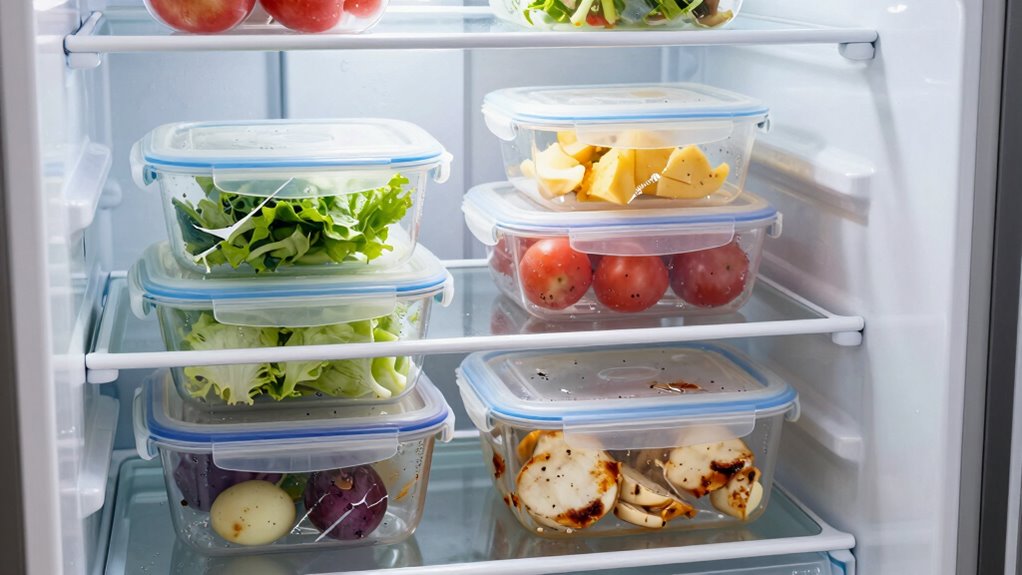
One common mistake that can compromise food safety is leaving leftovers at unsafe temperatures for too long. When food stays in the danger zone (between 40°F and 140°F), bacteria multiply rapidly, increasing the risk of food poisoning. Failing to store leftovers promptly or neglecting to reheat them properly can lead to illness. Cross contamination is another mistake to avoid; placing raw or contaminated foods near cooked leftovers can transfer harmful bacteria. Using the same utensils or cutting boards without cleaning them increases this risk. Additionally, neglecting to cover leftovers can cause bacteria to spread and spoilage to accelerate. To keep leftovers safe, always refrigerate promptly, reheat thoroughly, and practice proper hygiene to prevent food poisoning and cross contamination. Additionally, be aware that indoor air quality can be impacted by the presence of bacteria and mold in spoiled food.
How Do You Know When Leftovers Have Gone Bad?
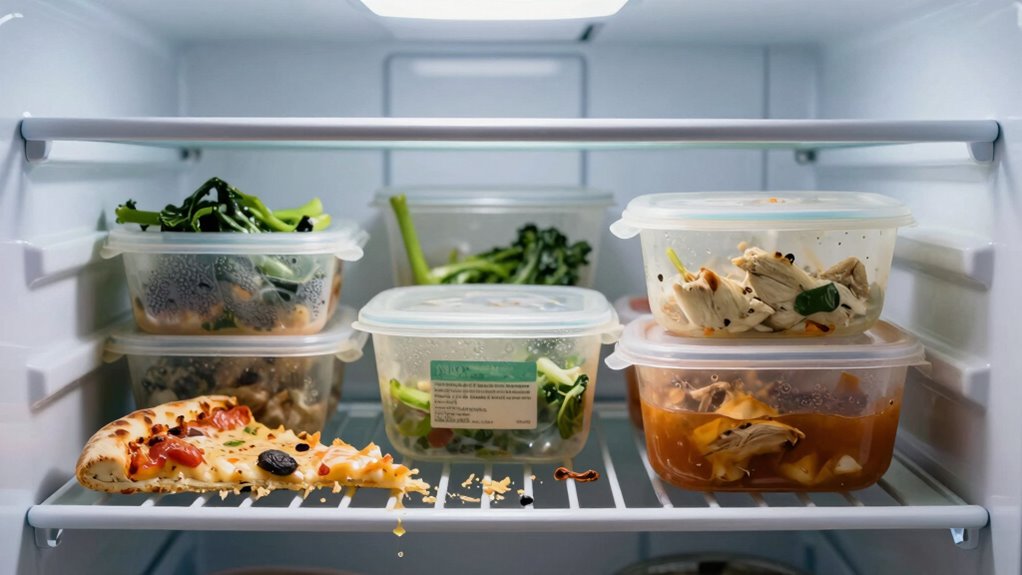
Knowing when leftovers have gone bad is essential for avoiding foodborne illnesses. Spoilage indicators, such as a sour smell, slimy texture, or an unusual appearance, signal bacteria growth and potential danger. If food develops a foul odor or changes color, it’s best to discard it immediately. Pay attention to any mold or surface discoloration—these are clear signs of spoilage. Even if leftovers look okay, if they’ve been in the fridge beyond 3-4 days, bacteria may have multiplied to unsafe levels. Remember, bacteria growth doesn’t always produce a strong smell or visible signs, so when in doubt, throw it out. Properly stored leftovers can last longer, but always rely on your senses and common safety guidelines to determine if food is still safe to eat. Additionally, understanding cookie preferences can help you manage your digital food safety resources more effectively. To enhance your food safety knowledge, consider learning about digestible pre-swim carbs, as they can provide essential insights into nutrition and food storage. It’s also important to remember that food safety guidelines, such as proper food storage, are crucial for minimizing risks in your kitchen. Proper food storage techniques, including heat buffering, can significantly extend the shelf life of your leftovers. Moreover, maintaining high-quality content on food safety can help raise awareness and improve public understanding of proper food handling practices.
How Should You Organize Your Fridge for Better Food Safety?
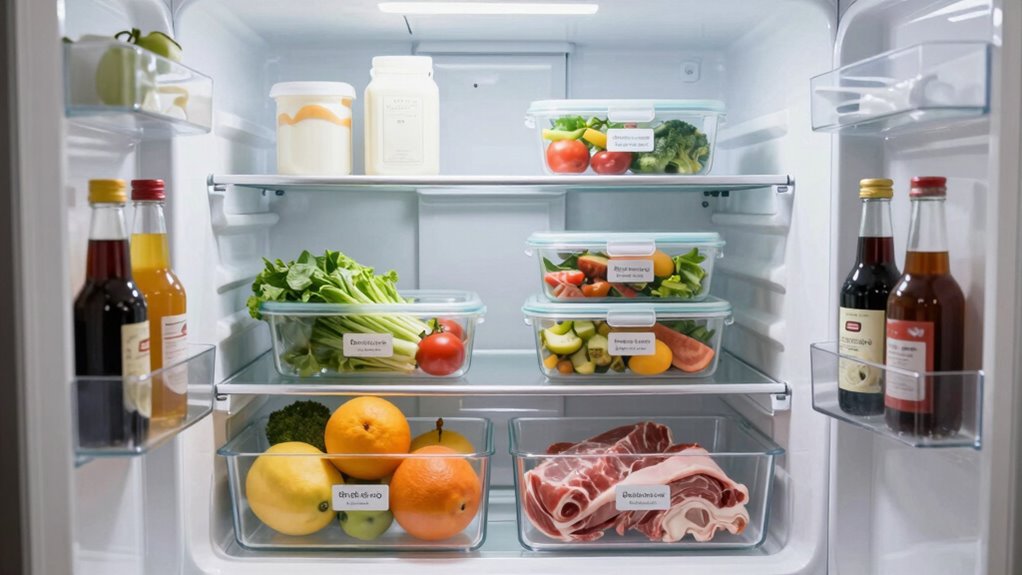
Organizing your fridge properly is key to preventing cross-contamination and keeping food safe. Keep raw meats on the bottom shelves to prevent drips from contaminating cooked or ready-to-eat foods. Store leftovers and prepared meals on middle shelves, away from raw ingredients. Use clear containers for meal prep items so you can easily see what’s inside and guarantee proper rotation. Additionally, ensure that your fridge maintains a temperature of 40°F (4°C) to optimize food preservation, as maintaining proper temperatures is critical in reducing bacteria buildup. Properly organizing your fridge also helps you reduce waste and ensures that you can easily track expiration dates. Place fruits and vegetables in the crisper drawers to maintain freshness. For freezer tips, label packages with dates and store older items in front to use first. Keep freezer temperatures at 0°F (-18°C) to prevent spoilage. Regularly clean your fridge and freezer to prevent bacteria buildup. Proper organization helps you monitor food safety and reduces waste from spoiled leftovers. Implementing burnout prevention strategies can also enhance your overall well-being while managing kitchen tasks efficiently.
Frequently Asked Questions
Can Leftovers Be Frozen to Extend Their Safety?
Yes, leftovers can be frozen to extend their safety. Use proper freezing techniques, like cooling leftovers quickly before freezing, to prevent bacteria growth. Make certain you use proper packaging, such as airtight containers or heavy-duty freezer bags, to avoid freezer burn and contamination. Label your leftovers with dates to keep track, and consume them within recommended timeframes. Freezing helps preserve leftovers safely, making sure you enjoy them later without risk.
Is It Safe to Reheat Leftovers Multiple Times?
Yes, you can reheat leftovers multiple times, but it’s not recommended for safety reasons. When reheating, use proper techniques like stovetop, microwave, or oven, ensuring even heat distribution. Follow temperature guidelines—reheat to at least 165°F (74°C)—to kill bacteria. Repeated reheating can increase the risk of bacterial growth and foodborne illness, so try to reheat only what you’ll consume and avoid multiple cycles whenever possible.
How Can I Tell if Soup or Stew Has Spoiled?
You’ll know your soup or stew has spoiled when it smells off, looks moldy or slimy, or tastes sour—these are big signs of bacterial growth. Rely on sensory evaluation: if the aroma, appearance, or taste seems abnormal, it’s better to toss it. Bacterial growth detection isn’t always visible, so trust your senses. When in doubt, discard leftovers to avoid food poisoning—your health’s worth it!
What Types of Containers Are Best for Storing Leftovers?
You should use container types like glass or BPA-free plastic for storing leftovers, as they offer better storage durability and prevent odors from seeping in or out. These containers are microwave-safe, easy to clean, and won’t stain or retain flavors. Avoid using flimsy or non-airtight containers, as they can leak or spoil quickly. Properly sealed, these containers help keep your leftovers fresh longer and maintain food safety.
How Can I Prevent Cross-Contamination in the Fridge?
You can prevent cross-contamination by storing leftovers properly. Always use sealed containers and keep raw meats separate from cooked foods. Proper labeling helps you track expiry dates, reducing the risk of consuming spoiled items. Monitor your fridge’s temperature regularly—ideally below 40°F—to inhibit bacteria growth. By following these steps, you guarantee your leftovers stay safe and your fridge stays organized, minimizing any risk of cross-contamination.
Conclusion
Sticking to fridge rules can considerably cut down on food waste—did you know that Americans throw away about 150,000 tons of food every day? By properly storing leftovers, reheating them safely, and keeping your fridge organized, you reduce your risk of foodborne illness. Remember, leftovers should be eaten within 3-4 days. Take control of your food safety habits today, and enjoy fresher, safer leftovers tomorrow!
Evergreen bestsellers Picks
bestsellers
As an affiliate, we earn on qualifying purchases.