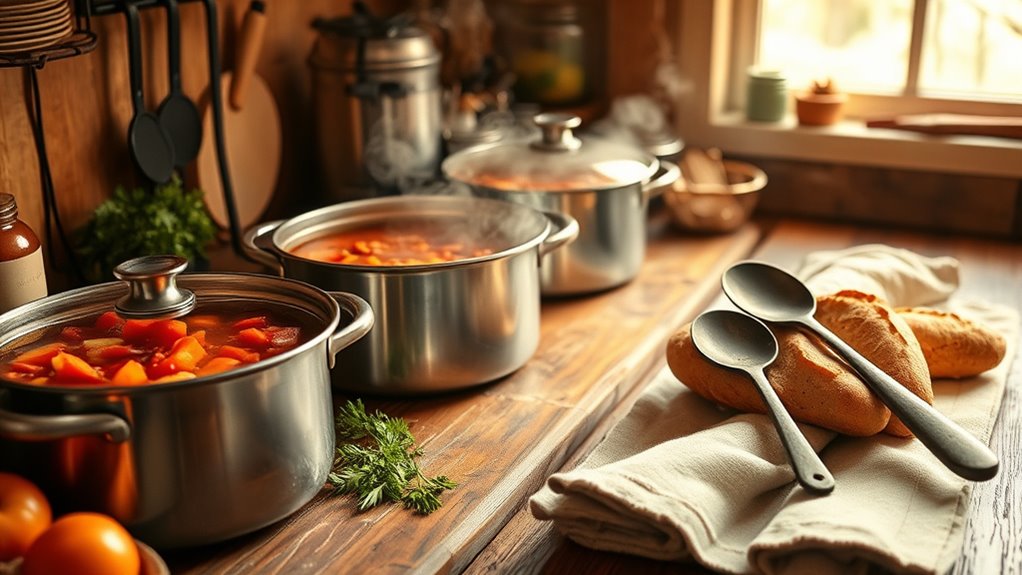
Batch cooking soups and stews is a smart way to enjoy warm, nutritious meals during colder months. By preparing large quantities ahead of time, you reduce daily cooking efforts and always have comfort food ready when needed. Use freezer-safe containers to store individual portions and reheat quickly whenever you crave a cozy meal. Keep experimenting with recipes and storage tips to make winter meal planning easier—more helpful techniques await as you continue exploring.
Key Takeaways
- Choose recipes that freeze well, like beef stew or vegetable chili, for easy batch cooking and reheating.
- Use airtight, freezer-safe containers to store soups and stews in portioned sizes for convenience.
- Cool hot dishes slightly before sealing to prevent condensation and freezer burn, then label with date.
- Reheat evenly on the stove or microwave, allowing flavors to meld and maintaining texture.
- Plan and prepare ingredients and containers ahead of time to streamline cooking and ensure a well-stocked freezer.
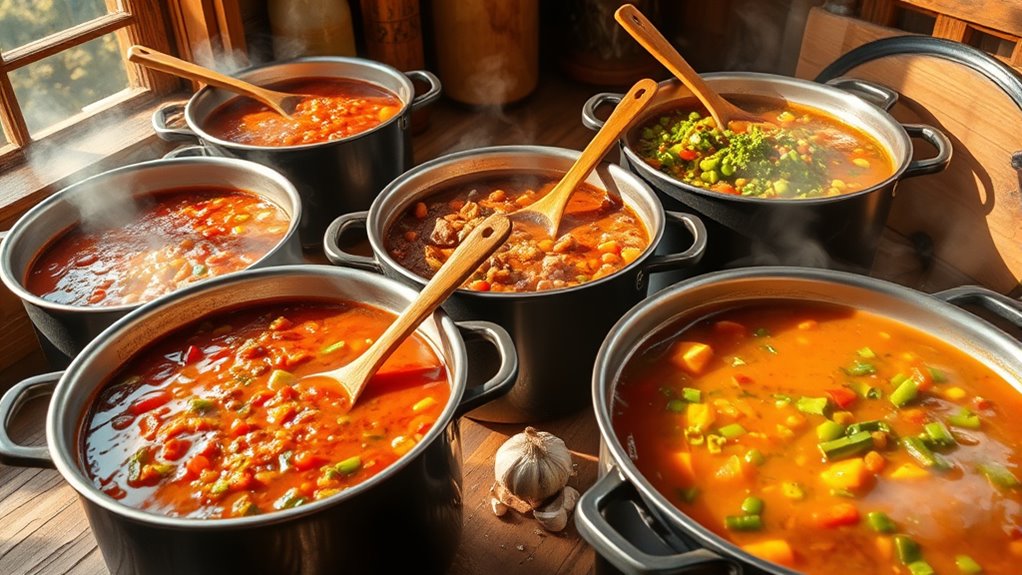
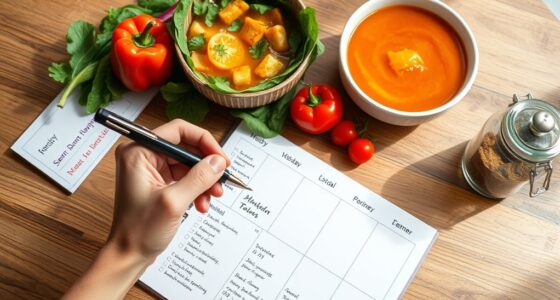
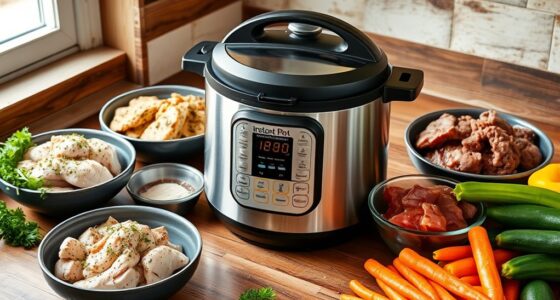
When the weather turns cold, nothing beats a warm, hearty bowl of soup or stew to keep you cozy. Preparing these meals in advance allows you to enjoy comfort food without the daily hassle. Batch cooking is your best friend during chilly months, giving you multiple nutritious servings ready to heat and serve whenever you need a quick, satisfying meal. To get started, focus on meal prep tips that streamline the process. Choose recipes that freeze well, like classic beef stew, chicken noodle soup, or vegetable chili. Keep your ingredients simple and versatile so you can mix and match flavors easily. When cooking in large quantities, it’s smart to portion out your soups and stews into individual servings. This not only makes reheating easier but also helps with meal planning and reducing waste.
Using the right storage containers makes a big difference in maintaining the quality of your batch-cooked meals. Opt for airtight, freezer-safe containers that are durable and easy to stack in your freezer. Transparent containers are especially helpful because they allow you to see what’s inside at a glance, saving you time during busy weeks. Divide your cooked soups and stews into portions that suit your household’s needs—single servings for quick lunches or larger containers for family dinners. Before sealing, let the hot dishes cool slightly to prevent condensation and maintain the integrity of the container seals. Label each container with the name and date, so you always know what’s inside and how long it’s been stored. Incorporating organic techniques such as natural preservatives can help extend the freshness of your frozen meals.
When reheating, make sure to do so evenly, either on the stove or in the microwave, to preserve flavor and texture. Soups and stews often taste even better after a day or two in the fridge, as the flavors meld together. If you notice any signs of freezer burn or off smells, discard those portions to stay safe. Incorporating meal prep tips into your routine makes batch cooking more efficient and less stressful. Prepare your containers in advance, so when you’re ready to store, everything is organized and accessible. Having a well-stocked freezer filled with homemade soups and stews means you’re always prepared for busy mornings, chilly evenings, or unexpected guests. With a little planning and the right storage solutions, you’ll enjoy warm, comforting meals all winter long without the daily effort.
Frequently Asked Questions
How Long Can Cooked Soups and Stews Be Stored Safely?
You can store cooked soups and stews safely for up to 3 to 4 days in the refrigerator. Pay attention to storage duration and spoilage indicators like sour smells, mold, or slimy textures. If you want to extend their shelf life, consider freezing them for up to 3 months. Always reheat thoroughly and discard any leftovers that show signs of spoilage, to prevent foodborne illnesses.
Can I Freeze Soups With Dairy or Pasta?
Yes, you can freeze soups with dairy or pasta, but expect some changes. Dairy may separate when frozen, leading to a grainy texture upon reheating. Pasta tends to become mushy, affecting its texture. To minimize these issues, add dairy and pasta after reheating the soup, or freeze in portions to reheat gently. This way, you preserve flavor while managing dairy separation and pasta texture.
What Are the Best Containers for Freezing Soups?
A stitch in time saves nine, so choosing the right containers matters. You should opt for airtight containers that are specifically labeled as freezer safe options. These prevent freezer burn and keep your soups fresh. Look for BPA-free plastic or glass containers with tight-fitting lids. Avoid regular storage bags, as they don’t provide the same protection. Proper containers make all the difference in maintaining flavor and quality.
How Do I Reheat Soups Without Losing Flavor?
To preserve flavor when reheating soups, use gentle reheating techniques like stovetop simmering or microwave at low power. Stir frequently to prevent uneven heating, which can cause flavor loss. Cover your container to trap moisture and enhance flavor preservation. Avoid boiling, as high heat can dull flavors. By reheating slowly and carefully, you maintain the rich taste and aroma of your soup, ensuring it tastes just as good as when freshly made.
Are There Vegetarian or Vegan-Friendly Options for Batch Cooking?
Yes, you can definitely craft comforting, cruelty-free creations with plant-based alternatives and ingredient substitutions. You might swap out meat for hearty beans, lentils, or tofu, while veggie broths boost flavor without animal products. By blending bold spices and fresh vegetables, you create vibrant, vegan-friendly dishes. This approach not only satisfies your soup cravings but also supports a sustainable, compassionate lifestyle, turning simple ingredients into spectacular, soul-warming stews.
Conclusion
Cooking soups and stews in batches keeps you warm and saves time during chilly months. Did you know that households that batch cook save up to 67% on meal prep time each week? Plus, having hearty, homemade dishes ready to go means you’re more likely to eat nutritious meals and stay cozy all season. So, embrace batch cooking this winter — it’s a simple way to stay warm, save money, and enjoy delicious comfort food anytime.