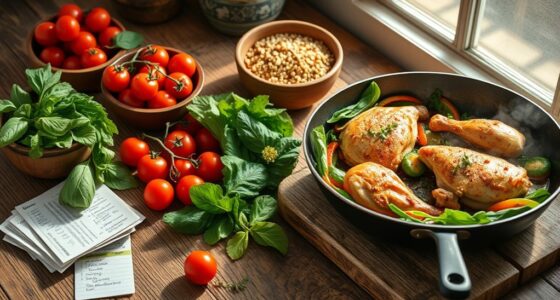
To plan budget-friendly meals with legumes and grains, focus on seasonal produce for added flavor and savings. Cook large batches of grains like rice or quinoa and prepare beans in bulk to use across multiple dishes. Incorporate fresh, in-season vegetables to boost nutrition and variety. Store extras for future meals, and combine ingredients creatively to maximize your budget. Keep these tips in mind, and you’ll discover even more ways to make nutritious, affordable meals using seasonal produce and staples.
Key Takeaways
- Plan meals around seasonal grains and legumes, buying in bulk from local markets to maximize savings.
- Cook large batches of grains and legumes to use across multiple budget-friendly meals.
- Incorporate pre-chopped seasonal vegetables to enhance flavor and reduce prep time.
- Store surplus produce and cooked grains/legumes by freezing to prevent waste and ensure availability.
- Use versatile ingredients like beans, lentils, rice, and quinoa in various recipes to diversify nutrition and flavor.

Budget meal planning is a smart way to save money without sacrificing nutrition or flavor. When you focus on inexpensive ingredients like legumes and grains, you can create satisfying meals that stretch your budget further. One key to making this work is leveraging seasonal produce, which tends to be more affordable and flavorful when it’s in peak season. By choosing seasonal fruits and vegetables, you not only save money but also enjoy fresher, tastier ingredients that elevate your meals. Incorporating seasonal produce into your meal prep tips helps you keep variety on the table and makes planning easier, since you’re working with what’s readily available and at its best.
Leverage seasonal produce for budget-friendly, flavorful, and nutritious meals that make meal planning easier.
To maximize your savings, start by planning your meals around what’s in season. Look for local farmers’ markets or grocery store deals on seasonal produce, and build your menus around those items. For example, in summer, use zucchini, tomatoes, and berries, while in winter, turn to root vegetables, cabbage, and apples. These ingredients often cost less and provide a natural flavor boost, making your dishes more appealing without extra spending. When you plan ahead, you can also buy larger quantities of seasonal produce and store or freeze them for later use. This prevents waste and ensures you always have fresh ingredients on hand for hearty grain and legume dishes. Additionally, using energy-efficient cooking methods can help reduce overall costs and conserve resources while preparing these nutritious meals.
Meal prep tips play an essential role in sticking to your budget. Cook large batches of grains like rice, quinoa, or oats, and store them in portioned containers. Similarly, prepare a big pot of beans, lentils, or chickpeas that you can incorporate into various meals throughout the week. This approach saves time and reduces the temptation to buy takeout or prepackaged foods. When you combine these staples with seasonal produce, you create versatile, flavorful meals that don’t break the bank. For example, a grain bowl topped with roasted seasonal vegetables and a sprinkle of beans offers a nutritious, filling dish that’s quick to assemble.
In addition, using meal prep tips helps you manage your ingredients better, minimizing waste and ensuring every dollar counts. Chop and store vegetables in advance, so you’re ready to add them to salads, stir-fries, or wraps. Keep in mind that using seasonal produce not only saves money but also encourages you to experiment with different flavors and textures, keeping your meals interesting. By planning your recipes around what’s in season and prepping ingredients ahead of time, you make it easier to stick to your budget while enjoying wholesome, delicious meals featuring legumes and grains. This method ensures you get maximum nutrition, flavor, and savings all in one simple, effective approach.

Instant Pot Duo 7-in-1 Electric Pressure Cooker, Slow Cooker, Rice, Steamer, Sauté, Yogurt Maker, Warmer & Sterilizer, Includes App With Over 800 Recipes, Stainless Steel, 6 Quart
7 Cooking Functions: Pressure cook, slow cook, sauté, steam, make rice, yogurt, or simply keep your meal warm—all...
As an affiliate, we earn on qualifying purchases.
Frequently Asked Questions
How Can I Store Legumes and Grains to Maximize Shelf Life?
You should store legumes and grains in airtight packaging options like sealed glass jars or heavy-duty plastic containers to maximize shelf life. Keep them in a cool, dark, and dry place, such as a pantry or cupboard. Use moisture-proof storage techniques, and consider adding oxygen absorbers or desiccants to prevent spoilage. Proper storage helps prevent pests, maintains freshness, and extends the longevity of your grains and legumes.
Are There Any Allergies Associated With Common Legumes and Grains?
You should be aware of legume allergies and grain sensitivities, as some people react to common varieties like peanuts, soy, wheat, and barley. If you suspect an allergy, avoid consuming these and watch for symptoms like hives, swelling, or digestive issues. Always check labels and consider testing with a healthcare professional before introducing new legumes or grains into your diet to prevent adverse reactions.
What Are Some Quick Recipes Using Legumes and Grains?
You can whip up quick meal ideas like a hearty lentil soup, a chickpea salad, or a grain bowl with quinoa and roasted veggies. To boost flavor, add spices, herbs, or a squeeze of lemon. These recipes are fast, affordable, and filling, making them perfect for busy days. Just cook your legumes or grains ahead of time, then mix in your favorite toppings and seasonings for a delicious, nutritious meal in minutes.
How Do I Improve the Taste of Plain Legumes and Grains?
Imagine you’re in a cozy kitchen, chopping fresh herbs—here’s how to improve plain legumes and grains. You can boost flavor with simple seasoning techniques like adding garlic, onion, or spices. Mix in a splash of broth or olive oil, and consider acid like lemon juice or vinegar. These small flavor enhancements transform bland dishes into tasty meals, making your legumes and grains more enjoyable without extra cost or effort.
Can Legumes and Grains Be Incorporated Into Breakfast Meals?
Yes, you can incorporate legumes and grains into breakfast meals. Try simple legume breakfast ideas like chickpea scramble or lentil muffins. For grain-based morning recipes, opt for oatmeal topped with nuts and seeds, or rice porridge with fruit. These options add protein and fiber, making your breakfast more filling and nutritious. Experiment with different flavors to find your favorites and start your day energized.

Instant Pot Duo 7-in-1 Mini Electric Pressure Cooker, Slow Rice Cooker, Steamer, Sauté, Yogurt Maker, Warmer & Sterilizer, Includes Free App with over 1900 Recipes, Stainless Steel, 3 Quart
7 Cooking Functions: Pressure cook, slow cook, sauté, steam, make rice, yogurt, or simply keep your meal warm—all...
As an affiliate, we earn on qualifying purchases.
Conclusion
By incorporating legumes and grains into your meal plan, you’re building a sturdy foundation for delicious, budget-friendly meals. Think of these ingredients as the roots of a thriving garden—hidden but essential, supporting a vibrant harvest of flavors. With a little planning, you’ll cultivate satisfying dishes that nourish your body and wallet alike. So, embrace these humble staples; they’re the quiet architects of your flavorful, economical kitchen.
Instant Pot Duo 7-in-1 Electric Pressure Cooker, Slow Cooker, Rice Cooker, Steamer, Sauté, Yogurt Maker, Warmer & Sterilizer, Includes App with Over 800 Recipes, Stainless Steel, 8 Quart
7 Cooking Functions: Pressure cook, slow cook, sauté, steam, make rice, yogurt, or simply keep your meal warm—all...
As an affiliate, we earn on qualifying purchases.

Instant Pot Duo Plus 9-in-1 Multicooker, Pressure Cooker, Slow Cook, Rice Maker, Steamer, Sauté, Yogurt, Warmer & Sterilizer, Includes App with Over 800 Recipes, Stainless Steel, 6 Quarts
9 Cooking Functions: Pressure cook, slow cook, sauté, sous vide, steam, sterilize, keep warm, make rice and yogurt—all...
As an affiliate, we earn on qualifying purchases.