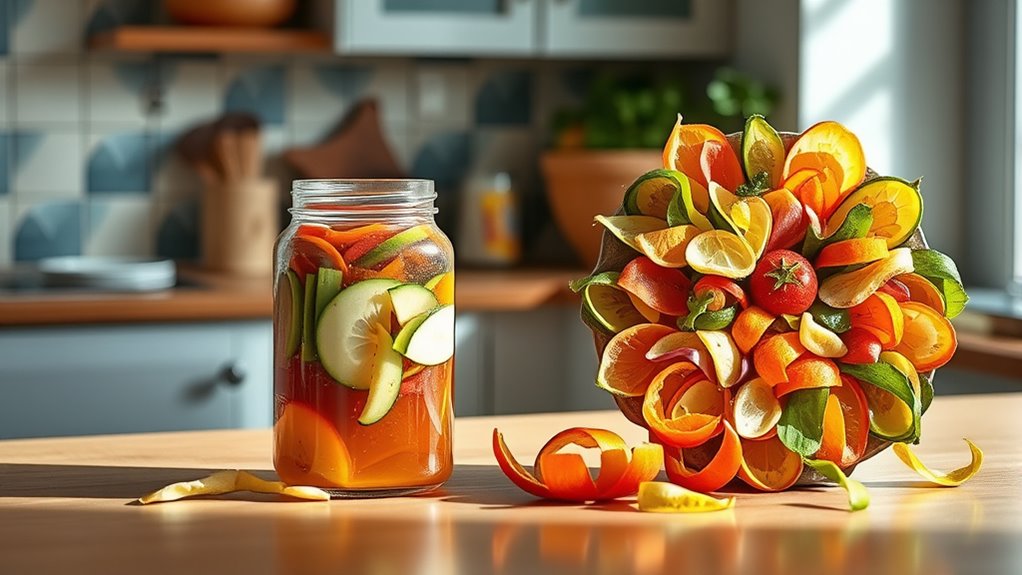

To transform leftovers creatively for zero waste, start by repurposing bread into croutons or bread pudding, or shredded cooked chicken for tacos and salads. Use cooked grains in stir-fries or stuffed peppers, and add leftover vegetables to frittatas or soups. Incorporate herbs, spices, and sauces to enhance flavors. Embracing these ideas helps reduce waste, save money, and sparks culinary experimentation—discover more inspiring ways to make the most of your leftovers beyond the basics.
Key Takeaways
- Repurpose leftovers into new dishes like soups, salads, or casseroles to minimize waste and add variety.
- Use leftover bread for croutons, bread pudding, or stuffing to extend its utility.
- Transform cooked grains and vegetables into stir-fries, stuffed peppers, or grain bowls for quick meals.
- Incorporate herbs, sauces, and spices from leftovers to enhance future dishes creatively.
- Compost vegetable peels, coffee grounds, and eggshells to support sustainable waste management.

Leftovers often get a bad rap as mere scraps or wasted food, but with a little creativity, they can become the foundation for exciting new dishes. Instead of tossing out yesterday’s roast or half-eaten vegetables, you can repurpose them into fresh meals, reducing waste and saving money. The key is to incorporate smart meal planning, which allows you to anticipate leftovers and decide how best to transform them. When you plan your weekly meals thoughtfully, you can cook in larger quantities intentionally, knowing that the extras will serve as ingredients for future dishes. This not only minimizes waste but also streamlines your cooking routine.
Smart meal planning transforms leftovers into flavorful future dishes, reducing waste and saving money.
For example, leftover roasted vegetables can be chopped and added to a hearty frittata or blended into a flavorful soup. Cooked grains like rice or quinoa can become the base for stir-fries, salads, or even stuffed peppers. By thinking ahead, you can set aside specific containers for leftovers, making it easier to visualize what’s available for your next meal. This organized approach helps prevent over-purchasing and ensures that nothing goes to waste. Plus, it saves you time during busy weekdays because you already have ingredients ready to go.
In addition to meal planning, embracing composting techniques is an eco-friendly way to handle scraps that can’t be repurposed in the kitchen. Composting allows you to convert vegetable peels, coffee grounds, eggshells, and other organic waste into nutrient-rich soil for your garden. Setting up a simple compost bin in your backyard or using community composting programs makes it easy to reduce landfill waste. Proper composting not only supports sustainability, but also closes the food loop, giving scraps a second life by nourishing future plants. When combined with strategic meal planning, composting techniques turn your food waste into a valuable resource, making your kitchen more sustainable and zero waste-friendly.
To maximize your leftover transformations, get creative with your recipes. Think of leftovers as ingredients rather than waste. Leftover bread can become croutons or bread pudding, while cooked chicken can be shredded for tacos or salads. Keep a stash of versatile ingredients, like herbs, spices, and sauces, to elevate these repurposed dishes. The more you experiment, the more you’ll discover new favorites, reducing the need to buy additional ingredients and cutting down on waste.
Frequently Asked Questions
How Can Leftovers Be Turned Into Gift Ideas?
You can turn leftovers into thoughtful gifts by exploring DIY gift crafts and repurposing ideas. For example, bake homemade treats and package them creatively, or repurpose jars and containers into personalized gift sets. Use leftover fabric for small pouches or decorate jars with labels for homemade jams or scrubs. These ideas make your gifts unique, eco-friendly, and show your effort, making your presents even more meaningful.
What Are Eco-Friendly Packaging Options for Leftover Creations?
For eco-friendly packaging options, opt for biodegradable wraps and compostable containers. These sustainable choices markedly reduce waste and environmental impact. You can wrap your leftover gifts in natural, biodegradable wraps that break down easily, or use compostable containers that return to the earth without pollution. Such stylish, sustainable solutions showcase your commitment to caring for the planet while presenting your creative leftover gifts beautifully and responsibly.
Can Leftovers Be Safely Stored for Future Use?
Yes, leftovers can be safely stored for future use if you follow proper food safety and storage tips. Make certain you cool leftovers quickly and store them in airtight containers to prevent contamination. Label containers with dates and consume within recommended timeframes, usually 3-4 days. Keep your refrigerator at the right temperature, around 40°F (4°C), and reheat leftovers thoroughly before eating to avoid foodborne illnesses.
How Do Cultural Traditions Influence Leftover Transformations?
Cultural traditions shape how you transform leftovers, acting like a guiding star in your culinary journey. Cultural culinary practices and traditional preservation methods influence whether you turn leftovers into new dishes or preserve them through fermentation, drying, or pickling. These customs carry wisdom passed down generations, turning leftovers into cherished meals that honor your heritage. Embracing these traditions not only minimizes waste but also enriches your cooking with cultural significance.
What Tools Are Essential for Creative Leftover Repurposing?
You need basic tools like scissors, glue, and paint for creative crafting and upcycling techniques. A sharp knife helps you cut leftovers precisely, while a hot glue gun secures materials quickly. Having a variety of fabric scraps, jars, and cardboard allows you to transform items easily. These tools empower you to experiment with creative crafting, turning remnants into useful or decorative pieces, maximizing your zero waste efforts through innovative leftover repurposing.
Conclusion
Now that you’ve opened the art of transforming leftovers, you’re turning your kitchen into a treasure trove of creativity. Every scrap becomes a gem waiting to shine again, proving waste isn’t inevitable but a chance to innovate. With these tips, you’re not just saving food—you’re sparking a revolution in mindful living. So go ahead, let your leftovers dance into new dishes, and watch your waste diminish like a fading sunset. Your kitchen’s magic begins now!