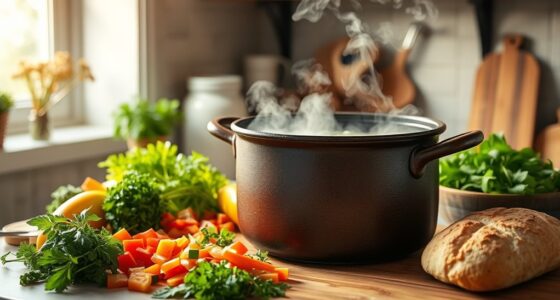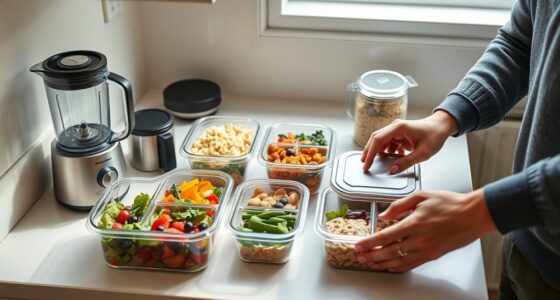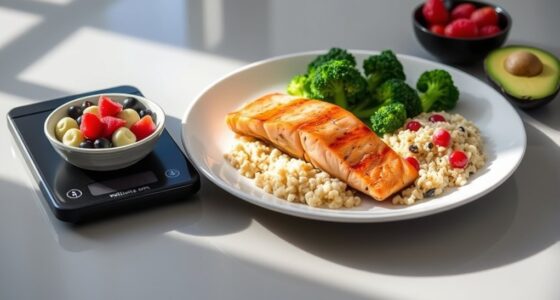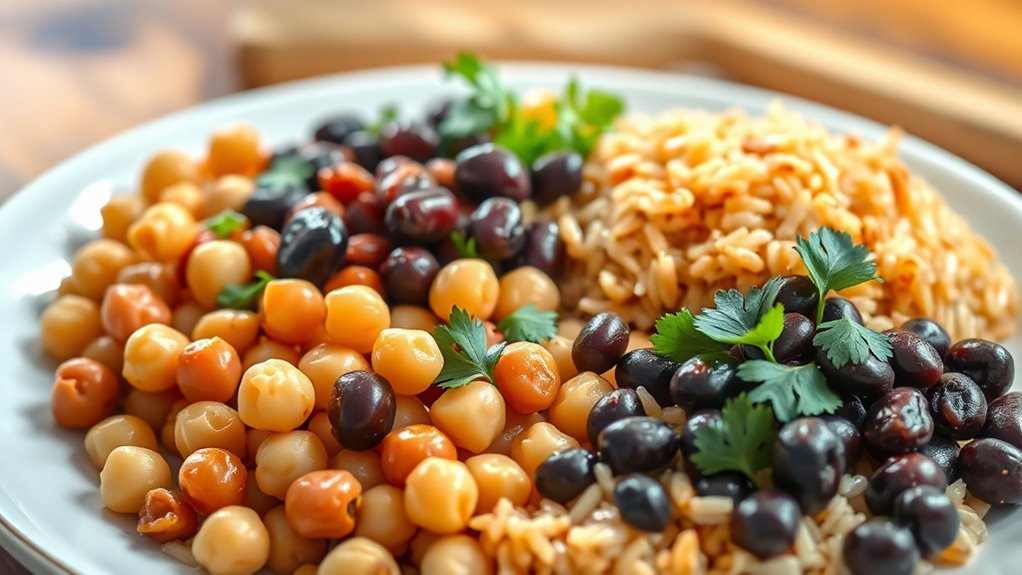

To create high-fiber meal plans with beans and whole grains, incorporate options like black bean and quinoa salads, lentil soups with brown rice, or veggie grain bowls topped with chickpeas. Snack on roasted chickpeas or whole grain crackers to boost your fiber intake throughout the day. Combining these ingredients helps regulate blood sugar, improve digestion, and promote long-term health. Keep exploring for more ideas to naturally support your gut and wellness journey.
Key Takeaways
- Incorporate beans like black beans, lentils, or chickpeas into salads, soups, and grain bowls for fiber and protein.
- Use whole grains such as oats, brown rice, and quinoa as base ingredients in meals.
- Combine beans and whole grains in dishes to enhance fiber content and support gut health.
- Prepare snacks like roasted chickpeas or whole grain crackers to boost daily fiber intake.
- Gradually increase fiber-rich foods and drink plenty of water to improve digestion and prevent bloating.
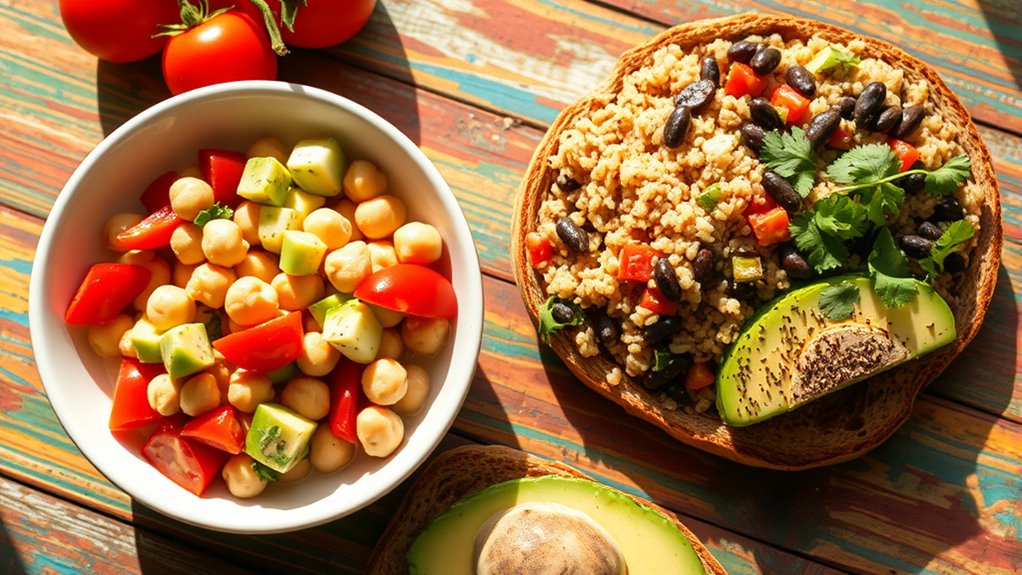
Are you looking for a simple way to improve your digestion and boost your overall health? Incorporating high-fiber meal plans that focus on beans and whole grains can be a game-changer. These foods are packed with fiber, which is essential for maintaining a healthy digestive system. By adding fiber-rich snacks into your daily routine and adopting effective digestive health strategies, you can feel more energized, reduce bloating, and support long-term wellness.
Start by replacing your usual snacks with fiber-rich options like roasted chickpeas, trail mix with nuts and dried fruit, or whole grain crackers. These snacks not only satisfy your hunger but also contribute to your daily fiber intake. When you choose snacks that are high in fiber, you’re giving your gut the nourishment it needs to function best. This can prevent constipation and promote regular bowel movements, making your digestive system more efficient. Fiber-rich snacks are easy to prepare and carry, so you’re more likely to stick with your plan throughout the day.
Swap in fiber-rich snacks like roasted chickpeas and whole grain crackers to boost digestion and keep you satisfied.
In your main meals, focus on incorporating beans—such as black beans, lentils, or chickpeas—and whole grains like oats, brown rice, or quinoa. Beans are an excellent source of soluble and insoluble fiber, which helps regulate blood sugar levels and supports the growth of healthy gut bacteria. Whole grains provide a sustained release of energy and add bulk to your stool, aiding digestion and preventing discomfort. Combining these ingredients in salads, soups, or grain bowls creates delicious, fiber-loaded dishes that satisfy your taste buds while supporting your digestive health strategies. Additionally, herbal teas like ginger or chamomile can promote relaxation and improve digestion during meals.
It’s important to increase your fiber intake gradually to avoid discomfort like gas or bloating. Drinking plenty of water alongside high-fiber foods helps fiber do its job effectively. As you develop these habits, you’ll notice your digestion improves, and your energy levels stabilize. Incorporating herbal teas into your routine can also support your digestive health and overall well-being. Consistency is key, so aim to include fiber-rich snacks and meals in your daily routine. Over time, you’ll experience fewer digestive issues and enjoy better overall health.

30-Grain Multigrain Rice Mix from Japan – Mixed Grains Blend with Barley, Beans & Sesame for Buddha Bowls & Burritos, Whole Grains, Non-GMO, High Fiber, Just Mix with White Rice, Easy to Cook (240g)
1. PREMIUM 30-GRAIN BLEND MADE IN JAPAN A traditional Japanese multi-grain mix crafted from 30 carefully selected grains,…
As an affiliate, we earn on qualifying purchases.
As an affiliate, we earn on qualifying purchases.
Frequently Asked Questions
Can I Combine Beans and Whole Grains in Every Meal?
Yes, you can combine beans and whole grains in every meal using smart meal pairing strategies. Focus on balancing flavors with herbs, spices, and complementary ingredients to enhance taste. For example, pair black beans with brown rice or chickpeas with quinoa. Keep flavor pairing tips in mind—use garlic, lemon, or cumin to add zest. This approach guarantees variety, nutrition, and deliciousness in your high-fiber meals.
Are There Any Allergy Concerns With Beans or Grains?
You might be surprised, but yes, there are allergy concerns with beans and grains. If you have a Bean allergy or Grain sensitivity, consuming these foods could trigger reactions ranging from mild discomfort to severe symptoms. Always check labels and consult your doctor before making them a regular part of your diet. Being cautious now can prevent unexpected health issues later—so don’t overlook potential allergies!
How Do I Prevent Gas When Eating High-Fiber Foods?
To prevent gas when eating high-fiber foods, you should introduce them gradually into your diet. Drinking plenty of water helps fiber move smoothly through your digestive system. Using digestive enzymes can also assist in breaking down fiber, reducing gas and bloating. Additionally, soaking beans before cooking and choosing whole grains can lower your chances of discomfort. Over time, your body will adapt, making digestion easier.
What Are Quick High-Fiber Snack Options?
Did you know that 94% of Americans don’t get enough fiber? For quick, high-fiber snacks, try fruit smoothies packed with berries and oats or spread nut butters on whole-grain crackers. These options deliver fiber, healthy fats, and energy on the go. You can also add chia seeds or flaxseeds to your smoothies for an extra fiber boost. They’re simple, nutritious, and perfect when you’re in a hurry.
How Do I Adjust Fiber Intake for Specific Health Conditions?
You should adjust your fiber intake based on your health condition, and it’s best to start with gradual increases in fiber-rich foods like beans and whole grains. If needed, consider fiber supplementation, but always consult your healthcare provider first. They can recommend the appropriate amount and type of fiber for your specific condition, ensuring you avoid discomfort or adverse effects while maintaining ideal health.

BIENA Chickpea Snacks – Crunchy Roasted Chickpeas – High Fiber Vegan Protein Snacks for Adults and Kids – 10-Pack, 1.2 Ounce Bags – Sea Salt
SATISFYING CRUNCH WITH HEALTH BENEFITS: Enjoy the perfect combination of light and crispy texture with our 10-pack of…
As an affiliate, we earn on qualifying purchases.
As an affiliate, we earn on qualifying purchases.
Conclusion
By choosing beans and whole grains, you’re fueling your body with fiber that can help lower cholesterol by up to 10%. Imagine filling half your plate with these nutrient-rich foods—you’re not just eating healthy; you’re supporting heart health and digestion. Incorporate these meals into your routine, and you’ll be surprised how easy it is to boost your fiber intake daily. Start today, and watch your energy and wellness improve effortlessly!

Wasa Crispbread Variety Pack (Pack of 4), Sourdough and Whole Grain, Crackers, Non-GMO Ingredients, Fat Free
Wasa Sourdough Crispbread and Wasa Whole Grain Crispbread both start with a few simple ingredients and are baked…
As an affiliate, we earn on qualifying purchases.
As an affiliate, we earn on qualifying purchases.

Yupik Organic Sunny Soup Mix with Lentils & Green Peas, 2.2 lb (35.2 oz), Non-GMO, Vegan, Kosher, Source of Protein, Fiber & Iron, Ideal for Soups, Salads & Vegetarian Meals
High in fiber, protein and iron
As an affiliate, we earn on qualifying purchases.
As an affiliate, we earn on qualifying purchases.