
To plan a healthy and fun lunchbox for kids, focus on balanced meals with colorful fruits and crunchy vegetables, paired with lean proteins like turkey or beans. Use kid-friendly shapes and keep foods separated in divided containers to make eating appealing. Incorporate whole grains and dairy options, and include water as the main drink. By mixing different food groups and involving your child in packing, you’ll create exciting meals that encourage good eating habits—so, stay tuned for more tips to make lunchtime a breeze.
Key Takeaways
- Incorporate colorful, appealing foods like fruits, vegetables, and fun-shaped snacks to make meals visually enticing.
- Balance meals with lean proteins, whole grains, dairy, and a variety of fruits and vegetables for nutrient diversity.
- Use divided containers and pre-assemble components the night before to keep foods fresh and organized.
- Involve kids in packing their lunch to increase interest and encourage healthy eating habits.
- Limit added sugars and prioritize water, milk, or 100% fruit juice in small portions to support hydration and nutrition.

Packing a nutritious and appealing lunch for kids can feel challenging, but with a little planning, it becomes much easier. The key is understanding the nutritional guidelines for children and paying attention to portion sizes. These guidelines help you create balanced meals that fuel their energy and support growth, all while keeping lunch fun and engaging. When you’re planning, aim to include a variety of food groups: lean proteins, whole grains, fruits, vegetables, and dairy. This ensures your child gets essential nutrients without the meal becoming monotonous.
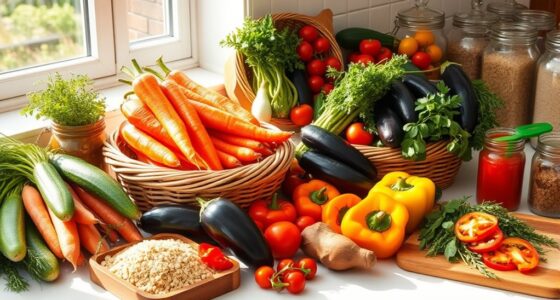
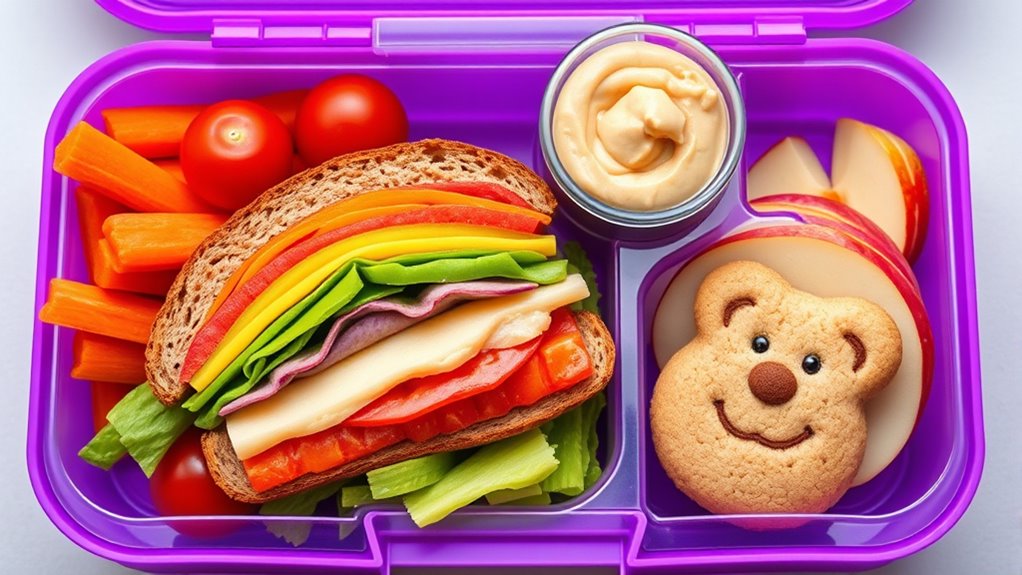
Start by selecting items that are colorful and appealing, encouraging kids to eat without fuss. For example, cut fruits into fun shapes or serve crunchy vegetables with a tasty dip. Keep portion sizes suitable for your child’s age—smaller portions for younger kids and slightly larger ones for older children. This prevents overeating and helps them learn about listening to their hunger cues. Remember, a balanced lunch isn’t just about quantity; it’s about quality. Incorporate whole-grain bread or crackers instead of refined options, and choose lean meats, beans, or eggs for protein. Dairy can be included through milk, cheese, or yogurt, which also adds calcium and vitamin D.
Choose colorful, appealing foods in appropriate portions to make balanced, nutritious lunches that your child will enjoy.
Variety is vital to prevent lunch boredom and to ensure your child receives a broad spectrum of nutrients. Rotate different fruits and vegetables throughout the week. Incorporate different protein sources to keep meals interesting—think turkey slices, hummus, or tuna salad. When it comes to beverages, water should be your go-to, but you can occasionally include a small serving of 100% fruit juice or milk. Be mindful of added sugars, especially in snacks and drinks, which can quickly undermine nutritional goals.
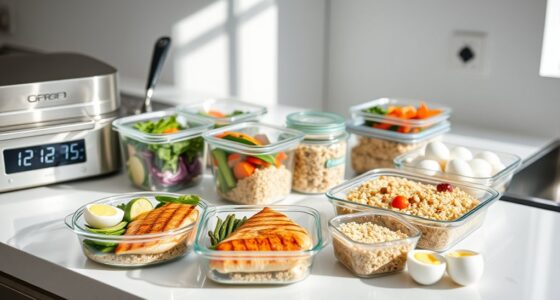
To make meal prep easier, consider batching snacks and pre-assembling parts of the lunch the night before. Use divided containers to keep foods separate and fresh, and involve your child in choosing or packing their lunch. This can boost their interest and willingness to eat what’s packed. Additionally, incorporating kid-friendly presentation techniques can make healthy foods more enticing. Most importantly, keep the focus on creating meals that are both nutritious and fun. When you follow nutritional guidelines and portion sizes, you’re setting your child up for healthy eating habits that will last a lifetime. With a little practice and creativity, packing a lunch that hits all these marks becomes second nature, and your child will look forward to mealtime every day.

Canfanni 4 Pcs Snack Box Containers Set, Reusable 4 Compartment Lunchable Container with 2Pcs Sauce Containers, Stackable BPA-Free Bento Box for School, Work, Travel (4 Color)
【Divided Snack Containers】The 4 compartment snack containers size 6.14 x 5.94 x 3.62 inches, with each compartment has…
As an affiliate, we earn on qualifying purchases.
As an affiliate, we earn on qualifying purchases.
Frequently Asked Questions
How Can I Involve My Child in Lunchbox Planning?
You can involve your child in lunchbox planning by encouraging parent-child collaboration. Ask them for their favorite healthy foods and incorporate their ideas into creative lunch ideas. Let them choose between various nutritious options or help pack the lunch to make it fun and engaging. This way, your child feels empowered and excited about their meals, making healthy eating a positive experience they’ll look forward to daily.
What Are Some Budget-Friendly Healthy Lunch Options?
You can save money by choosing budget-friendly healthy lunch options like homemade sandwiches, veggie sticks, and fruit. Swap out expensive snack alternatives for nuts, yogurt, or homemade trail mix. Practice portion control to prevent waste and keep portions manageable. Incorporate versatile ingredients like hummus or cheese to add flavor without extra cost. These tips help you pack nutritious, fun meals that fit your budget and keep your kid energized throughout the day.
How Do I Keep Food Fresh Until Lunchtime?
You find a forgotten lunchbox in your bag, and it’s still fresh—how do you do that? It’s all about good food preservation techniques and smart storage container choices. Use airtight containers to lock in freshness, and pack ice packs or frozen items to keep everything cool until lunchtime. Also, pre-chill food and avoid packing perishable items too early. These simple tips guarantee your kid’s lunch stays fresh and safe.
What Are Allergy-Safe Lunch Ideas for Kids?
You should pack allergy-safe lunch ideas like nut-free sandwiches using hummus or seed butters, ensuring they’re safe for kids with nut allergies. Include gluten-free snacks like rice cakes, fruit, or veggie sticks to cater to gluten sensitivities. Always check labels and communicate with parents or caregivers about allergies to prevent any allergic reactions. By choosing these options, you create a safe, inclusive lunch that kids will enjoy.
How Can I Make Lunchpacking Quicker and Easier?
Like a well-oiled machine, you can make lunch packing quicker and easier with smart lunchbox organization. Prepare ingredients in advance, such as pre-cut veggies or portioned snacks, to speed up the process. Use packing tips like reusable containers and designated compartments to keep things tidy. Keep a checklist handy to guarantee nothing’s forgotten. This approach streamlines your routine, saving time and reducing stress during busy mornings.

4 Pack Fruit Silicone Molds Set – Watermelon/Strawberry/Lemon/Pineapple Shapes for Gummy, Chocolate, Ice Cubes – Reusable Candy & Cake Decor Baking Tools
Set combination: This set includes 4 packs of silicone fruit molds, which are sufficient to meet your different…
As an affiliate, we earn on qualifying purchases.
As an affiliate, we earn on qualifying purchases.
Conclusion
With a little creativity and planning, your kid’s lunchbox becomes a treasure chest of healthy, fun options. Think of it as planting seeds of good habits that grow stronger with each meal. When you pack with love and variety, lunchtime transforms from a chore into an exciting adventure. Keep experimenting, and watch your child’s enthusiasm for healthy eating blossom like a garden in full bloom. After all, a well-packed lunch is the key to a happy, energized day!

Bumkins Reusable Snack Bags, for Kids School Lunch and for Adults Portion, Washable Fabric, Waterproof Cloth Zip Bag, Supplies Travel Pouch, Food-Safe, 2-pk Unicorns and Rainbows
REUSE AND REDUCE WASTE – Bumkins reusable cloth snack bags are made from our original waterproof fabric with…
As an affiliate, we earn on qualifying purchases.
As an affiliate, we earn on qualifying purchases.

Kerilyn 12oz Kids Water Bottle, Stainless Steel Insulated Water Bottle for Kids, Toddler Cup With Straws Leak-proof, Toddler Water Bottles for School Boys Girls, BPA Free, Green
INSULATED BOTTLE – Our insulated stainless steel water bottle designed for kids, keeps liquids hot for 12 hours…
As an affiliate, we earn on qualifying purchases.
As an affiliate, we earn on qualifying purchases.