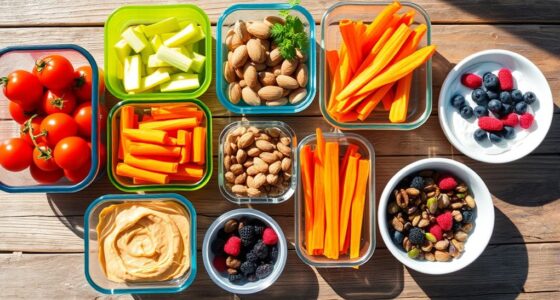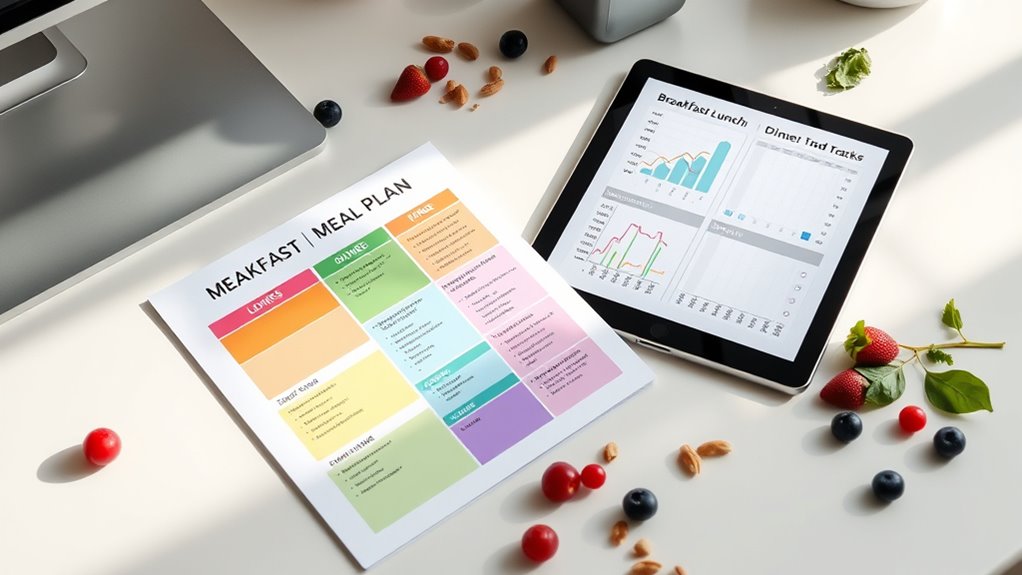

To master meal plan templates and trackers, start by choosing layouts that suit your needs and goals, whether simple grids or detailed plans. Customize them to include snacks, prep instructions, and dietary restrictions. Use the templates to create precise grocery lists, saving time and cutting waste. Track your progress over time to spot patterns and adjust accordingly. Keep refining your approach, and you’ll release the full potential of organized, healthier eating habits.
Key Takeaways
- Choose adaptable templates that fit your dietary needs and lifestyle for effective meal planning.
- Customize templates with snack ideas, prep instructions, and substitutions to enhance flexibility and compliance.
- Use detailed grocery lists derived from your plan to streamline shopping and minimize waste.
- Track meal satisfaction and reactions to identify patterns and optimize your diet over time.
- Combine planning tools with trackers to support health goals, reduce waste, and simplify meal preparation.
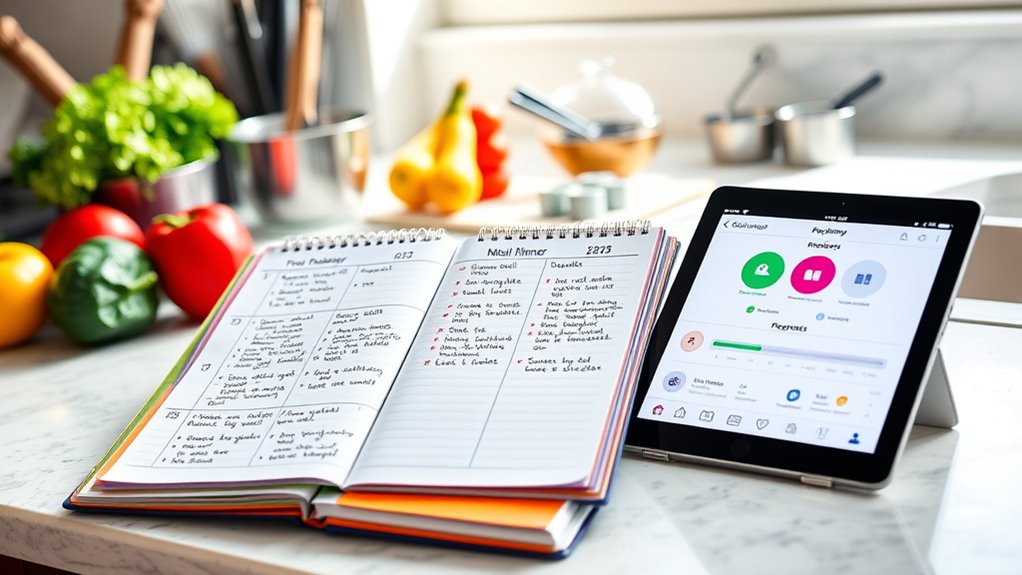
Have you ever struggled to organize your weekly meals or stick to a healthy routine? If so, you’re not alone. Managing meal planning can feel overwhelming, especially when it comes to grocery shopping and accommodating dietary restrictions. That’s where meal plan templates and trackers come in. They’re powerful tools that help you streamline your process, stay on track, and make healthier choices. When you use a meal plan template, you create a clear roadmap for each week, allowing you to see what you’ll eat each day. This foresight reduces last-minute decisions and impulse buys, saving you time and money. Plus, it helps you stick to your dietary restrictions—whether you’re gluten-free, vegetarian, or managing food allergies—by ensuring you include suitable options and avoid accidental cross-contamination. Incorporating meal prep techniques can further enhance your efficiency and reduce waste. To get started, choose a template that suits your needs. Some prefer simple grid layouts, while others need more detailed plans that incorporate snack ideas or prep instructions. The key is to customize the template to match your lifestyle and goals. As you fill it out, consider your grocery shopping list. Writing down exactly what you need for each meal makes shopping more efficient and prevents unnecessary trips or forgotten items. It also helps you stay within your budget and reduces food waste because you buy only what you’ll use. When factoring in dietary restrictions, make sure your template highlights special ingredients or substitutions. This way, you won’t overlook allergen-free options or special diets, and you can plan meals that are safe and enjoyable for everyone at your table.
Meal plan trackers are equally important because they let you monitor your progress over time. With a tracker, you can note which meals worked well, how you felt after eating certain foods, and where adjustments might be needed. Tracking also helps you identify patterns—such as craving certain snacks or feeling sluggish after particular meals—so you can fine-tune your diet. When you combine a well-designed template with an effective tracker, you gain insight into your eating habits, making it easier to stay consistent and motivated. Over time, these tools become a personal roadmap, guiding you toward healthier choices and a more organized approach to meal prep. They not only simplify grocery shopping and meal prep but also empower you to respect your dietary restrictions and achieve your nutritional goals with confidence. Additionally, understanding the Juice Manufacturing Process can inspire healthy beverage options to complement your meal plans.

Weekly Meal Planner Printable PDF, Grocery List Template, Digital Meal Planner
As an affiliate, we earn on qualifying purchases.
As an affiliate, we earn on qualifying purchases.
Frequently Asked Questions
Can Meal Plan Templates Be Customized for Specific Dietary Restrictions?
Yes, meal plan templates can definitely be customized for specific dietary restrictions. You can incorporate dietary modifications by adjusting ingredients, portion sizes, and meal options. Template personalization allows you to tailor the plan to meet your unique needs, whether you’re gluten-free, vegan, or have allergies. This flexibility guarantees you stick to your restrictions while maintaining a balanced diet, making meal planning easier and more effective for your health goals.
How Often Should I Update My Meal Plan Templates?
Think of your meal plan as a fashionista’s wardrobe—always in style, but needing fresh pieces. You should update your meal plan templates weekly to keep meal flexibility and nutritional goals on point. A quick weekly review helps you spot what’s working and what’s not, preventing your plan from becoming as outdated as last season’s trends. Stay current, stay flexible, and enjoy a deliciously adaptable routine.
Are There Digital Tools That Sync Meal Plans With Grocery Shopping?
Yes, there are digital tools that sync meal plans with grocery shopping. You can use grocery list apps like AnyList or Out of Milk, which integrate with meal planning software such as Plan to Eat or Mealime. These tools automatically generate shopping lists based on your meal plan, saving you time and effort. Just select your meals, and the app will organize all the ingredients, making grocery shopping more efficient and stress-free.
How Do I Handle Unexpected Changes in My Meal Schedule?
Suddenly, your plans are thrown off—what now? You handle unexpected changes by employing flexibility strategies and contingency planning. Keep a few backup meals or ingredients ready, and adjust your plan on the fly. Stay calm, adapt quickly, and remember that flexibility is key. With a little prep, you can navigate surprises smoothly, ensuring your meal routine stays on track without stress or chaos.
What Are Common Mistakes to Avoid When Using Meal Plan Trackers?
When using meal plan trackers, avoid common mistakes like neglecting portion control and inaccurate calorie counting. You might underestimate serving sizes or forget to log snacks, skewing your progress. Double-check portion sizes and be honest about every item you consume. This helps you stay on track with your goals, guarantees accurate tracking, and prevents frustration. Consistent, precise entries make your meal plan work effectively, leading to better results over time.

Decorably 52 Sheets Pastel Undated Magnetic Weekly Meal Planner and Grocery List Notepad with 4 Strong Magnets – 8.5x11in Spring-Bound, Refrigerator Mountable, Easy Tear-Off Design
CPC-CERTIFIED FOR SAFETY – This weekly meal planner for fridge features high-quality paper and strong magnets, all certified…
As an affiliate, we earn on qualifying purchases.
As an affiliate, we earn on qualifying purchases.
Conclusion
Think of your meal plan as a ship steering through waters. With well-crafted templates and trackers as your sturdy compass, you navigate smoothly, avoiding storms of last-minute choices or forgotten ingredients. Each meal becomes a destination reached with confidence, guiding you toward healthier habits. Mastering these tools transforms your journey into a voyage of discovery, where every week is a new adventure. Set your course, trust your map, and enjoy the smooth sailing toward your goals.

Meal Plan, High Protein Meals Cookbook, 28-Day Weight Loss Planner with Recipe and Guidance to help you lose weight, ward off diabetes, fight inflammation and boost your health.
84 Recipes in Alphabetical Order: This cookbook offers 84 high-protein recipes including breakfast, lunch/dinner, and snacks, so you…
As an affiliate, we earn on qualifying purchases.
As an affiliate, we earn on qualifying purchases.

Food Journal – Journal for Women Weight Loss, 5.8" x 8.3", 6 Months Meal Planner to Count Calories Health Journals for Women/Men, Keep Healthy Diet & Achieve Fitness Goals – Rose Gold
FOOD JOURNAL FOR HEALTHY – A food journal to tracks daily dietary and nutritional intake for women/men. It…
As an affiliate, we earn on qualifying purchases.
As an affiliate, we earn on qualifying purchases.