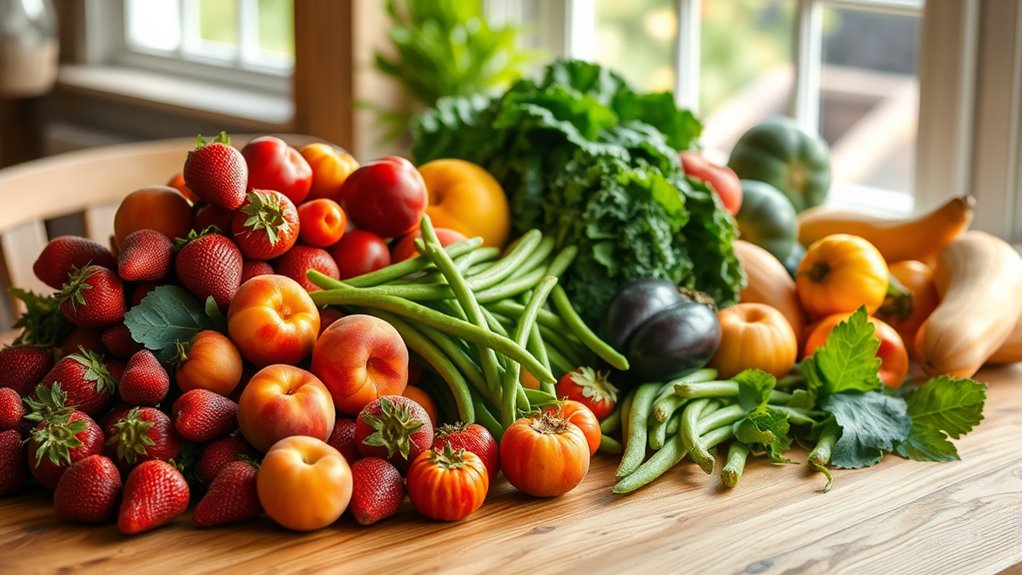

Eating with the seasons allows you to enjoy fresh, flavorful produce at its peak, supporting local farmers and reducing your environmental footprint. It encourages you to get creative in meal planning by exploring diverse fruits, vegetables, and herbs that are naturally abundant at different times of the year. Preserving seasonal flavors guarantees you can enjoy them year-round, while fostering a deeper understanding of natural food cycles and sustainability. Keep exploring to discover how to make the most of seasonal eating.
Key Takeaways
- Plan meals around peak seasonal ingredients for optimal flavor and nutritional value.
- Visit farmers’ markets to access fresh, locally sourced produce during each season.
- Preserve seasonal foods through freezing, pickling, or canning to enjoy year-round flavors.
- Incorporate a variety of seasonal vegetables and fruits to keep meals creative and diverse.
- Align your diet with natural food cycles to promote sustainability and reduce environmental impact.

Planning your meals around seasonal produce is one of the best ways to enjoy fresh, flavorful ingredients while supporting local farmers and reducing your environmental footprint. When you focus on what’s in season, you naturally incorporate a variety of fruits and vegetables at their peak, which means better taste and higher nutritional value. To make the most of this approach, frequent your local farmers’ market, where you can discover a diverse array of Farmers’ Market Finds. These markets often showcase the freshest seasonal produce, often harvested just hours before you buy them. By shopping directly from farmers, you gain access to a wider selection of ripe, flavorful options that you might not find in grocery stores. Plus, engaging with farmers gives you valuable insights about how produce is grown, when it’s at its best, and how to incorporate these ingredients into your meals.
Preserving Seasonal Flavors is another key aspect of meal planning around the seasons. When you bring home an abundance of fresh produce, you can preserve these flavors through methods like freezing, pickling, or canning. This way, you extend the enjoyment of seasonal ingredients well beyond their peak, creating a supply of delicious, home-preserved foods for future months. For example, making strawberry jam during summer or freezing summer squash allows you to savor the taste of summer months even in winter. Preserving seasonal flavors is also a practical way to reduce waste—any extra produce can be turned into shelf-stable treats rather than discarded. It’s a simple, satisfying way to enjoy the bounty of the season year-round. Incorporating seasonal produce into your meal planning also encourages creativity in the kitchen. With a fresh supply of produce, you’ll find yourself experimenting with new recipes and flavor combinations that highlight the natural sweetness and textures of seasonal foods. Think roasted root vegetables in fall, vibrant salads in spring, or hearty stews in winter that incorporate seasonal vegetables and herbs. Planning your weekly meals around what’s available at the market ensures variety and keeps your diet exciting. Plus, because seasonal produce is often more affordable, you can stretch your grocery budget further while eating more nutritious, flavorful meals. When you align your meal planning with the seasons, you foster a deeper connection to the natural cycles of food and enjoy a more sustainable, delicious way to eat.

CHEFMAN 2 Qt Mini Air Fryer – Digital Space-Saving Compact Air Fryer with Nonstick and Dishwasher Safe Basket, Quick & Easy Meals in Minutes, Features Digital Timer and Shake Reminder – Black
FAST AND EASY: This small air fryer comes prepared for any culinary challenge. The capacitive touch screen display...
As an affiliate, we earn on qualifying purchases.
Frequently Asked Questions
How Can I Better Preserve Seasonal Produce at Home?
You can better preserve seasonal produce at home by using freezing techniques like blanching vegetables before storing them in airtight containers, which helps retain flavor and nutrients. For root vegetables and hardy produce, consider root cellaring, where cool, dark, and humid conditions naturally extend freshness. Combining these methods guarantees you enjoy seasonal flavors year-round while minimizing waste and maintaining quality.
Which Tools Are Essential for Seasonal Meal Prep?
Think of your kitchen as a gardener’s toolbox—your essential tools. You’ll want reliable kitchen gadgets like sharp knives, a good peeler, and storage containers that act as treasure chests for your seasonal bounty. Recipe books serve as your map, guiding you through fresh ideas. These tools help you harvest the best flavors, turning seasonal produce into delicious meals, and keeping your culinary garden thriving year-round.
How Do I Adapt Recipes for Off-Season Ingredients?
To adapt recipes for off-season ingredients, you can use ingredient substitutions that mimic the flavor and texture of seasonal produce. For example, swap fresh herbs with dried ones, or use frozen or canned options when fresh isn’t available. Make flavor adjustments by adding spices, acids, or sweeteners to enhance or balance the dish. This way, you maintain delicious results while making the most of available ingredients year-round.
What Are Some Affordable Ways to Access Seasonal Produce?
You can access seasonal produce affordably by visiting farmers’ markets and joining a community-supported agriculture (CSA) program. Farmers’ markets often offer fresh, local produce at lower prices, especially near the end of the day. CSA memberships provide you with a regular share of seasonal harvests at a discounted rate. Both options support local farmers and guarantee you get fresh, in-season ingredients without breaking the bank.
How Can I Introduce Children to Seasonal Eating Habits?
You can introduce children to seasonal eating habits by making seasonal food education fun and engaging. Involve them in shopping for seasonal produce, explaining how it changes with the seasons, which supports their taste development. Cook simple, colorful dishes together, and share stories about the origins of each ingredient. This hands-on approach helps children appreciate seasonal foods, encouraging healthier choices and fostering a love for eating with the seasons.

bella 4Qt Slim Air Fryer, Fits-anywhere™ Kitchenware, EverGood™ Ceramic Nonstick Coating, Adjustable Temperature, 6 Preset Cooking Options, 60 Min Auto Shutoff w Audible Tone, 3.3lb Capacity, Oatmilk
Slim Design for Any Space: The bella 4qt Air Fryer features a sleek, space-saving design, perfect for fitting...
As an affiliate, we earn on qualifying purchases.
Conclusion
By planning your meals around seasonal produce, you not only enjoy fresher, tastier ingredients but also support local farmers and reduce your environmental impact. Isn’t it rewarding to connect with nature’s cycles through your daily choices? Embracing seasonal eating makes every meal more meaningful and vibrant. So, why not start today and discover how delicious eating with the seasons can truly be? Your taste buds—and the planet—will thank you.

CHEFMAN Multifunctional Digital Air Fryer+ Rotisserie, Dehydrator, Convection Oven, 17 Touch Screen Presets Fry, Roast, Dehydrate, Bake, XL 10L Family Size, Auto Shutoff, Large Easy-View Window, Black
Versatile countertop cooking: Air fry, bake, dehydrate, rotisserie, or roast to crispy perfection in one convenient appliance
As an affiliate, we earn on qualifying purchases.

COSORI 11-in-1 Air Fryer Oven, 13Qt Small Footprint Airfryer combo with Rotisserie, Toast, Bake, Roast, Reheat Functions and more, Recipe Book & 6 Accessories Included, Perfect for Small Countertop
𝑬𝒇𝒇𝒐𝒓𝒕𝒍𝒆𝒔𝒔 𝑼𝒑𝒈𝒓𝒂𝒅𝒆: This is the perfect solution to upgrade your air fryer while simplifying your traditional oven. Enjoy...
As an affiliate, we earn on qualifying purchases.