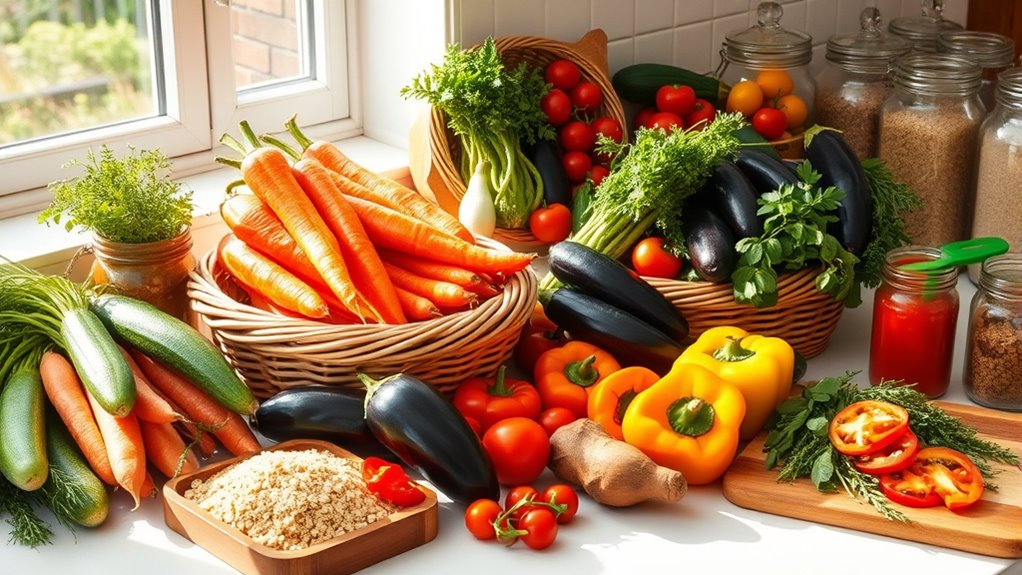

By planning meals around local and organic produce, you support your community’s farmers and reduce your environmental footprint. Focus on seasonal ingredients to minimize packaging and transportation emissions, while enjoying fresher, more flavorful foods. Careful meal planning helps you reduce waste and avoid over-purchasing. Incorporating these practices not only benefits the planet but also boosts your well-being. If you want to discover practical tips and strategies, there’s much more to explore.
Key Takeaways
- Plan weekly meals around seasonal, local, and organic ingredients to reduce environmental impact and support local farmers.
- Incorporate recipes that utilize fresh, organic produce before spoilage to minimize food waste.
- Buy in bulk and choose minimal packaging options to decrease waste and promote sustainable purchasing habits.
- Prioritize shopping at farmers’ markets or co-ops to access organic, local foods with less packaging and transportation emissions.
- Create flexible menus that adapt to seasonal availability, maximizing freshness, affordability, and environmental benefits.

Have you ever considered how your meal choices impact the environment? When you think about sustainable meal planning, one of the biggest factors is reducing food waste. Every year, tons of edible food go to landfill because it’s overlooked, spoiled, or simply discarded. By planning your meals carefully, you can minimize leftovers and avoid buying more than you need. This not only saves money but also lessens the burden on waste management systems and reduces methane emissions from decomposing food. To make this easier, start by creating a weekly menu based on what’s in season and what you already have at home. This approach encourages you to use ingredients before they spoil, cutting down on food waste and ensuring you get the freshest flavors. Seasonal eating is a powerful tool in sustainable meal planning because it aligns your diet with nature’s cycles. When you choose produce that’s in season, you’re supporting local farmers and reducing the carbon footprint associated with long-distance transportation. Seasonal foods are often more affordable, fresher, and tastier, making it easier to enjoy a variety of nutritious meals without relying heavily on imported or processed options. Incorporating seasonal eating also encourages you to experiment with different ingredients throughout the year, which keeps your diet diverse and exciting. It pushes you to be more mindful about your consumption habits, which is essential for a sustainable lifestyle. *furthermore*, buying seasonal produce typically means less packaging, further decreasing waste. When you plan your meals around what’s in season locally, you naturally become more conscious of your consumption patterns, reducing impulse buys and unnecessary packaging. This intentional approach helps establish a more sustainable relationship with food, fostering respect for the environment and your health. Additionally, buying in bulk when possible, especially for staple items, can further cut down on packaging waste and reduce trips to the store, saving fuel and decreasing emissions. Incorporating sustainable food practices into your routine can also help you discover new recipes and ingredients, enriching your culinary experience. Remember, sustainable meal planning isn’t about perfection; it’s about making smarter choices that benefit the planet while still satisfying your nutritional needs. By focusing on reducing food waste and embracing seasonal eating, you’re actively participating in a more sustainable food system. You’re helping to lower greenhouse gas emissions, support local economies, and promote biodiversity. Each meal becomes an opportunity to make a positive impact, and by staying mindful of these strategies, you turn everyday eating into an act of environmental responsibility. So, next time you plan your shopping list or prepare your meals, think about how your choices can support a healthier planet — it’s easier than you think.

From Freezer to Instant Pot: The Cookbook: How to Cook No-Prep Meals in Your Instant Pot Straight from Your Freezer (Instant Pot Bible, 2)
As an affiliate, we earn on qualifying purchases.
Frequently Asked Questions
How Can I Find Local Organic Farmers Near Me?
You can find local organic farmers near you by visiting farmer’s markets and exploring community supported agriculture (CSA) programs. Farmer’s markets are great for directly connecting with farmers and buying fresh, organic produce. CSAs offer weekly or seasonal boxes of local, organic foods. Check online directories, social media groups, or local community boards for schedules and contact info. Supporting these options helps you access healthy, sustainable, and local produce easily.
What Are Seasonal Produce Options for Year-Round Meal Planning?
Seasonal produce options vary throughout the year, keeping your meals fresh and flavorful. You can enjoy strawberries in spring, tomatoes in summer, pumpkins in fall, and hearty greens in winter. To maintain variety, practice preservation techniques like freezing and canning, and implement crop rotation to support sustainable growth. This approach guarantees you incorporate seasonal, local, and organic produce into your meals all year long, reducing environmental impact.
How Do I Store Organic Produce to Maximize Freshness?
To maximize freshness, you should focus on proper produce storage techniques. Keep leafy greens in a damp cloth or vented container in the fridge’s crisper drawer to preserve their freshness. Store root vegetables in a cool, dark, and well-ventilated space, while berries should go in a breathable container, washed just before eating. Proper produce storage is key to freshness preservation and reducing waste.
Are There Affordable Options for Organic and Local Foods?
Yes, you can find budget-friendly options for organic and local foods by exploring farmers’ markets, community-supported agriculture (CSA) programs, and co-ops. Use organic shopping tips like buying in season, choosing produce with minimal packaging, and shopping sales or bulk. Also, consider growing some herbs or vegetables at home. These strategies help you access fresh, local, and organic foods without breaking the bank.
How Can I Reduce Food Waste in Meal Preparation?
Did you know that Americans waste about 30-40% of their food? To cut down, focus on meal portioning—serve smaller amounts and save leftovers. Compost food scraps to reduce landfill waste, and use composting tips to turn waste into nutrient-rich soil. Planning meals ahead helps you buy only what you need, minimizing excess. These simple steps make a significant difference in reducing food waste and promoting sustainability.

The Complete Meal Prep Instant Pot Cookbook for Beginners: Quick, Healthy and Delicious Instant Pot Recipes for Clean Eating & Weight Loss
As an affiliate, we earn on qualifying purchases.
Conclusion
Think of your meal plan as tending a garden. When you choose local, organic produce, you’re planting seeds that grow into a thriving, sustainable future. Each mindful choice is like watering that garden with care, ensuring it flourishes without draining the earth’s resources. By embracing this approach, you become a gardener of change, nurturing a world where delicious, healthy meals bloom naturally and responsibly, one meal at a time.

The Everyday Instant Pot Cookbook for Beginners: Easy, Wholesome, and Flavorful Recipes to Master Pressure Cooking — Perfect for Busy Families, Meal Prep, and Weeknight Dinners
As an affiliate, we earn on qualifying purchases.

The Healthy Meal Prep Instant Pot® Cookbook: No-Fuss Recipes for Nutritious, Ready-to-Go Meals
As an affiliate, we earn on qualifying purchases.