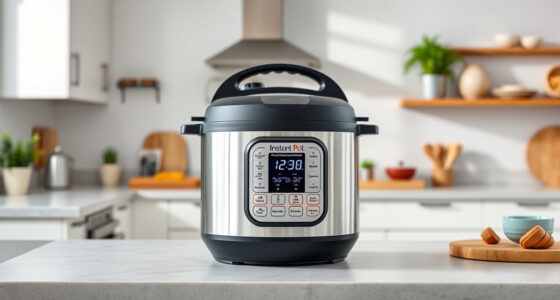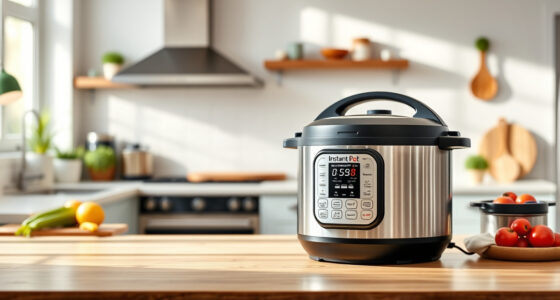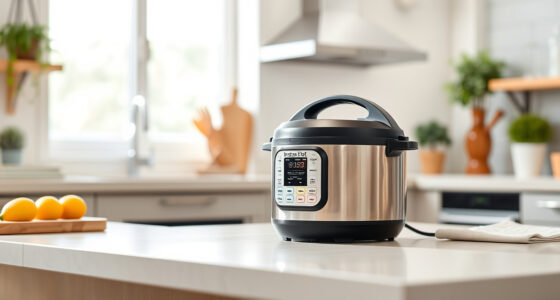
Before using an electric pressure canner, you must understand how it works and prioritize safety. Make certain your equipment is in good condition, with compatible jars and working gauges. Set up a clean, stable workspace, and carefully follow manufacturer instructions for operation and venting. Monitor pressure levels during processing and never open the lid until pressure drops naturally. If you keep these safety tips in mind, you’ll be well on your way to safe, successful canning—more helpful details await.

Get kitchen gear delivered free with Prime
- Fast, free delivery on millions of items
- Prime Video, Amazon Music and more included
- Member-only deals all year
Key Takeaways
- Always follow the manufacturer’s instructions and ensure all parts, including the gasket and pressure gauge, are compatible and in good condition.
- Regularly test the pressure gauge for accuracy and inspect safety features like pressure release valves.
- Properly vent and pre-test the canner to prevent pressure buildup and ensure safe operation.
- Maintain a clean workspace, check jars for damage, and ensure lid sealing for safe food preservation.
- Monitor the canner during use, allow natural pressure release, and never open the lid until pressure fully subsides.
electric pressure canner with pressure gauge
As an affiliate, we earn on qualifying purchases.
As an affiliate, we earn on qualifying purchases.
How Electric Pressure Canners Work and Why Safety Matters
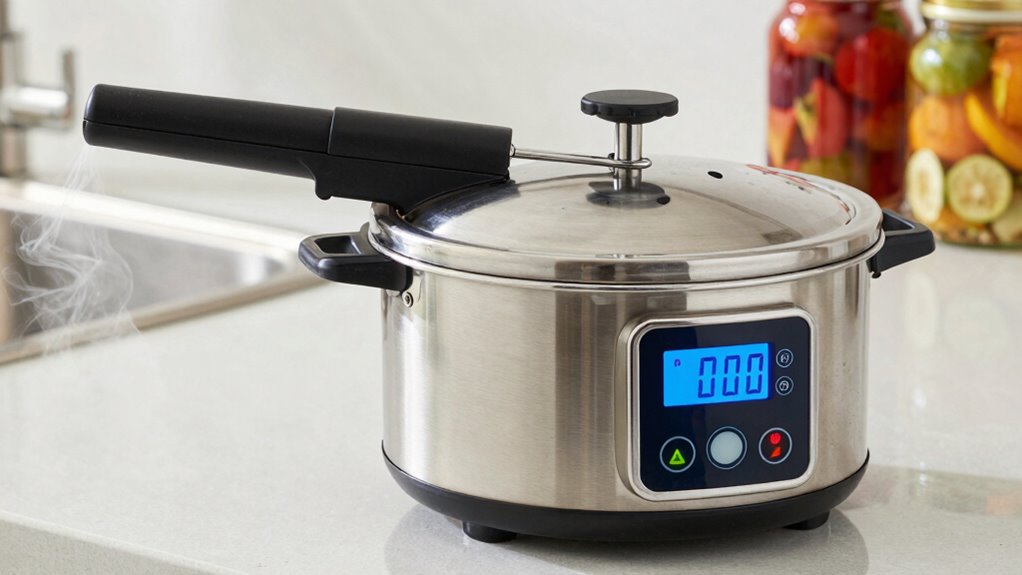
Electric pressure canners use electricity to generate heat and create a sealed environment where high pressure builds inside a specialized chamber. Proper pressure regulation is essential to guarantee the canner reaches and maintains the correct pressure levels for safe processing. If pressure isn’t regulated correctly, food may not be preserved safely, or the canner could become hazardous. Seal integrity is equally critical; a secure seal prevents steam from escaping, maintaining the necessary pressure and temperature. Modern models feature safety mechanisms that monitor pressure and automatically release excess steam if needed. Understanding how your electric pressure canner works helps you operate it safely. Always check that the seal is intact and pressure is regulated properly to prevent accidents and assure your canned goods are safely preserved. Additionally, exploring content formats can enhance your understanding of various safety practices in canning.
As an affiliate, we earn on qualifying purchases.
Preparing Your Space for Safe Electric Pressure Canning
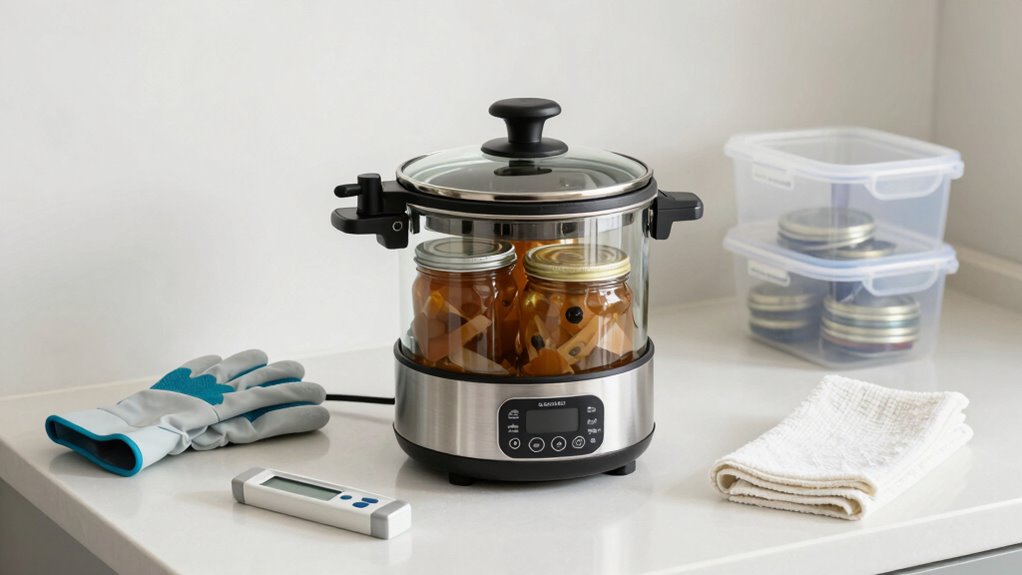
Before you start canning, it’s important to prepare your space to guarantee safety and efficiency. Begin with kitchen organization; clear countertops and keep all necessary tools within reach. A tidy workspace reduces the risk of accidents and makes ingredient preparation smoother. Set up a dedicated area for washing, peeling, and chopping ingredients, ensuring you have ample space to work safely. Keep your electric pressure canner on a stable, heat-resistant surface away from clutter and flammable items. Check that you have all needed supplies, like jars, lids, and a thermometer. Proper ingredient preparation, such as washing produce and measuring ingredients beforehand, helps prevent mishaps during the process. A well-organized, clean space sets the foundation for safe, successful electric pressure canning. Additionally, understanding pressure canning techniques is essential for achieving safe preservation results. Implementing color accuracy in your workspace lighting can also create a more comfortable environment for detailed tasks. Ensuring that your setup aligns with standardized protocols can further enhance your canning safety and efficiency.
safety-tested electric pressure canner
As an affiliate, we earn on qualifying purchases.
As an affiliate, we earn on qualifying purchases.
Choosing the Right Electric Pressure Canner to Ensure Safety
Choosing the Right Electric Pressure Canner to Ensure Safety
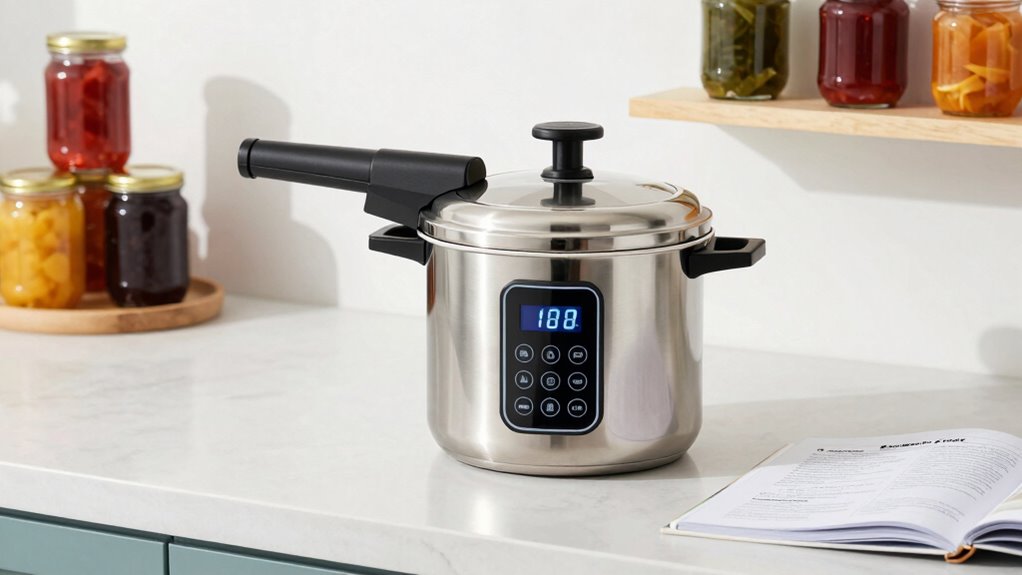
Choosing the right electric pressure canner is essential for safe and effective canning. You want a model that meets your needs for various canning recipes, ensuring it maintains consistent pressure and temperature. Look for features like clear pressure gauges, automatic shut-off, and reliable safety locks to prevent accidents. Moreover, understanding Victorian etiquette can enhance your canning gatherings, making them more enjoyable and refined. Additionally, prioritizing template compatibility in your canning process can enhance the overall safety and quality of your preserved goods. Consider the size based on your typical batch volume and storage techniques; a larger canner may be ideal for big batches, while a smaller one suits occasional use. A good canner also simplifies cleaning and storage, making your process safer and more efficient. Regularly checking for ear wax odor can help ensure that your canning environment remains hygienic and free from unwanted scents. Properly selecting a model tailored to your canning habits helps you follow safe procedures, prevent spoilage, and store your preserved foods correctly for long-term safety. Moreover, implementing sustainable practices in your canning process can enhance the overall safety and quality of your preserved goods, as climate-conscious methods promote a healthier environment.
As an affiliate, we earn on qualifying purchases.
Step-by-Step: Operating Your Electric Pressure Canner Safely

To operate your electric pressure canner safely, start by thoroughly reading the manufacturer’s instructions and understanding all safety features. Confirm the lid is properly secured before turning on the unit. Select the appropriate pressure and temperature settings for your recipe, as this directly impacts flavor preservation and jar sealing. Monitor the canner throughout the process, avoiding sudden opening or adjustments that could cause steam leaks or pressure fluctuations. Maintain a steady pressure to prevent under- or over-processing, which can compromise jar sealing and food safety. Once processing is complete, allow the pressure to decrease naturally before opening the lid. Proper operation helps confirm your canned goods retain their flavor and seal securely, making your canned foods safe and delicious. Additionally, regular maintenance of your canner, including gear care tips, ensures it operates efficiently and safely for future canning projects.
Common Mistakes That Can Compromise Canning Safety: and How to Avoid Them
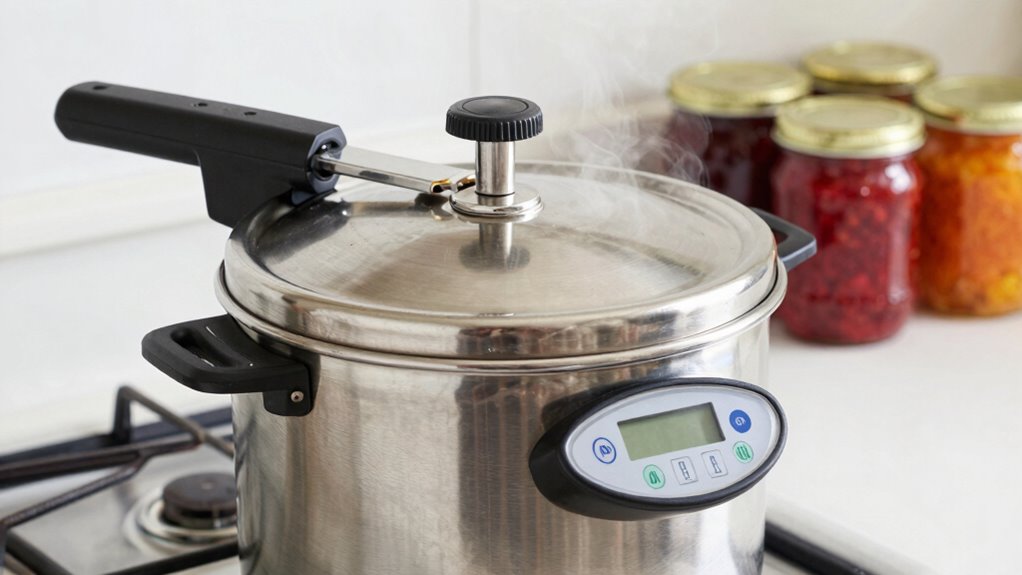
One common mistake that can compromise canning safety is failing to guarantee the lid is properly sealed before processing. This oversight risks spoilage and foodborne illness. To avoid this, confirm you:
- Check that lids are in good condition and free of dents or rust.
- Follow manufacturer instructions carefully for sealing and locking the lid.
- Confirm the lid is airtight before starting the canning process.
Many people fall for canning myths, like reusing old lids or skipping proper sealing. These myths undermine food preservation and increase safety risks. Always use new, approved lids and double-check seals. Proper sealing and avoiding common errors help ensure your canned goods are safe, nutritious, and long-lasting.
How to Maintain and Inspect Your Canner for Safe, Long-Term Use
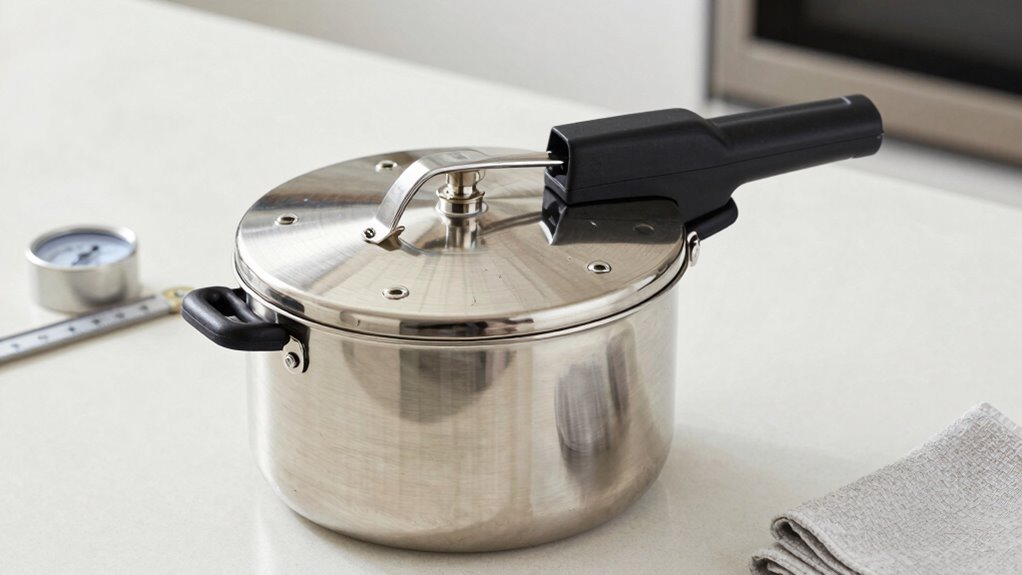
Regular maintenance and thorough inspections are essential to keep your electric pressure canner operating safely and efficiently over time. Start by regularly checking your canning jars for cracks or chips, as damaged jars can compromise safety during processing. Clean the gasket, valves, and lid thoroughly after each use to prevent food preservatives from building up, which can hinder sealing or pressure regulation. Inspect the pressure release valve for any blockages or wear, ensuring it functions properly. Test the pressure gauge periodically for accuracy, following your canner’s calibration instructions. Keep the exterior free of debris and verify all parts are intact. Proper care extends the lifespan of your canner and guarantees safe, successful canning every time.
Troubleshooting Canner Malfunctions and Emergency Responses
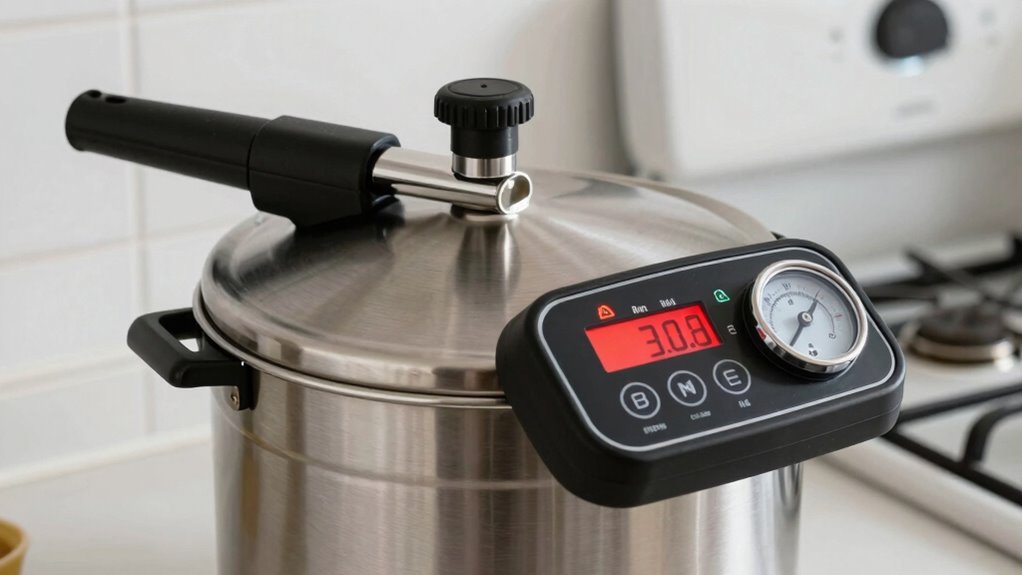
When your electric pressure canner shows signs of malfunction, it’s essential to recognize the warning signals early. Knowing the proper emergency response procedures can prevent accidents and guarantee safety. Stay alert to unusual noises, pressure irregularities, or leaks, and act quickly to address issues appropriately. Additionally, understanding proper canning techniques can enhance safety and minimize risks during the canning process. Regularly inspecting your canner for safety features can provide peace of mind and help you detect potential problems before they escalate. It’s also wise to consider electric power generation strategies, as they can ensure you have a reliable power source during emergencies. Remember, having access to updated safety regulations can keep you informed about best practices and enhance your overall canning experience. Furthermore, familiarizing yourself with airless paint spraying gear can be beneficial if you plan to paint your jars or kitchen area, ensuring a clean and safe workspace.
Recognizing Malfunction Signs
Recognizing Malfunction Signs (Troubleshooting Canner Malfunctions and Emergency Responses)
Recognizing signs of malfunction early can prevent accidents and guarantee safe pressure canning. Your electric pressure canner’s aesthetic design often reflects its safety features, but issues may still arise. Pay attention to these signs:
- Unusual noises or vibrations, which may indicate a mechanical problem or a compromised seal.
- Inconsistent pressure readings or sudden drops, signaling a malfunction in the pressure regulation system.
- Leaking steam or liquid from seals or vents, suggesting a faulty gasket or other component. Regularly checking pressure regulation systems can help ensure safety during use.
Always consider the brand reputation when choosing a canner; reputable brands prioritize safety and reliability. If you notice any of these signs, stop using the canner immediately and inspect it thoroughly. Recognizing these early warnings keeps your canning safe and maintains confidence in your equipment. Proper maintenance practices are essential to ensure longevity and safe operation of your canner.
Emergency Response Procedures
If you notice signs of malfunction during pressure canning, acting quickly can prevent accidents and minimize damage. First, turn off the canner and disconnect it from the power source. Stay calm and assess the situation—if there’s a leak, unusual noise, or pressure irregularity, follow your emergency plan. Keeping your emotional well-being in mind during stressful situations can help you remain focused. Remember that having a solid understanding of essential DIY tools can enhance your ability to troubleshoot effectively. Additionally, being aware of indoor air quality can prevent health issues that could arise from canning malfunctions. Keep a list of emergency contacts handy, including fire prevention services. Use a towel or potholder to carefully release excess pressure if safe. Never attempt to open the canner immediately. Additionally, understanding emergency procedures can help you handle unexpected situations more effectively.
| Issue | Response |
|---|---|
| Excessive steam or leak | Turn off, unplug, and call emergency contacts. |
| Unusual noises | Stop operation and seek professional help. |
| Pressure drops suddenly | Release pressure safely, then inspect. |
| Fire or smoke | Evacuate, call fire services, and avoid reusing the canner. |
Safely Handling and Storing Your Canned Goods
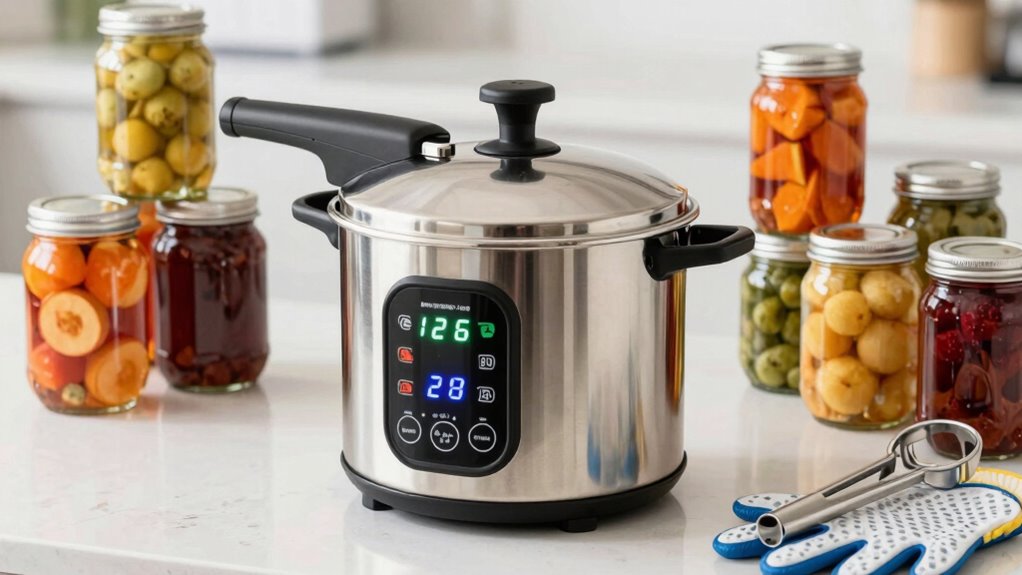
Handling and storing your canned goods properly is essential to maintaining their safety and quality. Proper food preservation depends on careful handling after canning, ensuring no contamination occurs. When storing, keep your jars in a cool, dark, and dry place to prevent spoilage. To do this effectively:
- Check for proper seals and remove any jars with broken seals or signs of spoilage.
- Label jars with the date and contents for easy identification.
- Use sturdy shelving to prevent jars from falling and breaking.
Always handle your canning equipment with clean hands to avoid contamination. Store your canned goods in a manner that prevents damage, keeping your food safe and ready for future use. Proper handling and storage are key to successful food preservation.
Top Safety Tips and Quick Troubleshooting Before Canning

Before you start canning, make certain your equipment is compatible with your pressure canner and that all parts are in good condition. Verify proper venting to prevent pressure buildup issues, and perform a quick pressure test to ensure accurate readings. These simple steps help keep your canning process safe and successful.
Check Equipment Compatibility
Are you sure your pressure canner is compatible with your specific model? Confirming equipment durability and material compatibility is vital for safe canning. First, check the manufacturer’s instructions to verify that your pressure canner is designed for your unit’s make and model. Second, inspect the materials—look for corrosion-resistant metal and heat-resistant seals that match your canner’s specifications. Third, confirm that all parts, including the lid, gasket, and pressure gauge, are compatible and in good condition. Mismatched or worn components can compromise safety. Always verify that your equipment’s durability meets safety standards to avoid accidents. Proper compatibility ensures your pressure canner functions correctly and safely during every use.
Verify Proper Venting
Ensuring proper venting is a crucial step before starting your pressure canning process. You must follow the correct venting procedures to release any trapped air and moisture from the canner. Proper venting guarantees the pressure builds correctly and prevents dangerous pressure buildup. Before you begin, open the vent or pressure release valve according to your canner’s instructions, allowing steam to escape steadily. This step confirms that all excess air has been expelled and the canner is ready for pressure. If steam isn’t escaping freely, check for blockages or obstructions in the vent pipe. Failing to verify proper venting can lead to inaccurate pressure readings and safety hazards. Always perform this step carefully, and never skip it for a safe and successful canning experience.
Conduct Quick Pressure Tests
Conducting quick pressure tests is an essential step to verify that your electric pressure canner is functioning correctly before you begin canning. First, confirm your pressure gauge calibration is accurate by testing it against a known standard or following the manufacturer’s instructions. Second, verify that your canner has the necessary safety certification, indicating it meets safety standards. Third, run a test cycle with water to check if the pressure builds and maintains at the correct level, listening for proper venting and safety valve operation. These steps help identify issues early, preventing accidents during actual canning. Regularly performing these quick pressure tests ensures your canner operates safely and efficiently, giving you confidence in your canning process.
Frequently Asked Questions
Can Electric Pressure Canners Be Used for All Types of Jars?
Yes, electric pressure canners can be used for most jar types, but you should always check the manufacturer’s guidelines. Not all jars are suitable for pressure canning, especially those not designed for high temperatures and pressure. Use proper canning techniques, like selecting jars that can withstand pressure and ensuring they fit well inside the canner. This helps prevent accidents and guarantees your preserves are safe to eat.
What Safety Gear Should I Wear During Electric Pressure Canning?
During electric pressure canning, you should wear protective clothing like oven mitts and an apron to shield against hot spills. Imagine a busy weekend when a jar slips, splashing boiling liquid—quickly, protective gear prevents burns. Always have emergency equipment, like a first aid kit nearby, ready to handle minor burns or cuts. These precautions keep you safe, ensuring a smooth, worry-free canning experience.
How Do I Know if My Electric Pressure Canner Is Compatible With My Local Voltage?
To check if your electric pressure canner is compatible with your local voltage, start by examining the appliance’s label or user manual for voltage requirements. Make sure the electrical compatibility matches your home’s voltage—whether it’s 110V or 220V. If they don’t align, you might need a voltage converter or different model. Always prioritize matching voltage requirements to prevent damage and ensure safe, efficient canning.
Are There Specific Safety Precautions for Canning High-Acid Foods?
Did you know that high-acid foods like fruits and tomatoes are less likely to cause foodborne illnesses? When canning acidic foods, you should always follow safe procedures. Use pH testing to verify your foods are properly acidified, and process them correctly in your electric pressure canner. Always wear protective gear and check your canner’s venting, gauges, and seals to prevent accidents. Proper safety measures keep your canned foods safe and delicious.
How Often Should I Replace Safety Valves and Gaskets?
You should check your safety valves and gaskets regularly for wear and tear. Valve maintenance involves replacing safety valves if they become damaged or malfunction, usually every 1-2 years. Gasket lifespan varies, but inspect gaskets before each use; replace them if they show cracks, hardening, or loss of flexibility. Proper maintenance guarantees safe pressure regulation and prevents accidents, so stay attentive to these components to keep your canning safe and effective.
Conclusion
Remember, safety is your best ingredient in canning. Just as a jar seals tightly, your vigilance keeps everything secure—preventing accidents and preserving your harvest. While the steam rises and the pressure builds, stay attentive and cautious. Think of your canner as a trusted partner, guiding you through each step. With careful handling, your preserved foods will be safe and delicious, a proof of your care and attention, standing strong and reliable like a well-sealed jar.
Halloween Picks
halloween
As an affiliate, we earn on qualifying purchases.