Sautéing ingredients before pressure cooking is a flavor hack your Instant Pot was made for, revealing richer, deeper tastes and aromatic complexity. When you sauté first, you develop caramelization, enhance spices, and build a flavorful base that makes your dishes more layered and satisfying. It’s simple to do—just heat the pot, add aromatics, and cook until fragrant. Keep experimenting with different herbs and spices, and you’ll discover tricks for even tastier results. If you want to master this technique, keep exploring for more tips.

Get kitchen gear delivered free with Prime
- Fast, free delivery on millions of items
- Prime Video, Amazon Music and more included
- Member-only deals all year
Key Takeaways
- Sautéing builds a flavorful, aromatic base through caramelization and browning, enhancing the depth of your pressure-cooked dishes.
- It allows you to develop complex flavors early by cooking aromatics like garlic, onions, and spices before sealing in pressure.
- Proper sauté techniques ensure even browning and prevent sticking, resulting in richer, more layered tastes.
- Deglazing after sautéing lifts flavorful browned bits, maximizing taste and preventing residue buildup.
- Sautéing first is a quick flavor hack that transforms simple ingredients into deeply satisfying, nuanced dishes.
As an affiliate, we earn on qualifying purchases.
Why Sautéing Before Pressure Cooking Boosts Flavor
Why Sautéing Before Pressure Cooking Boosts Flavor
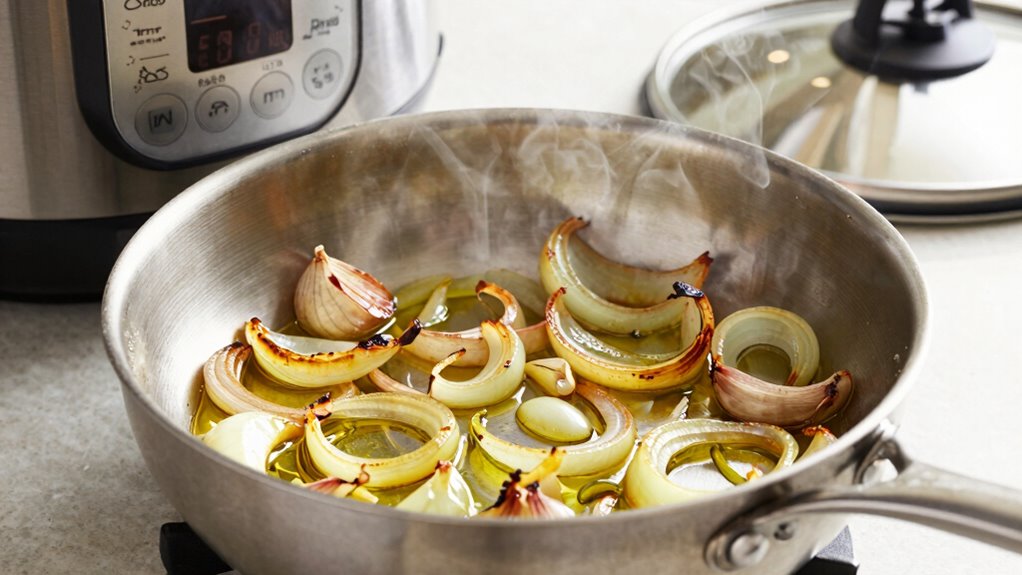
Sautéing before pressure cooking enhances flavor by developing rich, browned notes that add depth to your dish. When you sauté, you control the cooking temperature to achieve that perfect caramelization, revealing complex flavors. Understanding cooking techniques allows you to avoid burning ingredients while still browning them effectively. Additionally, incorporating essential oils like peppermint oil can provide refreshing aroma and enhance your overall cooking experience. Ingredient variations also influence the process—vegetables release sweetness, while meats develop savory, umami tones. Sautéing helps to build a flavorful base, ensuring these tastes meld during pressure cooking. By browning ingredients first, you create a more layered, robust flavor profile that wouldn’t be as pronounced if you skipped this step. This simple technique transforms your dish from basic to beautifully nuanced, making every bite richer and more satisfying. Furthermore, AI technologies can analyze cooking trends to inspire new recipes and methods, enriching your culinary journey. Additionally, building stronger relationships through emotional skills can enhance your cooking experience by fostering a more mindful approach, allowing you to appreciate the nuances of each ingredient. This method exemplifies exploring new frontiers in culinary techniques, paving the way for innovative cooking practices.
stainless steel pressure cooker pot
As an affiliate, we earn on qualifying purchases.
As an affiliate, we earn on qualifying purchases.
How to Sauté in Your Instant Pot Step by Step
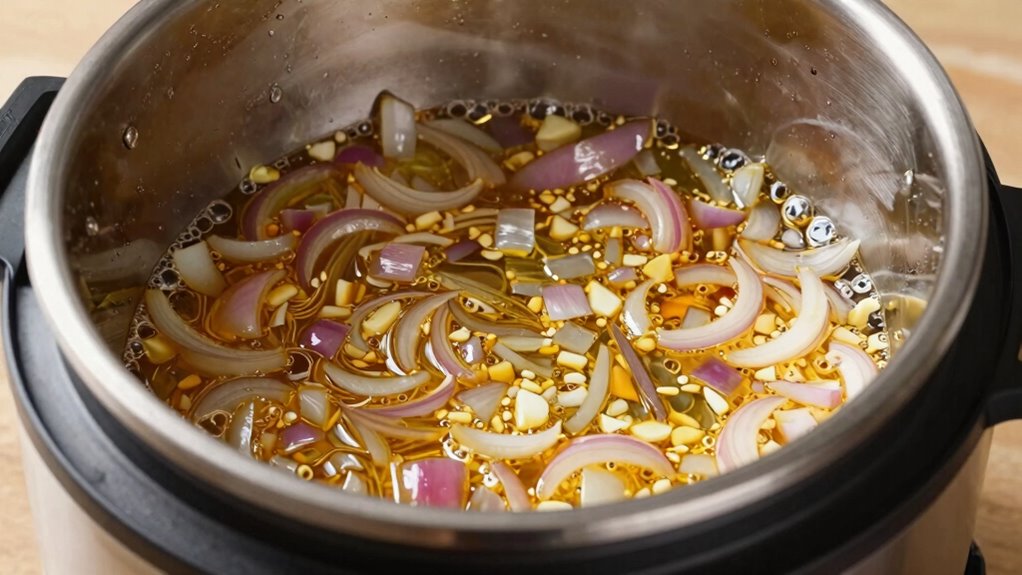
To sauté effectively in your Instant Pot, start by selecting the sauté function and allowing the device to heat up. Once hot, add a small amount of oil or fat, depending on your recipe. Use seasoning techniques like adding garlic, onions, or spices early to build flavor. Stir frequently to prevent sticking and guarantee even cooking. When comparing cookware, the Instant Pot’s inner stainless steel pot distributes heat evenly, making it easier to control the sauté process. Avoid overcrowding; cook ingredients in batches if necessary. For additional flavor, adjust seasoning levels during sautéing. Once ingredients are browned and aromatic, you’re ready to switch to pressure cooking or continue on sauté mode. This simple step enhances taste and sets the foundation for delicious meals. Additionally, proper color accuracy ensures that the final dish looks as good as it tastes.
Instant Pot flavoring accessories
As an affiliate, we earn on qualifying purchases.
As an affiliate, we earn on qualifying purchases.
Choosing the Best Ingredients and Aromatics for Sautéing
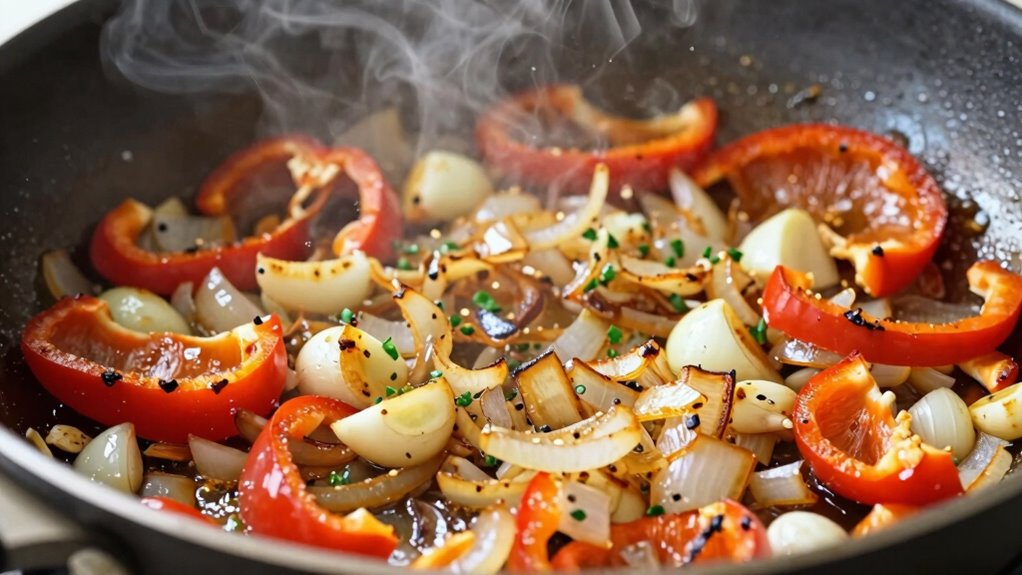
Choosing the right ingredients and aromatics can make a big difference in your dish’s flavor. You’ll want to decide between fresh herbs for brightness or dried ones for intensity, depending on what you’re making. Building a strong aromatic base with onions, garlic, and spices sets the foundation for a delicious pressure-cooked meal.
Fresh vs. Dried Herbs
Sure! Here’s your revised article subheading content with the requested addition:
—
When deciding between fresh and dried herbs for sautéing, consider how their flavors develop and release during cooking. Fresh herbs offer bright, vibrant flavors that add freshness to your dish, but they can fade quickly if not used promptly. Dried herbs, on the other hand, have concentrated flavors due to herb preservation, making them more potent and long-lasting.
Here’s what to keep in mind:
- Use fresh herbs early in cooking for maximum aroma and color.
- Add dried herbs during sautéing to unlock their full flavor potential.
- Remember dried herb potency means less is needed—start small.
- Dried herbs store well, maintaining their flavor over time, unlike fresh herbs, which lose potency faster. Additionally, incorporating music therapy can enhance your overall cooking experience by promoting relaxation and focus.
Choosing between them depends on your flavor goals and ingredient availability. Additionally, understanding accessibility features can help enhance your cooking experience by ensuring you have the right tools to maximize flavor and ease of use.
—
Let me know if you need any further modifications!
Building Aromatic Bases
Building a flavorful aromatic base starts with selecting the right ingredients to set the foundation for your dish. You can experiment with seasoning variations by adding garlic, onions, or ginger to create depth. Using different cooking techniques, like sweating or caramelizing, enhances the aromatics’ flavors. For a milder taste, sauté vegetables gently; for richer, browner flavors, cook them longer until they develop a deep aroma. Incorporate herbs and spices thoughtfully—dried or fresh—depending on your desired intensity. You might start with aromatics like bay leaves or cinnamon sticks, which add complexity. Remember, the key is to build layers of flavor early on, so your pressure-cooked dish bursts with aroma and taste. Properly building this base sets the stage for a truly flavorful meal. Furthermore, understanding the impact of AI on culinary techniques can inspire innovative approaches to cooking, allowing for even more creativity in the kitchen. Additionally, consider how ADAS sensor calibration can be likened to fine-tuning the balance of flavors, ensuring every ingredient harmonizes beautifully. Choosing the right battery inverter generator can also elevate your cooking experience by providing a reliable power source for your appliances.
pressure cooker spice and herb set
As an affiliate, we earn on qualifying purchases.
As an affiliate, we earn on qualifying purchases.
Common Sautéing Mistakes and How to Avoid Them
Certainly! Here’s the revised version of your subheading content with the requested changes:
—
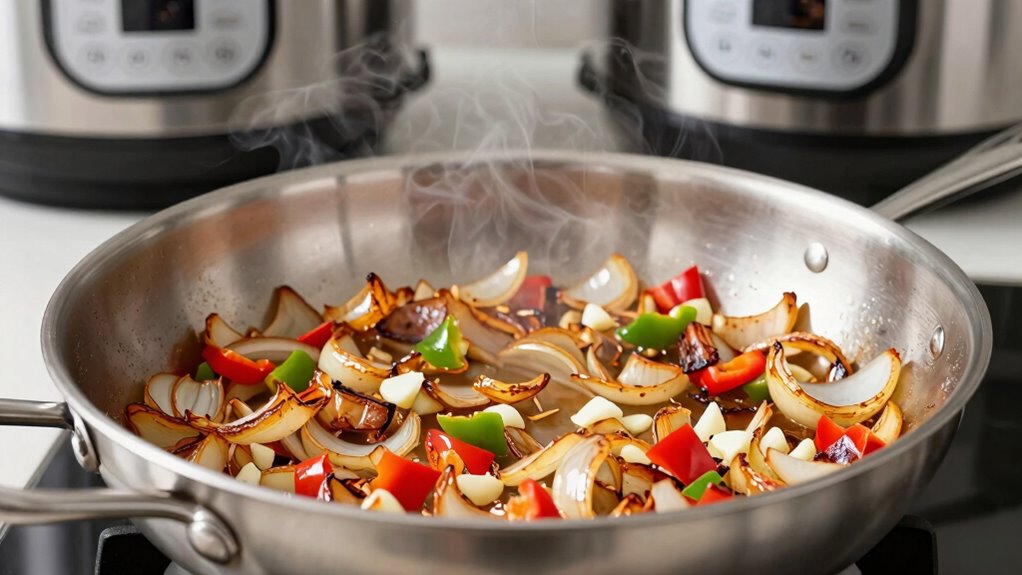
Avoid overcrowding the pan, as it causes ingredients to steam instead of sauté, leading to uneven cooking. Make sure your pan heats properly before adding ingredients to develop the right flavors and prevent sticking. Additionally, consider that proper temperature control is key to achieving the best sautéed results. Don’t ignore residue buildup, which can cause burning and affect the taste of your dish. Additionally, understanding how temperature affects cooking can help you achieve perfect sautéed results every time. For optimal flavor development, use well-draining soil to ensure your ingredients have the right foundation for cooking. Using high-quality knives can also improve your chopping technique, making it easier to achieve consistent sizes for even cooking. Remember, incorporating clear guidance can streamline your cooking process and enhance your overall experience in the kitchen.
—
Let me know if you need any further adjustments!
Overcrowding the Pan
Overcrowding the pan is a common mistake that can sabotage your sautéing efforts. When the pan is too full, ingredients steam instead of sear, losing flavor and texture. To avoid this:
- Choose the right pan size—use a larger pan for more ingredients.
- Don’t layer ingredients too thickly; spread them out evenly.
- Work in batches if needed, instead of overfilling.
- Keep ingredients moving to promote even cooking and prevent steaming.
Proper ingredient layering allows heat to circulate, ensuring ingredients brown properly. Overcrowding traps moisture and reduces caramelization, dulling flavors. By selecting an appropriate pan size and avoiding unnecessary piling, you’ll achieve better color, taste, and overall sautéing results.
Not Heating Properly
Even if you’ve chosen the right pan and spread your ingredients evenly, improper heating can still sabotage your sauté. Poor temperature control and uneven heat distribution prevent the pan from reaching the ideal temperature, leading to undercooked or unevenly cooked food. To avoid this, start with medium heat and gradually increase as needed, allowing your ingredients to heat evenly. Use the sauté function wisely, monitoring the temperature closely. If you notice the oil isn’t shimmering or your ingredients aren’t sizzling, adjust the heat immediately. Avoid rushing into high heat; it can cause hot spots and uneven cooking. Proper heat management guarantees consistent temperature control, helping you achieve perfectly sautéed ingredients that develop flavor without burning. Additionally, using kitchen ventilation can help maintain an optimal cooking environment by reducing excess moisture and smoke. Implementing proper heat management is crucial for achieving the best flavor in your dishes. Remember, even a small adjustment in cooking temperature can vastly improve the taste and texture of your meals. The right tip size for airless paint sprayers can also affect how evenly heat is distributed in a cooking process, just as it does in paint application.
Ignoring Residue Buildup
Residual food particles and oil buildup can quickly sabotage your sautéing efforts if you ignore them. Residue buildup can cause uneven heating, sticking, and burning, compromising flavor and texture. To avoid this, follow these cleaning tips:
- Deglaze the pot immediately after sautéing to loosen stuck bits.
- Use a gentle scrubber to remove residue without damaging the surface.
- Regularly clean the sealing ring and lid to prevent odor transfer; proper maintenance can enhance confidence in your cooking skills. Additionally, maintaining a clean pot can help ensure effective heat distribution, which is crucial for optimal cooking results.
- Deep clean with vinegar or baking soda periodically to break down stubborn residue. Remember that maintaining your kitchen gear not only enhances performance but also promotes eco-friendly disposal practices when it’s time to replace items.
Top Tips for Perfect Sautéed Aromatics
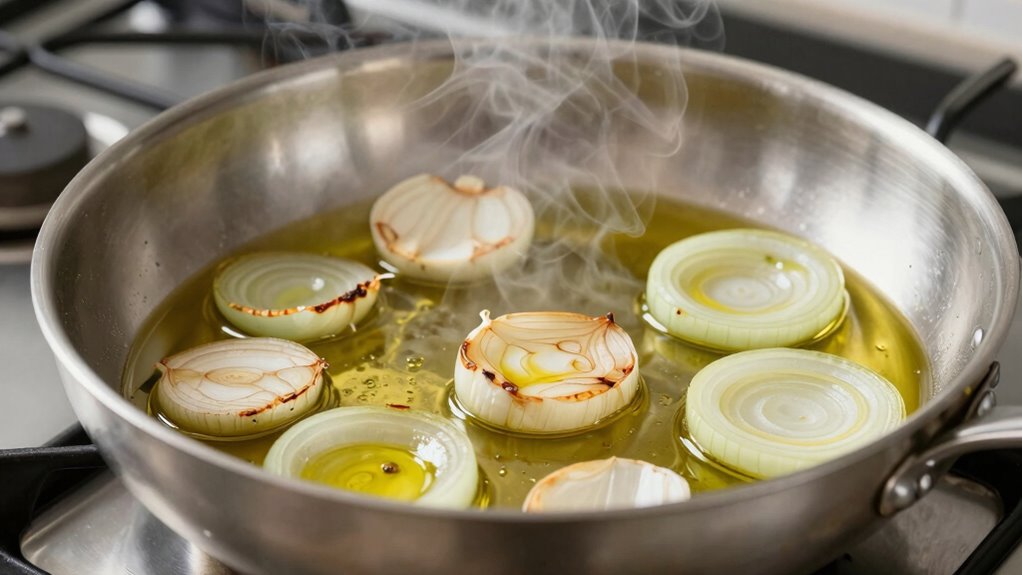
To achieve perfectly sautéed aromatics, start by heating your pan over medium heat until it’s hot but not smoking. This guarantees even cooking and prevents burning. Pay attention to cultural influences—different cuisines favor various aromatics like garlic, ginger, or lemongrass—so choose ingredients that suit your dish. Stir frequently to release their flavors evenly. If you’re missing an ingredient, don’t hesitate to use substitutions; for example, shallots can replace onions, and fresh herbs can stand in for dried. Keep the heat steady, and avoid overcrowding the pan, which can cause steaming instead of sautéing. Proper technique and mindful ingredient choices will enhance your dish’s depth, making your sautéed aromatics truly flavorful and perfectly cooked every time. Embracing California’s culinary diversity can inspire new flavor combinations and elevate your cooking experience.
Experimenting With Different Spices and Flavors
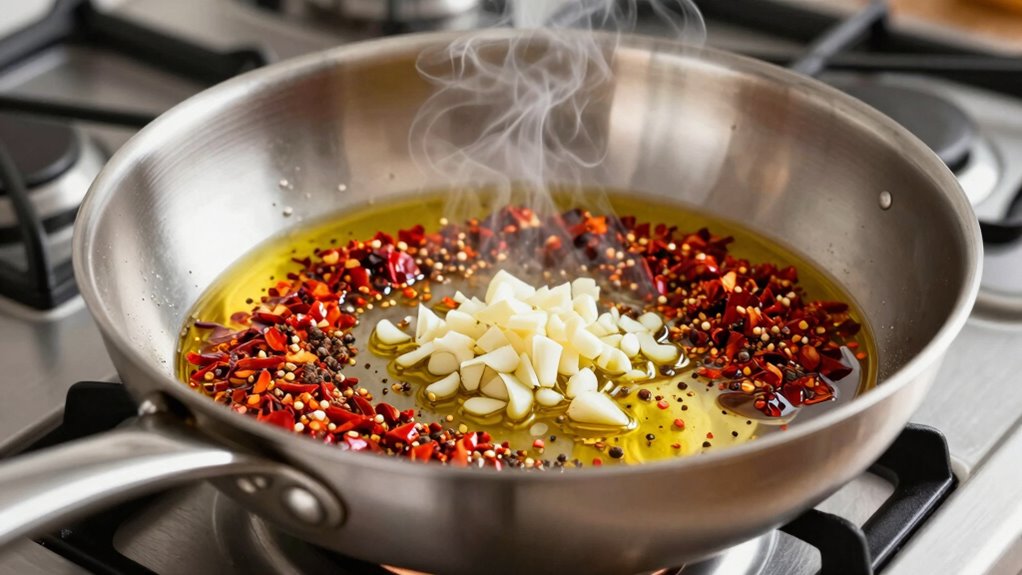
Experimenting with different spices and flavors can transform a basic dish into something extraordinary. By exploring various spice combinations, you discover new dimensions of flavor layering that elevate your pressure-cooked meals. Here are some ideas to get you started:
Experiment with spice blends to elevate your pressure-cooked dishes and unlock exciting new flavors.
- Mix cumin, coriander, and turmeric for a warm, earthy base.
- Combine smoked paprika, chili powder, and garlic for a smoky, spicy kick.
- Use cinnamon, allspice, and nutmeg for sweet and savory balance.
- Pair ginger, lemongrass, and lime zest for a bright, citrusy aroma.
These combinations allow you to customize and deepen your dish’s flavor profile, making each meal uniquely delicious. Don’t be afraid to experiment—your Instant Pot is made for creative spice adventures.
Frequently Asked Questions About Sautéing in Instant Pot
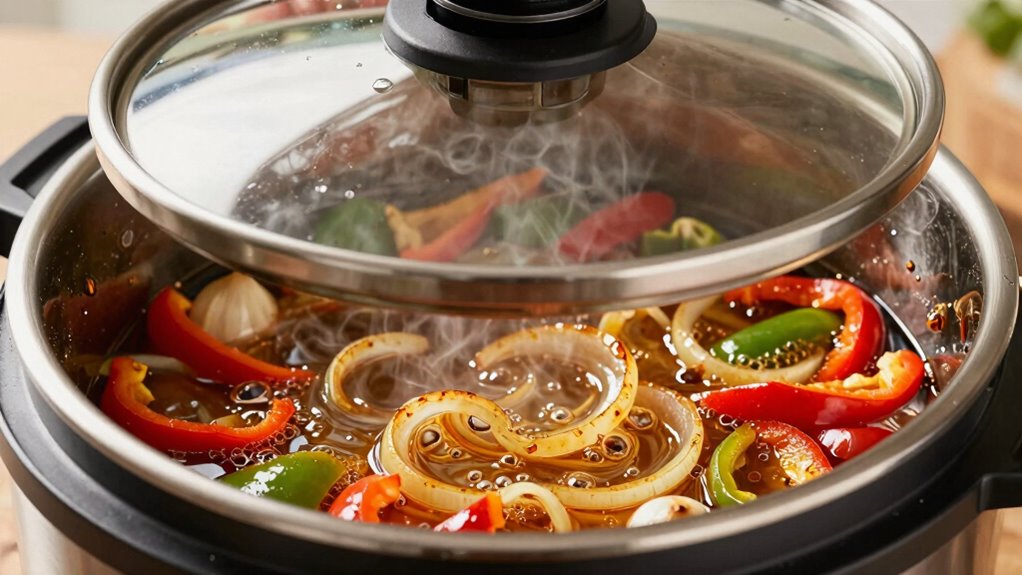
Sautéing in your Instant Pot can seem straightforward, but many users have common questions about the process. One key concern is cooking safety—make sure to never overfill the pot, as boiling over can be dangerous. Always use the “Sauté” function at the recommended temperature setting to prevent burning or sticking. Equipment care is also important; after cooking, clean the inner pot thoroughly to avoid residue buildup that could affect future dishes. Use silicone or wooden utensils to protect the non-stick surface. If you’re unsure about timing or temperature, start with short intervals and adjust as needed. Proper safety and maintenance guarantee your Instant Pot stays in top shape, making sautéing safer and more effective every time.
Frequently Asked Questions
Can I Sauté Without Using Oil in My Instant Pot?
Yes, you can sauté without oil in your Instant Pot by using oil substitutions like broth, water, or even apple cider vinegar. For sautéing alternatives, add a small amount of liquid to prevent sticking, and keep the pot on the sauté setting. Stir frequently to avoid burning or sticking, especially without oil. This method helps you achieve flavorful results while reducing fat and keeping cleanup simple.
How Long Should I Sauté Ingredients Before Pressure Cooking?
Sauté your ingredients for about 3 to 5 minutes, like a painter adding bold strokes to a canvas. This step boosts flavor enhancement and helps with ingredient preparation. Stir frequently to prevent sticking and guarantee even cooking. If you’re using oil, it helps develop richer flavors, but even without it, the process reveals deeper tastes. Keep an eye on your ingredients, and adjust the time as needed for ideal results.
Is Sautéing Necessary for All Recipes in an Instant Pot?
Sautéing isn’t necessary for every Instant Pot recipe, but it often enhances flavor. For recipe variations like stews or curries, sautéing can deepen the taste and improve texture. It’s a quick step that reveals richer flavors and adds complexity to your dishes. If you’re short on time or aiming for a lighter dish, you can skip it. However, for the best flavor enhancement, sautéing is highly recommended.
Can I Sauté Frozen Ingredients Directly in the Instant Pot?
You can sauté frozen ingredients directly in your Instant Pot, but it’s a bit trickier than fresh. The frozen ingredients release excess moisture, which can slow down the sizzling process. Use your sauté techniques to break them apart and increase heat gradually. Keep stirring, and don’t rush; patience turns icy blocks into flavorful, tender bites. With a little effort, your frozen ingredients will transform into deliciousness in no time!
How Do I Clean the Instant Pot After Sautéing?
After sautéing, you should unplug your Instant Pot and let it cool slightly. Use a damp cloth or sponge with mild soap to wipe down the inner pot and lid, focusing on residue removal. For stubborn spots, soak a soft cloth in warm, soapy water before cleaning. Avoid abrasive cleaners to protect the non-stick coating. Regular cleaning tips like these keep your Instant Pot in top shape and prevent lingering residues.
Conclusion
By sautéing before pressure cooking, you reveal a world of rich, caramelized flavors that dance on your taste buds. Imagine your Instant Pot transforming simple ingredients into a fragrant masterpiece, with sizzle and aroma filling your kitchen like a warm hug. It’s your secret weapon for depth and complexity in every dish. So, grab those spices, turn on the sauté, and watch your meals become irresistibly flavorful adventures, all with a few easy steps.
Evergreen bestsellers Picks
bestsellers
As an affiliate, we earn on qualifying purchases.