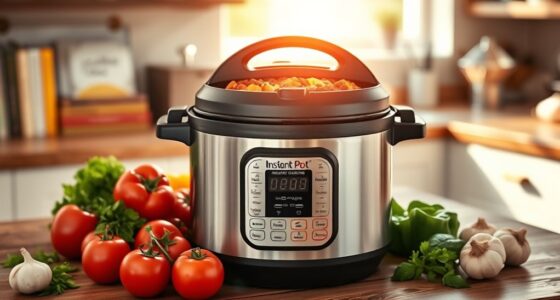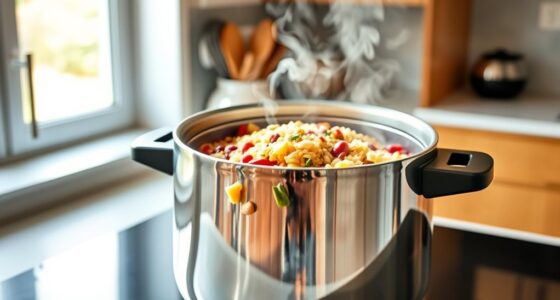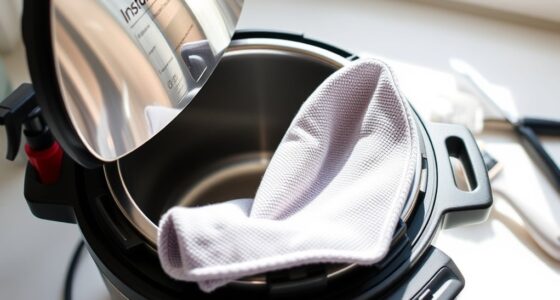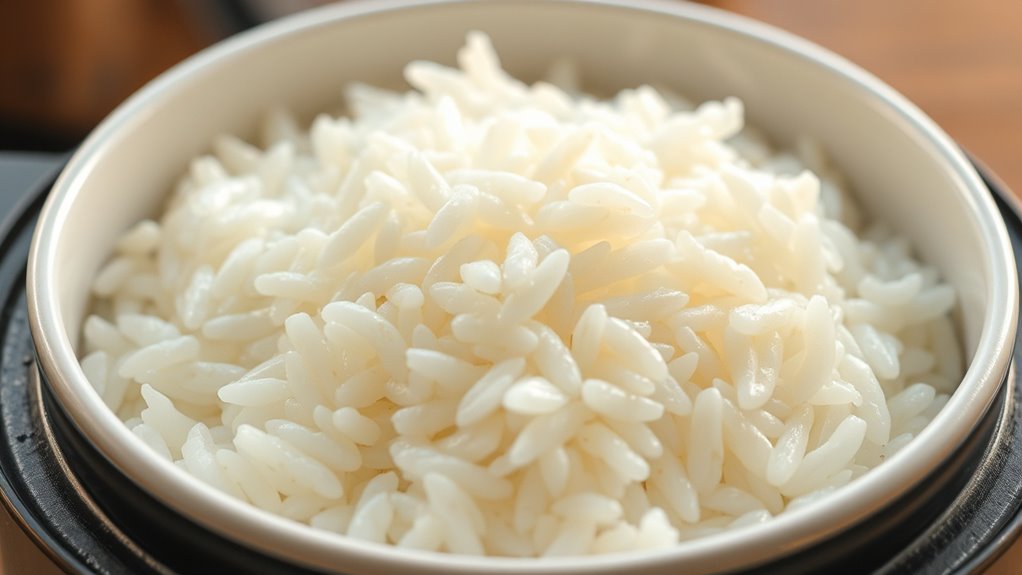
To get perfect rice every time in your Instant Pot, start by measuring about 1 cup of rinsed rice with 1 to 1.25 cups of water, depending on the rice type. Use the high-pressure setting and cook for 4-6 minutes for white rice or 22-24 minutes for brown rice. Let it naturally release pressure for 10 minutes before fluffing. If you want to master consistently fluffy rice, keep exploring for more tips.
Key Takeaways
- Rinse rice thoroughly to remove excess starch, preventing stickiness and ensuring fluffy results.
- Use the correct water-to-rice ratio: 1 to 1.25 cups water per 1 cup rice.
- Cook on high pressure for 4-6 minutes for most rice types, longer for brown rice.
- Allow a natural pressure release for 10 minutes to finish steaming and improve texture.
- Fluff rice gently after cooking and adjust water or time as needed for perfect texture.

Cooking perfect rice in your Instant Pot is quick and easy once you know the right steps. The key to achieving that ideal rice texture lies in understanding how cooking time and water ratio affect the final result. When you get these factors right, you’ll consistently enjoy fluffy, tender rice without the fuss of traditional stovetop methods. First, measure your rice carefully, using about 1 cup of rice for every 1 to 1.25 cups of water. This ratio guarantees your rice isn’t too soggy or undercooked. Rinsing the rice thoroughly before cooking removes excess starch, which can cause stickiness and uneven texture. Once rinsed, add the rice and water to your Instant Pot, and close the lid securely.
Set your Instant Pot to the “Manual” or “Pressure Cook” setting at high pressure. The cooking time is vital here—generally, 4 to 6 minutes works well for most types of rice, such as long-grain or jasmine. Shorter times tend to produce firmer rice, while longer times can lead to softer, even slightly mushy results. Keep in mind that different rice varieties may require slight adjustments: brown rice, for example, often needs about 22 to 24 minutes at high pressure. When the cooking cycle ends, allow the pressure to release naturally for about 10 minutes before quick-releasing any remaining pressure. This resting period helps the rice finish steaming gently, improving the rice texture and preventing it from becoming overly sticky.
The magic of the Instant Pot is that it cooks rice uniformly, so you don’t have to stir or keep an eye on it. The precise cooking time and pressure ensure the rice grains absorb just enough moisture to become tender but not soggy. Once you open the lid, fluff the rice gently with a fork to separate the grains. This step is important because it keeps the rice light and airy, rather than clumped together. If your rice still seems undercooked or too firm, you can add a splash of water and cook on high pressure for another minute or two. Conversely, if it’s too soft, reduce the water slightly next time. Proper water ratio and consistent timing are crucial for perfect results.
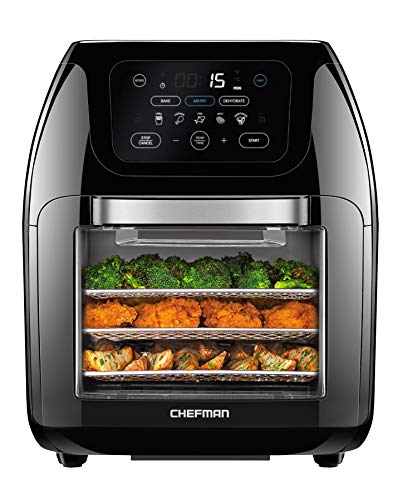
CHEFMAN Multifunctional Digital Air Fryer+ Rotisserie, Dehydrator, Convection Oven, 17 Touch Screen Presets Fry, Roast, Dehydrate, Bake, XL 10L Family Size, Auto Shutoff, Large Easy-View Window, Black
Versatile countertop cooking: Air fry, bake, dehydrate, rotisserie, or roast to crispy perfection in one convenient appliance
As an affiliate, we earn on qualifying purchases.
Frequently Asked Questions
Can I Use Different Types of Rice in My Instant Pot?
Yes, you can use different rice varieties in your Instant Pot. Just keep in mind that each type may need some cooking adjustments, like water ratios or cooking time. For example, brown rice requires more water and longer pressure cooking than white rice. Experiment with small batches to find the perfect settings for each rice type, ensuring you get fluffy, delicious results every time.
How Do I Adjust Cooking Times for Various Rice Varieties?
Imagine cooking jasmine rice, which typically needs less time than brown rice. You’ll want to adjust cooking times based on rice variety considerations: for jasmine, reduce the time; for brown rice, extend it. Generally, you can start with the standard times and make small adjustments based on texture. Always consider rice type, water ratio, and altitude to fine-tune your cooking time adjustments for perfect results every time.
Is It Necessary to Rinse Rice Before Cooking?
You should rinse rice before cooking to remove excess starch, which helps prevent clumping and creates fluffier results. Wash the rice thoroughly with water to improve texture, especially for dishes where you want distinct grains. Keep in mind, rinsing slightly affects the water ratio, so adjust accordingly—generally, use a bit less water if your rice is pre-washed. This simple step guarantees your rice turns out perfectly every time.
Can I Cook Larger Quantities of Rice at Once?
You can definitely cook larger quantities of rice at once in your Instant Pot, which is perfect for batch cooking. Did you know that properly stored rice can last up to six months? To guarantee even cooking and easy rice storage afterward, use the pot’s natural release feature and avoid overfilling. This way, you get fluffy rice in bigger batches, saving time and making meal prep more efficient.
How Do I Prevent Rice From Sticking to the Bottom?
To prevent rice from sticking to the bottom, use a non-stick coating on your Instant Pot or add a little oil or butter before cooking. After adding the rice, stir it gently to distribute the oil evenly. This helps create a barrier, reducing sticking. Also, avoid overfilling and make certain you’re using the correct water-to-rice ratio. Stirring the rice before cooking keeps it from sticking and promotes even cooking.

Emeril Lagasse Extra Large French Door Air Fryer Toaster Oven Combo, 24 Cooking Functions and Digital Controls, 7 Accessories Included, Stainless Steel Finish, 26QT Capacity
A VERSATILE AIR FRYER AND MULTI-COOKER COMBO: Elevates practically any meal, from air frying quick after-school snacks to...
As an affiliate, we earn on qualifying purchases.
Conclusion
Now that you’ve mastered perfect rice in your Instant Pot, imagine the steam rising gently as you lift the lid, revealing fluffy grains that shimmer with a inviting glow. Each bite feels like a warm hug, tender and perfectly cooked. With just a little attention, you’ve transformed simple ingredients into a comforting meal that fills your kitchen with a delicious aroma. Enjoy your flawless rice, knowing you’ve created something truly satisfying—ready to serve and savor anytime.

Cosori 9-in-1 TurboBlaze Air Fryer 6 Qt, Premium Ceramic Coating, 90°–450°F, Precise Heating for Even Results, Air Fry, Roast, Bake, Broil, Dry, Frozen, Proof, Reheat, Keep Warm, 120V, Dark Gray
𝘼𝙞𝙧 𝙁𝙧𝙮𝙚𝙧 𝙐𝙥𝙜𝙧𝙖𝙙𝙚: Innovative TurboBlaze Technology delivers a powerful 3600 rpm fan speed and temperatures up to 450℉,...
As an affiliate, we earn on qualifying purchases.

bella 4Qt Slim Air Fryer, Fits-anywhere™ Kitchenware, EverGood™ Ceramic Nonstick Coating, Adjustable Temperature, 6 Preset Cooking Options, 60 Min Auto Shutoff w Audible Tone, 3.3lb Capacity, Oatmilk
Slim Design for Any Space: The bella 4qt Air Fryer features a sleek, space-saving design, perfect for fitting...
As an affiliate, we earn on qualifying purchases.