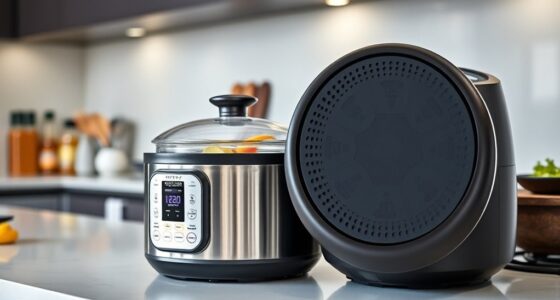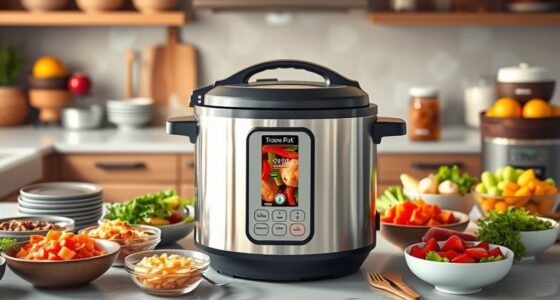

To guarantee safe pressure cooker use, always follow the manufacturer’s instructions and inspect safety valves and gaskets before each use. Use the correct pressure release method—natural for tough foods or quick for delicate ones—and never force open the lid while pressure remains. Keep safety features in good condition and handle the lid carefully to avoid steam burns. For more detailed safety tips, you’ll discover how to operate your pressure cooker confidently and safely.
Key Takeaways
- Always follow the manufacturer’s manual and safety instructions before use.
- Ensure safety valves and gaskets are clean, undamaged, and functioning properly.
- Use the appropriate pressure release method (natural or quick) based on the food type.
- Never open the lid until all pressure has been fully released and the indicator shows safe.
- Regularly inspect the cooker for cracks, wear, or corrosion to maintain safety.

Using a pressure cooker can save you time and lock in flavors, but safety should always come first. One of the most important safety aspects involves understanding how to properly perform a pressure release. After cooking, you need to release the pressure safely before opening the lid. There are two main methods: natural release and quick release. Natural release involves turning off the heat and letting the pressure decrease gradually on its own, which is ideal for foods like beans or tough cuts of meat. Quick release, on the other hand, involves carefully turning or pressing the valve to release steam rapidly, which is useful for delicate foods or when you want to prevent overcooking. Whichever method you choose, never attempt to force open the lid until the pressure indicator shows it’s safe, as residual pressure can cause dangerous steam bursts. Understanding the types of pressure release is essential for safe operation.
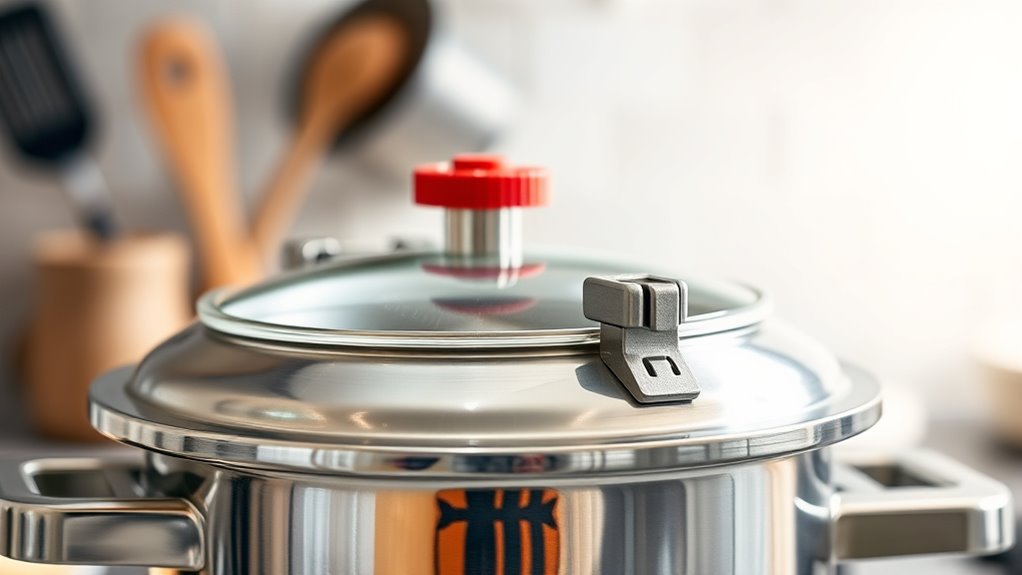
Understanding the role of safety valves is critical to safe pressure cooker operation. These safety valves act as fail-safes, preventing excess pressure from building up inside the cooker. If the pressure exceeds safe limits, the safety valve automatically releases steam, protecting you from potential accidents. Always make sure the safety valves are clean and unobstructed before use. Check that they move freely and are properly seated. If you notice any damage or if the valve is stuck, do not use the cooker until it’s repaired or replaced. Remember, safety valves are designed to release pressure at a specific point; never modify or disable them, as that could lead to dangerous over-pressurization.
In addition to pressure release and safety valves, it’s essential to familiarize yourself with the cooker’s manual. Each model has specific instructions for safe operation, including how to handle the pressure release and what to do if the safety valve activates unexpectedly. Always inspect your pressure cooker before each use—look for cracks, wear, or corrosion, especially around the lid, gasket, and valves. Keep the gasket clean and replace it if it shows signs of deterioration to ensure a proper seal. When opening the lid after cooking, tilt it away from you to avoid steam burns, and double-check that all pressure has been released before removing the lid completely.

Instant Pot Duo 7-in-1 Mini Electric Pressure Cooker, Slow Rice Cooker, Steamer, Sauté, Yogurt Maker, Warmer & Sterilizer, Includes Free App with over 1900 Recipes, Stainless Steel, 3 Quart
7 Cooking Functions: Pressure cook, slow cook, sauté, steam, make rice, yogurt, or simply keep your meal warm—all...
As an affiliate, we earn on qualifying purchases.
Frequently Asked Questions
Can I Open the Pressure Cooker While It’s Still Under Pressure?
You should never open a pressure cooker while it’s still under pressure. Always wait for the pressure release to happen naturally or use the quick-release method if your cooker allows it. Make certain the safety lock has disengaged before opening to avoid accidents. Opening it prematurely can cause hot steam and food to splatter, risking burns. Always follow your pressure cooker’s safety instructions for safe operation and peace of mind.
What Should I Do if My Pressure Cooker’s Gasket Is Damaged?
If your pressure cooker’s gasket is damaged, you should stop using it immediately. Inspect the gasket for any cracks, tears, or deformation as part of damage inspection. Replace the gasket promptly to guarantee safety and proper sealing. You can usually find gasket replacement parts at stores or online. Always follow the manufacturer’s instructions for replacement, and never use a pressure cooker with a compromised gasket to prevent accidents.
Is It Safe to Cook Multiple Dishes at Once in a Pressure Cooker?
Cooking multiple dishes at once in a pressure cooker isn’t recommended because it can overcrowd the pressure cooker capacity, affecting safety and cooking efficiency. When you overload it, steam circulation might be restricted, leading to uneven cooking or potential safety hazards. To guarantee safety and ideal results, stick to the manufacturer’s recommended capacity and cook dishes separately if needed. Always prioritize safety over multitasking in the kitchen.
How Often Should I Replace the Pressure Cooker’s Safety Valves?
Think of your pressure cooker’s safety valve as a crucial guardian—neglect it, and safety’s at risk. You should replace the safety valve every 12 to 24 months, depending on how often you cook. Regular pressure valve maintenance helps guarantee it functions properly, preventing accidents. Keep an eye out for signs of wear or damage, and don’t hesitate to replace it sooner if needed, prioritizing safety over convenience.
Can I Leave a Pressure Cooker Unattended During Cooking?
You shouldn’t leave a pressure cooker unattended during cooking because it affects cooking times and ingredient safety. Pressure builds quickly, and if it’s left alone, there’s a risk of over-pressurization or accidents. Always stay nearby, monitor the cooker, and follow the recommended cooking times to guarantee your ingredients stay safe and delicious. Being attentive helps prevent any mishaps and assures ideal results.

Instant Pot Duo 7-in-1 Electric Pressure Cooker, Slow Cooker, Rice, Steamer, Sauté, Yogurt Maker, Warmer & Sterilizer, Includes App With Over 800 Recipes, Stainless Steel, 6 Quart
7 Cooking Functions: Pressure cook, slow cook, sauté, steam, make rice, yogurt, or simply keep your meal warm—all...
As an affiliate, we earn on qualifying purchases.
Conclusion
By following these simple safety tips, you’ll keep your culinary adventures smooth and worry-free. Think of your pressure cooker as a trusted companion guiding your flavors safely to the table, rather than a wild stallion to be tamed. With gentle attention and respect, it will serve you well, turning everyday ingredients into delightful creations. Embrace these precautions, and enjoy the comforting warmth and rich aromas that come from cooking with confidence and care.

Instant Pot Duo Plus 9-in-1 Multicooker, Pressure Cooker, Slow Cook, Rice Maker, Steamer, Sauté, Yogurt, Warmer & Sterilizer, Includes App with Over 800 Recipes, Stainless Steel, 6 Quarts
9 Cooking Functions: Pressure cook, slow cook, sauté, sous vide, steam, sterilize, keep warm, make rice and yogurt—all...
As an affiliate, we earn on qualifying purchases.

Instant Pot 4QT RIO Mini 7-in-1 Multi-Cooker, Pressure Cooker, Slow cook, Sauté, Steam, Rice Maker, Yogurt, & Warmer, Black, 4 Quarts
7 Cooking Functions: Pressure cook, slow cook, sauté, steam, cook rice, make yogurt, or keep your meals warm,...
As an affiliate, we earn on qualifying purchases.