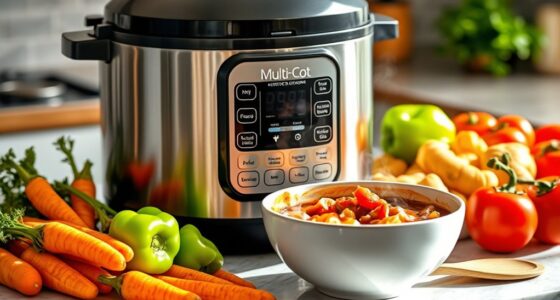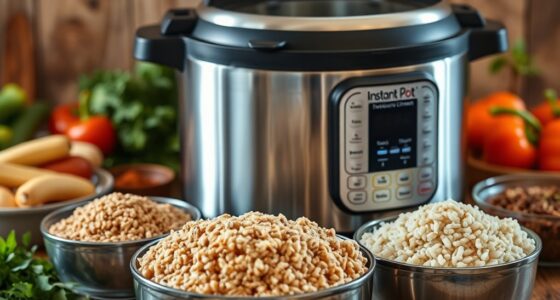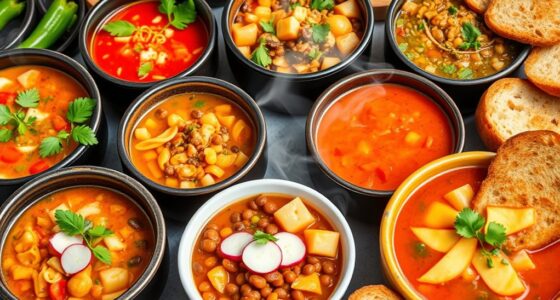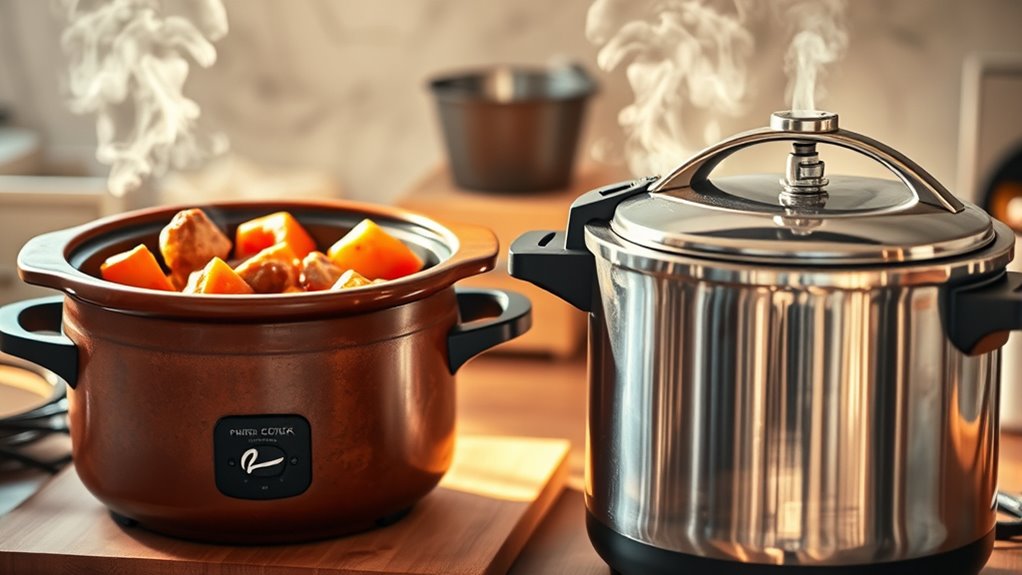

Choose slow cooking when you want rich flavors and tender results with minimal effort, especially for stews, pulled pork, or braised dishes that benefit from long simmering. If you’re pressed for time, pressure cooking is your go-to for quickly tenderizing meats, beans, or rice while preserving nutrients and flavor. Knowing when to use each method helps you achieve perfect dishes efficiently—continue exploring to discover how to optimize your cooking techniques.
Key Takeaways
- Use slow cooking for tenderizing tough cuts and developing deep, complex flavors over several hours.
- Opt for pressure cooking when time is limited and quick, flavorful results are needed.
- Choose slow cooking to preserve nutrients and achieve gentle, rich textures in stews and braised dishes.
- Select pressure cooking for fast preparation of beans, rice, and tender meats without sacrificing flavor.
- Consider the dish’s flavor profile, time constraints, and desired nutrient retention to decide the best method.

When it comes to preparing meals efficiently, choosing between slow cooking and pressure cooking can considerably impact your results. Each method has its strengths, especially when it comes to flavor preservation and nutrient retention, which are key to creating delicious, healthy dishes. Understanding when to use each technique helps you maximize their benefits and tailor your cooking to your needs.
Slow cooking excels at gently tenderizing tougher cuts of meat and infusing flavors over hours. Because it operates at low temperatures for extended periods, slow cooking preserves the delicate flavors of ingredients and maintains a higher level of nutrients. The slow process minimizes nutrient loss that often occurs with high heat, making your meals not only tasty but also more nutritious. If you’re preparing stews, pulled pork, or braised dishes, slow cooking allows flavors to meld beautifully, creating rich, complex profiles without sacrificing essential nutrients. This method is especially advantageous when you want to retain the natural essence of vegetables and herbs, enhancing flavor without extensive seasoning or additives.
Slow cooking tenderizes tough meats and preserves nutrients for rich, flavorful dishes.
On the other hand, pressure cooking is your go-to when time is tight but you still want flavorful, nutrient-rich results. Since it uses high pressure and temperature, it drastically reduces cooking time, often by up to 70%. This rapid process locks in flavors more effectively than some traditional methods because the sealed environment prevents moisture and aroma from escaping. As a result, your dishes come out flavorful and well-preserved, with much of the original nutrients still intact. The high-pressure environment breaks down cell walls quickly, making nutrients like vitamins and minerals more accessible and less prone to degradation. If you’re preparing quick meals like beans, rice, or tender cuts of meat, pressure cooking delivers the same flavorful, nutritious outcome as slow cooking but in a fraction of the time.
Choosing between slow and pressure cooking depends on your schedule and the type of dish you’re aiming for. Slow cooking is ideal for dishes that benefit from long, gentle simmering to develop deep flavors and retain nutrients. Meanwhile, pressure cooking offers a fast, efficient alternative for everyday meals, preserving flavor and nutrients through its sealed, high-pressure environment. Both methods have their unique advantages, and knowing when to use each helps you create flavorful, nutritious meals efficiently. Whether you’re after the slow, gradual flavor infusion or the quick, nutrient-preserving power of pressure cooking, understanding their differences ensures you get the best results every time.
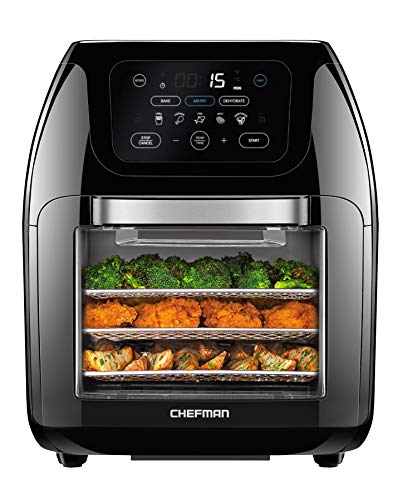
CHEFMAN Multifunctional Digital Air Fryer+ Rotisserie, Dehydrator, Convection Oven, 17 Touch Screen Presets Fry, Roast, Dehydrate, Bake, XL 10L Family Size, Auto Shutoff, Large Easy-View Window, Black
Versatile countertop cooking: Air fry, bake, dehydrate, rotisserie, or roast to crispy perfection in one convenient appliance
As an affiliate, we earn on qualifying purchases.
Frequently Asked Questions
Can I Convert Slow Cooker Recipes to Pressure Cooker Versions?
Yes, you can convert slow cooker recipes to pressure cooker versions. Focus on recipe adaptation by reducing cooking times and adjusting liquid amounts, since pressure cookers cook faster and retain moisture differently. To maintain flavor, use aromatic ingredients and seasonings, and avoid over-adding liquids. Keep an eye on the recipe, and experiment with small adjustments to ensure your dish turns out flavorful and tender, just like the slow cooker version.
Which Method Retains More Nutrients, Slow Cooking or Pressure Cooking?
They say “you are what you eat,” so choosing the right cooking method matters. Pressure cooking generally retains more nutrients because it cooks faster and uses less water, preserving nutrient integrity. Slow cooking, while gentler, can cause some nutrient loss over long periods. For better nutrient preservation and cooking efficiency, go for pressure cooking when you want quick, nutrient-rich meals.
Are There Safety Concerns Unique to Pressure Cooking?
Yes, there are safety concerns with pressure cooking. You should always check that the pressure valve is functioning properly and never overfill the cooker, as this can cause dangerous foaming or clogging. Make sure the lid is securely locked before cooking, and follow the manufacturer’s instructions for lid safety. Regularly inspect seals and valves to prevent accidents, and never attempt to open the lid until pressure has fully released.
How Does Cooking Time Differ Between the Two Methods?
You’ll find that pressure cooking considerably reduces cooking durations, often taking a fraction of the time compared to slow cooking. While slow cooking can take several hours to tenderize ingredients, pressure cooking achieves similar results in 30 minutes to an hour, making it more time-efficient. Your choice depends on your schedule; if you want quick meals, pressure cooking is ideal, but slow cooking offers hands-off convenience for longer, gentle preparations.
Can Both Methods Be Used for the Same Types of Dishes?
Yes, you can use both methods for similar dishes, but each offers different benefits. Slow cooking enhances recipe versatility by allowing flavors to develop gradually, making it ideal for hearty stews and roasts. Pressure cooking, on the other hand, speeds up the process while still delivering rich flavor. Choose slow cooking for deep, complex taste, and pressure cooking when you need quick results with satisfying flavor.

Emeril Lagasse Extra Large French Door Air Fryer Toaster Oven Combo, 24 Cooking Functions and Digital Controls, 7 Accessories Included, Stainless Steel Finish, 26QT Capacity
A VERSATILE AIR FRYER AND MULTI-COOKER COMBO: Elevates practically any meal, from air frying quick after-school snacks to...
As an affiliate, we earn on qualifying purchases.
Conclusion
So, whether you’re craving tender, melt-in-your-mouth meals or quick, flavorful dishes, knowing when to use slow or pressure cooking can transform your kitchen game. Think of slow cooking as your trusty, patient friend that turns tough cuts into gold, while pressure cooking is your lightning-fast wizard that saves the day in minutes. Master these tools, and you’ll conquer any recipe — your culinary skills will be unstoppable! Happy cooking!

Instant Pot Duo Crisp 11-in-1 Air Fryer and Electric Pressure Cooker Combo with Multicooker Lids that Air Fries, Steams, Slow Cooks, Sautés, Dehydrates, & More, Free App With Over 800 Recipes, 6 Quart
11 Cooking Functions: Air fry, roast, bake, dehydrate, pressure cook, slow cook, sauté, steam, sterilize, warm, or cook...
As an affiliate, we earn on qualifying purchases.

Cosori 9-in-1 TurboBlaze Air Fryer 6 Qt, Premium Ceramic Coating, 90°–450°F, Precise Heating for Even Results, Air Fry, Roast, Bake, Broil, Dry, Frozen, Proof, Reheat, Keep Warm, 120V, Dark Gray
𝘼𝙞𝙧 𝙁𝙧𝙮𝙚𝙧 𝙐𝙥𝙜𝙧𝙖𝙙𝙚: Innovative TurboBlaze Technology delivers a powerful 3600 rpm fan speed and temperatures up to 450℉,...
As an affiliate, we earn on qualifying purchases.