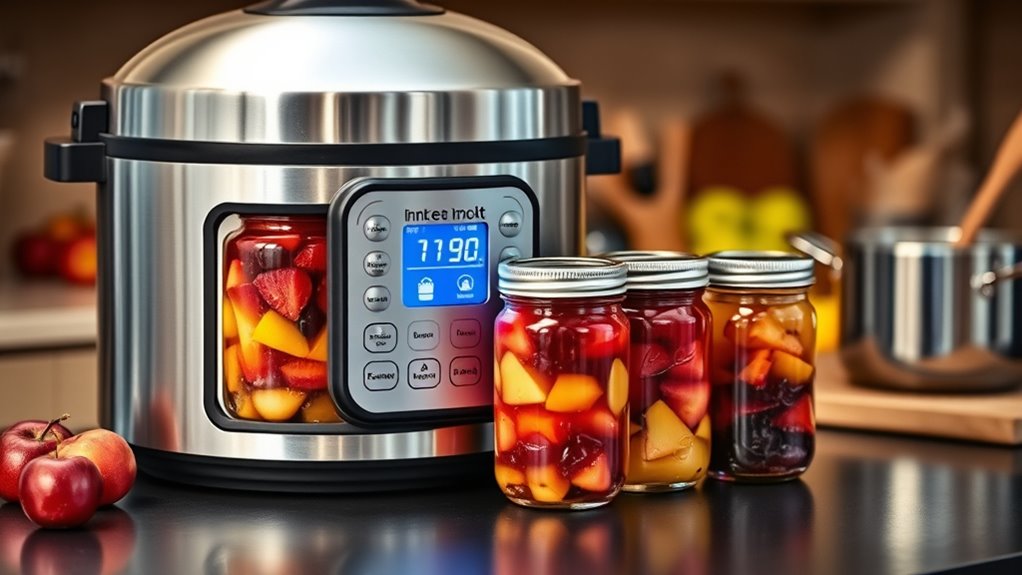

Using your multicooker for safe home canning is possible if your device has a pressure cooker function suitable for low-acid foods. Make sure you follow your model’s manual and use proper pressure levels for different foods to prevent spoilage and bacteria growth. Keep jars sterilized, sealed correctly, and maintain steady pressure throughout the process. If you want to know more about safely canning with your multicooker, there’s important information to think about.
Key Takeaways
- Verify your multicooker is designed for pressure canning by consulting the manual or manufacturer guidelines.
- Use proper pressure settings recommended for each food type to ensure safety during processing.
- Sterilize jars thoroughly and fill them correctly, sealing tightly before placing in the multicooker.
- Maintain consistent pressure and temperature throughout the process, allowing natural pressure release afterward.
- For low-acid foods, consider using a traditional pressure canner, as not all multicookers are suitable for low-acid pressure canning.
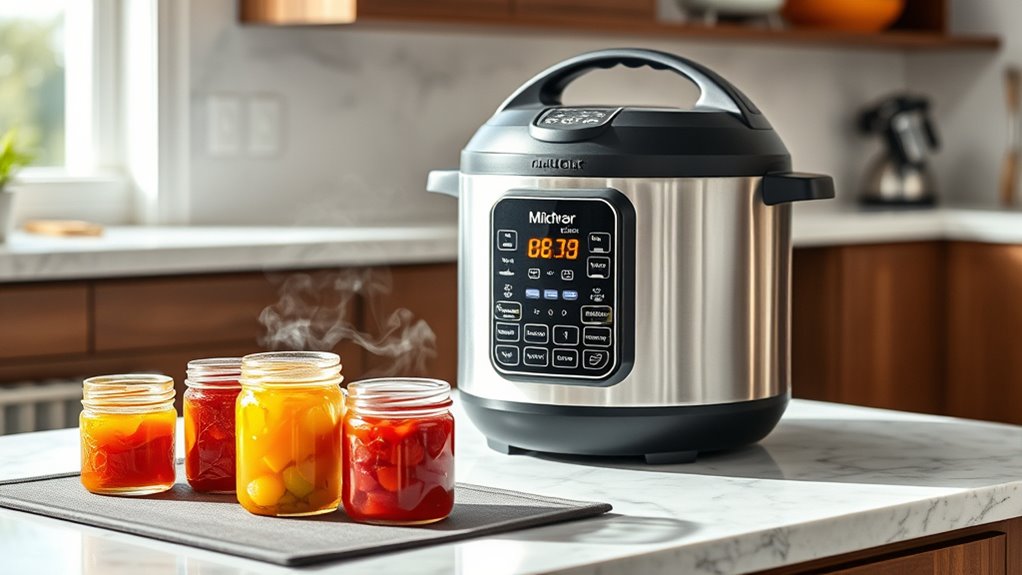
A multicooker can be a versatile tool for home canning, making the process faster and more convenient. While many people associate canning with traditional boiling water baths or large pressure canners, your multicooker offers an alternative that simplifies food preservation techniques. Although not all multicookers are designed for pressure canning, some models come with a pressure cooker function that allows you to safely process low-acid foods. This feature is essential because pressure canning is the only approved method for preventing botulism in low-acid foods like vegetables, meats, and beans. If your multicooker has a pressure setting, you can follow specific guidelines to guarantee you’re maintaining the right pressure level and temperature for safe food preservation.
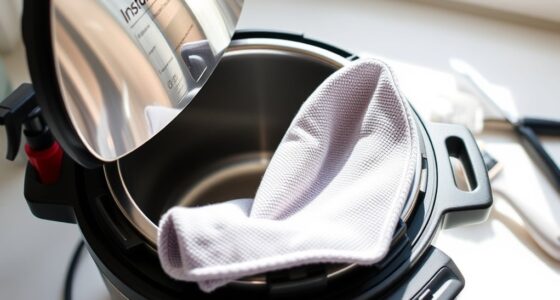
Using your multicooker for pressure canning involves understanding its capabilities and limitations. Unlike traditional pressure canners, multicookers often lack the weight or vent system necessary to regulate pressure precisely, so it’s imperative to consult your device’s manual and verify whether it’s suitable for pressure canning. If it is, you’ll need to prepare your jars with the appropriate food, guaranteeing they’re properly sterilized and filled correctly to prevent spoilage. Once sealed, you’ll set your multicooker to the pressure cooking mode, selecting a pressure level recommended for the specific food you’re processing. Maintaining a consistent pressure throughout the process is essential because fluctuations can compromise safety. Proper pressure regulation is crucial for ensuring that the heat reaches and maintains the necessary levels to kill harmful bacteria and spores.
Food preservation techniques like pressure canning require careful attention to timing, pressure, and temperature. Your multicooker can streamline this process by offering controlled pressure settings, minimizing the need for constant monitoring. During the process, you’ll want to guarantee that the pressure remains stable, adjusting the cooking time as needed based on the recipe or guidelines. After processing, allow the pressure to release naturally, making sure jars are cooled and sealed properly before storing. Proper sealing is vital to prevent contamination and guarantee your preserved foods last for months or even years.
Keep in mind that not all multicookers are suitable for pressure canning. If your device lacks a true pressure canning function, it’s safer to stick with water bath canning for high-acid foods or invest in a traditional pressure canner for low-acid items. Using your multicooker correctly can enhance your food preservation techniques, saving time and effort while guaranteeing your canned goods are safe for consumption. Always prioritize safety by following tested recipes, maintaining proper pressure, and inspecting jars before storage. With proper use, your multicooker can become a valuable tool in your home canning arsenal.
Frequently Asked Questions
Can I Use Any Multicooker Model for Home Canning?
Not all multicooker models are suitable for home canning. You should verify your multicooker’s compatibility and model limitations before attempting to can. Many multicookers lack the necessary temperature control and pressure features required for safe canning, so using a model designed for pressure cooking or a dedicated canner is safer. Always follow manufacturer guidelines to ensure your multicooker is appropriate and safe for home canning.
What Safety Precautions Should I Follow During Multicooker Canning?
Imagine you’re canning applesauce in your multicooker. To guarantee food safety, always follow recipe instructions carefully, use a reliable thermometer, and check your equipment for proper sealing and cleanliness. Never overload the cooker and avoid abrupt temperature changes. Regularly maintain your multicooker by cleaning it thoroughly after each use. These steps help prevent contamination, ensure safety, and keep your equipment functioning properly during home canning.
How Do I Adjust Processing Times for Different Jar Sizes?
To modify processing times for different jar sizes, you should consider jar size adjustments and processing time modifications. Larger jars may need slightly longer processing, while smaller jars require less time. Always follow tested recipes and guidelines, and when in doubt, consult your multicooker’s manual or trusted canning resources to guarantee safety. Keep an eye on jar seals and processing consistency to ensure your canned goods stay safe and preserved properly.
Is a Pressure Function Necessary for Safe Canning?
Did you know that improper pressure safety can lead to botulism, a deadly toxin? A pressure function is essential for safe canning because it guarantees canning accuracy by reaching the proper temperature to kill harmful bacteria. Without it, your jars might look sealed but could still pose health risks. Always use a pressure setting on your multicooker to maintain consistent, safe pressure levels during the canning process.
Can I Reuse Canning Jars and Lids After Processing in a Multicooker?
Yes, you can reuse canning jars and lids after processing in a multicooker, but you must verify jar integrity and lid safety first. Inspect jars for cracks or chips, and ensure lids are not rusted or bent. Reusing jars is safe, but lids should be replaced if there’s any doubt about their seal. Properly sealed jars ensure safe jar reuse and maintain lid safety during storage.
Conclusion
Now that you know how to safely use your multicooker for home canning, imagine the delicious jars waiting to be enjoyed. But don’t get too comfortable just yet—there’s one final step that could make or break your canned treasures. Are you ready to uncover the secret that guarantees every jar is perfectly safe and sealed? Stay tuned, because your home-canning adventure is about to reach its most exciting, satisfying conclusion. The best is yet to come!