For candy making kits for home, my best overall pick is the Kusini Gummy Candy Making Kit, which pairs a heating base with reusable molds for a more hands-on candy-making setup. The Thames & Kosmos Candy Chemistry Science Kit suits curious kids who want experiments alongside treats, while the Cotton Candy Maker Kit is a stronger fit for parties and serving a group. The main tradeoff is between equipment that supports repeat batches and single-use or novelty kits built around one activity. I also compare setup, adult involvement, candy variety, and how well each kit fits its intended age and occasion. Read on for the full breakdown and help matching a kit to your kitchen, gift, or group activity.

Get kitchen gear delivered free with Prime
- Fast, free delivery on millions of items
- Prime Video, Amazon Music and more included
- Member-only deals all year
Complete the kit

Key Takeaways
- The Kusini kit stands apart for repeat use: its heating base and four silicone molds make it a more equipment-focused choice than the experiment and novelty kits.
- Science-led kits offer more than candy shaping: Thames & Kosmos and Playz sets emphasize experiments, making them better suited to kids who enjoy learning activities as much as the finished treat.
- Party needs change the ranking: the cotton candy set includes sugars, cones, and bags, so it is geared toward serving a group rather than exploring several candy-making techniques.
- Novelty kits trade repeatability for a memorable activity: ramen, edible slime, gross gummy shapes, and exploding candy focus on playful outcomes rather than broad everyday candy-making use.
- Chocolate kits serve different purposes: the Dubai chocolate set centers on a filled bar, while the fondue and bar-maker kits focus on sharing or shaping chocolate.
| Dubai Chocolate Bar Making Kit with Pistachio Cream and Kataifi |  | Best for Filled Chocolate Bars | Included ingredients: Milk chocolate melts, pistachio cream, kataifi pastry | Included equipment: Reusable chocolate bar mold | Preparation: Melt, layer, fill, and chill | VIEW LATEST PRICE | See Our Full Breakdown |
| Thames & Kosmos Candy Chemistry Science Kit |  | Best for Candy Science Projects | Brand: Thames & Kosmos | Age range: 10–15 years | Manual: 48-page full-color manual | VIEW LATEST PRICE | See Our Full Breakdown |
| Kusini Gummy Candy Making Kit with Heating Base and 4 Silicone Molds |  | Best for Family Gummy-Making Sessions | Mold shapes: 4 | Included accessories: Heated base, removable gelatin pot, ice tray, 2 syringes | Package dimensions: 9.8 x 9.72 x 6.42 inches | VIEW LATEST PRICE | See Our Full Breakdown |
| Cotton Candy Maker Kit with 5 Sugars, 30 Cones, and 30 Bags |  | Best for Parties | Included sugar flavors: Grape, strawberry, vanilla, raspberry, and cranberry | Sugar container size: 8.4 oz (240 g) each | Included cones: 30 | VIEW LATEST PRICE | See Our Full Breakdown |
| Thames & Kosmos Rainbow Gummy Candy Lab STEM Kit |  | Best for Younger Beginners | Brand: Thames & Kosmos | Age range: 6 years and up | Educational objective: STEM | VIEW LATEST PRICE | See Our Full Breakdown |
| Tasty Labs Gross Gummy Candy Lab: Worms and Spiders |  | Best for Sour-Shaped Gummies | Brand: Thames & Kosmos | Age range: 6+ | Set name: Gross Gummy Candy Lab (V 2.0) | VIEW LATEST PRICE | See Our Full Breakdown |
| Kracie DIY Chocolate Fondue Party Candy Kit |  | Best for a Quick Fondue Activity | Product type: DIY candy kit | Sauces: Chocolate and strawberry chocolate | Included dipping ingredients: Strawberry jelly, banana, petit cake, and marshmallow | VIEW LATEST PRICE | See Our Full Breakdown |
| Flair Chocolate Bar Maker Kit for Kids |  | Best for Custom Chocolate Bars | Brand: Flair | Number of pieces: 1 | Materials: Plastic and silicone | VIEW LATEST PRICE | See Our Full Breakdown |
| Playz Edible Slime Candy Making Kit for Kids |  | Best for Experiment Variety | Brand: Playz | Age range: 8 years and up | Experiments: Over 25 | VIEW LATEST PRICE | See Our Full Breakdown |
| Dinosaur Gummy Candy Lab STEM Experiment Kit | 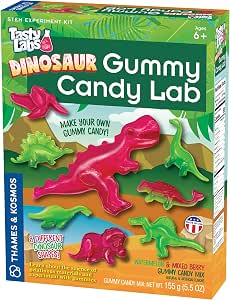 | Best for Gummy Yield and STEM Learning | Brand: Thames & Kosmos | Age range: 6 years and up | Candy yield: Up to 72 gummies | VIEW LATEST PRICE | See Our Full Breakdown |
| Tasty Labs Lollipop Lab Experiment Set |  | Best for Focused, Hands-On Learning | Brand: Thames & Kosmos | Age range: 8 years and up | Included components: Lollipop molding tray, candy thermometer, 20 lollipop sticks, ring lollipop base, blue raspberry and red cherry mixes, beaker | VIEW LATEST PRICE | See Our Full Breakdown |
| Playz Edible Candy Making Science Kit for Kids, 40+ Experiments |  | Best for Experiment Variety | Brand: Playz | Recommended age: 8–12 years and up | Experiments: 40+ | VIEW LATEST PRICE | See Our Full Breakdown |
| Playz Edible Exploding Candy Making Kit for Kids |  | Best for Guide-Led STEM Projects | Brand: Playz | Recommended age: 8 years and up | Experiments: Over 29 | VIEW LATEST PRICE | See Our Full Breakdown |
| Kracie Popin’ Cookin’ DIY Candy Ramen Kit, 1.1 Ounce |  | Best Compact, No-Cook Pick | Weight: 1.1 ounces | Origin: Japan | Kit contents: Ingredients and mold for ramen-shaped jelly candy, ramen toppings, gyoza dumplings, a spring roll, and pudding | VIEW LATEST PRICE | See Our Full Breakdown |
| candy making kits for home | Brand | Model number |
|---|---|---|
| Dubai Chocolate Bar Making Kit | — | — |
| Thames & Kosmos Candy Chemistr | Thames & Kosmos | 665003 |
| Kusini Gummy Candy Making Kit | — | KGMKS2 |
| Cotton Candy Maker Kit with 5 | — | — |
| Thames & Kosmos Rainbow Gummy | Thames & Kosmos | 550028 |
| Tasty Labs Gross Gummy Candy L | Thames & Kosmos | 550060 |
| Kracie DIY Chocolate Fondue Pa | — | — |
| Flair Chocolate Bar Maker Kit | Flair | — |
| Playz Edible Slime Candy Makin | Playz | edibleslime |
| Dinosaur Gummy Candy Lab STEM | Thames & Kosmos | 550054 |
| Tasty Labs Lollipop Lab Experi | Thames & Kosmos | 550042 |
| Playz Edible Candy Making Scie | Playz | — |
| Playz Edible Exploding Candy M | Playz | — |
| Kracie Popin’ Cookin’ DIY Cand | — | — |
More Details on Our Top Picks
Dubai Chocolate Bar Making Kit with Pistachio Cream and Kataifi
For a home candy project centered on one indulgent treat, this kit brings together milk chocolate melts, pistachio cream, kataifi pastry, and a reusable bar mold. The melt, layer, fill, and chill sequence gives beginners a clear path to a filled bar, while the crunchy pastry contrasts with the creamy center. Compared with the Thames & Kosmos Candy Chemistry Science Kit, which offers tools for several candy types but leaves ingredients to the buyer, this kit supplies the core ingredients for its specific recipe. That focus is also its limit: it does not offer the variety of a multi-project kit, and melting and chilling take time before the bars are ready. I’d choose it for a dessert-making activity or a gift, not for someone seeking broad candy experiments.
Pros:- Includes milk chocolate melts, pistachio cream, and kataifi pastry for the featured recipe
- Reusable mold gives the finished chocolate a bar shape
- Beginner-friendly sequence breaks the task into simple steps
- Combines a creamy filling with a crunchy texture
Cons:- Focused on making one style of chocolate bar rather than several types of candy
- Requires melting and chilling, so it is not a quick, ready-to-eat activity
Best for: Beginners or gift buyers who want the ingredients and mold for making pistachio-filled chocolate bars at home
Not ideal for: Families seeking multiple candy recipes or a project that avoids melting chocolate and waiting for it to chill
- Included ingredients:Milk chocolate melts, pistachio cream, kataifi pastry
- Included equipment:Reusable chocolate bar mold
- Preparation:Melt, layer, fill, and chill
- Skill level:Beginner-friendly
- Candy type:Pistachio-filled chocolate bars
- Filling texture:Creamy pistachio with crispy kataifi
Our verdict“Choose this kit for a guided, ingredient-included pistachio chocolate project, rather than a varied candy-making set.”
Thames & Kosmos Candy Chemistry Science Kit
This set is the most tool-and-instruction-focused choice here: its 48-page manual, candy thermometer, molds, and utensils support projects such as rock candy, chocolates, and gummies while explaining heat, measurement, and crystallization. That makes it a stronger fit for families who want candy-making to double as a learning activity than the Thames & Kosmos Rainbow Gummy Candy Lab STEM Kit, which supplies ingredients for a narrower gummy project. The tradeoff is that food ingredients are not included, so a buyer must source them before starting. Its broad instructions also mean more preparation than the Dubai Chocolate Bar Making Kit, which supplies ingredients for one guided recipe. I’d put this first for variety and learning, but skip it if you need a ready-to-make kit straight from the box.
Pros:- Covers several candy types, including rock candy, chocolates, and gummies
- Includes a candy thermometer and a range of molds and utensils
- 48-page full-color manual explains candy-making concepts
- Supports hands-on learning about heat, temperature, measurement, and crystallization
Cons:- Food ingredients must be purchased or supplied separately
- The number of tools and project choices may take more setup than a single-recipe kit
Best for: Families with children ages 10–15 who want multiple candy projects paired with explanations of the science
Not ideal for: Buyers who want included food ingredients or a simple, ready-to-start single-recipe activity
- Brand:Thames & Kosmos
- Age range:10–15 years
- Manual:48-page full-color manual
- Included components:Plastic and metal molds, candy thermometer, spatula, dipping fork, foils, paper cups, sticks, and wrappers
- Food ingredients:Not included
- Warranty:1-year limited warranty
- Model number:665003
Our verdict“Pick this for a family science activity with multiple candy projects, provided you are willing to supply the ingredients.”
Kusini Gummy Candy Making Kit with Heating Base and 4 Silicone Molds
Unlike the Thames & Kosmos Rainbow Gummy Candy Lab, which supplies a specific gummy mixture and mold, this Kusini kit is built around reusable equipment: a heated base, removable gelatin pot, four silicone mold shapes, and two filling syringes. That setup can make family sessions more flexible, since users can vary gelatin flavors and colors and choose among shapes such as bears, worms, dinosaurs, and crocodiles. The removable pot and syringes give the process a more hands-on, assembly-style feel, though they also mean more parts to manage than the simpler single-mold lab kit. Gelatin powder is not listed as included, so the kit may need an extra ingredient purchase before the first batch. I’d choose it for repeat gummy-making activities, not for a fully stocked, one-time experiment.
Pros:- Heated base and removable pot are designed for preparing gummy mixture
- Four silicone mold shapes allow variety across batches
- Two syringes support filling the molds
- Can be used with different gelatin flavors and colors
Cons:- Gelatin powder is not listed among the included items
- Heating, pot, molds, and syringes involve more components to handle than a basic gummy kit
Best for: Families with children six and older who want reusable equipment for making gummies in different flavors and shapes
Not ideal for: Buyers who want all candy ingredients included or prefer a minimal, single-mold gummy activity
- Mold shapes:4
- Included accessories:Heated base, removable gelatin pot, ice tray, 2 syringes
- Package dimensions:9.8 x 9.72 x 6.42 inches
- Item weight:2.29 pounds
- Manufacturer:Evergreat USA
- Model number:KGMKS2
- Recommended age:6 years and older
Our verdict“Choose Kusini for repeat family gummy projects with several shapes, but plan to supply gelatin powder.”
Cotton Candy Maker Kit with 5 Sugars, 30 Cones, and 30 Bags
This is the lineup’s clearest choice for serving a crowd: the retro red tabletop spinner comes with five flavored sugars, 30 cones, and 30 bags, so the kit is set up for making and handing out cotton candy rather than teaching candy chemistry. Compared with the Kusini Gummy Candy Making Kit, it shifts the activity from shaping small batches to spinning fluffy portions for a party or family event. The included grape, strawberry, vanilla, raspberry, and cranberry sugars add variety without requiring buyers to source separate flavors. The compromise is its narrower use: it makes cotton candy, not bars, gummies, or other forms of candy, and the machine occupies a meaningful amount of counter and storage space. I’d choose it for gatherings where serving accessories matter as much as the machine.
Pros:- Includes five flavored sugars: grape, strawberry, vanilla, raspberry, and cranberry
- Comes with 30 cones and 30 bags for serving and storing portions
- Tabletop design suits party and family-event use
- Sugar varieties add flavor choice without needing separate flavor supplies
Cons:- Limited to making cotton candy rather than a variety of homemade sweets
- The machine’s listed package dimensions and 9.37-pound weight may make storage and moving less convenient
Best for: Hosts and families planning parties who want a tabletop cotton candy activity with included flavors and serving supplies
Not ideal for: Buyers seeking a compact storage solution, a range of candy types, or a kit focused on hands-on candy science
- Included sugar flavors:Grape, strawberry, vanilla, raspberry, and cranberry
- Sugar container size:8.4 oz (240 g) each
- Included cones:30
- Included bags:30
- Design:Retro red tabletop spinner
- Package dimensions:15.39 x 12.95 x 11.85 inches
- Item weight:9.37 pounds
Our verdict“Pick this for parties where cotton candy and ready-to-serve supplies are the goal, not for broad candy-making projects.”
Thames & Kosmos Rainbow Gummy Candy Lab STEM Kit
For a younger child’s first gummy project, this kit keeps the idea focused: it includes a mold, gelatin mixture, four gummy colors, and citric acid for making unicorn-, cloud-, and rainbow-shaped candies, with a manual that introduces color mixing and natural polymers. Compared with the Kusini Gummy Candy Making Kit, it supplies the gummy ingredients and centers on a contained activity rather than reusable heating equipment and several mold shapes. The included citric acid also lets children make sour gummies, adding a simple variation without changing the project type. That simplicity has limits: it is a single-style gummy kit, and the mixture requires cooking, so adult help may be needed around heat. I’d choose it for a guided STEM activity, not for families seeking repeated batches with interchangeable flavors.
Pros:- Includes gelatin mixture, colors, citric acid, and a mold for the featured activity
- Makes unicorn-, cloud-, and rainbow-shaped gummies
- Citric acid allows sour gummy variations
- Introduces color mixing and natural polymers
Cons:- Requires cooking to prepare the gummy candies
- Focused on one gummy activity rather than a broad set of reusable candy-making tools
Best for: Families with children six and older who want an ingredient-included gummy activity with simple STEM concepts
Not ideal for: Buyers looking for reusable heating equipment, many candy recipes, or a project that avoids cooking
- Brand:Thames & Kosmos
- Age range:6 years and up
- Educational objective:STEM
- Included components:Plastic candy mold, citric acid, gelatin mixture, red, yellow, blue, and white gummy colors, manual
- Material:Plastic
- Item dimensions:8.6 x 2.3 x 11.1 inches
- Item weight:0.1 kg
- Model number:550028
- Warranty:1 year against manufacturer defects
Our verdict“Choose this for a contained, ingredient-included gummy STEM activity for a younger beginner who can have help with cooking.”
Tasty Labs Gross Gummy Candy Lab: Worms and Spiders
For a home activity centered on making gummy worms and spiders, this kit keeps the project focused: it supplies gummy mixes, a molding tray, and citric acid for sour gummies. Green apple and mixed berry give kids two flavors to work with, while the candy-making steps can introduce measurement, phases of matter, and natural polymers. Compared with the Dinosaur Gummy Candy Lab, this one leans into silly, slightly spooky shapes rather than offering a stated yield of up to 72 gummies and a 16-page manual. That makes it a playful fit for younger children, but a narrower choice for families wanting a more structured experiment. Its two-flavor selection also limits variety, and the age guidance is aimed at children six and up.
Pros:- Includes gummy mixes and a molding tray for making worm and spider shapes
- Citric acid allows for sour gummies
- Green apple and mixed berry provide two flavor options
- Introduces measurement, phases of matter, and natural polymers through candy making
Cons:- Limited to two flavors
- Aimed at children ages 6 and up rather than adults seeking a broader candy-making project
Best for: Families with children ages 6 and up who want a simple gummy-making activity with silly shapes and the option to make sour candy.
Not ideal for: Buyers looking for many flavors, a large stated gummy yield, or a detailed experiment manual; the Dinosaur Gummy Candy Lab offers a specified yield and includes a 16-page manual.
- Brand:Thames & Kosmos
- Age range:6+
- Set name:Gross Gummy Candy Lab (V 2.0)
- Flavors:Green apple and mixed berry
- Included gummy mix:4 packets: 2 purple and 2 green
- Other included components:4 plastic storage bags, citric acid, plastic molding tray, and sticker sheet
- Model number:550060
- Country of manufacture:USA
Our verdict“Choose this kit for a child-friendly sour gummy activity with worm and spider shapes, but pick the Dinosaur Gummy Candy Lab for a stated yield and a more detailed manual.”
Kracie DIY Chocolate Fondue Party Candy Kit
This kit takes a different route from candy making: instead of molding or cooking sweets, kids mix two powdered sauces with water, microwave them for 10 seconds, and dip the included treats. Strawberry jelly, banana, petit cake, and marshmallow make it feel like a small fondue party rather than a lesson in shaping candy. Compared with the Flair Chocolate Bar Maker Kit, it needs less decorating equipment and offers ready-to-dip ingredients, but it gives buyers less room to create their own finished candy. The quick sauce preparation suits a short, supervised activity; the tradeoff is that the kit depends on its supplied contents, which may differ from the photos. Its stated not Halal dietary note also rules it out for some households.
Pros:- Two powdered sauce flavors make chocolate and strawberry chocolate dips
- Includes strawberry jelly, banana, petit cake, and marshmallow for dipping
- Sauces are prepared by mixing with water and microwaving for 10 seconds
- Offers an interactive party-style activity without requiring candy molds
Cons:- Contents may vary from the photos
- Not Halal, which excludes some dietary needs
- Less suitable for children who want to mold, decorate, or make a finished candy creation
Best for: Caregivers planning a short, supervised treat-making activity for children who enjoy dipping snacks more than molding or decorating candy.
Not ideal for: Families seeking halal-certified food, customizable chocolate bars, or a kit that teaches candy molding; the listing says it is not Halal and the fondue format is limited to dipping.
- Product type:DIY candy kit
- Sauces:Chocolate and strawberry chocolate
- Included dipping ingredients:Strawberry jelly, banana, petit cake, and marshmallow
- Preparation:Mix sauce powder with water and microwave for 10 seconds
- Included extra:MAIKO sticker
- Dietary note:Not Halal
Our verdict“Pick this for a quick dipping activity with supplied treats, not for customizable candy making like the Flair Chocolate Bar Maker Kit.”
Flair Chocolate Bar Maker Kit for Kids
The Flair kit is the reusable-tool choice in this group: food-grade silicone molds and decorating tools let families shape and customize chocolate bars at home. Its microwave-safe, BPA-free materials support a straightforward kitchen activity, but the kit supplies the equipment rather than the chocolate or toppings. That makes it a better match for households that already keep baking ingredients on hand than the Kracie DIY Chocolate Fondue Party Candy Kit, which includes sauces and dipping treats for a more ready-to-start snack activity. The tradeoff is that you must provide the ingredients and decide what goes into each bar. Compared with the gummy kits, this option is less about candy chemistry and more about personalizing chocolate shapes and toppings.
Pros:- Silicone molds support making custom chocolate bar shapes
- Decorating tools encourage personalization
- Food-grade, microwave-safe materials suit home preparation
- BPA-free materials
Cons:- Chocolate and toppings must be supplied separately
- The listing describes a single kit piece rather than a broad set of candy ingredients
- Offers less STEM instruction than the gummy candy lab kits
Best for: Families who already have chocolate and toppings and want reusable molds and tools for making personalized bars together.
Not ideal for: Buyers wanting an all-in-one kit with candy ingredients or a science-led activity; this kit requires chocolate and toppings, while gummy lab kits supply mixes and experiment concepts.
- Brand:Flair
- Number of pieces:1
- Materials:Plastic and silicone
- Material type free:BPA-free
- Item weight:0.3 kg
- Volume:100 ml
- Color:Yellow/red
Our verdict“Choose this for reusable chocolate-bar molding and decorating if you are happy to supply the chocolate and toppings yourself.”
Playz Edible Slime Candy Making Kit for Kids
With more than 25 experiments and over 25 tools and ingredients, this is the broadest activity set among these five picks. It spans edible slime, gummies, chocolate, and sour treats, so children can explore several candy formats rather than repeat one recipe. The 20-page illustrated lab guide gives the projects a more structured STEM angle than the Flair Chocolate Bar Maker Kit, which focuses on shaping and decorating chocolate. That variety comes with a practical catch: some experiments need additional household supplies, so not every activity is ready to start from the box. Compared with the Dinosaur Gummy Candy Lab, Playz offers more types of projects, but it does not provide the same stated gummy yield or focus on one clear candy-making outcome.
Pros:- More than 25 experiments cover several candy and edible-slime formats
- Includes more than 25 tools and ingredients
- 20-page illustrated guide supports guided activities
- Combines candy making with STEM concepts
Cons:- Some experiments require additional household supplies
- The broad range of activities may be less appealing to buyers seeking one specific candy project
Best for: Families with children ages 8 and up who want a varied sequence of guided candy and edible-slime experiments rather than one focused recipe.
Not ideal for: Buyers who want a simple, ready-to-make gummy kit or dislike gathering extra household supplies; some experiments require materials beyond the box.
- Brand:Playz
- Age range:8 years and up
- Experiments:Over 25
- Included tools and ingredients:Over 25
- Guide:20-page illustrated activity and lab guide
- Item dimensions:10 x 2 x 2.77 inches
- Material:Plastic
- Model number:edibleslime
Our verdict“Pick this for children ready to try many guided edible experiments, but choose a focused gummy lab if you want a more direct, single-project activity.”
Dinosaur Gummy Candy Lab STEM Experiment Kit
Among these options, this is the clearest pick for families who want a defined gummy-making project with a useful quantity target: the kit says it can make up to 72 gummies across eight dinosaur shapes. It includes four mix packets, citric acid, a mold, and a 16-page experiment manual covering topics such as measurement, temperature, phases of matter, and polymers. Compared with the Tasty Labs Gross Gummy Candy Lab, it trades worms and spiders for dinosaurs and adds the stated yield and longer manual, making it a stronger fit for a more guided session. The limits are real: it offers only mixed berry and watermelon, and preparation involves temperature reading. It is a more involved kitchen activity than the Kracie fondue kit, which is quicker to prepare but does not make molded gummies.
Pros:- Makes up to 72 gummies according to the product description
- Mold includes eight dinosaur shapes
- Four gummy mix packets and citric acid support the candy-making activity
- 16-page experiment manual connects candy making with STEM concepts
Cons:- Preparation includes temperature reading
- Limited to mixed berry and watermelon flavors
Best for: Families with children ages 6 and up who want to make a batch of shaped gummies while following a guided, hands-on science activity.
Not ideal for: Buyers who want minimal preparation, many flavor choices, or a quick snack activity; this kit requires temperature reading and includes only two flavors.
- Brand:Thames & Kosmos
- Age range:6 years and up
- Candy yield:Up to 72 gummies
- Flavors:Mixed berry and watermelon
- Dinosaur shapes:8
- Included components:4 gummy mix packets, 4 plastic storage bags, citric acid, plastic molding tray, sticker sheet, and 16-page experiment manual
- Model number:550054
- Age guidance:6 years and up
Our verdict“Choose this over the Tasty Labs worm-and-spider kit if a stated gummy yield and a longer experiment manual matter more than unusual shapes.”
Tasty Labs Lollipop Lab Experiment Set
This lollipop-focused kit pairs candy making with chemistry and math activities, giving kids a clear project rather than the broad menu of experiments in Playz Edible Candy Making Science Kit. It includes cherry and blue raspberry mixes, a mold, sticks, a ring base, a beaker, and a candy thermometer, so children can explore measuring and temperature as part of making their treats. The reusable tools add value beyond the included mixes, but the supplied ingredients make only a limited number of lollipops. Since the process involves boiling sugar, an adult needs to handle or closely supervise the hot-sugar steps. Compared with the simpler, water-based Kracie Popin’ Cookin’ DIY Candy Ramen Kit, this is a more involved activity with more kitchen safety demands.
Pros:- Includes a candy thermometer and reusable measuring and molding tools
- Makes cherry, blue raspberry, and ring-shaped lollipops
- Connects candy making with chemistry and math activities
Cons:- Boiling sugar calls for close adult supervision
- Included mixes support only a limited number of lollipops
Best for: Families with children ages 8 and up who want a guided lollipop project that connects candy making to measuring, temperature, and basic STEM ideas.
Not ideal for: Buyers seeking many batches from one kit or a low-heat activity children can prepare with little adult involvement.
- Brand:Thames & Kosmos
- Age range:8 years and up
- Included components:Lollipop molding tray, candy thermometer, 20 lollipop sticks, ring lollipop base, blue raspberry and red cherry mixes, beaker
- Materials:Plastic
- Dimensions:7.5 × 2.5 × 11 inches
- Weight:12.8 ounces
- Model number:550042
Our verdict“Choose this kit for a supervised, lollipop-centered STEM activity; pick Playz Edible Candy Making Science Kit for a much wider range of candy experiments.”
Playz Edible Candy Making Science Kit for Kids, 40+ Experiments
For variety, this is the broadest-play kit in this group: its 40-plus experiments span jelly candies, rock candy, chocolates, and lollipops. That range gives families more ways to return to candy making than the dedicated Tasty Labs Lollipop Lab Experiment Set, which focuses on one treat style. A 32-page illustrated guide and more than 21 tools and ingredients help structure the activities, while the STEM framing gives kids a reason to observe and compare results rather than just follow a recipe. The tradeoff is that the box does not supply everything for every experiment; some activities call for additional household supplies. Its larger footprint also takes more storage space than the compact lollipop kit. Choose it for a rotating set of projects, not for a single ready-to-make candy recipe.
Pros:- Offers more than 40 candy-making experiments across several candy types
- Includes a 32-page illustrated activity guide
- Provides more than 21 tools and ingredients
- Combines candy projects with STEM activities
Cons:- Some experiments require additional household supplies
- The 15 × 11.5-inch box needs more storage space than a focused kit
Best for: Families with children ages 8–12 who want several kinds of candy projects and are comfortable supplying extra kitchen ingredients when an activity calls for them.
Not ideal for: Shoppers who want every experiment to use only kit contents or need a small, single-purpose set that stores easily.
- Brand:Playz
- Recommended age:8–12 years and up
- Experiments:40+
- Activity guide:32 pages
- Tools and ingredients:21+
- Materials:Plastic, sugar, chocolate, gelatin
- Dimensions:15 × 11.5 × 3.3 inches
- Weight:1.5 pounds
Our verdict“Pick this for the widest range of guided candy experiments, provided you are willing to gather extra supplies for some activities.”
Playz Edible Exploding Candy Making Kit for Kids
The standout here is the 72-page illustrated lab guide, which gives kids more written direction than the 32-page guide in Playz Edible Candy Making Science Kit. The kit includes materials and instructions for more than 29 experiments, including rock candy, gummies, chocolates, and lollipops, so it covers several familiar candy formats without reaching the other Playz kit’s 40-plus experiment count. Its kid-friendly science explanations make this a good fit for children who like learning the reasoning behind an activity, not just making a treat. But some projects need household supplies, so the experiment count does not mean every activity is fully provisioned. Compared with the Tasty Labs Lollipop Lab Experiment Set, it offers wider project variety and a more extensive guide, but less focus on a specific candy-making tool such as a thermometer.
Pros:- Includes more than 29 candy-making experiments
- The 72-page illustrated lab guide explains activities in a kid-friendly way
- Covers rock candy, gummies, chocolates, and lollipops
- Combines hands-on candy making with STEM learning
Cons:- Some experiments require additional household supplies
- Offers fewer listed experiments than the Playz 40+ experiment kit
Best for: Families with children ages 8 and up who enjoy reading activity instructions and want candy experiments paired with accessible science explanations.
Not ideal for: Buyers who want a fully supplied, single-session project or who prefer a focused kit with specialized tools for one candy type.
- Brand:Playz
- Recommended age:8 years and up
- Experiments:Over 29
- Lab guide:72 pages
- Tools and ingredients:Over 29
- Theme:Candy
- Materials:Sugar, chocolate, food-grade ingredients
- Item weight:0.64 kg
- Number of packs:1
Our verdict“Choose this Playz kit if a substantial illustrated guide matters more than having the highest experiment count or a specialized single-candy tool.”
Kracie Popin’ Cookin’ DIY Candy Ramen Kit, 1.1 Ounce
This tiny, water-mixed kit is the easiest option here to prepare without a stovetop: the powders and included mold turn into ramen-shaped jelly candy, toppings, gyoza, a spring roll, and pudding. That makes it a simpler, lower-heat alternative to the Tasty Labs Lollipop Lab Experiment Set, where boiling sugar calls for adult supervision. It also offers a playful presentation that suits kids who enjoy shaping and assembling small edible creations. Unlike either Playz kit, though, it is one themed activity rather than a collection of experiments, and its 1.1-ounce weight signals a small-scale project rather than a substantial batch. The product may melt or be damaged by heat or sunlight, so storage and delivery conditions matter. It is made in Japan, but that origin does not change its limited scope.
Pros:- Preparation uses water and included ingredients
- Makes several themed shapes and treats, including ramen candy and pudding
- Includes a mold for shaping the creations
- Made in Japan
Cons:- A single small kit offers less repeat play than the Playz experiment sets
- Heat or sunlight may melt or damage the product
Best for: Families seeking a compact, water-prepared candy activity for children who enjoy molding miniature food shapes.
Not ideal for: Buyers looking for repeated candy batches, extensive STEM experiments, or a kit that can tolerate warm storage conditions.
- Weight:1.1 ounces
- Origin:Japan
- Kit contents:Ingredients and mold for ramen-shaped jelly candy, ramen toppings, gyoza dumplings, a spring roll, and pudding
Our verdict“Pick this for a small, playful shaping activity with simple preparation, not for broad candy-making practice or a multi-experiment kit.”
How We Picked
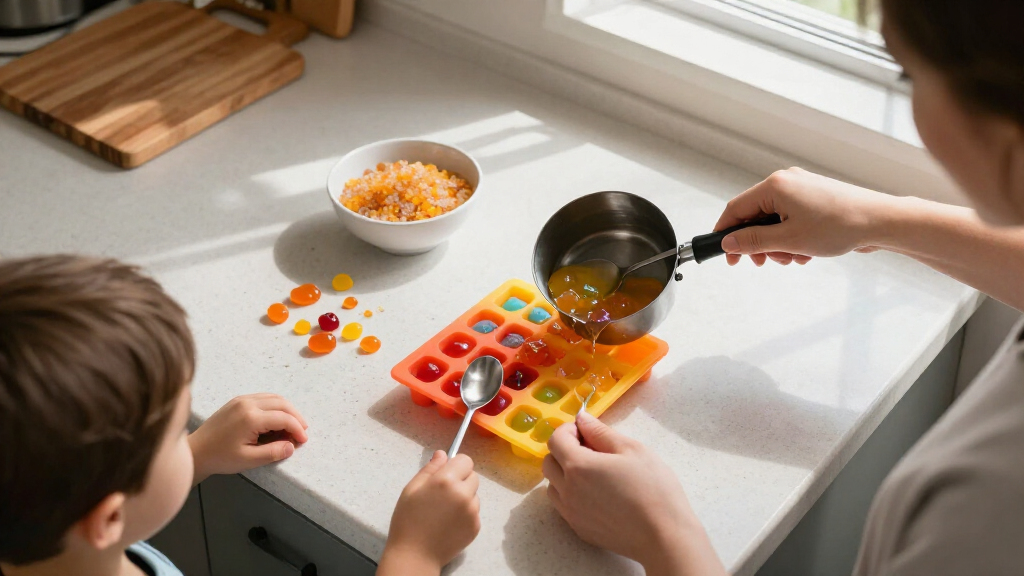
I ranked these candy making kits for home by how clearly each one supports its intended use, then compared the practical details that affect the experience: what candy it makes, whether it includes purpose-built equipment or molds, how much variety it offers, and whether it is better for an individual, family, or group. I also weighed the likely need for adult help, cleanup, and repeat use, since a kit that looks fun but needs extra tools or ingredients may be a poor match for a quick home activity.
The order favors options with a clear, useful role and a more complete home setup, while specialized kits rank for the audience or occasion they serve best. A reusable heating base earns a different place from a single-session science experiment, and a party set is judged by group convenience rather than educational depth. Because these products cover different ages and candy styles, I treat the ranking as a guide to fit—not a claim that one kit is right for every household.
| candy making kits for home | Brand |
|---|---|
| Dubai Chocolate Bar Making Kit | — |
| Thames & Kosmos Candy Chemistr | Thames & Kosmos |
| Kusini Gummy Candy Making Kit | — |
| Cotton Candy Maker Kit with 5 | — |
| Thames & Kosmos Rainbow Gummy | Thames & Kosmos |
| Tasty Labs Gross Gummy Candy L | Thames & Kosmos |
| Kracie DIY Chocolate Fondue Pa | — |
| Flair Chocolate Bar Maker Kit | Flair |
| Playz Edible Slime Candy Makin | Playz |
| Dinosaur Gummy Candy Lab STEM | Thames & Kosmos |
| Tasty Labs Lollipop Lab Experi | Thames & Kosmos |
| Playz Edible Candy Making Scie | Playz |
| Playz Edible Exploding Candy M | Playz |
| Kracie Popin’ Cookin’ DIY Cand | — |
Factors to Consider When Choosing Candy Making Kits For Home
Before choosing a kit, match the activity to the person who will use it and the kind of candy they actually want to make. A broad experiment set, a dedicated appliance, and a novelty treat kit can all be appealing, but they solve different problems.
Choose Between Equipment and a One-Session Activity
A kit with a heating base or other dedicated equipment can support repeat batches, but it also takes up storage space and may need more cleaning. A small novelty kit is easier to give as a one-time activity, though it may offer little use after the included ingredients are gone. Before buying, check whether the kit depends on household tools or ingredients that are not included. A lower-effort kit can be the better choice when the goal is a rainy-day project rather than a new kitchen hobby. For frequent use, favor clear instructions and equipment that can be cleaned and stored without hassle.
Match the Kit to the Maker’s Age and Patience
Age labels are a starting point, not a guarantee that a child can complete every step alone. Heating, measuring, and handling sticky mixtures can call for adult help, even when the theme is aimed at kids. For younger makers, look for short steps, manageable portions, and activities where an adult can handle any warm components. Older children may get more from experiment-led kits that explain what changes during candy-making. A common mistake is choosing a kit based on its playful packaging without checking the actual preparation steps and supervision needs.
Decide Whether Variety or a Finished Treat Matters More
Some kits focus on one distinct result, such as a filled chocolate bar or candy shaped like ramen, while others offer several experiments or ways to make gummies. One focused result can be satisfying when the recipient is excited about that specific treat. A broader kit makes more sense when the activity needs to hold attention across multiple sessions. Check what “variety” means: extra shapes, different recipes, or separate experiments lead to different kinds of play. If the child mainly wants to eat a familiar candy, a science-heavy kit may feel less direct than a simple maker.
Plan for Group Size and Serving
A kit designed around a single maker may slow down a party if everyone expects a turn. For groups, consider how many portions or supplies are included and whether people can work at the same time. Cones, bags, or multiple molds can help with serving and sharing, but they do not automatically mean the kit supports a large gathering. A one-result novelty kit may work best as a supervised station with small groups rotating through. If you are buying for a classroom or party, count participants before choosing and check whether extra ingredients or serving supplies will be needed.
Check Ingredients, Allergens, and Dietary Fit
Candy kits may include ingredients that do not suit every household, and the included materials may be only part of the recipe. Read ingredient information and packaging details before purchase, especially when a recipient has allergies or dietary restrictions. Do not assume that a kit labeled as an activity is free from common allergens. Some recipes may also call for additional ingredients, which can affect the total preparation time and suitability for a spontaneous activity. When dietary fit is uncertain, choose a kit with clearly listed ingredients and a recipe that allows safe substitutions.
Pay More for the Feature You Will Actually Use
A higher-cost kit is easier to justify when its equipment, included supplies, or range of activities will see repeat use. It is less compelling if the main draw is a single themed result that the recipient may try once. Compare what comes in the box with what must be supplied at home, and think about storage and cleanup alongside the number of activities. A compact, focused kit can be better value for a gift or occasional project, while a more complete setup may suit a family that plans to make candy regularly. Avoid paying for a large experiment count if the maker is likely to prefer one simple activity.
Frequently Asked Questions
Which candy making kit is the best choice for repeat use at home?
Start with a kit that includes purpose-built equipment, such as a heating base, rather than one centered on a single novelty recipe. Reusable molds can also support repeat batches, though you should check whether ingredients need to be replenished separately. A large activity count does not always mean the kit is reusable; some experiments may rely on one-time supplies. Think about storage and cleanup before choosing an appliance-style set. For an occasional gift activity, a focused kit may be more practical than equipment you rarely bring out.
Can children use these kits without adult help?
That depends on the recipe, the child’s age, and whether the steps involve heat, measuring, or handling sticky mixtures. Science and novelty themes can make an activity look simple, but they do not remove the need to supervise kitchen work. Read the instructions and age guidance before opening the kit, and plan for an adult to manage any warm ingredients or equipment. For independent play, favor activities with minimal preparation and no heated steps. When in doubt, treat the kit as a shared project rather than a drop-off activity.
Which type of kit works best for a birthday party or group activity?
A kit with supplies for serving multiple people is usually a better starting point than one built around a single small batch. Check the number of included portions, molds, and serving items, then compare that with your guest count. A group may also need an adult to manage turns, preparation, and cleanup, even when the activity is designed for kids. Novelty kits can be entertaining as rotating stations, while a party-oriented maker may suit everyone who wants a finished treat. Have extra ingredients or serving supplies ready if the package quantity does not match the group.
Are STEM candy kits better than simple candy-making kits?
They are better for a different goal. STEM kits tend to add experiments or explanations, which can hold the interest of children who like learning how ingredients change. A straightforward maker may be a better match for someone who mainly wants to shape or eat candy without multiple activities. Consider whether the recipient enjoys following experiments and repeating steps, not just the science label. Also check how much adult guidance the activities need. If the main goal is a quick treat, an educational kit may add complexity the buyer does not need.
What should I check before buying a candy kit for someone with food allergies?
Read the full ingredient list and allergen statements for every included component, rather than relying on the product name or theme. Check whether recipes call for additional household ingredients, since those can introduce allergens not listed among the kit contents. If the package does not clearly address a relevant allergen, contact the seller or manufacturer before buying. Shared kitchen tools and surfaces can also create cross-contact concerns. For strict dietary needs, choose only a kit with ingredient details that let you verify each step.
Conclusion
For most households wanting a more repeatable setup, I’d choose the Kusini Gummy Candy Making Kit as the best overall pick. The best value for a party setting is the Cotton Candy Maker Kit, thanks to its bundled sugars, cones, and bags; for a premium-style filled chocolate project, the Dubai Chocolate Bar Making Kit is the standout choice, though it is more specialized. Beginners who want a clear, hands-on starting point may prefer the Kusini kit, while curious kids are better matched with Thames & Kosmos Candy Chemistry. For specific interests, choose the ramen or edible slime kits for novelty, the lollipop set for a focused candy activity, or the STEM gummy kits for experiments. Let the intended maker, occasion, and appetite for repeat use decide the final pick.
Halloween Picks

HOPOCO Halloween Pumpkin Fog Machine with 12 LED Colors & Remote Control

Jenaai 5.3-Foot Motion-Activated Halloween Animatronic Skeleton

10 ft Halloween Inflatable Archway with Built-in LEDs
As an affiliate, we earn on qualifying purchases.