
TL;DR

Get kitchen gear delivered free with Prime
- Fast, free delivery on millions of items
- Prime Video, Amazon Music and more included
- Member-only deals all year
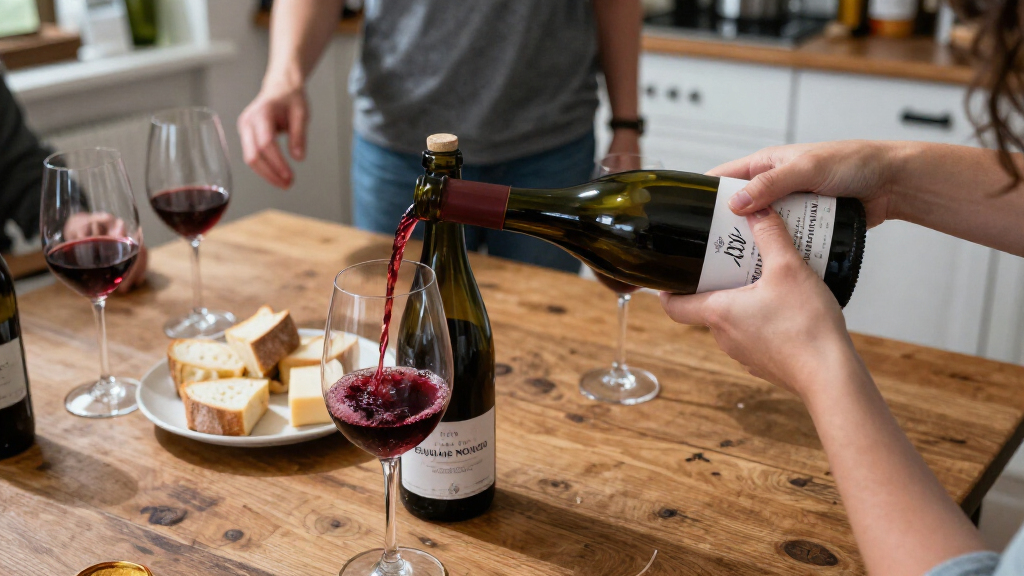
Beaujolais Nouveau is released each year on the third Thursday of November, a tradition that grew from a local harvest celebration into an international event. Its fixed launch date, rapid delivery and theatrical promotion—especially by négociant Georges Duboeuf—help explain why it is often compared with modern product drops.
Beaujolais Nouveau, the young Gamay wine released each year on the third Thursday of November, developed from a local post-harvest custom into an internationally promoted event. A VinePair report traces that shift to the wine’s tightly timed release, races to deliver bottles and publicity campaigns led in part by négociant Georges Duboeuf—features that invite comparison with today’s limited-edition product launches.
The wine is made from Gamay grapes grown in France’s Beaujolais region. Unlike wines intended for extended aging, Nouveau is made to be consumed soon after harvest. The source report says production can take roughly six to eight weeks from vine to bottle, using carbonic maceration to produce a fresh, aromatic style.
In the 1950s and 1960s, négociants and couriers raced to get the first bottles from Beaujolais to restaurants and bistros in Paris. The report describes promotional stunts that amplified the competition, including a tuxedoed waiter parachuting near the Eiffel Tower with a bottle. In 1985, France’s appellation authority, the INAO, standardized the release for 12:01 a.m. on the third Thursday of November.
Duboeuf, who founded his wine-trading house in 1964, helped promote the release internationally, according to VinePair. His campaigns included shipping bottles by plane and, in 1988, a midnight truck departure led by actor James Coburn on horseback. The source also describes the house’s flowered labels and its annual Artist Collector Series. These examples show how marketing and spectacle became part of the release’s identity; they do not, by themselves, establish how consumers currently respond or how the wine’s sales compare with other releases.
How a Harvest Became an Event
Beaujolais Nouveau’s appeal as a product launch lies in its shared timing: a specific release moment gives retailers, restaurants and wine drinkers a reason to talk about and try the same wine at once. The tradition predates social media, but its basic ingredients—anticipation, a fixed date, distribution urgency and distinctive packaging—resemble tactics now used for limited-run products.
The comparison has limits. The source presents the wine as an early analogue to modern viral releases, not as evidence that it pioneered every element of contemporary launch marketing. The underlying occasion is also tied to the annual harvest and the region’s wine culture, rather than solely to manufactured scarcity. For consumers, the release offers a seasonal wine with a short window of freshness and a date that often falls shortly before Thanksgiving in the United States.
The story also matters to producers and retailers because a coordinated release can concentrate attention on a region and its wines. But the supplied report does not provide sales figures, market-share data or consumer research. Its case is chiefly historical and promotional: Beaujolais Nouveau made an annual arrival into an occasion that could travel beyond its place of origin.
Products Worth Considering

Breville Bambino Espresso Machine, Brushed Stainless Steel

Vitamix Touch & Go Advance 32-Ounce Bar Blender, White

Cuisinart 7-in-1 Air Fryer Toaster Oven Combo, 1800W, TOA-55
As an affiliate, we earn on qualifying purchases.
From Paris Race to Fixed Release
Beaujolais Nouveau began as a local way to celebrate the grape harvest soon after picking, rather than waiting months or years for maturation. As demand and publicity grew in the mid-20th century, the race to reach Paris gave the release a competitive element. The later move to a standardized date turned that race into a predictable annual event, coordinated around a single moment.
Duboeuf became a prominent ambassador for Beaujolais and popularized the rallying cry, “The Beaujolais Nouveau has arrived!” The phrase, translated from the French slogan cited by VinePair, helped make arrival itself the focus. The source report says bottles were rushed around the world by air and recounts the 1988 stunt with Coburn. The house’s recognizable floral labels and artist collaborations extended that identity to the bottle as well as the event.
The wine’s style supports its place in the calendar. VinePair characterizes it as light-bodied, juicy and relatively low in tannins, with bright acidity and fruit notes such as raspberry and cherry. Some drinkers also look for banana or bubblegum-like aromas. It is commonly served slightly chilled, and the report notes its possible fit with Thanksgiving foods, charcuterie and roasted vegetables. These are descriptions and pairing suggestions, not a guarantee that every bottle or vintage will taste the same.
““The Beaujolais Nouveau has arrived!””
— Beaujolais Nouveau campaign slogan, as translated in the VinePair report
What the Report Does Not Measure
The supplied report offers a history and a promotional account, but it does not provide sales totals, year-over-year comparisons or audience data. It therefore cannot establish how large the release is in today’s wine market or whether its reach has grown or declined. The “viral release” framing is an interpretation of its timing and publicity, not a measured comparison with modern online campaigns.
Details also vary by producer and vintage. The source describes a general production window and typical flavor profile, but does not give technical measurements or tasting results for a particular year’s bottling. It also does not specify the release date for a named upcoming vintage or confirm current inventory at any retailer.
The November Release Returns
The established calendar calls for Beaujolais Nouveau to arrive each year on the third Thursday of November. The next release will renew the same annual cycle, though the source material does not identify a specific vintage date, bottle allocation or retailer stock. Consumers seeking it can check with local wine shops and other sellers; availability may differ by location.
For the tradition’s continuing significance, the next release will provide another chance to see how producers and retailers present the wine and whether the fixed-date event draws attention. The supplied material does not include current sales forecasts or announcements about changes to the release system.
Key Questions
What is Beaujolais Nouveau?
It is a young red wine made from Gamay grapes grown in France’s Beaujolais region and released soon after harvest.
When is Beaujolais Nouveau released?
The annual release is scheduled for the third Thursday of November. The INAO set the standardized release time at 12:01 a.m. in 1985, according to the VinePair report.
Why is it compared with a modern product drop?
Its fixed launch moment, anticipation, fast distribution and publicity campaigns resemble elements of limited-edition product launches. The comparison is an interpretation; the source does not provide data measuring its reach against modern campaigns.
What does Beaujolais Nouveau taste like?
The report describes a generally light, fresh and fruit-forward style, often associated with raspberry and cherry notes. It says some drinkers also detect banana or bubblegum-like aromas; individual bottles and vintages can differ.
How should it be served?
VinePair suggests serving it with a slight chill and pairing it with foods such as charcuterie, turkey, stuffing, cranberry sauce or roasted vegetables. These are suggestions rather than fixed rules.
Source: vinepair.com