TL;DR
Choose a turkey roasting pan that leaves room around the bird, fits your oven with its handles, and feels sturdy enough to lift when loaded. Match the material and rack to how you cook and clean, and check the manufacturer’s oven and cooktop guidance before roasting or making gravy.
A turkey can weigh 15 pounds, but the pan that carries it can feel twice as awkward once it’s hot and full of drippings. A beautiful bird is little comfort if the handles catch on the oven walls or the pan flexes as you lift it.

Get kitchen gear delivered free with Prime
- Fast, free delivery on millions of items
- Prime Video, Amazon Music and more included
- Member-only deals all year
Turkey roasting pans are large oven-safe pans designed to hold a whole bird and collect its drippings. The right one helps keep the turkey stable, gives heat room to circulate, and can make gravy easier. You’ll learn how to choose the right size, compare materials, decide whether a rack helps, and avoid cleanup and handling surprises.
Think of buying a roasting pan like choosing a suitcase for a trip: capacity matters, but so do the doorway, the handle, and how much weight you can comfortably carry. A pan you can fit in your oven and lift securely beats an enormous one that only looks impressive on a store shelf.
Measure your oven’s usable interior and the pan’s full exterior, including handles, before buying.
Choose manageable weight and sturdy, secure handles over extra-large capacity.
A rack promotes airflow and catches drippings; sturdy vegetables can lift the turkey if you do not have one.
Match the material to your cooking and cleaning habits, and follow its temperature and utensil limits.
Check manufacturer guidance before using an oven-safe pan on a stovetop.
Measure your oven before you buy a pan
A turkey roasting pan should fit the bird with some space around it and fit your oven with its handles in place. Measure your oven’s usable width, depth, and height with the rack installed, then compare those numbers with the pan’s exterior dimensions. That quick check can prevent a holiday discovery involving a hot pan stuck halfway out of the oven.
Pan capacity alone can mislead you because two pans marked for similar birds may have different shapes and handle lengths. A broad, shallow pan may suit a wide turkey, while a narrower bird may sit securely in a different shape. Leave room for airflow and for your hands to grip the pan without scraping the oven walls.
For example, if your oven opening is tight and the pan has long handles that project outward, the body may fit while the handles do not. Measure the pan from handle tip to handle tip, and check the turkey’s height if it has a tall breast. Pull the oven rack partway out during your measurement so you can account for the space needed to slide a loaded pan in and out.
Prioritize a secure fit and manageable weight over extra-large capacity. If you’re choosing between two sizes, picture the pan holding the turkey, rack, and vegetables—not sitting empty on the counter. A snug but uncramped setup is more useful than unused space that makes maneuvering harder.
Products Worth Considering
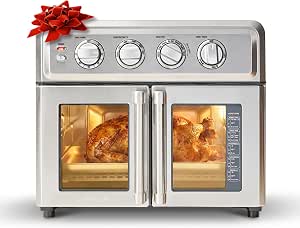
Cuisinart Artisan French-Door Air Fryer Toaster Oven, 7 Functions

Le Creuset Alpine Enameled Cast Iron Fondue Set, 2.5 qt., Nuit

Breville Barista Express Manual Espresso Machine with Built-In Grinder, Brushed Stainless Steel
As an affiliate, we earn on qualifying purchases.
Compare materials by how you cook and clean
The best pan material depends on what matters most to you: durability, heat response, easy cleanup, or weight. Stainless steel is a durable, versatile choice, though it may heat less evenly than some alternatives. Aluminum conducts heat well but can warp, and uncoated aluminum can react with acidic foods.
Enameled steel and cast iron hold heat well, but their weight can make a full pan harder to lift. Nonstick finishes can release sticky drippings with less scrubbing, but check the temperature limit and use utensils and cleaning tools that won’t damage the coating. No one material wins every kitchen matchup; your cooking habits decide the better fit.
| Material | What it offers | What to check |
|---|---|---|
| Stainless steel | Durability and versatility | Cooktop compatibility and heat distribution |
| Aluminum | Good heat conduction | Warping risk and reaction with acidic foods |
| Enameled steel or cast iron | Strong heat retention | Weight when loaded |
| Nonstick | More convenient release and cleanup | Temperature limits and gentle utensil care |
Imagine you want to turn browned turkey drippings into gravy right in the pan. Stainless steel may suit that task if the manufacturer says it works on your cooktop. If you value an easier wash after dinner, a nonstick model may appeal—but check its guidance and avoid metal tools. A warm-water soak with dish soap can loosen baked-on residue; the right scrubber depends on the finish.
Choose a rack that keeps the turkey steady
A roasting rack holds the turkey above the pan so hot air can move around it and the drippings collect underneath. It also helps keep the underside from sitting directly in rendered fat. A rack is useful, but it is not mandatory; sturdy vegetables can lift the bird and add savory flavor to the pan.
V-shaped racks cradle the turkey and help keep it from rolling, especially when you shift the pan. Their shape is tailored to a bird, so they may be less convenient for vegetables or flatter cuts of meat. A flat rack can handle more jobs, though it may not hold a rounded turkey as snugly.
Picture a 14-pound turkey nestled into a V-shaped rack: it sits upright while the fat and juices drip below. If you roast vegetables alongside the bird and want to reuse the rack for other meals, a flat model may work better. For a rack-free approach, arrange thick-cut carrots, celery, and onion in a sturdy layer, then rest the turkey on top. The vegetables act like a simple platform, though they may soften deeply in the drippings.
Before buying, check whether the rack comes with the pan, whether it fits securely, and whether the maker approves it for your oven temperature. If you plan to make gravy in the roasting pan, leave enough room below the turkey for drippings to gather. The rack is a small piece of hardware, but it can shape how easily the bird roasts and how much work your gravy takes.
Balance browning, splatter, and pan depth
A broad, moderately shallow pan often offers a useful balance: it catches drippings while leaving more of the turkey exposed to oven heat. Higher sides can contain splatter, but very deep walls may shield the lower part of the bird and limit airflow. Shape and depth affect how the roast behaves, not just how tidy your oven stays.
Think of oven heat like warm air moving around a person in a room: a tight alcove blocks some of that flow. A pan with tall sides can create a similar barrier around the turkey’s lower portion. That does not mean every deep pan will fail, but it gives you a reason to compare wall height as well as length and width.
For example, if your turkey browns well across the breast but the lower sides stay pale, the pan walls may be part of the setup. A shallower pan exposes more surface to the circulating heat, while a deeper pan can be helpful if you expect lots of splatter or want extra room for liquid. Your recipe, bird size, and oven all play a role, so use the pan dimensions as one part of the decision.
Choose a pan with sides high enough to contain drippings and broad enough to hold the bird without crowding. If gravy matters to you, make sure it can collect its drippings beneath the rack. Before roasting day, set the empty pan in the oven and check that the rack can slide freely; this simple rehearsal reveals clearance problems while everything is still cool.
Make safety and lifting part of your buying decision
A roasting pan must stay rigid and offer grips you can hold securely, because a loaded pan combines a heavy bird, hot fat, and awkward weight. Look for thick, flat construction and sturdy handles. Handles that stick outward may help with gripping, but they also need enough oven clearance.
A thin disposable aluminum pan can hold a turkey, but it may flex under a large bird. If you use one, set it on a sturdy baking sheet or support it from below before it goes into the oven. Do not pick it up by pinching the disposable pan’s rim while the turkey and hot drippings are inside.
Imagine carrying a roast across a crowded kitchen while guests reach for side dishes. With a stable pan and secure oven mitts, you can keep the load level and move deliberately. Clear the route first, grip both handles, and ask another adult to help if you cannot lift the loaded pan steadily. Avoid sudden temperature changes that can warp some pans, and follow the maker’s care instructions.
- Check the handles for firm attachment and room to grip with mitts.
- Confirm the pan’s temperature rating matches your roasting recipe.
- Check cooktop compatibility before placing it over a burner for gravy.
- Clear a landing spot before you remove the hot pan.
Oven-safe does not automatically mean stovetop-safe, especially with nonstick coatings or uneven bases. Follow the manufacturer’s guidance for your exact pan and cooktop. If you make gravy on the stove, these checks help prevent damage and keep the pan stable over heat.
Use your pan beyond one holiday dinner
A versatile roasting pan earns its storage space when you use it for chicken, vegetables, ham, or large cuts of meat throughout the year. A flat rack can be handy for different foods, while a V-shaped rack may be the better support for turkey. Before buying a specialty model, think through the meals you actually cook.
For a Sunday dinner, you might use the pan for roast chicken with potatoes tucked around the edges. A few weeks later, it could hold a tray of carrots and onions or a small ham. But a large pan is only useful when you have somewhere to store it and can lift it without strain. A pan that lives awkwardly across two cupboard shelves may see fewer meals than a smaller, easier-to-reach option.
Some pans can go from oven to stovetop for gravy, which saves you from transferring browned bits to a separate saucepan. That convenience depends on the pan’s material and construction; check the manufacturer’s instructions for your specific burner or cooktop. If it is not approved for stovetop use, make gravy in a suitable saucepan instead.
Consider cleaning and storage before you commit. Check whether the pan and rack are dishwasher-safe, whether your sink can hold the pan, and whether its handles fit your cupboard. A safe pan designed for your oven and cooking habits should be sturdy, easy enough to handle, and useful on an ordinary weeknight—not just during a holiday meal.
Frequently Asked Questions
What size roasting pan do I need for a turkey?
Choose a pan that holds your bird without crowding it and fits your oven with the rack in place. Check exterior dimensions, including handles, because stated capacity does not tell you whether the pan will clear your oven walls.
Do I need a rack to roast a turkey?
No. A rack lifts the turkey so air can circulate and drippings collect below, but a sturdy bed of vegetables can serve as a support. A V-shaped rack cradles a bird, while a flat rack may work for more types of food.
Is stainless steel or nonstick better for roasting?
Stainless steel offers durability and may suit stovetop gravy making if the manufacturer approves it for your cooktop. Nonstick can make release and cleanup easier, but you need to follow its temperature limit and avoid damaging the finish with metal utensils or abrasive pads.
Can I roast a turkey in a disposable aluminum pan?
Yes, but thin disposable pans can flex under a heavy bird. Set the pan on a sturdy baking sheet or support it from below before moving it, and avoid lifting a full pan by its flimsy rim.
Can I put my roasting pan on the stovetop to make gravy?
Only if the manufacturer says your pan works on that specific cooktop. Oven-safe does not automatically mean burner-safe, particularly for pans with nonstick coatings or an uneven base.
Should a turkey roasting pan be deep or shallow?
A moderately shallow pan can expose more of the turkey to circulating oven heat, while taller sides help contain splatter and liquid. Look for enough depth to hold drippings without walls that crowd the bird.
Conclusion
Choose a pan that fits your oven, supports your turkey without flexing, and feels safe to lift. Measure the handles, check the material and rack, and confirm whether you can use the pan on your cooktop before gravy day.
The right roasting pan should make the big meal feel steadier: a golden bird, a pool of rich drippings, and a pan you can carry without holding your breath.