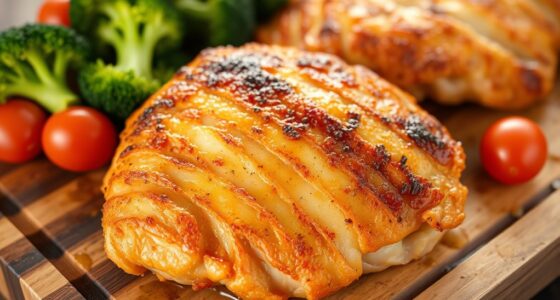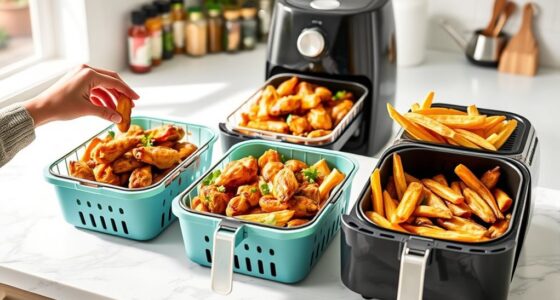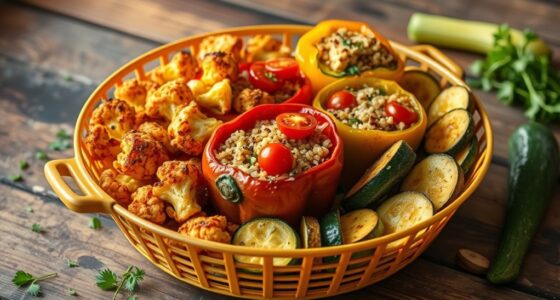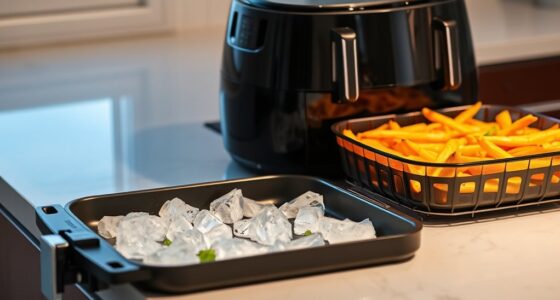
To achieve even cooking results, you should regularly flip or shake your food during the process. This helps distribute heat evenly, prevents hotspots, and guarantees consistent browning or crispiness. Whether you’re roasting vegetables, flipping pancakes, or stirring a stir-fry, these techniques keep your food moving and promote uniform flavors. Mastering the right timing and motions can make a noticeable difference in your results—stick around to learn more about perfecting these essential cooking skills.
Key Takeaways
- Flipping and shaking distribute heat evenly, preventing hot spots and ensuring consistent cooking across food surfaces.
- Regularly turning ingredients promotes uniform browning, caramelization, and prevents soggy or burnt areas.
- Using proper tools and gentle motions helps maintain food integrity and prevents sticking or breaking.
- Small, consistent adjustments during cooking enhance overall results and achieve professional-quality dishes.
- These techniques improve flavor distribution, reduce the need for extra seasoning, and produce more predictable outcomes.

Ensuring even cooking results often depends on simple techniques like flipping and shaking your food during the process. These methods are fundamental to achieving perfectly cooked dishes, whether you’re roasting vegetables, frying meats, or baking treats. By consistently turning or moving your food, you prevent hot spots and guarantee all sides receive equal heat. This approach is especially critical when using baking techniques that involve dry heat, as uneven heat distribution can lead to burnt edges or undercooked centers. Incorporating proper flipping and shaking into your routine helps you maintain control over the cooking process, making your results more predictable and professional-looking.
When it comes to baking techniques, flipping isn’t just reserved for pancakes or bread; it’s also essential for things like roasting vegetables or baking cookies that require even browning. For instance, if you’re roasting potatoes or carrots, flipping them halfway through ensures each piece gets equal exposure to the oven’s heat. This simple step helps you avoid soggy or overly crisp spots and promotes uniform caramelization. Shake the baking sheet gently to redistribute the pieces if they’re crowded or touching, which enhances airflow and promotes consistent cooking. These small adjustments during baking are key to mastering even results and are part of effective seasoning tips—since evenly cooked food also means flavors are well distributed, enhancing taste without needing extra salt or spices.
Shaking your food during cooking isn’t limited to baking; it’s equally important in pan-frying or sautéing. When frying vegetables or meats, use a spatula or tongs to turn pieces regularly, ensuring they develop a crisp exterior without burning. For items like stir-fries, shaking the pan frequently keeps ingredients moving, preventing sticking and uneven cooking. This technique is especially useful for delicate foods that might break apart or overcook if left untouched. Remember, the goal is to keep everything moving in the pan or oven, which promotes even heat exposure and prevents burnt edges while keeping the interior juicy and tender.
Incorporating these flipping and shaking techniques into your cooking routine isn’t complicated, but it makes a noticeable difference. Practice paying attention to how your food responds and adjust your movements accordingly. Over time, you’ll develop an intuitive sense of when to flip or shake, helping you achieve restaurant-quality results at home. Whether you’re baking, roasting, or frying, these simple techniques are your best tools for ensuring even cooking and maximizing flavor. So, next time you prepare a meal, remember to flip and shake—your taste buds will thank you. Additionally, using natural materials like wooden utensils can help prevent scratching cookware and promote even heat transfer.
Frequently Asked Questions
How Often Should I Flip Food During Cooking?
You should flip your food every 2-3 minutes, depending on the cooking temperature and ingredient size. For high heat, flip more frequently to prevent burning, while larger pieces may need fewer flips to cook evenly. Keep an eye on the color and texture. Regular flipping helps distribute heat evenly, ensuring your food cooks thoroughly without overdoing it on one side. Adjust based on your specific ingredients and stove settings.
Can Shaking the Pan Cause Food to Break Apart?
Shaking the pan is like a gentle dance, but it can sometimes cause food to break apart. If you shake too vigorously, you risk pan damage and food disintegration, especially with delicate items. To avoid this, shake lightly and with control, ensuring your ingredients stay intact. Think of it as guiding your food safely across the stage, maintaining its form while achieving even cooking.
Is Flipping Necessary for All Types of Cookware?
Flipping isn’t necessary for all cookware types, especially with non-stick cookware where gentle stirring often suffices. However, with cast iron cookware, flipping can help make certain of even cooking and prevent sticking or burning. You should flip or shake your food as needed based on the cookware’s material and the dish you’re preparing. Always handle your cookware carefully to avoid damaging non-stick coatings or breaking food apart.
What’s the Best Technique for Shaking Food Without Spilling?
Imagine gently rocking a boat in calm waters—you can shake your food without spilling by using the right utensil and keeping a steady hand. Choose a spatula or tongs with a firm grip for pan safety, and hold the skillet’s edge to stabilize. Shake with controlled, smooth motions, avoiding over-agitation. This technique keeps your food secure, ensures even cooking, and minimizes mess, making your kitchen experience safer and more enjoyable.
How Do I Prevent Uneven Cooking When Flipping or Shaking?
To prevent uneven cooking when flipping or shaking, make sure your pan is at the right temperature—medium or medium-high works best. Use a sturdy, flat utensil like a spatula or tongs to handle food gently, avoiding over-shaking which can cause uneven heat distribution. Keep an eye on your food as you flip, and shake gently to distribute heat evenly, ensuring all pieces cook uniformly without burning or undercooking.
Conclusion
By flipping and shaking your food regularly, you guarantee even cooking and prevent burning. Did you know that stirring or turning food just once can improve heat distribution by up to 30%? So, next time you cook, remember to keep your movements active. This simple habit makes a big difference in achieving perfectly cooked meals every time. Keep flipping and shaking — your taste buds will thank you!