To prevent dryness in air-fried meats, marinate with acid, oil, and herbs to boost moisture and tenderness. Pat the meat dry before cooking, and avoid overcooking by monitoring temperature closely with a meat thermometer. Use lower temperatures initially and rest the meat afterward to let juices redistribute. Season thoughtfully and incorporate moisture-enhancing ingredients like broth or yogurt. If you want more tips on keeping your meat juicy, there’s plenty of effective techniques to explore.
Key Takeaways
- Marinate meat with acid, oil, and herbs to tenderize and lock in moisture before air frying.
- Pat meat dry thoroughly to prevent steaming and uneven cooking during air frying.
- Cook at slightly lower temperatures and monitor time closely to avoid overcooking and dryness.
- Use a meat thermometer to ensure precise internal temperature and prevent over-drying.
- Rest meat for a few minutes after cooking to allow juices to redistribute and retain moisture.
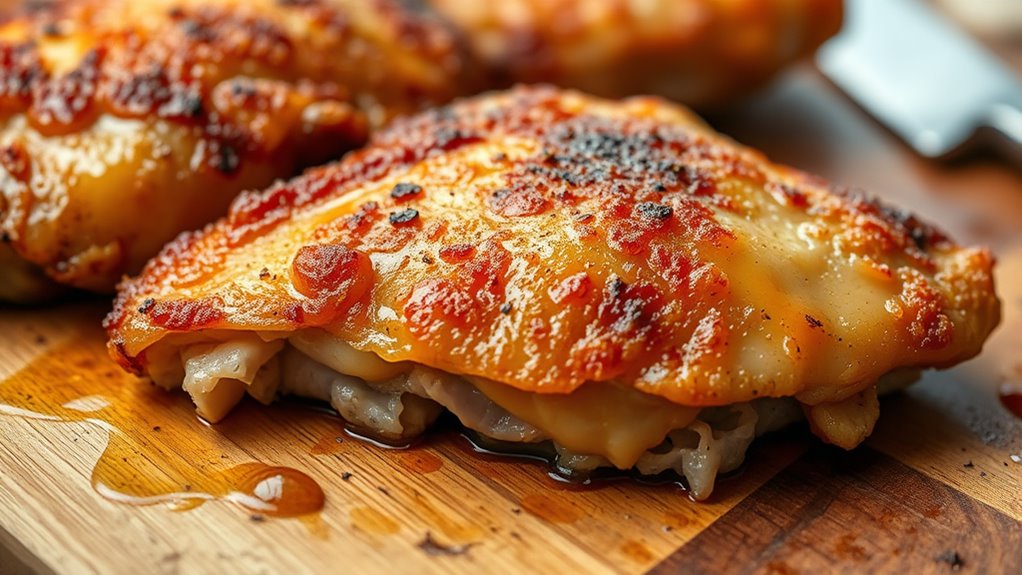
Air frying is a popular way to prepare meats quickly and with less oil, but it can sometimes lead to dryness if you’re not careful. To avoid ending up with tough, overcooked meat, you need to pay attention to how you prepare and season your cuts. One effective way to keep your meats moist is by using proper marinating techniques. When marinating, aim for a mixture that includes acid, like lemon juice or vinegar, along with oil and herbs. The acid helps tenderize the meat, while the oil forms a barrier that locks in moisture. Keep your meat submerged in the marinade for at least 30 minutes, or up to a few hours if you want more flavor infusion. Don’t forget to pat the meat dry before air frying; excess marinade can cause steaming rather than crisping, which might result in dryness or uneven cooking.
Marinate with acid, oil, and herbs to keep meats moist during air frying.
Seasoning strategies are just as essential in preventing dryness. Instead of simply salting your meat right before cooking, consider applying a dry rub or seasoning mix that includes moisture-retaining ingredients such as olive oil, yogurt, or even a splash of broth. These ingredients help create a protective layer that helps retain juices during air frying. When seasoning, think about adding ingredients that aid in moisture retention, like garlic, onion powder, and herbs. These not only boost flavor but also help keep the meat from drying out. Applying seasoning evenly ensures each bite stays moist and flavorful. Remember, seasoning too early or too heavily with salt can draw out moisture, so find a balance and season just enough to enhance taste without dehydrating the meat.
Timing and temperature control are equally essential. To prevent dryness, start with a slightly lower temperature than you might normally use for traditional frying. For example, if you’d fry chicken at 400°F in a skillet, try 375°F in the air fryer. Keep a close eye on cook times; overcooking is the main culprit behind dry meats. Use a meat thermometer to check internal temperatures and remove the meat as soon as it hits the recommended range for its type. Resting the meat for a few minutes after cooking allows juices to redistribute, which helps keep it moist when you cut into it. Being aware of your cooking temperature and adjusting it accordingly is crucial for juicy results.
In essence, the key to preventing dryness in air-fried meats lies in thoughtful preparation—marinating to tenderize and add moisture, seasoning strategies that lock in juices, and precise cooking controls. By combining these techniques, you’ll achieve juicy, flavorful results every time, even with the quick, health-conscious method of air frying.
Frequently Asked Questions
Can Marinating Meat Prevent Dryness in Air Frying?
Yes, marinating meat can prevent dryness in air frying. Marinade benefits include tenderizing the meat and infusing it with flavor, which helps retain moisture during cooking. When you marinate, the meat absorbs juices, making it less likely to dry out. Just make certain you don’t over-marinate, and use a balanced marinade with some oil or acidity to enhance moisture and flavor, resulting in juicy, flavorful air-fried meats.
Does the Type of Meat Affect Dryness During Air Frying?
Think of your meat as a delicate dance partner—its quality and the right temperature set the rhythm. Different meats respond uniquely; high-quality cuts with good marbling tend to stay moist, while leaner options dry out faster. When air frying, adjusting the cooking temperature based on meat type helps prevent dryness. So, yes, the type of meat markedly influences moisture retention during air frying.
How Does Thickness Influence Moisture Retention in Air-Fried Meats?
Thicker meats tend to retain moisture better during air frying because their interior heats more slowly, reducing the risk of drying out. Meat thickness directly influences moisture retention, as thinner cuts cook quickly and can lose more juices. To keep your meat moist, choose thicker cuts or adjust cooking times accordingly. This way, you guarantee even cooking while maintaining ideal moisture levels, resulting in tender, flavorful air-fried meats.
Are There Specific Seasonings That Help Retain Moisture?
You can use herb blends and citrus infusions to help retain moisture in air-fried meats. Herb blends, like rosemary or thyme, create a flavorful barrier that locks in juices, while citrus infusions, such as lemon or lime zest, add moisture and tenderize the meat. These seasonings not only enhance flavor but also promote moisture retention, making your meat juicy and delicious with every bite.
Can Resting Meat After Cooking Improve Juiciness?
Resting meat after cooking is like giving it a gentle hug, locking in those precious juices. You should use resting techniques to improve juiciness enhancement, allowing the meat’s fibers to reabsorb moisture. Keep it tented loosely and let it sit for 5-10 minutes. This simple step guarantees every bite stays tender and succulent, transforming your air-fried meats into mouthwatering delights with maximum flavor and moisture.
Conclusion
To keep your air-fried meats juicy and flavorful, make sure to marinate or brine them beforehand, and don’t forget to keep an eye on the cooking time to avoid overdoing it. Rest your meats a few minutes after cooking to lock in moisture. Remember, a watched pot never boils, so stay attentive without rushing. With these tips, you’ll turn out tender, tasty results every time — just don’t let dryness spoil your culinary efforts.