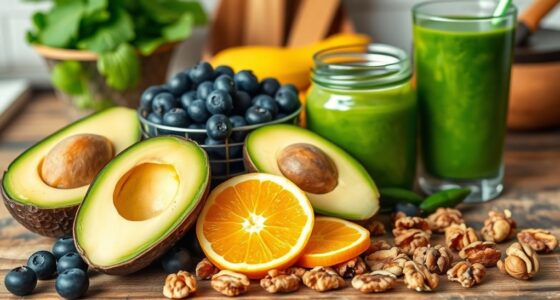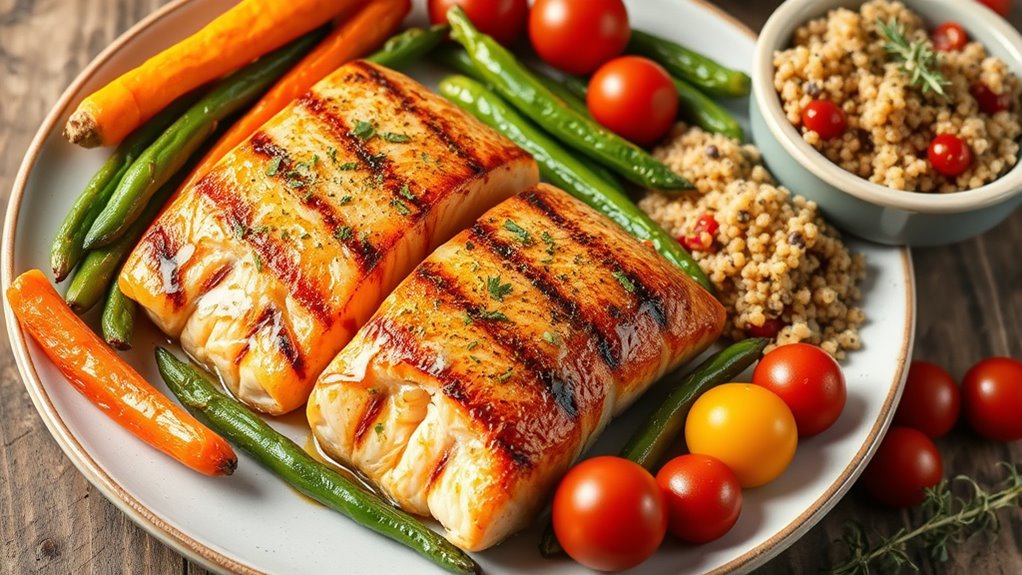

To enjoy low-sodium meals without sacrificing flavor, focus on fresh herbs, citrus, and nutrient-dense ingredients. Use herbs like basil, cilantro, and parsley to add aroma and depth, and drizzle herb-infused oils to enhance taste naturally. Incorporate sliced vegetables, nuts, and fruit for satisfying snacks, and experiment with zesting lemon or lime to brighten flavors. If you keep exploring, you’ll discover more tips to make your meals both healthy and delicious.
Key Takeaways
- Incorporate fresh herbs, citrus, and aromatic ingredients to naturally boost flavor without adding salt.
- Use herb-infused oils and flavorful dips to enhance dishes while keeping sodium low.
- Choose nutrient-dense snacks like fruits, vegetables, and nuts to satisfy cravings healthily.
- Add herbs early in cooking for depth and freshness, and finish with herbs for a vibrant flavor boost.
- Focus on minimally processed ingredients and natural seasonings to maintain taste and health benefits.
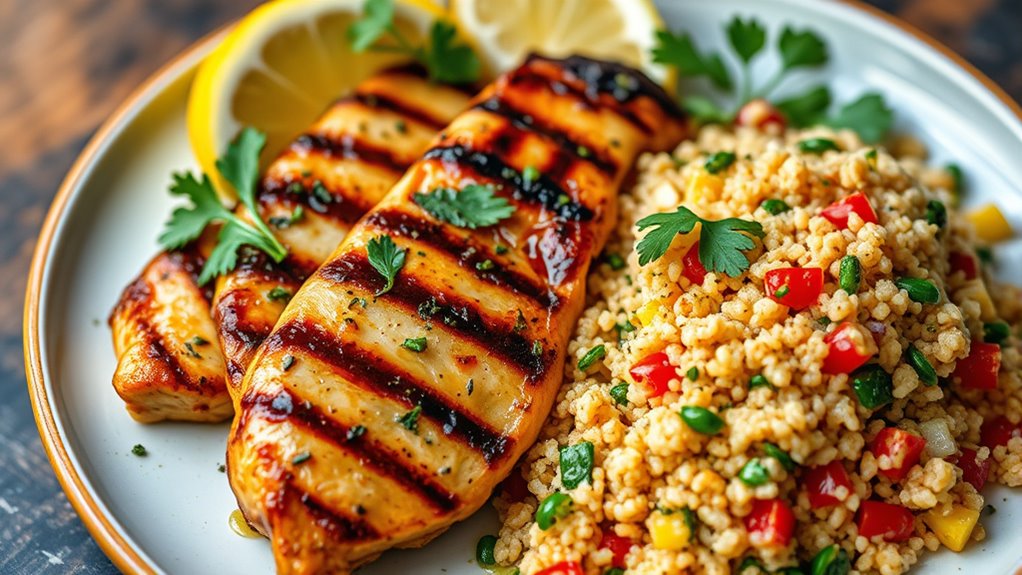
Are you looking for ways to enjoy flavorful meals while reducing your sodium intake? If so, you’re not alone. Many people want to cut back on salt but worry about sacrificing taste. The good news is that you can create delicious, satisfying dishes without relying on excessive salt. One effective approach involves exploring healthy snack options that are naturally flavorful and satisfying. Instead of reaching for salty chips or processed snacks, opt for fresh fruit, nuts, or veggies with hummus. These choices provide essential nutrients and flavor without the added sodium. Incorporating foods like roasted chickpeas, air-popped popcorn, or sliced vegetables with flavorful dips can help curb cravings and keep your snack game strong.
Another key to maintaining flavor in your low-sodium meal plans is learning to cook with herbs. Herbs are a fantastic way to add depth and aroma to your dishes without extra salt. Fresh herbs like basil, cilantro, parsley, thyme, and rosemary can transform simple recipes into vibrant culinary experiences. For example, a sprinkle of chopped basil can brighten up a tomato salad, while fresh thyme can elevate roasted vegetables. Dried herbs are also useful, but fresh herbs tend to deliver a more robust flavor, allowing you to use less overall. When cooking, add herbs early to let their flavors meld with your ingredients, or sprinkle them at the end for a burst of freshness. Experimenting with different combinations can turn even the plainest ingredients into flavorful creations.
Enhance dishes naturally by adding fresh herbs early or at the end for vibrant, flavorful results without salt.
Cooking with herbs doesn’t mean sacrificing simplicity. You can infuse your dishes with flavor by making simple herb-infused oils or vinegars. Drizzle a little herb-infused olive oil over your salads or roasted vegetables to add richness without sodium. Using herbs to marinade meats or vegetables before grilling or roasting enhances natural flavors, reducing the need for salt. Additionally, consider using citrus juices like lemon or lime, which complement herbs and add brightness to your meals. These natural flavor enhancers give your dishes a zesty kick that helps compensate for reduced salt.
Incorporating these strategies into your routine makes it easier to enjoy meals that are both tasty and heart-healthy. By choosing healthy snack options and mastering the art of cooking with herbs, you can enjoy a wide variety of flavorful dishes without relying on salt. Remember, it’s about enhancing natural flavors rather than masking them. With a little experimentation and creativity, you’ll find that reducing sodium doesn’t mean sacrificing deliciousness. Instead, it opens the door to a more vibrant and healthful way of eating.
Frequently Asked Questions
How Can I Enhance Flavor Without Salt?
You can enhance flavor without salt by using herb combinations like basil, thyme, and rosemary to add depth. Incorporate umami boosters such as mushrooms, tomatoes, or seaweed to naturally intensify savory notes. Toasting spices before adding them releases their aroma, making dishes more flavorful. Fresh citrus juice or zest can brighten flavors, while a splash of vinegar adds tang. These techniques keep your meals tasty without relying on salt.
Are There Specific Herbs That Reduce Sodium Taste?
Yes, certain herbs can reduce the sodium taste in your meals. Try herb combinations like garlic and rosemary, which boost flavor without added salt. Sodium substitutes such as potassium chloride can also help, but herbs are a natural way to enhance flavor. Experiment with fresh basil, thyme, and oregano to add depth and richness, making your dishes flavorful without relying on salt.
Can Low-Sodium Diets Be Suitable for Athletes?
Yes, low-sodium diets can be suitable for athletes. In fact, athletes often lose significant sodium through sweat, so replacing sodium with alternatives like potassium-rich foods helps maintain balance. Using taste enhancement techniques such as herbs and spices can make these diets enjoyable. Studies show that sodium alternatives can support performance without sacrificing flavor, ensuring you stay energized and healthy during intense training or competitions.
What Are Common Hidden Sources of Sodium?
You should watch out for hidden sources of sodium like processed foods and restaurant meals, which often contain high levels of salt. Even snacks, canned goods, and condiments can sneak in extra sodium. When dining out, ask about sodium content or request low-sodium options. Reading labels carefully helps you avoid unexpected salt, ensuring you stay within your sodium limits without sacrificing flavor in your meals.
How Do I Maintain Variety in My Low-Sodium Meals?
You can maintain variety in your low-sodium meals by experimenting with seasoning alternatives like herbs, spices, and citrus. Use flavor boosters such as garlic, onion, or vinegar to enhance taste without adding salt. Don’t be afraid to try new ingredients or cuisines; this keeps meals exciting and flavorful. By being creative with your seasonings, you’ll enjoy diverse dishes and stick to your low-sodium plan without feeling restricted.
Conclusion
By choosing low-sodium meal plans, you can enjoy flavorful, healthy dishes without sacrificing taste or health. Imagine Sarah, who reduced her salt intake and discovered her favorite herbs and spices boosted flavor naturally. With a little creativity, you’ll find that cutting back on salt doesn’t mean missing out—just experimenting with fresh ingredients. Start small, stay consistent, and savor the delicious, heart-friendly meals you create every day.