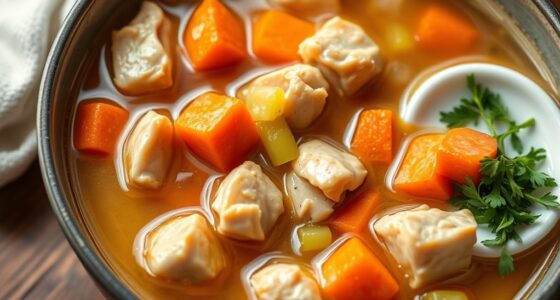
When choosing between natural and quick pressure release, consider safety, food type, and desired texture. Natural release is gentler, reducing risks like hot splatters and helping foods like stews and grains cook evenly. Quick release is faster and better for delicate items like vegetables or fish, but can cause uneven results if used improperly. Understanding which method suits your dish guarantees better safety and perfect results; exploring further will give you the complete picture.
Key Takeaways
- Use natural release for delicate, starchy foods to ensure even cooking and prevent messes from hot liquid splatter.
- Opt for quick release to save time when cooking vegetables or delicate fish that benefit from immediate pressure reduction.
- Choose natural release for tougher cuts and stews to promote tenderness through gradual pressure decrease.
- Select quick release for dishes that require precise timing or to prevent overcooking delicate ingredients.
- Consider safety and consistency: natural release offers safer, more uniform results, while quick release provides faster, more convenient results.

When using a pressure cooker, deciding between natural and quick pressure release methods can considerably impact your meal’s texture and safety. This choice isn’t just about convenience; it directly influences safety considerations and the cooking consistency you achieve. Natural release involves turning off the heat and letting the pressure gradually subside on its own, which can take anywhere from a few minutes to over twenty. Quick release, on the other hand, involves manually opening the valve immediately after cooking to release steam rapidly. Both methods have their advantages and risks, so understanding when to use each is essential.
From a safety perspective, natural release is generally safer because it allows the pressure to decrease gradually, reducing the risk of hot steam or liquid splattering out suddenly. When you perform a quick release, especially with foods that expand or foam (like beans or rice), there’s a higher chance of hot liquid escaping forcefully, which can cause burns or messes. Consequently, if safety is your top priority, especially when cooking delicate or starchy foods, natural release offers a safer approach. It minimizes sudden pressure drops and keeps the cooking environment controlled, giving you peace of mind and reducing the chance of accidents.
Natural release is safer, gradually reducing pressure and preventing hot steam or liquid splatters.
Cooking consistency is another critical factor. Natural release often results in more evenly cooked, tender ingredients because the gradual pressure reduction allows heat to distribute evenly within the food. This is particularly important for dishes like roasts, stews, or grains, where even cooking enhances flavor and texture. Quick release can sometimes cause uneven results, especially with dense foods, because the sudden drop in pressure might interrupt the cooking process prematurely. However, quick release can be beneficial when you need to stop the cooking process immediately to prevent overcooking, such as with vegetables or delicate fish.
Timing also plays a role. Natural release extends the overall cooking time, which might be inconvenient if you’re in a hurry. Conversely, quick release offers faster results, allowing you to serve meals sooner. When choosing between the two, consider the ingredients and desired texture. For tougher cuts of meat, natural release helps tenderize and meld flavors. For quick-cooking vegetables, quick release preserves their texture and color.
Frequently Asked Questions
Can I Switch Between Natural and Quick Release During Cooking?
Yes, you can switch between natural and quick pressure release during cooking, but you should do so cautiously. Wait for the appropriate pressure release timing for each step, keeping safety considerations in mind. For example, switch when the recipe calls for a quick release, but be cautious if steam is still escaping. Always follow your pressure cooker’s instructions to avoid accidents and ensure your food cooks properly.
Does the Type of Food Affect the Best Pressure Release Method?
The type of food influences your pressure release choice. For delicate dishes like seafood or soft vegetables, a natural release preserves cooking textures and flavor retention, preventing overcooking. Conversely, hearty stews and starchy foods benefit from quick releases, saving time and maintaining ideal textures. Your decision depends on balancing your desired cooking textures with flavor retention, ensuring each dish turns out perfectly, whether you’re seeking softness or speed.
How Long Does a Natural Release Typically Take?
A natural pressure release usually takes between 10 to 30 minutes, depending on the pressure buildup inside your pressure cooker. During this time, steam gradually escapes, allowing the pressure to decrease slowly. You don’t need to do anything during this process; just wait for the steam release to stop on its own. This method is ideal for foods that can overcook or become mushy with quick steam release.
Are There Safety Concerns With Quick Release?
Quick release is convenient, but it does pose safety risks. About 15% of pressure cooker accidents involve improper quick releases, mainly because of pressure hazards like hot steam burns. You should carefully follow manufacturer instructions to avoid safety concerns, such as sudden steam bursts that can cause injuries. Always verify the pressure is fully released before opening, and never force the lid open to prevent pressure-related accidents.
Can I Combine Both Methods for Different Parts of a Recipe?
Yes, you can combine both methods for different parts of a recipe. Start with quick pressure release to quickly stop cooking when you need to prevent overcooking, then switch to natural release for tenderer results or to guarantee pressure regulation. Just remember to follow safety precautions, like releasing pressure carefully and avoiding sudden releases, to keep your cooking safe and efficient. This approach gives you better control over your dish.
Conclusion
So, next time you’re cooking with a pressure cooker, remember that about 60% of home cooks prefer natural release for tougher meats, while quick release is popular for veggies. Choosing between the two depends on what you’re making and your timing needs. Experimenting with both methods helps you find what works best for you. Ultimately, understanding these options makes your cooking safer and more enjoyable, giving you perfect results every time.