When cooking brown rice and white rice in a pressure cooker, you’ll notice brown rice takes about 15-20 minutes at high pressure, requiring roughly 1.25 cups of water per cup of rice, while white rice cooks faster in 3-8 minutes with less water. Brown rice offers more fiber and nutrients, making it healthier but needs more planning. To get perfect results, understanding these differences is key—keep exploring for tips that will elevate your rice game.
Key Takeaways
- Brown rice requires 15-20 minutes at high pressure, while white rice cooks in 3-8 minutes.
- Use about 1.25 cups water per cup of brown rice; white rice needs 1 to 1.5 cups water.
- Proper water measurement and pressure settings are essential for optimal texture of both rice types.
- Brown rice’s longer cooking time benefits from planning, but pressure cooking makes it more convenient.
- White rice’s quick cook time offers faster meal prep, ideal for busy schedules.
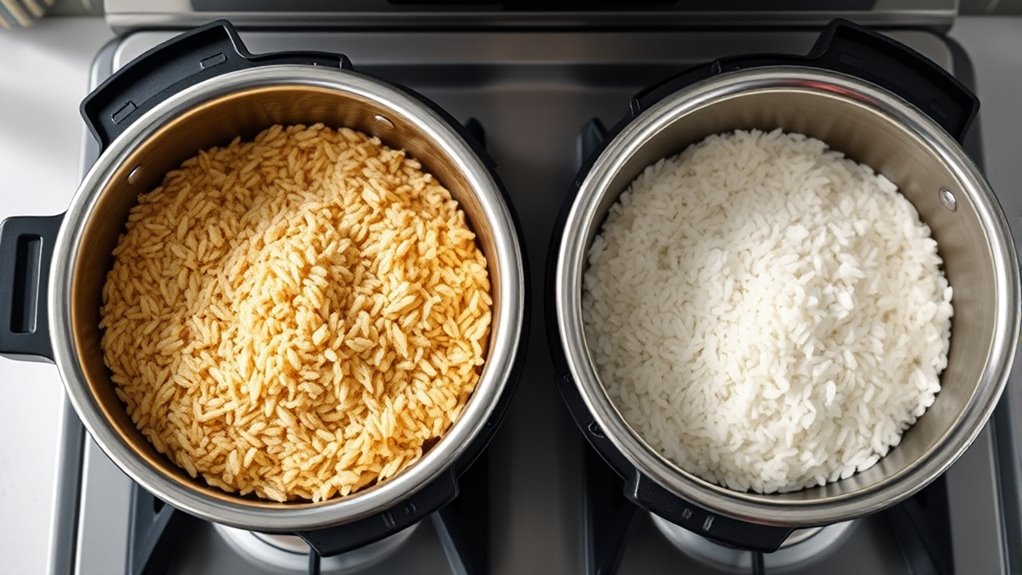
When it comes to cooking rice quickly and efficiently, a pressure cooker is a great tool, especially when choosing between brown and white rice. One of the main factors to contemplate is their nutritional differences, which influence not just health but also how you approach cooking times. Brown rice is a whole grain, meaning it retains the bran and germ layers, making it richer in fiber, vitamins, and minerals. White rice, on the other hand, has been milled to remove these layers, resulting in a less nutrient-dense product. This difference impacts your cooking process because brown rice typically requires a longer cooking time to soften fully and become palatable. When you cook brown rice in a pressure cooker, you’ll notice it takes about 15 to 20 minutes at high pressure, depending on the rice’s age and water ratio. White rice, in contrast, cooks much faster—generally around 3 to 8 minutes under pressure. This shorter cooking time makes white rice more convenient when you’re in a hurry, but it also means you’ll need to be precise with your timing to avoid overcooking or undercooking.
The nutritional differences are significant: brown rice’s higher fiber content can aid digestion and promote satiety, making it a smarter choice for those seeking a healthier diet. It also contains more magnesium, phosphorus, and B vitamins, which are crucial for energy production and overall health. White rice, while easier and quicker to cook, offers fewer nutrients, though it provides a quick source of carbohydrates. When cooking these grains in a pressure cooker, you should adjust your water ratios accordingly—about 1.25 cups of water for each cup of brown rice and slightly less for white rice, typically 1 to 1.5 cups. The pressure cooker’s sealed environment ensures even heat distribution, considerably reducing the cooking time compared to stovetop methods. This efficiency lets you prepare wholesome brown rice without sacrificing the benefits of a quick meal, though you need to plan ahead for the longer cooking duration.
Understanding these differences helps you make better choices based on your nutritional goals and available time. If you’re after maximum health benefits, brown rice is worth the extra cooking time, especially since a pressure cooker makes it more manageable. Meanwhile, white rice is ideal when speed and simplicity are priorities. Either way, mastering pressure cooker techniques ensures you get perfectly cooked rice every time, whether you prefer the hearty texture of brown or the softer bite of white rice.
Frequently Asked Questions
Can I Cook Both Types of Rice Together in a Pressure Cooker?
Yes, you can cook both rice varieties together in a pressure cooker, but you need to adjust cooking times and water ratios. Brown rice takes longer to cook than white rice, so add a little extra water and set the pressure cooker for a longer duration. Keep in mind, this method might affect the texture of each rice type, so it’s best to experiment with small batches to perfect your cooking techniques.
How Do I Prevent Brown Rice From Sticking in the Pressure Cooker?
To prevent brown rice from sticking in your pressure cooker, use some effective prevent sticking tips. Rinse the rice thoroughly to remove excess starch, which helps reduce sticking. Add a little oil or butter to create a barrier, and make certain enough water is used for proper rice release. After cooking, let it sit briefly, then gently fluff with a fork to help release the rice easily and avoid sticking.
What Are the Best Seasonings for Brown and White Rice?
You should try seasoning blends like garlic and herb or cumin for brown rice, and simple salt and pepper for white rice. To boost flavor, add flavor enhancers like soy sauce or a splash of broth. You can also sprinkle some fresh herbs or a squeeze of lemon to brighten the taste. These options add depth without overpowering, making your rice more delicious and satisfying.
Does Cooking Time Differ for Different Varieties of Brown or White Rice?
Imagine you’re cooking jasmine rice and brown basmati in your pressure cooker. You’ll notice that variety-specific cooking times matter because rice variety differences affect how long they take to cook. For example, longer grain brown rice needs more time than short grain white rice. So, always check the package or experiment with timing, as different rice varieties require tailored cooking times for perfect results.
How Can I Reduce the Cooking Time for Brown Rice?
To reduce brown rice cooking time, try pre-soaking it for 30 minutes to 2 hours, which softens the grains and speeds up cooking. You can also explore alternative methods like using an Instant Pot or stovetop simmering with a tighter lid, which can cut down cooking time. These techniques help you enjoy tender brown rice faster while preserving its nutritional benefits.
Conclusion
Whether you choose the hearty embrace of brown rice or the gentle whisper of white rice, your pressure cooker transforms each into a perfectly cooked symphony. Brown rice, with its nutty melody, demands patience, like a slow-burning ember, while white rice, quick to bloom, offers instant harmony. In your kitchen’s alchemy, both grains become culinary poetry—each note resonating with your taste buds’ deepest desires. Embrace the journey, and let your pressure cooker be your guiding star.