
To manage liquid ratios in pressure cooking, always start with the minimum required liquid—about 1 to 1.5 cups depending on your cooker—since it produces the steam needed for safety. Adjust liquids based on ingredients—vegetables and lean meats release moisture, while grains need more water. Never overfill beyond two-thirds capacity, and guarantee proper pressure release methods are followed. Keeping these points in mind helps you cook safely and consistently; more tips await below.
Key Takeaways
- Use 1 to 1.5 cups of liquid to generate enough steam for pressure and safety.
- Adjust liquid based on ingredients; vegetables and lean meats release moisture naturally.
- Avoid overfilling beyond two-thirds capacity to ensure proper steam circulation.
- For foods that expand, fill the cooker only halfway to prevent overpressure.
- Follow your pressure cooker’s minimum liquid guidelines to prevent dry burning and ensure safety.
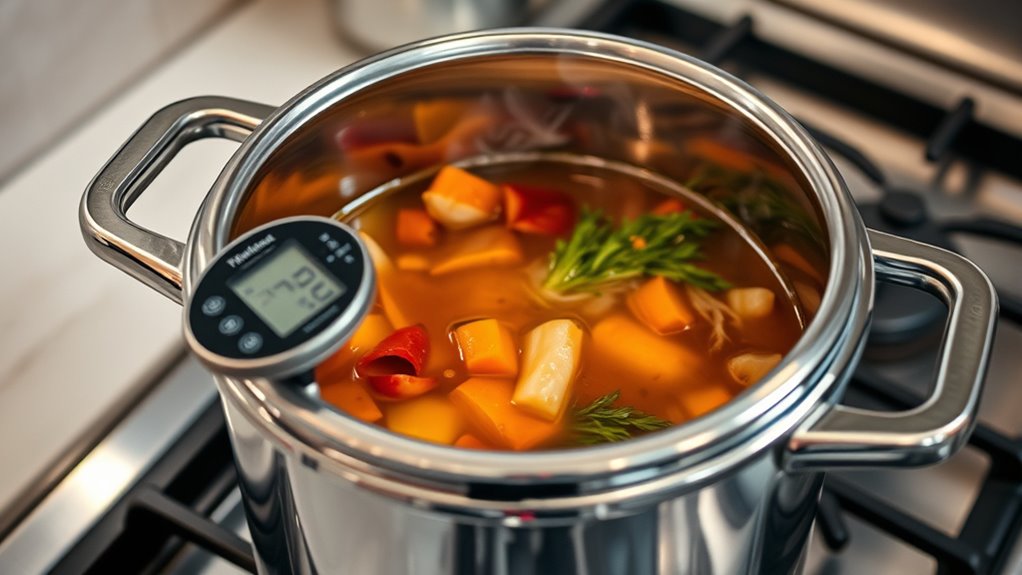
Have you ever wondered how to get the perfect pressure-cooked meal without ending up with burnt or undercooked food? One of the key factors lies in managing liquid ratios properly. The right amount of liquid ensures recipe consistency, giving you predictable results every time. Too little liquid, and your food might burn or stick to the bottom; too much, and you risk diluting flavors or overcooking ingredients. Striking the right balance means understanding your pressure cooker’s requirements and following safety precautions to avoid accidents or damage.
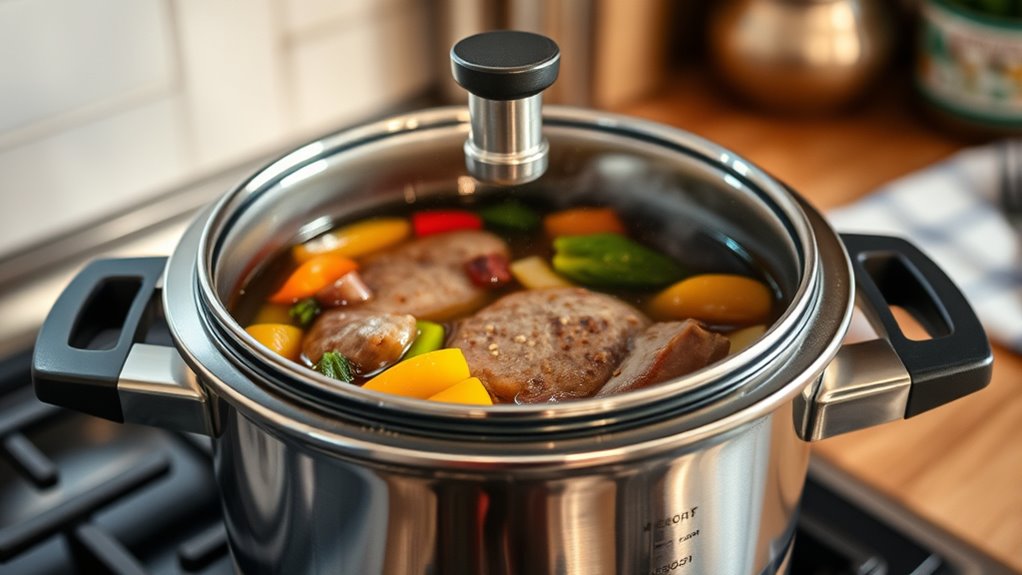
First, always check your pressure cooker’s guidelines for minimum liquid amounts. Most models need at least 1 to 1.5 cups of liquid to operate safely and generate enough steam for proper pressure buildup. This isn’t just about recipes; it’s about ensuring safety precautions are met. Insufficient liquid can cause the cooker to run dry, which might lead to overheating or even a dangerous malfunction. Using the correct amount of liquid isn’t just about cooking well—it’s about protecting yourself and your kitchen.
Check your pressure cooker’s minimum liquid requirements—usually 1 to 1.5 cups—for safety and proper operation.
When preparing your ingredients, consider their water content and how they might release moisture during cooking. For example, vegetables and lean meats release juices, so you may need slightly less added liquid. Conversely, dry grains or beans may require more water to prevent burning and ensure even cooking. Adjust your liquid ratios accordingly, but always keep within the recommended minimums for your specific pressure cooker model. This helps maintain recipe consistency, so your dishes turn out just right each time.
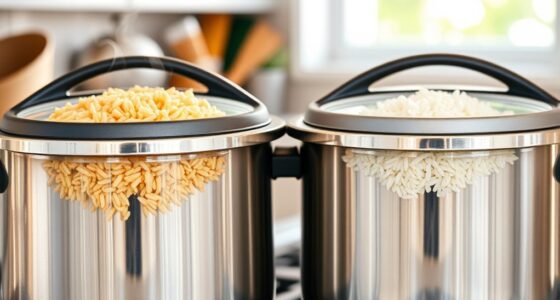
Another tip is to avoid overfilling the pressure cooker. Fill it no more than two-thirds full, or even half full if you’re cooking foods that expand, like rice or beans. Overfilling reduces the space for steam to circulate, which can compromise both safety and cooking performance. Properly managing the amount of food and liquid in the cooker helps prevent pressure buildup issues and ensures that heat distributes evenly.
Additionally, understanding the importance of pressure regulation and how it impacts cooking times can help you fine-tune your liquid management. Properly managing the amount of food and liquid in the cooker helps prevent pressure buildup issues and ensures that heat distributes evenly.
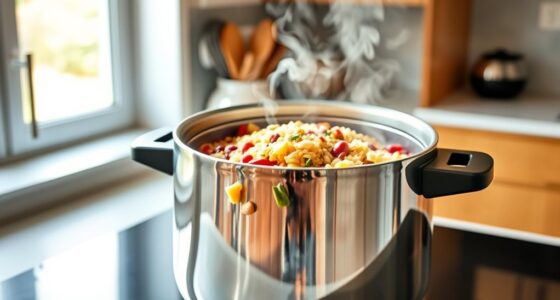
Lastly, always release pressure safely before opening the lid. Rapid depressurization can cause hot liquids to spray or splatter, which is dangerous. Follow your cooker’s instructions for natural or quick release methods, and never force the lid open when the pressure indicator shows it’s still pressurized. Safety precautions are essential because neglecting them can lead to burns or other injuries, regardless of how well you manage your liquid ratios.

Instant Pot Duo Crisp 11-in-1 Air Fryer and Electric Pressure Cooker Combo with Multicooker Lids that Air Fries, Steams, Slow Cooks, Sautés, Dehydrates, & More, Free App With Over 800 Recipes, 6 Quart
11 Cooking Functions: Air fry, roast, bake, dehydrate, pressure cook, slow cook, sauté, steam, sterilize, warm, or cook...
As an affiliate, we earn on qualifying purchases.
Frequently Asked Questions
How Do Different Types of Liquids Affect Cooking Times?
Different types of cooking liquids, like water, broth, or wine, influence cooking times by affecting heat transfer and flavor absorption. Heavier or more viscous liquids, such as thick sauces, may slow down heat penetration, extending cooking time. Liquid flavors also impact taste and aroma, so choosing the right cooking liquids guarantees your dish cooks evenly and develops the desired flavor profile. Always consider the liquid’s properties for ideal results.
Can I Reuse Leftover Cooking Liquids in Pressure Cooking?
Think of leftover cooking liquids as a treasure chest of flavor, waiting to be rediscovered. You can reuse broth in pressure cooking, but be mindful of its salt and fat content. Reusing liquid conserves resources and deepens flavors, like passing down a cherished family recipe. Just strain and check for spoilage first. It’s a smart way to maximize taste and minimize waste, turning every drop into culinary gold.
What Adjustments Are Needed for High-Altitude Pressure Cooking?
When cooking at high altitude, you need to make altitude adjustments because the boiling point of water drops, affecting cooking times. Increase pressure and cooking time accordingly, often by about 5% for every 1,000 feet above sea level. This guarantees your food cooks thoroughly. Keep an eye on your pressure cooker, and modify liquid amounts if needed to compensate for quicker evaporation at higher elevations.
How Does Liquid Ratio Influence Food Texture and Flavor?
Your liquid ratio directly impacts food texture and flavor. Using enough liquid guarantees flavor enhancement by allowing spices and ingredients to infuse properly, while also preserving the desired texture, preventing dryness or overcooking. Too little liquid can lead to burned or uneven results, while too much dilutes flavors and affects texture. Adjusting your liquid ratio helps you achieve perfectly tender, flavorful dishes with ideal texture every time.
Are There Safety Risks With Using Too Little or Too Much Liquid?
Using too little liquid can cause the pressure cooker to run dry, increasing the risk of overheating or damaging the appliance, so always follow the recommended liquid measurement. Excessive liquid, on the other hand, might lead to longer cooking times and diluted flavors. To stay safe, follow safety precautions like checking the pressure release and ensuring the lid is secure before cooking. Proper liquid measurement is essential for safety and ideal results.

Instant Pot Duo 7-in-1 Electric Pressure Cooker, Slow Cooker, Rice, Steamer, Sauté, Yogurt Maker, Warmer & Sterilizer, Includes App With Over 800 Recipes, Stainless Steel, 6 Quart
7 Cooking Functions: Pressure cook, slow cook, sauté, steam, make rice, yogurt, or simply keep your meal warm—all...
As an affiliate, we earn on qualifying purchases.
Conclusion
Mastering liquid ratios in pressure cooking guarantees your dishes turn out perfectly, whether you’re making a hearty stew or a delicate dessert. Keep an eye on the amount of liquid, and don’t forget that a little too much or too little can spoil your culinary masterpiece. Think of it like tuning a lute—balance is key. With practice, you’ll be a pressure cooking maestro, turning out delicious meals faster than a knight riding to a joust.

Instant Pot Duo 7-in-1 Mini Electric Pressure Cooker, Slow Rice Cooker, Steamer, Sauté, Yogurt Maker, Warmer & Sterilizer, Includes Free App with over 1900 Recipes, Stainless Steel, 3 Quart
7 Cooking Functions: Pressure cook, slow cook, sauté, steam, make rice, yogurt, or simply keep your meal warm—all...
As an affiliate, we earn on qualifying purchases.

Instant Pot Duo Plus 9-in-1 Multicooker, Pressure Cooker, Slow Cook, Rice Maker, Steamer, Sauté, Yogurt, Warmer & Sterilizer, Includes App With Over 800 Recipes, Stainless Steel, 6 Quarts
9 Cooking Functions: Pressure cook, slow cook, sauté, sous vide, steam, sterilize, keep warm, make rice and yogurt—all...
As an affiliate, we earn on qualifying purchases.