
To turn tough cuts into tender delights, start by marinating the meat in an acid-based mixture like vinegar or citrus for several hours to help break down fibers. After marinating, sear the meat to develop flavor, then cook slowly over low heat—using a slow cooker, oven, or stovetop—to soften connective tissues and lock in moisture. Combining these techniques ensures your dish becomes irresistibly tender and flavorful; keep exploring for more tips on perfecting this process.
Key Takeaways
- Marinate tough cuts with acid-based ingredients like vinegar or citrus to break down fibers and enhance tenderness.
- Use slow cooking methods such as braising or simmering at low temperatures to gradually soften connective tissues.
- Sear meat after marinating to develop flavor and lock in moisture before slow cooking.
- Keep the lid on during slow cooking to retain moisture and ensure even tenderization.
- Allow several hours of low-temperature cooking for optimal tenderness and flavor infusion.
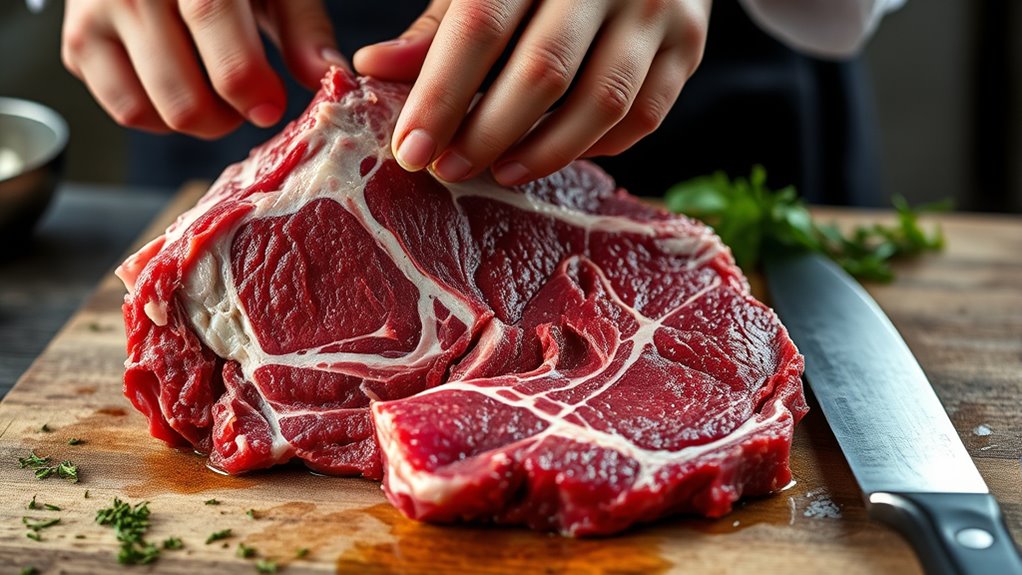
When it comes to preparing tougher cuts of meat, patience and proper techniques can transform them into tender, flavorful dishes. One of the most effective ways to do this is through thoughtful marinade techniques. By soaking the meat in a marinade that contains acid, such as vinegar or citrus juice, you help break down the muscle fibers, making the meat more tender. Incorporate ingredients like soy sauce, garlic, and herbs to add depth of flavor. Marinating for several hours or overnight allows the flavors to penetrate deeply, guaranteeing every bite is juicy and tasty. It’s important not to skip this step, especially with cuts like brisket or chuck, which are naturally tougher.
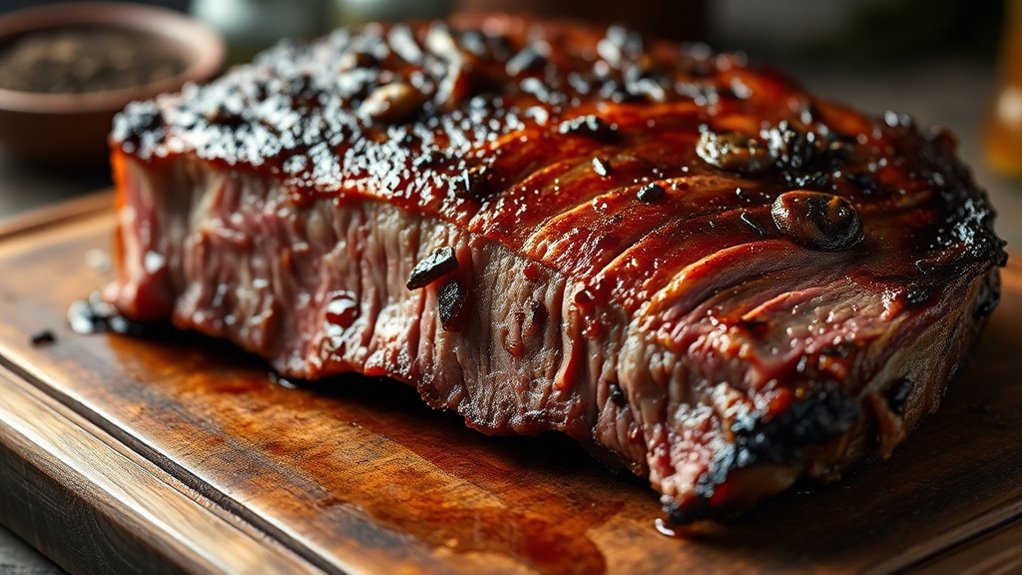
Once marinated, the next essential step is selecting the right slow cooking method. Low and slow cooking is the secret to turning tough cuts into tender delights. Using a slow cooker, braising in the oven, or simmering on the stovetop at low temperatures allows the connective tissues to break down gradually. This process results in meat that easily pulls apart and melts in your mouth. When slow cooking, keep the lid on to retain moisture and cook the meat over low heat for several hours. This gentle approach prevents the meat from drying out and guarantees it remains succulent. It’s a hands-off process that rewards you with rich, tender results.
Combine marinade techniques and slow cooking methods for best results. For example, after marinating, sear the meat briefly in a hot pan to develop flavor and then transfer it to a slow cooker or braising dish. This initial searing locks in juices and adds a caramelized flavor, which enhances the overall taste. As the meat slow-cooks, the flavors from your marinade meld with the natural juices, creating a complex, savory profile. You’ll find that even the toughest cuts become fork-tender and full of flavor when you give them enough time and proper preparation.
Frequently Asked Questions
What Are the Best Marinades for Tough Cuts?
You should try marinades with ingredients like vinegar, citrus juice, soy sauce, or yogurt, which help break down tough muscle fibers. Use marinating techniques such as scoring the meat or keeping it in the refrigerator for several hours. Combining acid, oil, and flavorings like garlic or herbs makes the marinade effective. Remember, the longer you marinate, the more tender and flavorful your tough cuts will become.
How Long Should I Cook Tough Cuts?
You should cook tough cuts using slow cooking or braising techniques for several hours—typically 2 to 3 hours for smaller pieces and up to 4-6 hours for larger cuts. These methods break down connective tissues and render the meat tender. Keep the heat low and maintain a gentle simmer or slow oven temperature. Check for tenderness, and once the meat easily pulls apart, it’s ready to serve.
Can Pressure Cooking Make Tough Meat Tender?
Yes, pressure cooking can make tough meat tender. It’s a great cooking technique because it uses high pressure to break down connective tissues quickly. When selecting meat, choose tougher cuts like brisket or stew meat, which benefit most from pressure cooking. You’ll want to cook these cuts for about 30-45 minutes, depending on size, to achieve tender, flavorful results. This method saves time while turning tough meat into a delicious, melt-in-your-mouth dish.
Are There Specific Herbs That Enhance Tough Cuts?
Yes, certain herbs can enhance tough cuts by boosting flavor. Herb pairing like rosemary, thyme, and bay leaves works well, adding depth and aroma to your dishes. You should add these herbs early in the cooking process to allow their flavors to infuse, helping to create a more tender, flavorful result. Incorporating fresh herbs near the end can also brighten the dish, making tough cuts taste more appealing and satisfying.
What Are Common Mistakes to Avoid When Cooking Tough Meat?
When cooking tough meat, avoid common mistakes like choosing the wrong cut or neglecting proper storage techniques. Always select cuts suited for slow cooking or braising, and make certain your meat is stored correctly to prevent spoilage. Don’t skip marinating or tenderizing, and avoid high heat for long periods, which can make the meat tough. Instead, use gentle, slow methods to break down connective tissue and achieve tender results.
Conclusion
Think of your cooking journey as tending a rugged garden. With patience, you turn tough, stubborn soil into rich, tender growth. Each slow braise or careful marinade is like nurturing roots beneath the surface, transforming obstacles into flavorful blooms. So, when you master these techniques, you’re not just making meat tender—you’re cultivating resilience and skill within yourself. Embrace the process, and soon, even the toughest cuts will reveal their sweet, tender rewards.