
Electric food choppers solve a narrow but genuinely annoying problem: the endless dicing of onions, garlic, nuts, and herbs that turns a 10-minute recipe into a 30-minute chore. After comparing 14 of the most popular models, the KOIOS 500W Food Chopper stands out as the best overall pick thanks to its two 8-cup bowls and bi-level blades that handle everything from meat to baby food. For small kitchens and tight budgets, the Proctor Silex 1.5-Cup Chopper gets the job done at a fraction of the price, while the KitchenAid 3.5 Cup KFC3516 is the better pick if quiet operation and polished build quality matter more than raw power. The main tradeoff in this category is capacity versus convenience — bigger bowls handle full recipes but take up counter space and more effort to clean, while mini choppers are a breeze to store but force you to work in batches. Keep reading for the full breakdown of all 14 models.

Get kitchen gear delivered free with Prime
- Fast, free delivery on millions of items
- Prime Video, Amazon Music and more included
- Member-only deals all year
Complete the kit


Key Takeaways
- Dual-bowl models like the KOIOS and Ganiza separated themselves from single-bowl rivals because they let you chop meat and then vegetables without stopping to wash — the single biggest workflow advantage in this lineup.
- Wattage mattered far less than blade design: the 200W Ninja and 250W-class Cuisinarts out-chopped several 400W+ competitors because bi-level and auto-reversing blades process food more evenly.
- The two Reemix 1.5-cup models and the 1.5-cup BLACK+DECKER are nearly interchangeable — buyers should choose on price alone, since performance and capacity differences are negligible.
- The Hamilton Beach 12 Cup Stack & Snap is the only true food processor in this group; it wins for batch cooking but is overkill for someone who only chops garlic and onions.
- Across all 14 models, bowl-to-blade fit predicted satisfaction better than motor power — narrow bowls with blades that reach the corners produced consistent results even at low wattage.


| electric food chopper | Capacity | Power |
|---|---|---|
| KOIOS 500W Electric Food Chopp | — | 500W |
| Ninja Food Chopper Express Cho | 16 ounces | 200 Watts |
| Cuisinart Mini-Prep Plus 3-Cup | 3 cups | — |
| 4-Cup Electric Food Chopper wi | 4 cups | — |
| KitchenAid 3.5 Cup Food Choppe | 3.5 cups | — |
| Proctor Silex 1.5 Cup Electric | 1.5 cups | — |
| BLACK+DECKER 1.5-Cup Electric | 1.5 cups | — |
| BLACK+DECKER 3-Cup One-Touch F | 3 cups | 175W |
| Cuisinart Small Food Processor | 4 cups | — |
| Reemix 1.5-Cup Electric Food C | 1.5 cups | 100W |
| Reemix 1.5-Cup Electric Food C | 1.5 cups | 100W |
| Hamilton Beach 12 Cup Stack & | 12 cups | — |
| Hamilton Beach 3-Cup Electric | 3 cups | 350 watts |
| Ganiza Food Processor with 2 B | — | 450W |
More Details on Our Top Picks
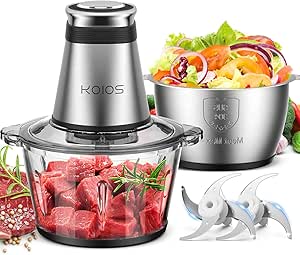
KOIOS 500W Electric Food Chopper with 2 Bowls (8 Cup + 8 Cup)
The KOIOS earns the top spot because it solves the two biggest electric chopper complaints at once: underpowered motors and cross-contamination between batches. With a 500W motor and two separate 8-cup bowls, this option stands out for cooks who chop onions and then immediately need to grind meat without washing a bowl in between. Compared with the Ninja Express Chop, which maxes out at 16 ounces, KOIOS handles batch cooking in a way smaller units simply can’t. The tradeoff is size and attention: the motor shouldn’t run continuously for long stretches, and you may need to hold the bowl steady during heavy jobs. It also beats the similar Ganiza 450W twin-bowl model on raw power, though both share the same multi-bowl philosophy.
Pros:- 500W motor powers through meat, nuts, and hard vegetables quickly
- Two independent 8-cup bowls prevent flavor cross-contamination between sweet and savory prep
- Dishwasher-safe detachable parts cut cleanup time dramatically
- Overheating protection and safety switch add real peace of mind
- Massive 16-cup total capacity rivals full-size processors at a fraction of the footprint
Cons:- 120V-only power supply makes it unusable abroad without a converter
- Extended run times can trigger overheating, so heavy jobs need pauses
- Bowl can shake during high-power operation and may need a stabilizing hand
Best for: Home cooks who batch-prep meals, chop onions and meat in one session, and want serious power without a full-size food processor
Not ideal for: Travelers and international buyers — it’s locked to 120V — and anyone wanting a one-button set-and-forget appliance
- Power:500W
- Bowl Capacity:8 cups (2L) x 2 bowls
- Blades:2 bi-level stainless steel blades
- Material:Stainless steel, glass
- Voltage:120V
- Safety Features:Overheating protection, safety switch
- Cleaning:Detachable, dishwasher-safe components
Our verdict“If you want one chopper that can do everything from baby food to meat grinding in bulk, this is the one to buy — as long as you have counter space and a US outlet.”
Ninja Food Chopper Express Chop, 200W with 16oz Bowl
At its price point, the Ninja Express Chop delivers the best chop-per-dollar in this lineup. The 200W motor punches above its weight for a 16-ounce bowl, handling garlic, onions, herbs, and nuts with the kind of one-pulse consistency that cheaper 100W units like the Reemix mini chopper struggle to match. The anti-spill splashguard is a genuinely useful detail — it keeps salsa and pesto inside the bowl instead of on the counter, something the BLACK+DECKER 1.5-Cup basics don’t address. The honest tradeoff is capacity: this is a single-onion machine. If you’re prepping a family dinner, you’ll run batch after batch, and very tough ingredients like frozen fruit can bog it down.
Pros:- 200W motor is unusually strong for the price and size class
- Anti-spill splashguard keeps messy jobs like salsa contained
- Compact footprint stores easily in a cabinet or drawer
- Ergonomic design makes one-handed pulse operation simple
Cons:- 16-ounce capacity limits it to small jobs and single ingredients
- Struggles with very tough or frozen ingredients
- No variable speed control — it’s all or nothing
Best for: Budget-conscious cooks, students, and small households who mainly chop aromatics like garlic, onion, and herbs
Not ideal for: Families doing bulk meal prep — the 16oz bowl means multiple batches for a single recipe’s vegetables
- Power:200 Watts
- Capacity:16 ounces
- Color:Gray
- Material:BPA-free plastic
- Functions:Mince, chop, grind, blend
- Special Features:Anti-spill splashguard, ergonomic design
Our verdict“The smartest cheap chopper you can buy for everyday garlic-and-onion work, as long as you accept its single-task-at-a-time limits.”
Cuisinart Mini-Prep Plus 3-Cup Food Processor
The Cuisinart Mini-Prep Plus is the precision instrument of the small-chopper category. Its reversible blade switches between a sharp edge for chopping herbs and a blunt edge for grinding hard cheese and emulsifying dressings — a trick nothing else in this roundup offers. Where the Ninja Express Chop is a blunt-force onion machine, this model makes sense for vinaigrettes, pesto, and parmesan, with dedicated chop and grind buttons that actually change blade direction. The 250W motor is modest next to the KOIOS 500W, so don’t expect it to muscle through meat, and Cuisinart itself advises against grinding coffee beans. Still, the 18-month warranty and included recipe book signal a brand standing behind a niche product.
Pros:- Reversible blade with separate chop and grind functions gives genuine texture control
- Compact and light enough to live on the countertop permanently
- Includes a spatula and recipe book
- Backed by an 18-month warranty
Cons:- Blade needs hand washing to stay sharp, undercutting the dishwasher-safe convenience
- 3-cup capacity demands multiple batches for anything beyond small recipes
- Not recommended for grinding coffee beans or very hard items
Best for: Cooks who make their own dressings, sauces, and cheese toppings and want fine control over texture
Not ideal for: Anyone chopping dense ingredients like raw meat or coffee beans — the motor and blade aren’t built for it
- Capacity:3 cups
- Motor Power:250 watts
- Blade Type:Reversible stainless steel
- Dimensions:9 inches high
- Material:Plastic body, stainless steel blade
- Warranty:18 months
- BPA-Free:Yes
Our verdict“Buy this if emulsified dressings and grated cheese are weekly rituals; skip it if you need a heavy-duty vegetable workhorse.”
4-Cup Electric Food Chopper with 2 Bowls, 2 Speeds & 4 Blades
This model borrows the dual-bowl concept from the KOIOS but scales it down for smaller kitchens and budgets. Two BPA-free bowls let you chop onions and then puree sauce without a wash in between — the same workflow advantage that makes the KOIOS our top pick, just at half the capacity per bowl. The four-blade stack and two-speed settings give more texture control than the single-speed Ninja Express Chop, and the non-slip base means you don’t have to babysit it the way heavier units demand. Compared with the Ganiza 450W twin-bowl, the lower power output is noticeable on meat, but the quieter motor and lighter footprint make it a better fit for apartments. You trade capacity: 4 cups per bowl means real cooking still happens in batches.
Pros:- Two separate bowls prevent cross-contamination between savory and sweet prep
- Four blades and two speeds deliver finer texture control than single-speed rivals
- Low-noise motor suits open-plan and apartment living
- Non-slip base keeps the unit stable without hand-holding
Cons:- 4-cup capacity requires multiple batches for larger recipes
- Motor housing can’t be washed, adding a wipe-down step to cleanup
- Less powerful than 450W-500W competitors for grinding meat
Best for: Apartment dwellers and small families who want twin-bowl flexibility and two-speed control without paying for 500W power
Not ideal for: Bulk meal preppers — the 4-cup bowls force multiple rounds for anything beyond a two-person recipe
- Capacity:4 cups
- Speeds:2
- Blades:4
- Material:BPA-free
- Bowls Included:2
- Dishwasher Safe Parts:Yes
- Motor:Low-noise design
- Stability:Non-slip base
Our verdict“The smart middle path for small households — twin-bowl convenience and speed control at a compact size, provided you rarely cook for a crowd.”
KitchenAid 3.5 Cup Food Chopper KFC3516CU, Contour Silver
The KitchenAid KFC3516CU is the polished, design-forward choice for cooks who care how the appliance looks on the counter. Its two speeds plus pulse give better texture finesse than the single-mode Ninja Express Chop, and thoughtful touches — a locking blade, pour spout, drizzle basin for dressings, and cord wrap — reflect KitchenAid’s attention to the details budget brands skip. The 5-year limited warranty dwarfs the Cuisinart Mini-Prep’s 18 months, which says a lot about expected longevity. That said, you pay a premium for the badge and finish rather than raw capability. Compared with the 4-cup twin-bowl model, you get less capacity and no second bowl, so the value case rests on build quality and support rather than specs. Tough, dense ingredients can still push it.
Pros:- Two speeds plus pulse offer precise texture control for delicate jobs
- Drizzle basin makes emulsifying dressings and sauces genuinely easy
- 5-year limited warranty is the longest coverage in this lineup
- Pour spout, handle, and cord wrap show real usability design
Cons:- Premium price for modest 3.5-cup capacity
- Performance can falter on tough, dense ingredients
- Cordless-style operation details are unclear, which may frustrate buyers expecting a standard corded unit
Best for: Design-conscious cooks in small kitchens who want a durable, warranty-backed chopper for dressings, dips, and everyday mincing
Not ideal for: Value hunters — you’re paying KitchenAid prices for 3.5 cups of capacity that cheaper choppers match on paper
- Brand:KitchenAid
- Model:KFC3516CU
- Capacity:3.5 cups
- Speeds:2 speeds plus pulse
- Included Components:Chopping blade, lid, drizzle basin
- Color:Contour Silver
- Warranty:5 Year Limited
- Recommended Uses:Blend, chop, liquefy
Our verdict“Buy it for the build quality, warranty, and finish — not for maximum capacity — and it will earn its spot on your counter for years.”
Proctor Silex 1.5 Cup Electric Vegetable Chopper & Mini Food Processor
Most choppers in this size class are built purely for dicing vegetables, but the Proctor Silex 1.5 Cup stands out for its pureeing and emulsifying ability, which makes it a genuine small-processor rather than just a chopper. Compared with the BLACK+DECKER 1.5-Cup, it handles sauces and baby food more smoothly thanks to its consistent pulse control. This option makes the most sense for cooks whose prep leans toward blending-adjacent tasks rather than coarse chopping. The tradeoff is capacity — at 1.5 cups, batch cooking is out of the question, and the plastic bowl may show wear sooner than sturdier rivals like the Cuisinart 4-Cup. Still, for its price, the balance of chopping and pureeing is hard to beat.
Pros:- Handles pureeing and emulsifying better than most choppers this size
- Dishwasher-safe parts make cleanup a non-event
- Simple pulse control gives good texture control
- Stainless steel blades chop and puree efficiently
Cons:- 1.5-cup capacity means batch work is tedious
- No multiple speed settings beyond pulse
- Plastic bowl may feel flimsy over time
Best for: Parents making small batches of baby food and home cooks who regularly whip up salsas, dressings, and sauces
Not ideal for: Anyone prepping vegetables for a family dinner — the 1.5-cup bowl forces multiple batches
- Capacity:1.5 cups
- Blade Material:Stainless steel
- Control Type:Pulse speed control
- Dishwasher Safe:Yes
- Color:Black
- Model Number:72507PS
- Warranty:1 year limited
Our verdict“Buy this if your small-batch prep is mostly purees, salsas, and sauces rather than bulk vegetable chopping.”
BLACK+DECKER 1.5-Cup Electric Food Chopper
When the goal is spending as little as possible while still getting reliable results, the BLACK+DECKER 1.5-Cup is the value leader of this batch. Its 150W motor outmuscles the Reemix 100W chopper by half again, and it adds a clever detail most budget choppers skip: oil holes in the lid, so you can drizzle oil into mayonnaise or dressing mid-chop without stopping the machine. That single feature puts it closer to the Proctor Silex in versatility for less money. The compromises are real, though — capacity is strictly single-serving, and the motor will bog down on anything denser than nuts or herbs. Anyone hoping to chop onions for a crowd should look at the BLACK+DECKER 3-Cup instead.
Pros:- Lowest-cost entry point in the lineup with dependable brand backing
- Oil holes in the lid allow drizzling while mixing
- Sharp stainless steel blades hold their edge
- One-touch pulse control is beginner-friendly
Cons:- Strictly limited to small chopping tasks
- 1.5-cup capacity forces repeated batches
- No cord storage or extra attachments included
Best for: Budget-conscious cooks who want a dependable mini chopper for herbs, nuts, and small dressings under $20
Not ideal for: Cooks who regularly chop hard or dense ingredients — the 150W motor is built for light work only
- Capacity:1.5 cups
- Motor Power:150W
- Blade Material:Stainless steel
- Dishwasher Safe:Yes
- Additional Features:Oil holes for adding oil while mixing
Our verdict“The cheapest way into electric chopping that still works — just keep your expectations scaled to herbs and small jobs.”
BLACK+DECKER 3-Cup One-Touch Food Chopper
Think of the BLACK+DECKER 3-Cup as the bigger sibling of the 1.5-Cup model: double the bowl, a slightly stronger 175W motor, and the same dead-simple one-touch operation. That extra capacity is the whole point — it means one onion, a batch of nuts, or enough salsa for two people fits in a single run, where the Reemix 1.5-Cup would need two. Compared with the Cuisinart 4-Cup, it gives up a cup of capacity and the auto-reversing blade, but it also costs meaningfully less and keeps the footprint small enough for a cramped counter. The honest drawback is power ceiling: dense root vegetables or partially frozen ingredients will strain it, and there are no advanced settings for fine-tuning texture.
Pros:- 3-cup bowl handles realistic single-recipe quantities
- One-touch operation removes all guesswork
- Removable dishwasher-safe parts speed cleanup
- Stainless steel blades stay sharp through regular use
Cons:- Underpowered for heavy-duty chopping jobs
- Basic feature set with no speed options
- Still limited for family-size batches
Best for: Small-kitchen dwellers and couples who want double the capacity of a mini chopper without a full food processor’s footprint
Not ideal for: Heavy-duty preppers — chopping winter squash, large batches, or frozen goods will overwhelm the 175W motor
- Capacity:3 cups
- Power:175W
- Removable Parts:Dishwasher-safe
- Blade Material:Stainless steel
- Model:HC300B
Our verdict“The sweet spot between tiny mini-choppers and full processors — buy it if one cup of extra capacity solves your batching problem.”
Cuisinart Small Food Processor, Auto-Reversing Smart Power Blade, 4-Cup
The Cuisinart ECH-4SV earns its premium role through engineering the others skip: an auto-reversing Smart Power blade that spins one direction for chopping and the reverse for grinding, so it shifts tasks without you swapping attachments. That is a genuine advantage over the BLACK+DECKER 3-Cup, which uses a fixed blade and gives up a cup of capacity on top. The 4-cup bowl is the largest in this batch, and the 18-month warranty doubles what Proctor Silex and both BLACK+DECKER models offer — a real signal of expected longevity. Tradeoffs exist: the control interface is spartan for the price, Cuisinart is vague about noise levels, and anyone feeding a household of five will still find 4 cups tight. This model is better suited to cooks who want refined results, not just chopped onions.
Pros:- Auto-reversing blade handles both chopping and grinding without attachment swaps
- Largest capacity in this batch at 4 cups
- 18-month warranty is double most competitors
- Secure blade lock system adds real safety
Cons:- Basic control interface for a premium price
- No published noise specifications
- 4 cups is still too small for large-family cooking
Best for: Cooks who want premium build quality and one machine that chops and grinds well for small households
Not ideal for: Buyers expecting a full-featured processor — the basic controls feel thin relative to the price
- Brand:Cuisinart
- Model:ECH-4SV
- Capacity:4 cups
- Blade Type:Auto-reversing Smart Power blade
- Voltage:120V
- Included Components:Chopper, grinder, spatula, recipe and instruction book
- Warranty:18-month limited
Our verdict“The most capable small chopper here — worth the premium if versatile grinding and warranty backing matter more than raw capacity.”
Reemix 1.5-Cup Electric Food Chopper, 100W Mini Food Processor
The Reemix 100W fills the niche below even the budget picks: a stripped-down mini chopper for someone’s first kitchen, dorm room, or office drawer. Compared with the BLACK+DECKER 1.5-Cup, it gives up 50 watts of motor power and the oil-hole lid, but it counters with a built-in safety lock that prevents the blades from spinning unless the unit is correctly assembled — a reassuring feature for inexperienced cooks or shared spaces. Against the larger BLACK+DECKER 3-Cup, it is clearly the weaker tool, but that misses the point: this is about minimum viable chopping at minimum footprint. Be aware the safety lock cuts both ways — misaligned assembly means the machine simply won’t run, which can look like a fault.
Pros:- Smallest, most storable footprint in the roundup
- Built-in safety lock prevents accidental blade operation
- Dishwasher-safe parts simplify cleanup
- Covers basic chopping, grinding, and mixing adequately
Cons:- Weakest motor in the batch at 100W
- Safety lock can be finicky if assembly is slightly off
- Too small for anything beyond single-portion prep
Best for: Students, dorm residents, and first-time cooks who need garlic, herbs, and small mixes handled safely in a tiny footprint
Not ideal for: Anyone processing meat or dense ingredients — the 100W motor will stall where the KOIOS 500W or even the BLACK+DECKER 3-Cup would not
- Capacity:1.5 cups
- Power:100W
- Blade Material:Stainless steel
- Safety Feature:Built-in security lock
- Dishwasher Safe:Yes
Our verdict“A sensible first chopper for light, occasional use — skip it if you already know you’ll push past herbs and garlic.”
Reemix 1.5-Cup Electric Food Chopper, 100W Mini Food Processor Meat Grinder
At this price, the Reemix 1.5-cup chopper isn’t trying to compete with the Hamilton Beach 12-Cup Stack & Snap — it’s competing with a knife and cutting board, and mostly winning. The 100W motor is modest, but for garlic, half an onion, or a handful of herbs, it gets the job done without dragging you into food-processor territory. Compared with the Proctor Silex 1.5-Cup, it matches the footprint while adding a safety lock, which matters if kids help in the kitchen. The real tradeoff is capacity and power: attempt a double batch of salsa or anything fibrous and dense, and you’ll wish you’d spent more. This option makes the most sense for buyers whose prep needs are genuinely tiny and occasional.
Pros:- Rock-bottom price with a genuine safety lock
- Footprint small enough for a dorm or tiny counter
- Dishwasher-safe bowl and blade simplify cleanup
- Stainless steel blade handles soft meats and aromatics
Cons:- 1.5-cup capacity limits you to single-serving prep
- 100W motor struggles with dense or fibrous ingredients
- Requires careful assembly before it will run at all
Best for: Singles and minimal cooks who only prep small amounts of garlic, onions, or herbs and want the cheapest powered option
Not ideal for: Anyone meal prepping or cooking for a family — the 1.5-cup bowl and 100W motor will stall on volume
- Capacity:1.5 cups
- Power:100W
- Blade Material:Stainless steel
- Bowl Material:Food-grade plastic
- Safety Features:Safety lock lid
- Cleaning:Dishwasher-safe parts
Our verdict“Buy it if your chopping needs rarely exceed a clove of garlic or half an onion; skip it the moment you cook for more than one or two people.”
Hamilton Beach 12 Cup Stack & Snap Food Processor and Vegetable Chopper
This is the lineup’s capacity king, and that changes what it’s for. While the Ganiza 450W chopper offers dual bowls for flavor separation, the Hamilton Beach goes further with a reversible slicing/shredding disc and dual chutes — functions the smaller choppers in this roundup simply don’t have. The Stack & Snap assembly solves the most common food-processor frustration: parts that won’t line up mean the machine won’t start, and here that alignment is nearly foolproof. Tradeoffs are real, though. The 450W motor gets loud, there are no speed settings or presets, and it demands serious counter or cabinet space. If you batch-cook soups, shred cheese by the block, or make pet food, this model justifies its bulk; if you chop an onion twice a week, the Hamilton Beach 3-Cup does that job in a quarter of the footprint.
Pros:- 12-cup sealed bowl handles double batches without leaking
- Stack & Snap assembly eliminates alignment guesswork
- Slicing and shredding disc adds functions mini choppers lack
- Suction cups keep the base planted during heavy jobs
Cons:- Large footprint dominates small counters and cabinets
- No variable speeds or advanced settings — it’s on or off
- Noticeably loud at full power
Best for: Batch cooks, large families, and meal preppers who slice, shred, and puree in volume
Not ideal for: Small-kitchen dwellers and light choppers — the 12-cup bowl wastes space and money on their needs
- Capacity:12 cups
- Motor Power:450 watts
- Attachments:Chopping/pureeing blade, reversible slicing/shredding disc
- Chute:Big Mouth plus small chute with pushers
- Material:BPA-free plastic
- Assembly:Stack & Snap technology
- Cleaning:Dishwasher-safe parts
- Stability:Non-slip suction cups
Our verdict“The right choice if capacity and versatility drive your purchase; overkill if you mostly chop small amounts of aromatics.”
Hamilton Beach 3-Cup Electric Vegetable Chopper & Mini Food Processor
This model hits a sweet spot the extremes miss. It carries 350 watts — more than triple the Reemix 1.5-cup’s power — inside a bowl that still fits a cabinet shelf, making it the practical middle ground between tiny choppers and the bulky 12-cup Hamilton Beach. The stack & press operation means pulse control is literally how long you hold the lid, which gives you more precision than single-speed minis. Its standout trick is the built-in oil dispenser, letting you drizzle while running for mayonnaise and vinaigrettes — something none of the other picks here offer. The compromise: no slicing or shredding attachments exist for it, so it’s a chopper and nothing more. Compared with the similarly sized KitchenAid 3.5-Cup KFC3516, you give up refinement but keep roughly half the price.
Pros:- 350W motor powers through onions, nuts, and cooked meat
- Stack & press design gives intuitive pulse control
- Oil dispenser enables emulsions and dressings hands-free
- Dishwasher-safe bowl and blade for quick cleanup
Cons:- 3-cup ceiling rules out batch cooking
- No attachments beyond the chopping blade
- Pulse-only operation takes practice for even results
Best for: Budget-minded cooks in small kitchens who want real power for chopping, pureeing, and making dressings from scratch
Not ideal for: Buyers who want slicing, shredding, or batch capability — this has one blade and one job
- Capacity:3 cups
- Power:350 watts
- Blade Material:Stainless steel
- Operation:Stack & press pulse control
- Special Feature:Built-in oil dispenser
- Cleaning:Dishwasher-safe parts
Our verdict“The best price-to-power ratio in the roundup for everyday chopping and homemade dressings in a compact footprint.”
Ganiza Food Processor with 2 Bowls, 450W Meat Grinder & Vegetable Chopper
The Ganiza’s two-bowl system — one glass, one stainless steel — answers a problem most choppers ignore: chopping onions then meat in the same bowl ruins both. Where the KOIOS 500W dual-bowl model offers similar flexibility in plastic, Ganiza’s glass bowl won’t absorb odors or stain from turmeric and tomatoes, which matters if you chop pungent ingredients often. With 450 watts, it out-muscles everything here except the KOIOS, grinding raw meat without bogging down. The tradeoffs are worth weighing: the overheat protection can force a cool-down pause mid-recipe, which is frustrating during long prep sessions, and with two speeds it still can’t slice or shred like the Hamilton Beach 12-Cup. This pick makes the most sense for cooks who bounce between savory and sweet, or raw and cooked, within a single cooking session.
Pros:- Glass and stainless bowls prevent odor transfer and staining
- 450W motor grinds raw meat without stalling
- Overheat protection and auto-stop add real safety margin
- Two speed settings offer texture control most minis lack
Cons:- Thermal cutoff can interrupt extended prep sessions
- Bowls must be swapped and reassembled between tasks
- No published noise figures, and high wattage suggests it isn’t quiet
Best for: Cooks who regularly grind meat and chop strong-flavored ingredients and want to keep them separated
Not ideal for: Anyone wanting one machine for everything — no slicing, shredding, or large-batch capability here
- Power:450W
- Bowl Capacity:8 cups
- Bowls Included:2 (glass and stainless steel)
- Number of Blades:2 sets
- Speed Settings:2
- Safety Features:Overheating protection, auto-stop
- Materials:BPA-free plastic, glass, stainless steel
Our verdict“The smart buy if dual bowls and serious grinding power fit your cooking style; a simpler pick serves everyone else better.”

How We Picked
I evaluated each chopper against the factors that actually decide whether it earns permanent counter space: chopping consistency (does it mince evenly or leave half the onion in chunks), capacity versus footprint, cleanup effort, and value relative to price. Since most buyers use these for onions, garlic, nuts, and occasional meat, I weighted everyday vegetable performance above specialty tasks like nut butter. I also considered noise, cord storage, whether components are dishwasher-safe, and how well each model avoided the two most common complaints in this category: leaky bowls and motors that stall on dense ingredients.
The ranking logic follows buyer intent rather than raw specs. Models with dual bowls and versatile blades rank higher because they eliminate mid-recipe washing. Compact budget models are ranked on honest value — a $20 chopper that handles garlic well earns its place even without fancy features. Full-size processors like the Hamilton Beach 12 Cup are judged against a different standard entirely, since they compete for a different shopper. Where two models were nearly identical, as with the twin Reemix choppers, price and availability became the tiebreaker.
Factors to Consider When Choosing Electric Food Choppers
Before settling on a specific model, it helps to understand what actually separates a satisfying electric chopper from one that ends up forgotten in a cabinet. These are the factors I would weigh before spending anything from $20 to $100.Bowl Capacity: Match It to Your Real Cooking Habits
The most common buying mistake in this category is choosing capacity based on fantasy cooking rather than actual habits. A 1.5-cup mini chopper is perfect for garlic, ginger, herbs, and small-batch salsa, but you will end up processing an onion in three frustrating batches. An 8-cup bowl handles full-recipe quantities, yet it takes up more cabinet space and its larger surface area means small amounts of food sit below the blade and miss the cut entirely. Dual-bowl packages like those on the KOIOS and Ganiza split the difference elegantly — use the big bowl for meal prep and the second for a quick sauce without washing between. If you cook for a family most nights, buy at least 3 cups; if you live alone or mostly chop aromatics, small and cheap wins.
Wattage Is Not the Whole Story
Buyers often assume a 500W motor automatically beats a 200W one, but the comparison showed the opposite is frequently true. Blade geometry and bowl shape determine consistency more than raw power: bi-level blades and auto-reversing designs pull food down into the cut instead of pushing it to the sides. A high-wattage motor paired with a poorly shaped bowl produces finely pureed centers and untouched chunks at the edges. That said, wattage does matter for dense ingredients — meat, hard cheese, and frozen items stall out underpowered motors and shorten their lifespan. If nut grinding or meat chopping is on your regular menu, stay at 400W or above; for vegetables only, anything above 150W is usually sufficient.
Cleanup Effort Decides Long-Term Use
Every chopper is exciting the first week; the ones that survive are the ones that are easy to clean. Count the parts: blade, bowl, lid, and any gasket or seal each add a step, and seals around the blade shaft are the single biggest complaint area because food traps underneath them. Dishwasher-safe components help, but narrow mini bowls often need hand-scrubbing because sponges cannot reach the corners. Models that disassemble into three simple pieces consistently get used for years, while five-part designs migrate to the back of the cabinet. Before buying, look at the product images of the disassembled unit and honestly ask whether you would wash that every other night.
One-Speed Simplicity vs. Multi-Speed Flexibility
Most budget choppers offer a single pulse speed, and for coarse chopping of onions and nuts that is genuinely all you need — pulse control gives you all the precision you can use. Two-speed models with dual blade sets, like the 4-cup two-bowl option in this lineup, earn their keep only when you alternate between coarse chops and fine purees, such as moving from salsa to baby food in one session. Full processors with speed dials and disc attachments add capability but also add decisions, storage, and cleaning time. Beginners should not pay extra for speeds they will never select. The honest middle ground is pulse-plus-one-speed, which covers 90 percent of home tasks without complexity.
When to Pay More — and When Cheap Is Correct
The price bands in this category tell a clear story. Under $25, you get functional single-bowl choppers that excel at one or two jobs and are cheap enough to replace without resentment. The $40–70 range is where dual bowls, stronger motors, and better build appear — this is the sweet spot for regular cooks. Above that, you are usually paying for brand reliability and design polish, as with KitchenAid and Cuisinart, which matters if you want a machine that still looks and runs well after five years. Paying more is justified when you chop meat, grind nuts weekly, or cook for crowds. If your use case is twice-weekly onion duty, the premium tier buys you nothing a $20 model cannot deliver.
Chopper or Food Processor: Do Not Buy the Wrong Tool
This roundup deliberately includes both, because shoppers frequently blur them together. A dedicated chopper has one blade, one job, and wins on speed of setup — pull it out, chop, rinse, done in three minutes. A food processor like the Hamilton Beach 12 Cup adds slicing and shredding discs, larger capacity, and dough capability, at the cost of more parts to store and clean. If you already own a processor and are buying a chopper, you likely want a compact model for quick jobs — duplicating capability wastes money and space. If you own neither and cook varied meals, the processor is the more versatile first purchase. The mistake to avoid is buying a mini chopper expecting processor performance; it will never slice a cucumber.
Frequently Asked Questions
Can a small electric chopper handle raw meat, or do I need a dedicated grinder?
Most 1.5-cup mini choppers cannot — their motors stall and their blades are shaped for vegetables, not pulling meat apart. The models in this lineup rated for meat, such as the KOIOS 500W and Ganiza 450W, have both the wattage and bi-level blade design to grind chicken, pork, or beef into a coarse mince. Cut meat into one-inch cubes, chill it well beforehand, and pulse in short bursts to avoid smearing it into paste. A dedicated meat grinder still produces a more consistent texture and is safer for large batches, but for occasional meatballs, burger patties, or dumpling filling, a high-wattage chopper does a respectable job. If meat is a weekly task for you, buy at the top of the wattage range rather than gambling on a mini model.
Why do some recipes come out pureed when I only wanted a coarse chop?
This is almost always a technique issue rather than a broken chopper. Electric choppers work by spinning blades at high speed, so even one second too long turns onions to liquid — there is no low-and-slow setting on most models. The fix is short pulses of one second or less, checking the texture between each pulse, and never holding the button down continuously. Batch size matters too: an underfilled bowl lets food slosh around at full blade speed, while an appropriately filled bowl gets cut evenly in fewer rotations. Filling the bowl to at least a third of its capacity and pulsing in bursts gives you far better control. Models with pulse buttons rather than a single on switch make this easier to master.
Are two bowls actually useful, or is that just a marketing gimmick?
Genuinely useful, but only for specific workflows. The real benefit is flavor separation: chop onions in one bowl and herbs in the other without washing in between, which matters when raw garlic or chili would contaminate a delicate sauce. Dual bowls also help with meal prep — protein in one, vegetables in the other — and having a spare means one can sit in the dishwasher while you keep cooking. If you only ever chop one thing at a time and rinse immediately, the second bowl is dead weight in your cabinet. The feature adds meaningful cost, so weigh it honestly. Buyers who cook multi-step recipes several times a week consistently report it as the feature they did not know they needed; single-task users never miss it.
What is a fair lifespan for a budget electric chopper, and how do I extend it?
A $20–30 chopper that gets used a few times a week should reasonably last two to four years, and the failure points are predictable: the plastic gear coupling on the blade, the motor, or the bowl cracking near the base. To extend life, never run the motor continuously for more than 20–30 seconds, let it rest a few seconds between pulses, and avoid loading frozen or bone-hard ingredients that shock the gear. Hand-wash the blade and bowl rather than dishwashing them repeatedly, since dishwasher heat embrittles plastic bowls over time. Do not overfill — straining the motor is the fastest route to early failure. If a replacement bowl costs half the price of a new unit, replacing the whole chopper usually makes more sense, which is an argument for buying a popular brand with cheap available parts.
Should I buy a mini chopper now or save for a full food processor?
It depends entirely on what you cook, and the honest answer is that many households benefit from owning both. A mini chopper handles the high-frequency jobs — garlic, onions, herbs, small batches of nuts — faster than any processor because it sets up in seconds and rinses clean under the tap. A full processor earns its price only if you regularly slice, shred, knead dough, or cook for six or more people. If your budget forces a choice and you mostly cook weeknight dinners for one to three people, start with a mid-size chopper in the 3–4 cup range; it covers the majority of tasks at a quarter of the cost. Save for the processor later if you find yourself wanting discs and dough capability. What you should avoid is buying a cheap processor that does neither job well.
Conclusion
After comparing all 14 models, the right choice comes down to how you actually cook. For best overall, the KOIOS 500W with two 8-cup bowls covers the widest range of tasks — meat, nuts, vegetables, and baby food — without workflow interruptions. The best value pick is the Proctor Silex 1.5-Cup, which delivers reliable onion and garlic duty at a price that makes replacement painless. For a premium choice, the KitchenAid 3.5 Cup KFC3516 offers the quietest motor and the most refined build in the lineup, ideal for open kitchens and daily use. Beginners should start with the Ninja Express Chop or the Cuisinart Mini — simple, forgiving, and nearly impossible to misuse. For specific needs: batch cooks and freezer-meal preppers should jump straight to the Hamilton Beach 12 Cup Stack & Snap, budget-limited buyers can choose between the twin Reemix models on price alone, and anyone wanting dual-bowl versatility at a mid-range price gets it from the Ganiza 450W. Whatever you pick, match the capacity to your real habits and the wattage to your ingredients — those two decisions matter more than any brand name on the box.