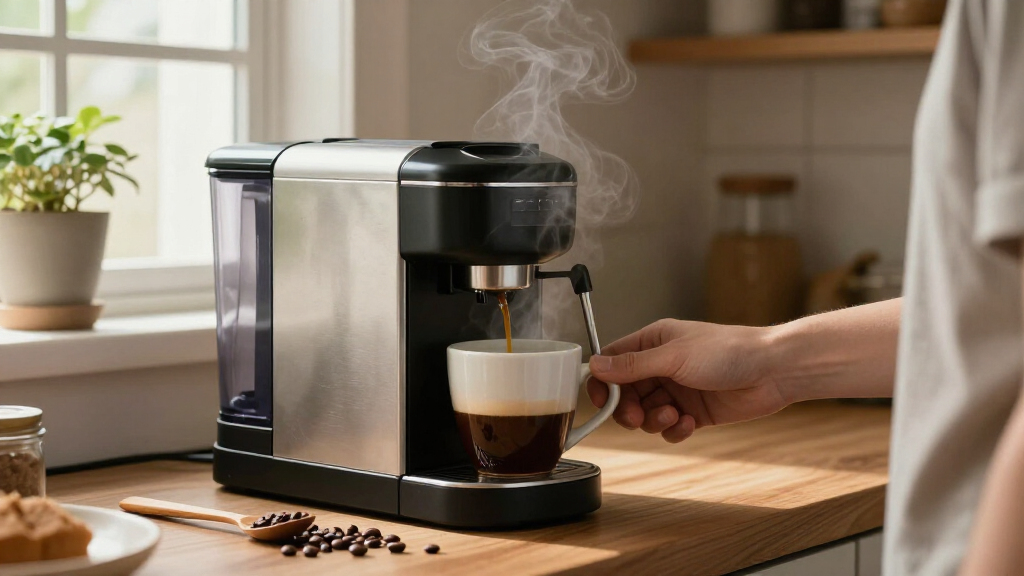
Automatic coffee makers span a wide range, from $25 basic drip machines to $1,000+ bean-to-cup espresso systems, and the right pick depends entirely on how much automation you actually want. The Philips 5500 Series earns my best overall spot because it handles grinding, brewing, and milk frothing at the touch of a button, covering every drink style without the learning curve of a manual machine. If drip coffee is all you need, the Cuisinart Brew Central DCC-1200P1 offers the best blend of programmability, capacity, and durability for the price, while the Keurig K-Duo makes the most sense for households split between single-serve pods and full carafes. The core tradeoff in this category is convenience versus coffee quality — pod and basic drip machines are effortless but limited, while fully automatic espresso machines deliver café drinks but cost far more and demand more maintenance. Read on for the full breakdown of all 15 machines.

Get kitchen gear delivered free — and shop member deals
- Fast, free delivery on millions of items
- Access to Prime Big Deal Days deals on October 6–7
- Prime Video, Amazon Music and more included
Complete the kit


Key Takeaways
- Fully automatic espresso machines (the Philips 3300 and 5500) dominated on drink versatility, but they cost 5–15x more than drip models — they only make sense if milk drinks like lattes are a daily habit.
- BLACK+DECKER appears four times in this roundup, and the comparison revealed clear quality tiers within the brand: the Thermal Programmable model outperformed its cheaper siblings on heat retention, while the basic Vortex models won purely on price.
- The Cuisinart DCC-1200P1 beat newer, cheaper 12-cup machines because of its build quality and temperature stability — proving that a classic design can still outperform budget touchscreen models.
- Single-serve convenience came with the biggest long-term cost: Keurig pod machines like the K-Express are cheap upfront but cost far more per cup than any drip or espresso option here.
- Thermal carafes versus glass hot plates was the most underrated differentiator — glass models like the SHARDOR kept coffee warm but degraded flavor after 30 minutes, while the BLACK+DECKER thermal model held temperature without scorching.







More Details on Our Top Picks
SHARDOR 10-Cup Programmable Coffee Maker with Touch Screen, Auto Shut Off, and Keep Warm Function
For shoppers who want programmable convenience under a tight budget, this SHARDOR model makes a strong case. The touch screen interface is a genuine step up from the button-only controls on the similarly priced BLACK+DECKER 12-Cup with Easy On/Off Switch, which offers no programming at all. Scheduling a brew the night before and waking up to hot coffee is the kind of feature that usually costs more — here it doesn’t. The two brew strength settings let you adjust for lighter roasts or a bolder cup, though coffee lovers chasing serious flavor depth will notice it can’t match the extraction of a Ninja Fresh Brew. The two-hour keep warm window is adequate, but the glass carafe means coffee sitting that long will taste cooked.
Pros:- Touch screen is easier to navigate than button panels at this price
- Programmable timer with auto shut-off adds safety and morning convenience
- Two brew strength settings give some flavor control
- Pause-and-serve lets you grab a cup mid-brew
Cons:- Glass carafe with hot plate degrades flavor during the 2-hour keep warm period
- No built-in grinder means pre-ground coffee only
Best for: First-time buyers or office break rooms that want set-and-forget programmable brewing without spending much
Not ideal for: Flavor obsessives — without premium extraction or a thermal carafe, coffee quality plateaus quickly
- Capacity:10 cups
- Programmable:Yes
- Touch Screen:Yes
- Keep Warm Duration:2 hours
- Auto Shut-Off:Yes
- Brewing Strength Options:2
- Color:Silver
Our verdict“A sensible entry point for anyone who wants scheduling and touch controls on a budget, as long as café-grade flavor isn’t the priority.”
Philips 3300 Series Fully Automatic Espresso Machine with LatteGo Milk System
This is the only true fully automatic espresso machine in this lineup, and it plays a different game entirely. While drip models like the BLACK+DECKER Thermal Programmable automate timing, the Philips 3300 automates the drink itself — six presets covering espresso, coffee, and cappuccino, each adjustable for strength, volume, and milk. The LatteGo milk system is the standout differentiator: it has no tubes or hidden parts, so cleaning takes seconds instead of the ritual descaling dance most milk frothers demand. The AquaClean filter stretches descaling intervals up to 5,000 cups, which quietly offsets some of the higher upfront cost. Compared with its sibling, the Philips 5500 Series, it offers fewer beverage presets, but most households won’t miss them.
Pros:- Six one-touch presets eliminate the learning curve for milk drinks
- LatteGo system rinses clean in seconds with no tubes to scrub
- AquaClean filter cuts descaling frequency dramatically
- Full-color display makes customization intuitive
Cons:- Substantially more expensive than every drip machine in this roundup
- Ongoing filter replacement costs add to the total cost of ownership
Best for: Latte and cappuccino drinkers who want one-touch milk drinks at home without barista skills or daily cleanup
Not ideal for: Budget-conscious buyers who just want basic drip coffee — the price buys milk drinks and espresso they may never use
- Presets:6 (espresso, coffee, cappuccino, and more)
- Milk System:LatteGo
- Filter:AquaClean
- Maintenance:Descale-free for up to 5,000 cups with AquaClean
- Display:Full color
- Customization:Strength, volume, and milk settings
Our verdict“If your mornings revolve around cappuccinos rather than plain black coffee, this is the machine that earns its price tag.”
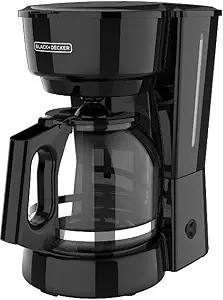
BLACK+DECKER 12-Cup Coffee Maker with Easy On/Off Switch, Non-Drip Carafe, Vortex Technology
Not everyone wants a screen, an app, or six presets — and this BLACK+DECKER model is the roundup’s answer to deliberate simplicity. One switch, one job. Where the SHARDOR 10-Cup Programmable asks you to learn a touch interface, this machine asks nothing at all, which makes it a natural fit for guest rooms, cabins, or households where anyone should be able to brew without instructions. The Vortex technology sprinkles water evenly over the grounds rather than dripping in one spot, so the resulting cup outperforms what its price suggests — closer to the Ninja Fresh Brew than a bare-bones Elite Gourmet. The sneak-a-cup function pauses brewing mid-cycle so impatient drinkers aren’t stranded. The honest tradeoff: zero programmability means no waking up to ready coffee.
Pros:- One-switch operation with essentially zero learning curve
- Vortex showerhead extraction punches above its price class
- Sneak-a-cup pause lets you pour before the cycle finishes
- Dishwasher-safe filter basket simplifies cleanup
Cons:- No programmable timer or digital display
- You must return the carafe to the plate promptly or risk overflow
Best for: Households, guest rooms, and vacation rentals that need a dead-simple, low-cost 12-cup brewer anyone can operate
Not ideal for: Anyone who wants coffee ready when they wake up — with no timer, this machine requires manual operation every time
Our verdict“The right pick when reliability and simplicity matter more than scheduling, as long as you accept doing everything manually.”
Keurig K-Duo Hot & Iced Single Serve & Carafe Coffee Maker, MultiStream Technology, 72oz Reservoir (Gen 2)
The K-Duo solves a household problem that single-purpose machines can’t: one person wants a quick K-Cup, another wants a full carafe. Compared with the Hamilton Beach 2-Way Brewer, which also does both, the Keurig pulls ahead with hot, iced, strong, and extra hot settings plus the larger 72oz reservoir — the Hamilton Beach offers neither iced brewing nor that capacity. MultiStream technology saturates pods more evenly than standard Keurig needles, addressing the most common complaint about pod coffee tasting thin. The 24-hour programmable auto brew works for the carafe side, which softens the learning curve tradeoff. Still, this is a compromise machine by design: pod coffee for one and grounds for many, but neither side reaches the quality of a dedicated machine like the Philips 3300.
Pros:- Brews both K-Cup pods and ground coffee carafes in one machine
- Iced, strong, and extra hot modes cover unusual preferences
- 72oz removable front-facing reservoir cuts refill frequency
- 24-hour programmable auto brew for the carafe
Cons:- Dual systems mean more setup complexity than a standard drip machine
- Carafe can still drip when poured carelessly despite the redesigned spout
Best for: Busy households mixing pod drinkers and carafe drinkers who want one machine to cover both habits
Not ideal for: Pod skeptics and purists — if you only brew grounds, you’re paying for a whole pod system you’ll never use
- Reservoir:72oz, removable front-facing
- Single-Serve Brew Sizes:6, 8, 10, 12oz
- Carafe Brew Sizes:6, 8, 10, 12 cups
- Technology:MultiStream Technology
- Functions:Hot, iced, strong, and extra hot brewing
- Programmable:Auto brew up to 24 hours in advance
- Carafe:Glass, drip-limiting design
Our verdict“The most practical single purchase for split households, provided both brewing styles actually get used.”
BLACK+DECKER 12-Cup Thermal Programmable Coffee Maker with Brew Strength and VORTEX Technology
Most 12-cup machines in this roundup — the Cuisinart Programmable 14-Cup, the Ninja Fresh Brew, the Bella 12-Cup — hold coffee on a hot plate, which keeps coffee hot by slowly cooking it. This BLACK+DECKER takes a different approach: a 4-layer vacuum-sealed thermal carafe keeps coffee hot for two hours with no warming plate at all, so the last cup tastes closer to the first. That single design choice explains why this model earns its spot despite costing less than premium thermal rivals. The 24-hour programmable timer and brew strength selector match what the SHARDOR offers, while the Vortex showerhead delivers the same even extraction praised in the non-programmable BLACK+DECKER. The tradeoffs are quiet ones: no smart features, no grinder, and thermal carafes require preheating for best results.
Pros:- Thermal carafe preserves flavor for two hours without a hot plate
- 24-hour programmable brewing with auto shutoff
- Vortex showerhead delivers even, full-flavored extraction
- Selectable brew strength adds real customization
Cons:- Thermal carafe performs best when preheated, adding a small step
- No built-in grinder or smart connectivity features
Best for: Coffee drinkers who sip slowly and hate the scorched taste of plate-warmed coffee, without paying premium prices
Not ideal for: Gadget hunters — there’s no Wi-Fi, app control, or grinder, just solid programmable brewing
Our verdict“The smartest choice for slow drinkers who want their second cup to taste like their first, at a mid-range price.”
Cuisinart Programmable 14-Cup Coffee Maker with Glass Carafe
Capacity is the story here, and no other drip machine in this lineup matches it. Where the Ninja Fresh Brew CE251 tops out at 12 cups, this Cuisinart pushes to 14, which matters if you’re filling multiple mugs before a busy morning or serving a table of guests. What separates it from cheaper high-capacity options like the BLACK+DECKER 12-Cup Vortex is control: adjustable carafe temperature (low, medium, high) lets you dial back the heat if you’ve been burned—literally—by scorched coffee sitting on a hot plate, and brew strength control adds flexibility most budget machines skip.
The tradeoff is complexity. Buyers who just want an on/off switch, as the Elite Gourmet 5-Cup delivers, may find the button layout overwhelming. And there’s no built-in grinder, so bean freshness depends on your own setup.
Pros:- Largest carafe capacity in the roundup at 14 cups
- Adjustable carafe temperature prevents scorched, bitter coffee
- Brew strength control for customizing flavor
- Brew pause lets you grab a cup mid-cycle
Cons:- No built-in grinder, so pre-ground coffee or a separate grinder is required
- Control panel has a learning curve compared to simple switch-based models
Best for: Large families or frequent hosts who need maximum carafe volume and want fine control over temperature and strength
Not ideal for: Solo drinkers and minimalists — 14 cups is overkill and the control panel adds complexity a one-cup-a-day person won’t use
- Capacity:14 cups
- Carafe:Glass
- Programmable:Yes
- Auto-off:Yes
- Brew Strength Control:Yes
- Adjustable Carafe Temperature:Low, Medium, High
- Brew Pause:Yes
- Water Window:Yes
Our verdict“If your household drains a full pot before 9 a.m., this is the machine that keeps up while still letting you tune temperature and strength.”
Keurig K-Express Single Serve K-Cup Pod Coffee Maker, 3 Brew Sizes, Strong Button, 42oz Removable Reservoir, Black
This pick makes the most sense for speed and simplicity over volume. Compared with the Keurig K-Duo, which adds a full carafe side, the K-Express strips things down to one job: pod-based brewing in three sizes (8, 10, 12 oz) with a strong brew button that fixes the biggest complaint about pod coffee—weak flavor. The 42oz removable reservoir means you can make several cups before refilling, a real step up from pour-per-cup machines.
Buyers should go in with eyes open, though. Pods cost more per cup than the ground coffee used in the BLACK+DECKER 12-Cup, and it won’t accept tall travel mugs comfortably despite being marketed as travel-friendly. It’s a convenience purchase, not an economy one, and coffee quality will never match a fresh-ground drip brew.
Pros:- Three brew sizes cover most mug and cup needs
- Strong brew setting produces noticeably bolder pod coffee
- Removable 42oz reservoir reduces refill frequency
- Compact footprint fits tight counters
Cons:- Locked into K-Cup pods; reusable filters cost extra
- Higher per-cup cost than ground coffee machines
- Struggles with taller travel mugs despite the claim
Best for: Busy singles or office desks where one fast cup at a time matters more than per-cup cost or coffee quality
Not ideal for: Multi-person households or anyone brewing for a crowd — pod costs add up fast and there’s no carafe option
- Brew Sizes:8, 10, 12 oz
- Water Reservoir:42 oz removable
- Strong Brew:Yes
- Travel Mug Friendly:Yes (shorter mugs)
- Auto Off:Yes
- Color:Black
Our verdict“The cheapest way into low-effort, one-cup-at-a-time brewing, as long as you accept pod costs and modest coffee quality.”
BLACK+DECKER 12-Cup Drip Coffee Maker with Vortex Brewing
This is the workhorse value pick: 12 cups, digital programming, and auto shutoff at a price well below the Cuisinart 14-Cup or Ninja Fresh Brew. The Vortex showerhead wets grounds more evenly than the flat spray on basic models like the Elite Gourmet 5-Cup, which translates to better extraction without any effort on your part. The sneak-a-cup feature stops drips when you pull the carafe mid-brew—genuinely useful on mornings when the pot isn’t done but you are.
The compromises are predictable at this price: no brew strength control, no adjustable warming plate, and a glass carafe on a fixed-temperature plate, so coffee left sitting will turn bitter faster than on the Cuisinart with its temperature settings. You’re also buying paper filters indefinitely.
Pros:- Programmable digital controls at a budget price
- Sneak-a-cup pause feature without dripping
- Vortex showerhead improves extraction over basic drips
- 2-hour auto shutoff adds safety
Cons:- Ongoing paper filter expense
- No brew strength or temperature control
- Basic feature set compared to premium rivals
Best for: Budget-conscious households that want reliable programmable 12-cup brewing without paying for strength and temperature controls
Not ideal for: Coffee tinkerers — there’s no brew strength adjustment or advanced customization to play with
- Capacity:12 cups
- Carafe Material:Glass
- Control Type:Digital
- Auto Shutoff:2 hours
- Brew Basket:Standard paper filter required
- Water Window:Yes
Our verdict“The most sensible pick if you want full-pot programmability for the least money and don’t care about dialing in flavor.”
Elite Gourmet 5-Cup Drip Coffee Maker with Pause & Serve
Simplicity is the entire value proposition. While the SHARDOR 10-Cup adds a touch screen and the Ninja CE251 offers multiple brew styles, this machine has exactly one switch—and for some buyers that’s a feature, not a limitation. The included reusable filter means zero ongoing consumable costs, unlike the BLACK+DECKER Vortex, which eats paper filters forever. The pause ‘n serve function is a nice touch at this price, where it’s often the first thing cut.
The limits are real, though. Five cups fills roughly two large mugs, so couples will refill constantly, and the tiny reservoir makes back-to-back brewing tedious. There’s no programming, so wake-up coffee requires pressing the switch yourself—a genuine drawback if you rely on a timed brew.
Pros:- One-switch operation with no learning curve
- Reusable filter eliminates ongoing costs
- Pause ‘n serve rarely found at this price
- Very compact footprint
Cons:- No programmable timer or auto-start
- 5-cup capacity requires frequent refilling for two or more people
- Bare-bones build and features
Best for: Dorm rooms, RVs, offices, or minimalists who want the cheapest, simplest possible drip brewer with no recurring filter costs
Not ideal for: Anyone who wants coffee ready when they wake up — there’s no timer, and the 5-cup capacity won’t cover a household
- Water Capacity:5 cups
- Carafe:Glass
- Filter Type:Reusable
- Pause ‘n Serve:Yes
- Water Level Indicator:Yes
- Controls:Simple on/off switch with indicator light
Our verdict“The right choice when price and simplicity trump everything else, as long as you don’t need scheduled brewing.”
Ninja Fresh Brew Coffee Maker, 12-Cup Glass Carafe, Stainless Steel CE251
This model occupies the sweet spot between the BLACK+DECKER Vortex’s basics and the Cuisinart 14-Cup’s premium controls. The Classic and Rich brew styles deliver noticeably different results—the Rich setting produces thicker, fuller coffee that stands up to milk, something the BLACK+DECKER simply can’t do. The small batch function solves a real drip-machine problem: brewing two cups into a 12-cup machine usually means weak coffee, and this corrects the water-to-grounds ratio automatically.
Compared with the Cuisinart, you give up two cups of capacity and adjustable carafe temperature, but gain a 60oz removable reservoir that’s far easier to fill at the sink than machines with fixed tanks. The stainless design looks better on the counter too. Drawbacks: it’s bulky for small kitchens, and the cleaning and descaling routine involves more steps than simpler rivals.
Pros:- Classic and Rich brew styles cover both everyday and bold preferences
- Small batch function prevents weak coffee when brewing partial pots
- 60oz removable reservoir makes refilling easy
- Programmable delay brew with adjustable warming plate
Cons:- Bulky footprint for compact counters
- More involved cleaning and descaling process than basic models
- Caps at 12 cups — less than the Cuisinart’s 14
Best for: Coffee drinkers who alternate between a morning cup for one and a full pot for guests and want good flavor in both cases
Not ideal for: Tiny kitchens or hands-off owners — the footprint is large and the cleaning/descaling routine takes real effort
- Capacity:12 cups
- Material:Stainless Steel
- Water Reservoir:60 oz removable
- Brew Styles:Classic, Rich
- Programmable Delay Brew:Yes
- Small Batch Function:Yes
- Adjustable Warming Plate:Yes
- Mid-Brew Pause:Yes
Our verdict“The best balance of flavor flexibility and everyday convenience if you want more than a basic drip machine without premium pricing.”
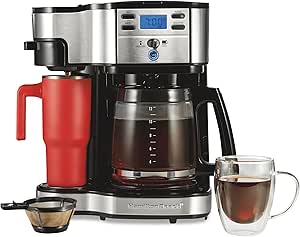
Hamilton Beach 2-Way Brewer Coffee Maker
The 2-Way Brewer solves a problem most single machines can’t: one household wants a single cup, another wants a full pot. With separate water reservoirs for each side, there’s no guesswork about how much water ends up in your mug. Compared with the Keurig K-Duo in this roundup, the Hamilton Beach trades pod convenience for ground-coffee-only brewing, which means better flavor per dollar but no K-Cup shortcuts. The auto-pause and pour feature lets impatient drinkers grab a cup mid-cycle. The tradeoff is footprint — this is a tall, two-sided machine that eats counter space, and unlike the Bella below, it skips a reusable filter.
Pros:- Brews a 14 oz. single serving or a full 12-cup pot from one machine
- Separate water reservoirs eliminate guesswork for each mode
- 24-hour programmability with bold or regular strength settings
- Auto-pause and pour for grabbing a cup mid-brew
Cons:- No K-Cup pod compatibility, unlike the Keurig K-Duo
- Tall, two-sided design takes up more counter space than standard brewers
Best for: Split households where one person brews a single cup and another needs a full 12-cup pot daily
Not ideal for: Pod loyalists and tiny kitchens — it doesn’t take K-Cups and its dual-side design makes it bulkier than single-function brewers
- Brewing Options:Single-serve and 12-cup pot
- Single-Serve Capacity:14 oz.
- Full Pot Capacity:12 cups
- Programmability:Up to 24 hours in advance
- Brew Strength:Bold or regular
- Water Reservoir:Separate for each brewing side
- Material:Black/Stainless Steel
Our verdict“Buy this if your household genuinely mixes single cups and full pots; skip it if you only ever brew one way.”
Cuisinart DCC-1200P1 Brew Central 12-Cup Programmable Coffeemaker
The Brew Central earns its place through flavor-focused engineering rather than novelty. Adjustable brewing temperature (low, medium, high) is rare at this price — most budget models like the Bella fix it — and hotter water means better extraction from freshly roasted beans. The charcoal water filter and gold-tone permanent filter pair to strip impurities while cutting paper-filter waste, a combination the BLACK+DECKER models in this roundup simply don’t offer. Its 1-4 cup setting compensates for the small-batch weakness common in 12-cup machines. The retro-styled body is handsome but wide and heavy, and there’s no brew-strength option where the BLACK+DECKER thermal model has one.
Pros:- Adjustable temperature control for better extraction control
- Charcoal water filter improves taste with unfiltered tap water
- Gold-tone permanent filter eliminates paper waste
- 1-4 cup setting properly brews small batches
Cons:- No brew-strength or single-serve options
- Large footprint takes considerable counter space
Best for: Drip coffee purists who prioritize taste control — temperature, filtration, small-batch mode — over smart features
Not ideal for: Buyers wanting single-serve flexibility or strength adjustment — this is a pot-only machine with fixed brew strength
- Capacity:12 cups
- Programmability:24-hour
- Cup Settings:1-4 cups
- Temperature Control:Low, medium, high
- Carafe:Glass, ergonomic handle, dripless spout
- Filters:Gold-tone permanent plus charcoal water filter
Our verdict“This is the pick for people who care what their drip coffee tastes like, not just when it’s ready.”
BLACK+DECKER 12-Cup Programmable Coffeemaker
Where the Cuisinart Brew Central optimizes flavor, this BLACK+DECKER optimizes simplicity and price. The Sneak-A-Cup function pauses brewing so you can pour early — a genuinely useful morning convenience usually reserved for pricier machines — and the Easy-View Water Window makes accurate filling faster than guessing with a carafe. Digital controls with a rubberized feel keep operation tactile and forgiving for non-technical users. Compared with its BLACK+DECKER siblings in this roundup, it lacks Vortex brewing and strength settings, so don’t expect nuanced extraction. It’s a straightforward timer-plus-pot machine, and that restraint is the point.
Pros:- Sneak-A-Cup lets you pour mid-brew without dripping
- Easy-View water window for fast, accurate filling
- Digital controls with intuitive, rubberized buttons
- Cord storage keeps the counter tidy
Cons:- No brew-strength or temperature settings for flavor control
- Bulky footprint relative to its modest feature set
Best for: First-time buyers or office break rooms that need reliable programmable brewing without paying for extras
Not ideal for: Coffee enthusiasts — no brew-strength control, temperature adjustment, or small-batch mode means limited flavor tuning
- Capacity:12 cups
- Color:White/Stainless Steel
- Mid-Brew Pour:Sneak-A-Cup feature
- Water Filling:Easy-View water window
- Controls:Digital with rubberized feel
- Extras:Cord storage
Our verdict“A dependable, no-frills programmable pot for anyone who just wants coffee waiting at 7 a.m.”
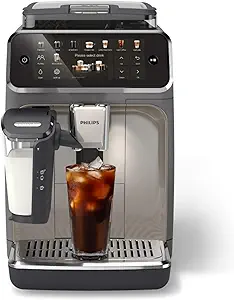
Philips 5500 Series Fully Automatic Espresso Machine with LatteGo
This machine operates in a different category than the drip brewers here — it grinds, tamps, and brews espresso drinks automatically, which is the truest meaning of “automatic coffee maker.” With 20 presets covering hot and iced drinks, plus four customizable profiles, it replaces a café run for latte and cappuccino drinkers. Compared with the Philips 3300 Series elsewhere in this roundup, the 5500 adds iced-drink capability, more presets, and profile memory — the 3300 remains the smarter buy for straight espresso fans. The LatteGo milk system rinses clean in seconds, a real advantage over tube-based rivals. The costs are real too: a steep price, a learning curve during setup, and mandatory descaling discipline.
Pros:- 20 presets plus 4 customizable user profiles for hot and iced drinks
- LatteGo milk system cleans in seconds with no tubes
- Quiet operation, 40% quieter than earlier models
- 3-second ready time with QuickStart heating
Cons:- High upfront cost compared with every drip machine here
- Requires regular descaling and ongoing maintenance
- Setup and menu navigation can confuse first-time owners
Best for: Households that drink milk-based espresso drinks daily and want one-touch café results at home
Not ideal for: Drip coffee drinkers and tight budgets — it’s overkill if you only drink black coffee, and the upfront cost plus maintenance demands are substantial
- Presets:20 drink presets
- Profiles:Up to 4 customizable profiles
- Milk System:LatteGo
- Ready Time:3 seconds
- Noise Level:40% quieter than earlier models
- Drink Types:Hot and iced espresso, lattes, cappuccinos
- Automation:Grinds, tamps, and brews at push of a button
Our verdict“If your daily order is a latte or cappuccino, this machine pays for itself — drip-only drinkers should stay with the Cuisinart or Hamilton Beach.”
Bella 12-Cup Programmable Coffee Maker
The Bella covers the core automatic basics — 24-hour programming, a clear digital display, and pause-and-serve — at the lowest complexity level in this batch. The reusable filter basket means no paper purchases ever, which the BLACK+DECKER budget pick above doesn’t match. The no-drip glass carafe addresses the most common complaint about cheap brewers: messy pours. What’s missing matters, though — no brew-strength setting, no temperature control, and no small-batch mode, all things the Cuisinart Brew Central provides for more money. This is coffee made predictable and cheap, not coffee made exceptional.
Pros:- 24-hour programmable start for wake-up-ready coffee
- Reusable filter basket cuts waste and recurring costs
- Pause and serve for pouring mid-brew
- No-drip carafe pours cleanly without spills
Cons:- No brew-strength control or temperature adjustment
- Feature set is limited to basic programming functions
Best for: Students, vacation homes, or anyone wanting set-and-forget programmability for the lowest possible price
Not ideal for: Anyone who tweaks strength, temperature, or batch size — this machine offers none of those adjustments
- Capacity:12 cups
- Programmability:Up to 24 hours in advance
- Carafe:No-drip glass
- Filter:Reusable filter basket
- Display:Clear digital display
- Mid-Brew Pour:Pause and serve
Our verdict“The cheapest path to programmable 12-cup coffee that still pours without making a mess.”

How We Picked
My ranking logic starts with a simple question: how well does each machine automate the job it was designed to do? For drip machines, that meant programmable timers, brew-strength control, auto shut-off, and whether the machine holds brewing temperature in the range that extracts coffee properly — a surprising number of budget models run too cool. For the Philips espresso machines, I weighed one-touch drink programming, grinder adjustability, milk-system cleanup, and how much daily maintenance the automation actually eliminates.
From there, I layered in capacity and household fit (5-cup compact models versus 14-cup entertainers), long-term cost of ownership (pods, filters, descaling), and durability signals like carafe quality and button or touchscreen reliability. Price was judged relative to the segment, not in absolute terms — a $30 BLACK+DECKER can outperform a $60 competitor in its class while still ranking below a $150 Ninja. Machines were then ordered by how cleanly they solve their segment’s core problem, with versatility and build quality breaking ties.
Factors to Consider When Choosing Automatic Coffee Makers
The 15 machines in this roundup fall into three distinct camps — basic drip, feature-rich drip, and fully automatic espresso — and most buyer regret comes from mismatching a machine to actual coffee habits rather than picking a bad product. These are the factors that should drive the decision.Pods, Grounds, or Beans: Match the Machine to Your Routine
The single biggest decision is what input format fits your routine, because it shapes both daily experience and lifetime cost. Pod machines like the K-Express trade coffee quality and per-cup price for zero cleanup — a fair deal for one-cup-a-day drinkers, but a poor one for a household of four. Ground-coffee drip machines hit the sweet spot for most people: cheaper per cup, better flavor, and enough automation through timers and programmable settings. Bean-to-cup machines like the Philips 5500 sit at the top because they automate grinding too, which means fresher coffee and no separate grinder cluttering the counter. A common mistake is buying a pod machine for a household that drinks three or more cups daily — the pod cost compounds fast enough to pay for an espresso machine within two years.
Glass Carafe With Hot Plate or Thermal Carafe
This choice is more consequential than most buyers realize, and it explains why the BLACK+DECKER thermal model outranked its three glass-carafe siblings despite similar features. A glass carafe with a hot plate keeps coffee at serving temperature for hours, but that heat keeps cooking the coffee — after 30 to 45 minutes the flavor turns bitter and flat, no matter how good the brew was. A thermal carafe relies on insulation instead, holding temperature for a couple of hours without electricity and without degrading flavor. Thermal models typically cost $20–40 more, and they’re worth it for anyone who sips coffee over a long morning. Glass carafes do have one real advantage: they let you see exactly how much coffee is left, and replacement carafes are cheaper when one breaks.
Programmability That You’ll Actually Use
Feature creep is real in this category, and paying for programmability you won’t use is the most common overspend. The feature that genuinely changes mornings is a 24-hour brew timer — set it the night before, wake up to coffee. Brew-strength control matters for anyone who finds standard drip too weak, and it’s a cheap upgrade. Auto shut-off is less about convenience and more about safety and peace of mind for commuters. Touchscreens like the SHARDOR’s look modern but add a failure point that simple buttons don’t have, and budget touchscreen models can feel laggy. My advice: list the two or three features you’d use weekly and ignore the rest. A $40 machine with a timer beats a $90 machine full of settings you never touch.
Capacity: Bigger Isn’t Better If It Goes to Waste
Carafe size should track to actual daily consumption, not entertaining fantasies. A 5-cup machine like the Elite Gourmet suits one person perfectly and takes up half the counter space of a 14-cup Cuisinart. The catch with large machines: brewing a full 12–14 cup carafe when you only drink four produces either waste or hours-old coffee. Most larger machines do have a 1–4 cup mode that adjusts flow rate for smaller batches, but budget models sometimes skip it, and small-batch coffee from a big machine often brews weaker. Households with staggered schedules should look at hybrid options like the Hamilton Beach 2-Way or Keurig K-Duo, which solve the timing problem better than a big carafe does.
The Hidden Costs Nobody Prices In
The sticker price is just the entry fee. Pod machines carry the highest running cost — figure 40 to 60 cents per cup versus 8 to 12 cents for ground coffee. Fully automatic espresso machines need water filters, descaling solution, and eventually grinder maintenance, which can add $50–100 per year. Drip machines are the cheapest to run but still need filter replacements (or a reusable basket) and occasional descaling depending on your water hardness. Milk systems add another layer: the Philips LatteGo design is genuinely dishwasher-safe, while tube-based systems on older machines require daily rinsing and are the number-one source of complaints. Before buying, estimate your per-cup cost over three years — it often reorders the value rankings dramatically.
Counter Space and Clearance
Measure before you buy, because physical fit kills more returns than performance does. Fully automatic espresso machines need 14–18 inches of vertical clearance under cabinets, since the bean hopper and service doors open upward — the Philips 5500 will not slide under a standard over-counter shelf comfortably. Single-serve machines are tall and narrow; drip machines are short and wide; 2-way brewers like the Hamilton Beach are both, making them awkward on shallow counters. Also check the water reservoir position: side-loading tanks (common on Keurigs) need clearance to slide out, while rear tanks need to be pulled away from the wall to refill. A machine that fits awkwardly gets used less, no matter how well it brews.
Frequently Asked Questions
Is a fully automatic espresso machine like the Philips 5500 worth it over a good drip coffee maker?
It depends entirely on whether milk-based drinks are part of your routine. If your daily order is black coffee, a fully automatic machine is massive overkill — the Cuisinart Brew Central will produce excellent drip coffee for a tenth of the price and with far less maintenance. But if you drink lattes, cappuccinos, or flat whites more than a couple of times a week, the math flips: at $5–6 per café drink, the Philips 5500 can pay for itself within a year for a two-person household. The Philips 3300 is the smarter entry point if you’re unsure, since it covers the same drink range with slightly less customization. Factor in maintenance honestly too — these machines need weekly cleaning cycles that drip machines never will.
Are Keurig pod machines actually more expensive over time?
Yes, and by a wide margin, but the total depends on your volume. Pods run roughly 40 to 60 cents each, while ground coffee in a drip machine works out to 8 to 12 cents per cup — a difference of around $150–200 per year for a two-cup-a-day drinker. For a single daily cup, that gap is smaller and may be worth paying for the convenience and zero waste. Where pods stop making sense is multi-cup households: four cups a day puts annual pod spending near $700, enough to buy the Philips 3300 outright in under a year. The K-Duo is the compromise option, letting a split household use pods on weekdays and ground coffee for weekend carafes.
What’s the real difference between a $30 and a $100 drip coffee maker?
The biggest difference isn’t features — it’s brewing temperature stability, which directly determines flavor. Budget machines like the basic BLACK+DECKER Vortex models often heat water inconsistently, producing coffee that’s sour or flat because proper extraction needs water held around 195–205°F. Mid-range machines from Cuisinart, Ninja, and the higher-end BLACK+DECKERS maintain temperature more reliably and add brew-strength control that compensates for personal taste. Build quality also improves: sturdier carafes, better pour spouts that don’t drip, and heating plates that don’t scorch coffee as fast. If you drink coffee black, the upgrade is noticeable; if you load it with cream and sugar, a $30 machine will likely taste fine to you.
Do I need a thermal carafe, or is a hot plate good enough?
If you finish the pot within 30 minutes, a glass carafe and hot plate are perfectly fine and save you $20–40. Beyond that window, the hot plate keeps cooking the coffee, and the flavor decline is real — bitterness increases and the aroma flattens, even on machines with adjustable plate temperature like the Cuisinart Brew Central. A thermal carafe holds heat through insulation alone for two or more hours without any flavor degradation, which is why the BLACK+DECKER thermal model ranked above its glass-carafe siblings. The tradeoffs are price, no visible coffee level, and thermal carafes that eventually lose vacuum insulation. Preheating the thermal carafe with hot water before brewing makes a surprising difference in how long it holds temperature.
Which machine is best for a household where people wake up at different times?
Single-cup-on-demand is the answer, and you have two routes. The Hamilton Beach 2-Way Brewer lets the first riser brew a single-serve cup using grounds, then the later risers can switch to the full 12-cup side — the cheapest way to cover staggered schedules with ground coffee. The Keurig K-Duo does the same thing with pods on the single-serve side, which is faster and cleaner but locks you into pod costs for those solo cups. A standard drip machine with a programmable timer only solves the problem for the earliest riser; everyone after gets reheated coffee. Fully automatic machines like the Philips 3300 handle staggered schedules well too, since each person brews a fresh cup in about a minute, but that’s a much bigger investment.
Conclusion
Matching the machine to the drinker matters more than any single spec on this list. For best overall, the Philips 5500 Series delivers the most complete automation in the lineup — grinding, brewing, and milk drinks at the touch of a button, with the LatteGo system making cleanup genuinely easy. The best premium value goes to the Philips 3300, which covers the same drink range for hundreds less if you can live without a few customization options. For best value overall, the Cuisinart Brew Central DCC-1200P1 remains the gold standard for programmable drip coffee — durable, consistent, and fairly priced. Beginners should start with the BLACK+DECKER 12-Cup Programmable or the Keurig K-Express (pods) — both are nearly foolproof and cheap enough that a mistake costs little. For specific needs: solo drinkers get the compact Elite Gourmet 5-Cup, staggered-schedule households get the Hamilton Beach 2-Way or Keurig K-Duo, all-day sippers get the BLACK+DECKER Thermal model, and entertainers who need 14 cups at once get the Cuisinart 14-Cup. Whatever you choose, buy for the coffee you actually drink — not the features that look good in the listing.
Fall Picks
fall essentials
As an affiliate, we earn on qualifying purchases.