
TL;DR

Get kitchen gear delivered free with Prime
- Fast, free delivery on millions of items
- Prime Video, Amazon Music and more included
- Member-only deals all year
A Good Housekeeping report offers expert organizing strategies tailored to five broad personality types, from keeping creative supplies visible to using concealed storage for minimalists. The advice is practical guidance from organizing professionals, not a validated personality assessment or evidence that one system works for everyone.
Good Housekeeping has published home organizing advice organized around five personality types: creative, minimalist, collector, procrastinator and perfectionist. Organizing coach Sherri Curley and organizing expert and author Shira Gill recommend adapting storage and routines to people’s habits, arguing that a system suited to how someone works may be easier to use and maintain.
The recommendations vary by type. For creative people, Gill suggests keeping frequently used tools and inspiration visible in open bins, jars or wall-mounted organizers, with a board or ledge for materials that can change over time. The aim is to reduce the effort required to start a project rather than putting supplies away so thoroughly that they are hard to retrieve.
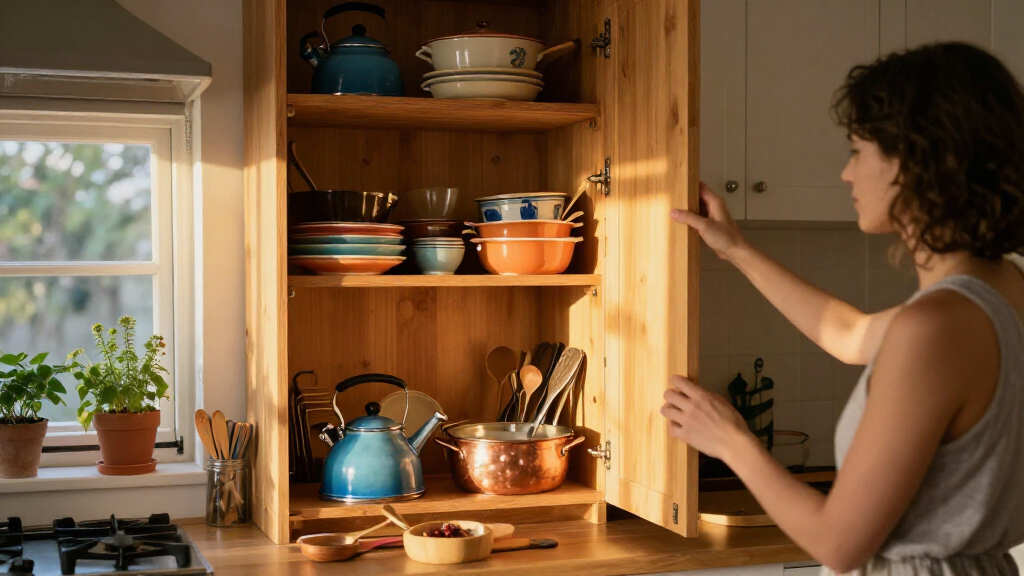
For minimalists, the report favors fewer visible items and concealed storage. Gill recommends matching bins, simple drawer dividers and uniform hangers to create a consistent look, along with multipurpose furniture such as a storage bench. Curley describes the approach simply as “less is more.”
Collectors are not advised to discard sentimental possessions simply to meet a conventional idea of tidiness. Curley encourages people to keep objects they value, while monitoring whether items are taking over work surfaces or areas intended for rest and entertainment. Open shelves and wall mounts can display collections while using vertical space.
For people who put off chores, Gill recommends visible, convenient reminders: a tray for an active project or an open basket by the door for returns and library books. Curley suggests choosing one area and working on it for a manageable stretch, including as little as three minutes. For perfectionists, Gill advises simple, repeatable systems and buffer spaces such as a catchall drawer. Curley says aiming for “good enough” upkeep can be more sustainable than demanding a flawless result.
Systems That Fit Daily Habits
The report’s central point is that organization depends on use, not appearance alone. A storage plan that hides every item may frustrate someone who needs visual reminders; a highly open display may feel stressful to someone who is easily distracted by clutter. Matching the setup to a person’s routines could make everyday tasks easier to begin and repeat.
That distinction matters to readers who have tried a popular organizing method and found it difficult to maintain. The article does not establish that personality-based organizing produces measurable benefits, but it offers concrete adjustments that can be tested in a particular room or routine. The suggestions also avoid treating decluttering as a single goal: the collector’s valued objects, for example, can remain part of an organized home if they have defined space.
Products Worth Considering

De'Longhi Classic Signature Espresso Machine with Adjustable Milk Frother

Vitamix Propel Series 510 Professional-Grade Blender, Black

Traeger Woodridge Wood Pellet Grill & Smoker, 860 Sq In, WiFi
As an affiliate, we earn on qualifying purchases.
Five Profiles, Practical Adjustments
The source report frames the five labels as organizing tendencies, not as a formal diagnostic system. It says people differ and that an approach successful for one person may not suit another. Readers are invited to identify with a type and select strategies accordingly; the material does not describe a test or explain how to classify people who fit more than one profile.
Curley, identified in the report as a certified neurodiversity coach and organizing success coach, says working against a person’s natural predispositions can make tasks feel harder. “Motivation drops. Overwhelm increases. Stress levels rise. Energy falls. Focus wanes,” she says. Gill, author of Minimalista, describes the home as both creative expression and an influence on daily life, saying a space that reflects a person’s style and values can feel supportive.
“When we work against our natural predispositions, strengths, skills, and abilities, our to-dos become uphill climbs.”
— Sherri Curley, certified neurodiversity coach and organizing success coach
Limits of the Personality Labels
The report offers expert recommendations, not research findings demonstrating that the five categories predict which organizing system will work. The supplied material does not cite studies, define a method for identifying a personality type or show outcomes from people who followed the suggestions. The labels are best read as prompts for considering habits, rather than fixed categories or clinical descriptions.
It is also unclear how well any one strategy will fit a person’s home, household size, available storage or accessibility needs. The report acknowledges individual differences but does not compare approaches or provide evidence that one is more effective than another. Readers may need to adapt the ideas, combine types or try a different arrangement if a system does not work in practice.
Try One Small Organizing Change
The report does not announce a follow-up study, product or scheduled next step. Its practical suggestion is to start with one area or recurring task: make a current project easier to see, give a collection a defined display space, or create a simple catchall for items that otherwise accumulate. Curley’s timer suggestion allows a short trial without committing to a large-scale overhaul.
After trying a change, readers can observe whether it makes the task easier to start and whether the arrangement remains usable during ordinary, imperfect days. The source also points readers toward other organizing approaches, including the 20-minute method, the Core 4 decluttering strategy and the 12-12-12 method, but provides no comparative results showing which approach works best.
Key Questions
What five organizing personality types does the report describe?
The report covers creative, minimalist, collector, procrastinator and perfectionist tendencies. It presents them as broad ways to think about organizing habits, not as a formal personality test.
How should creative people organize their supplies?
Shira Gill recommends keeping frequently used materials visible and easy to reach, using open bins, jars or wall-mounted storage. A board or ledge can hold changing inspiration and reference materials.
What does the report recommend for collectors?
It does not say collectors must get rid of sentimental items. Sherri Curley advises keeping objects that matter while checking whether they are crowding work surfaces or spaces used for relaxation and entertainment. Open shelves and wall mounts can make a collection visible without occupying as much floor or counter space.
What is one strategy for someone who procrastinates?
Make the next task visible and convenient, such as placing returns in an open basket near the door. Curley also suggests working on one area for a short period, even three minutes.
Are these personality-based methods proven to work for everyone?
No such evidence is provided in the report. The recommendations are expert advice, not proof of universal effectiveness. The article says people differ, so readers may need to adapt a strategy to their routines and available space.
Source: goodhousekeeping.com