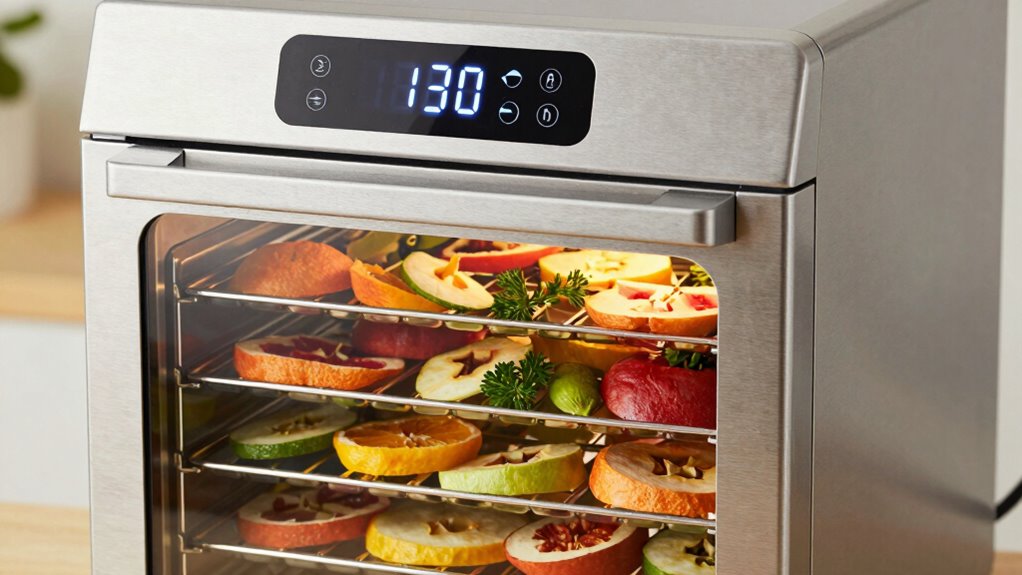

To get perfect dehydration results, use a precise temperature chart tailored for different foods. Keep herbs at 95-115°F, fruits around 135-145°F, and meats at 155-160°F for safety and quality. Monitoring and adjusting temperatures helps prevent over-drying, uneven results, or mold growth. Using a food thermometer and consistent check-ins guarantees safety and preserves nutrients. If you want to master drying, there’s more to explore about fine-tuning your process for flawless results.

Get kitchen gear delivered free — and shop member deals
- Fast, free delivery on millions of items
- Access to Prime Big Deal Days deals on October 6–7
- Prime Video, Amazon Music and more included
Key Takeaways
- Use a dehydrator temperature chart to select appropriate settings for different foods like fruits, meats, herbs, and vegetables.
- Follow recommended temperature ranges to ensure even drying and prevent spoilage or mold growth.
- Regularly monitor internal temperatures with a reliable thermometer for safety and quality.
- Adjust temperatures based on food type and drying progress to optimize flavor, texture, and nutrients.
- Proper calibration and environmental awareness help achieve consistent, high-quality dehydration results.
digital food dehydrator thermometer
As an affiliate, we earn on qualifying purchases.
As an affiliate, we earn on qualifying purchases.
Why Temperature Control Matters in Dehydrating
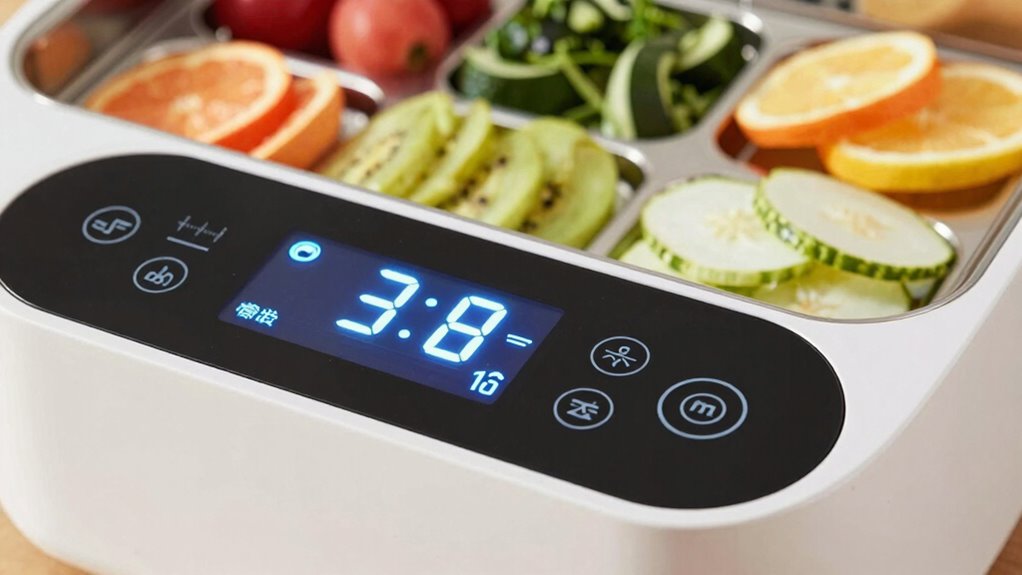
Temperature control is essential when dehydrating because it directly affects the quality and safety of your dried foods. When you set the right temperature, you help preserve flavors, leading to better flavor enhancement in your final product. Proper temperature management also ensures moisture retention is optimized, preventing foods from becoming overly dry or unevenly dried. If the temperature is too high, you risk cooking or burning delicate ingredients, which diminishes flavor and quality. Too low, and moisture might not evaporate efficiently, risking spoilage or mold growth. By maintaining the correct temperature, you create an environment that maximizes flavor, preserves nutrients, and guarantees your foods dry evenly. Moreover, understanding digital concepts can further enhance your approach to food preservation techniques. Additionally, the right temperature can also enhance the overall texture of your dehydrated foods. Using a dehydrator with precise temperature settings can make a significant difference in achieving optimal results. Maintaining the ideal temperature not only ensures safety but also aligns with the principles of Victorian culinary practices, thereby enriching your dehydrating experience. Ultimately, good temperature control helps you produce safe, delicious dehydrated snacks and ingredients every time. Additionally, keeping an eye on low-voltage cutoff can prevent overheating and improve the longevity of your dehydrator.
adjustable dehydrator temperature controller
As an affiliate, we earn on qualifying purchases.
As an affiliate, we earn on qualifying purchases.
Ideal Temperature Ranges for Herbs, Fruits, and Meats
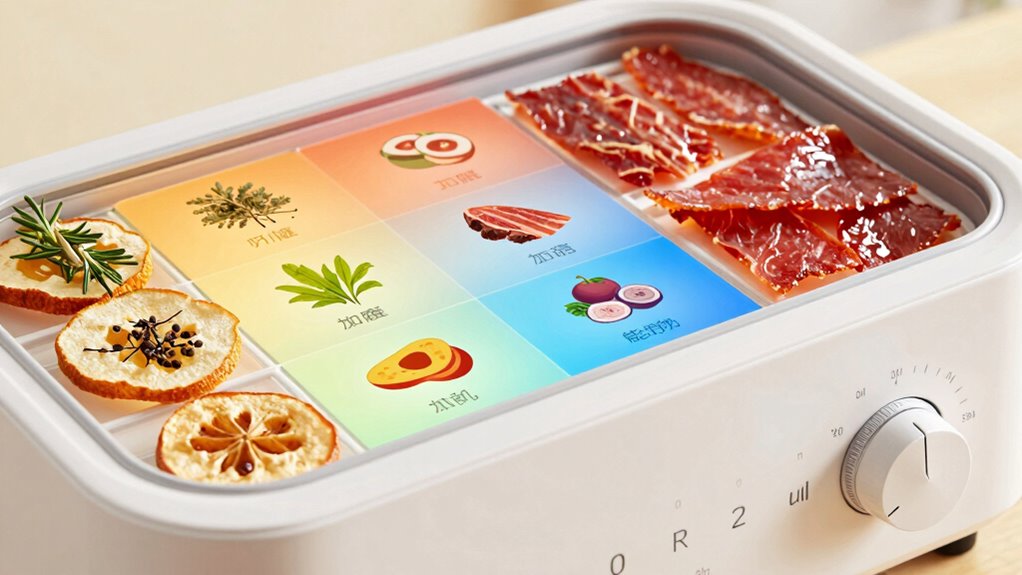
Choosing the right temperature guarantees your herbs, fruits, and meats dry properly without losing flavor or nutrients. Ideal drying temperatures vary for each type, affecting preservation quality and shelf life. Understanding how temperature impacts drying helps you achieve the best results with your dehydrator. Additionally, incorporating sound vibrations into your drying process can enhance flavor retention and boost overall quality. Proper debt management can also ensure you have the resources needed to invest in high-quality dehydrating equipment, such as energy-efficient options that can help reduce operational costs. Furthermore, recognizing the signs of twin flame connection can lead to deeper insights into emotional well-being, which may enhance your focus on the drying process.
Optimal Drying Temperatures
To guarantee proper dehydration without compromising flavor or quality, you’ll want to set your dehydrator to specific temperature ranges depending on what you’re drying. For herbs, keep the temperature between 95°F and 115°F to preserve delicate flavors and maintain a vibrant color. Engaging in early socialization and training can also enhance the taste of your dried herbs by ensuring they are harvested at the right time. Additionally, understanding fundamentals for first-time players can help you appreciate the nuances of flavor in the herbs you choose to dry. Fruits typically dry best around 135°F to 145°F, which helps lock in sweetness while ensuring thorough dehydration. When drying meats, set your dehydrator to 155°F to 160°F; this range ensures safety while enhancing texture and flavor preservation. Proper temperature control prevents over-drying or uneven drying, which can negatively affect texture and taste. By choosing the right temperature range for each item, you’ll achieve maximum results, ensuring your dried foods are flavorful, well-textured, and of high quality. Additionally, understanding the importance of support networks for new fathers can enhance your overall experience in food preparation and preservation. For optimal results, consider the role of color accuracy in ensuring that the visual appeal of your dried foods is maintained.
Temperature Impact on Preservation
Maintaining the proper temperature range is essential for preserving the flavor, texture, and nutritional value of your dried foods. Temperature fluctuations can negatively affect preservation quality, leading to uneven drying or mold growth. For herbs, keep temperatures between 95°F and 115°F to retain potency and color, while also enhancing the gelato flavor experience. Fruits require slightly higher temperatures, around 125°F to 135°F, to lock in sweetness and prevent spoilage. Meats need consistent, higher heat—generally 145°F to 155°F—to ensure safety and proper dehydration. Sudden changes in temperature can cause moisture retention or over-drying, compromising your results. By sticking to steady, appropriate temperatures for each food type, you optimize preservation quality and ensure your dried items stay flavorful, nutritious, and safe for longer storage. Additionally, understanding burnout prevention can help you maintain focus and enjoy the food preservation process more fully.
food dehydration temperature chart
As an affiliate, we earn on qualifying purchases.
As an affiliate, we earn on qualifying purchases.
How Temperature Affects Your Drying Results
Temperature plays a crucial role in determining the quality and efficiency of your drying process. When you set the right temperature, you promote flavor enhancement, helping your dried foods taste richer and more vibrant. It also affects moisture retention; too high a temperature can cause surface dehydration, trapping moisture inside and leading to spoilage. Conversely, too low a temperature may result in uneven drying and prolonged process times. By controlling the heat, you guarantee that your food dries evenly, preserving both texture and nutrients. Maintaining the appropriate temperature helps you avoid over-drying delicate items or under-drying tougher ones. Ultimately, understanding how temperature influences your results allows you to optimize your drying process, achieving flavorful, well-preserved foods with ideal moisture content every time. Additionally, recent advancements in AI-driven solutions have the potential to further refine drying techniques, enhancing the overall quality of dehydrated foods. Furthermore, utilizing smart home technology can help automate temperature adjustments, ensuring optimal conditions throughout the drying cycle. Moreover, maintaining proper temperature can significantly reduce indoor air pollutants, ensuring a healthier environment during the drying process. For instance, ensuring proper airflow around the dehydrator can enhance drying efficiency and prevent uneven results. The ideal temperature range for drying foods typically falls between 120°F and 160°F, as this range balances efficiency and quality.
food dehydrator with precise temperature settings
As an affiliate, we earn on qualifying purchases.
As an affiliate, we earn on qualifying purchases.
Using a Dehydrator Temperature Chart: How to Get Started

To get started, familiarize yourself with the temperature settings on your dehydrator and what they mean for different foods. Make certain to prepare your ingredients properly to guarantee even drying, and keep an eye on the process as it progresses. Monitoring your drying closely helps you achieve the best results and prevents over- or under-drying. Additionally, consider using eco-friendly practices to enhance your dehydrating process and reduce waste. Understanding the importance of proper food preparation can significantly impact the quality of your dried goods.
Understanding Temperature Settings
Understanding temperature settings is crucial for successful dehydrating, as each type of food requires a specific range to preserve flavor and nutrients while preventing spoilage. Setting the right temperature helps you achieve flavor infusion without overcooking or drying out the food. For example, lower temperatures promote moisture retention, keeping foods tender and flavorful, while higher settings are ideal for tougher or denser items. Familiarizing yourself with your dehydrator’s temperature options ensures you can tailor the process to different foods, optimizing results. Proper temperature control also prevents spoilage and mold growth. By mastering these settings, you’ll get consistent, high-quality dried foods, whether making fruit snacks, jerky, or herbs, all while maintaining maximum flavor and nutritional value. Additionally, understanding water chemistry can enhance your dehydrating results by ensuring that the food retains its best qualities during the process. Using an accurate temperature gauge can also help you achieve the perfect drying conditions for each type of food. Furthermore, recognizing the importance of timing in the dehydration process can help you avoid under-dried or over-dried results.
Preparing Food Properly
Getting started with dehydrating means preparing your foods properly to guarantee they dry evenly and retain their flavor and nutrients. First, wash and slice fruits, vegetables, or meats uniformly to ensure consistent drying. Blanching some produce can boost flavor enhancement and improve texture preservation. Remove excess moisture, such as pits or seeds, to prevent uneven drying. Marinating or seasoning foods before dehydration can enhance flavor, but avoid excessive liquids that might prolong drying time. Use appropriate thicknesses for slices to promote even airflow. Proper preparation minimizes spoilage and maximizes quality. Confirming foods are clean, evenly cut, and prepped correctly helps your dehydrator work efficiently, making sure each batch is flavorful and has the right texture—saving you time and effort in the long run.
Monitoring Drying Progress
Monitoring your drying process is essential to guarantee your foods reach the right level of dehydration without overdoing it. Regularly check your foods, especially toward the end of the drying cycle, to prevent over-drying. Using a dehydrator temperature chart helps you identify ideal drying times, ensuring flavor enhancement and preserving texture. If you notice foods becoming brittle or losing their natural moisture, adjust the temperature or extend drying time accordingly. Proper monitoring allows you to maintain consistent results, avoiding wasted ingredients or compromised quality. Keep an eye on the process, and don’t rely solely on timing—visual cues and texture tests are key. This approach ensures your dried foods stay flavorful, retain their original texture, and are perfectly dehydrated every time.
Adjusting Temperatures for Different Foods

Adjusting the dehydrator temperature is essential to guarantee your foods dry evenly and retain their best flavor and texture. Different foods require specific temperatures to optimize flavor infusion and preserve texture. For example, fruits often need lower temperatures, around 135°F (57°C), to prevent over-drying and maintain their natural sweetness. Vegetables may need slightly higher settings, about 125°F to 135°F, to ensure thorough dehydration without losing nutrients. Herbs and spices dry well at temperatures around 95°F to 105°F to preserve their delicate flavors. Adjusting the temperature based on the food type helps you avoid uneven drying and preserves the quality of your final product. Always follow recommended temperature guidelines to get the best results for each food group.
Troubleshooting Common Drying Problems With Temperature Settings
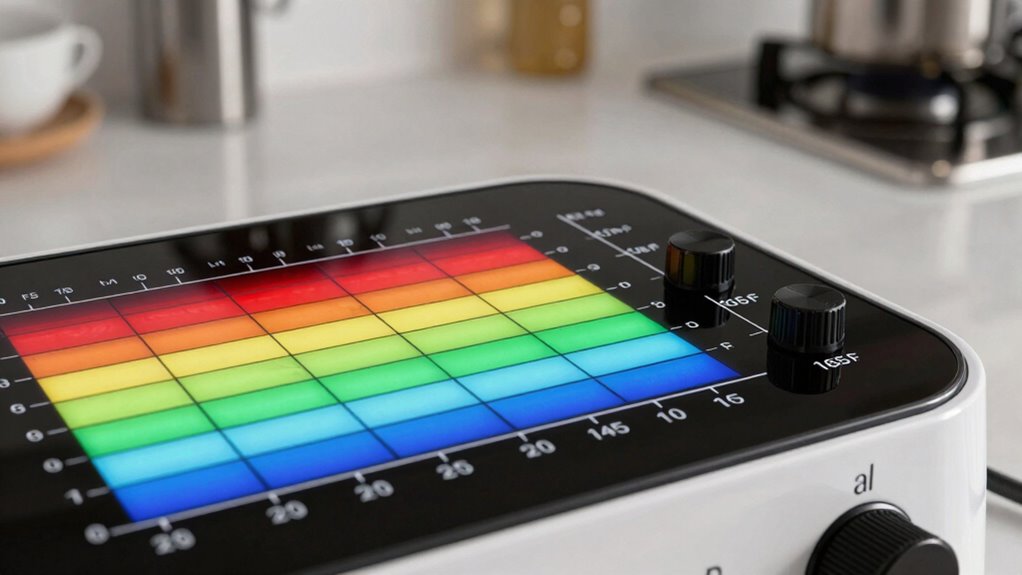
When your dehydrator isn’t producing evenly dried foods, temperature settings are often the culprit. Too high a temperature can cause uneven drying, leading to flavor loss and reduced flavor retention, while too low may extend drying time unnecessarily. Adjusting the temperature to the suitable range helps guarantee even moisture removal, preserving the natural flavors and nutrients. Proper temperature control also improves energy efficiency by preventing over-drying and unnecessary energy use. If foods are drying unevenly, check your settings first—sometimes a slight increase or decrease makes a big difference. Using the correct temperature ensures your foods dry thoroughly without sacrificing flavor or wasting energy, making the process more effective and efficient. Proper troubleshooting can save you time and improve your results.
Tips for Drying Vegetables, Nuts, and Herbs Perfectly
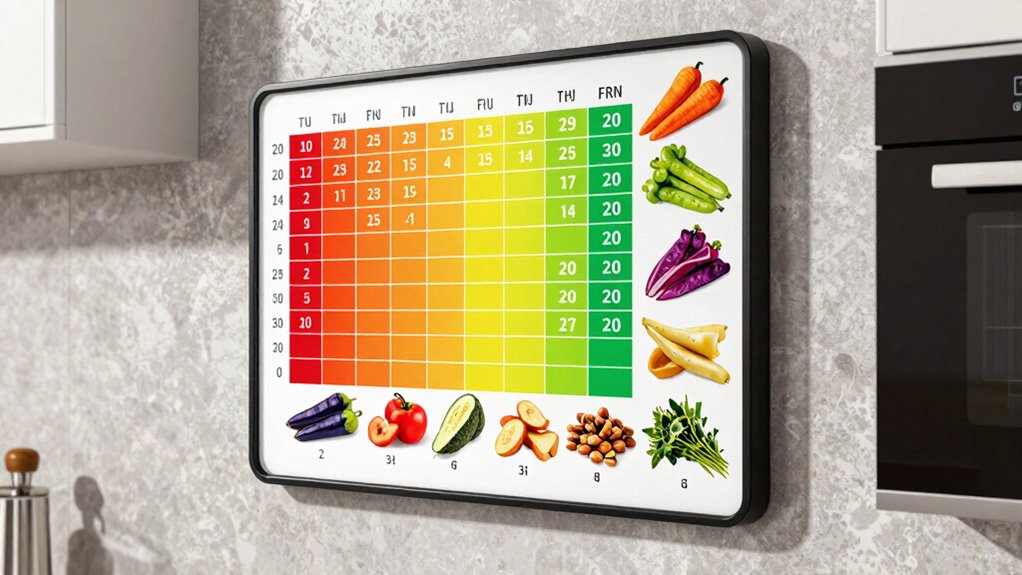
To dry vegetables, nuts, and herbs successfully, start with proper preparation—wash, chop, and blanch if needed. Using the right drying temperatures guarantees your foods dehydrate evenly without losing flavor or nutrients. Paying attention to these details helps you achieve perfectly dried results every time.
Proper Preparation Techniques
Proper preparation is essential to guarantee your vegetables, nuts, and herbs dry evenly and retain their flavor and nutrients. Start by cleaning and slicing produce uniformly to ensure consistent drying. Blanch vegetables briefly if necessary to preserve flavor and color. When drying herbs, chop them into small, even pieces to boost flavor preservation and facilitate airflow. For nuts, remove shells and make sure they’re dry and clean before placing them in the dehydrator. Properly arranged items in a single layer promote even drying and prevent sticking. Avoid overcrowding, which can hinder airflow and compromise texture enhancement. Using fresh, high-quality ingredients and handling them gently helps maintain their natural flavors and textures. These preparation steps set the foundation for successful dehydration, ensuring your final results are flavorful, crisp, and nutrient-rich.
Optimal Drying Temperatures
Achieving perfect dryness relies heavily on selecting the right temperatures for your dehydrator, which vary depending on the type of produce. For vegetables, nuts, and herbs, maintaining specific temperatures helps preserve flavor and moisture retention. Too high, and you risk flavor degradation; too low, and drying takes longer, risking mold. Use the following guide:
| Produce | Temperature (°F) | Tips |
|---|---|---|
| Vegetables | 125–135 | Preserve color and nutrients |
| Nuts | 115–125 | Maximize crunch and flavor |
| Herbs | 95–105 | Maintain aroma and potency |
Adjust according to thickness and desired dryness level, ensuring your produce retains flavor enhancement and ideal texture.
Why Proper Temperature Is Key for Safe Jerky

Ensuring your jerky reaches the right temperature is essential for safety because it kills harmful bacteria and pathogens that can cause foodborne illnesses. Proper temperature control not only safeguards your health but also improves flavor enhancement, making your jerky more enjoyable. When you dry at the correct temperature, you preserve the texture, preventing it from becoming too tough or chewy. If the temperature is too low, bacteria may survive, risking spoilage or illness. Conversely, excessively high temperatures can compromise flavor and cause uneven drying. Maintaining the proper temperature ensures your jerky is safe to eat, with a balanced flavor and ideal texture. Ultimately, paying attention to temperature is the key to producing delicious, safe, and well-preserved jerky every time.
Maintaining Consistent Temperatures in Your Dehydrator
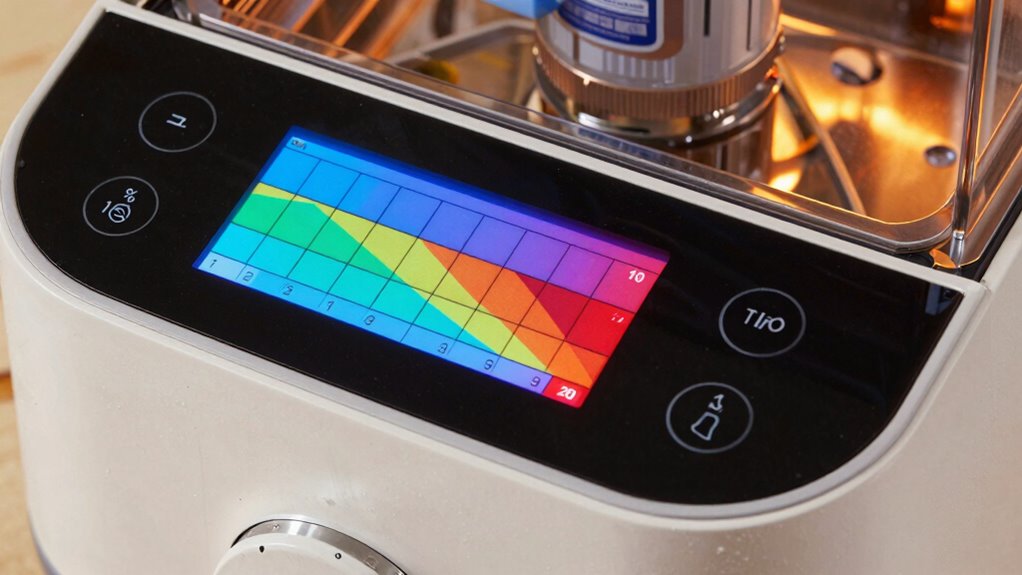
Maintaining consistent temperatures in your dehydrator is crucial for producing evenly dried, safe, and flavorful jerky. To do this effectively, regularly check and calibrate your dehydrator’s temperature setting to guarantee accuracy. Proper temperature calibration prevents hot spots or uneven drying. Humidity control also plays an essential role; fluctuations in humidity can impact drying times and quality. Keep your dehydrator in a well-ventilated, climate-controlled area to minimize environmental effects. Use a reliable thermometer to monitor internal temperatures periodically, ensuring your dehydrator maintains a steady heat. By staying vigilant about temperature calibration and humidity control, you guarantee your jerky dries uniformly and safely, reducing risks of spoilage or bacteria growth. Consistency is key to achieving perfect results every time.
When and How to Use a Food Thermometer During Dehydration
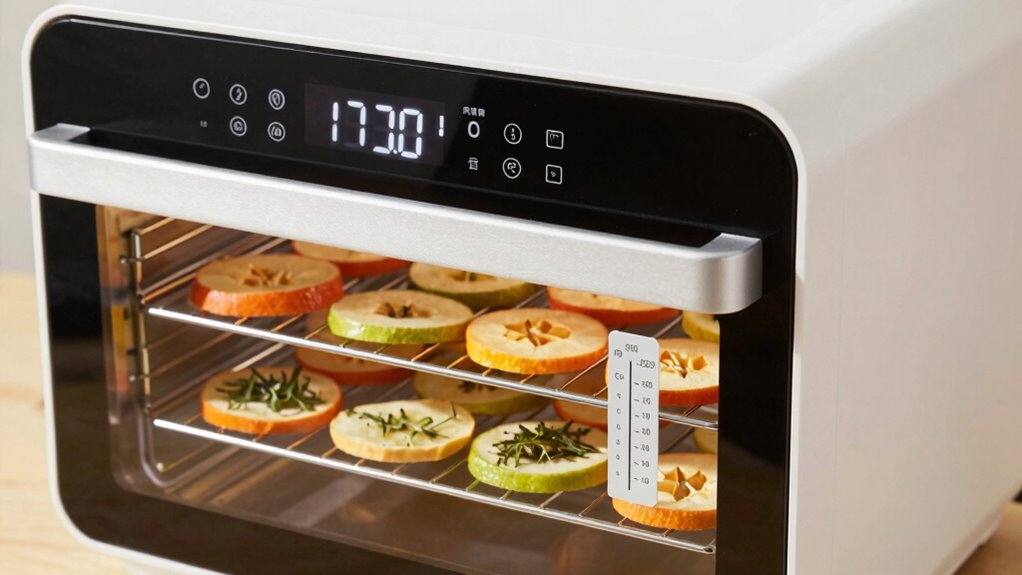
Using a food thermometer at key points during dehydration helps you confirm that your jerky reaches a safe and desired internal temperature. This assures food safety and maintains temperature accuracy. You should check the temperature when the dehydration process is nearly complete, especially for meats or high-risk foods. To do this effectively, insert the thermometer into the thickest part of the food, avoiding contact with trays or dehydrator walls. Use the table below as a guide:
| Stage | When to Check |
|---|---|
| Early dehydration | After 1-2 hours |
| Mid-process | Midway through drying |
| Near completion | Last 30 minutes |
| Final check | Before storage or consumption |
This practice guarantees safe, properly dried food every time.
Frequently Asked Questions
Can I Dehydrate at Temperatures Outside Recommended Ranges?
You can dehydrate at temperatures outside recommended ranges, but it’s not ideal. Inconsistent temperatures can affect drying times and food safety. To avoid issues, make sure your dehydrator maintains temperature consistency, and regularly calibrate your equipment. Deviating from recommended temps might lead to uneven drying or spoilage, so sticking to the guidelines helps ensure your food dries properly and stays safe to eat.
How Do Ambient Room Temperatures Affect Dehydration Times?
Did you know that ambient room temperatures can extend dehydration times by up to 50%? When room temperatures drop, higher humidity levels and poor air circulation slow down moisture removal. You’ll notice your food takes longer to dry because cooler air holds more moisture, and stagnant air hampers evaporation. To speed up the process, make certain there is good air circulation and keep the room warm and dry, optimizing dehydration efficiency.
Is It Necessary to Rotate Trays During Dehydration?
You should rotate trays during dehydration to guarantee even drying, especially if your dehydrator isn’t designed for uniform heat distribution. Tray rotation helps maintain a consistent temperature across all levels, preventing over-drying or under-drying spots. By rotating trays periodically, you promote uniform dehydration, improve overall quality, and reduce the risk of spoilage. It’s a simple step that makes a big difference in achieving perfect, evenly dried results.
What Are Signs of Over-Drying or Under-Drying?
You’ll notice over-dried foods become brittle and lose flavor, while under-dried items feel moist and may spoil quickly. For example, if apple slices are too brittle, they’ve been over-dried, risking flavor loss and poor texture preservation. Conversely, moist, chewy dried fruits indicate under-drying, risking mold. To avoid this, monitor your items carefully, adjusting drying time to maintain ideal flavor retention and texture, ensuring perfect results every time.
How Often Should I Check the Temperature During Long Dehydration Sessions?
You should check the temperature at least once every couple of hours during long dehydration sessions to maintain temperature stability. This helps guarantee dehydration consistency, preventing over-drying or under-drying. Keep an eye on your dehydrator’s thermostat and make adjustments if needed. Regular checks help you produce perfectly dried food without overtaxing your appliance or wasting energy, resulting in better quality and more reliable results.
Conclusion
Mastering your dehydrator’s temperature is key to perfect results. Think of it like baking—set too high, and you risk burning; too low, and the food won’t dry properly. Using a thermometer, you can visualize the ideal drying zone, much like a thermometer shows the right temperature for baking bread. With practice, you’ll confidently adjust settings, ensuring safe, delicious, and evenly dried foods every time.
Fall Picks
fall essentials
As an affiliate, we earn on qualifying purchases.